
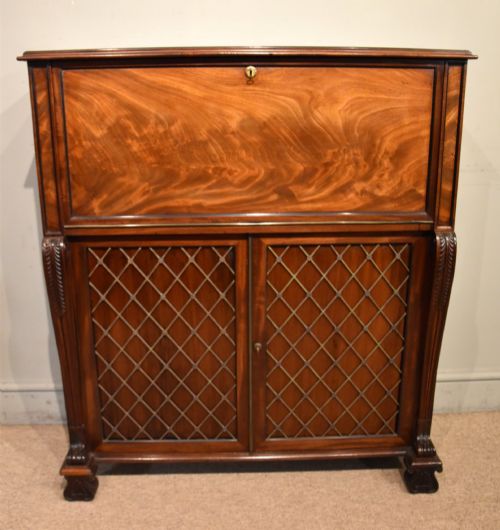
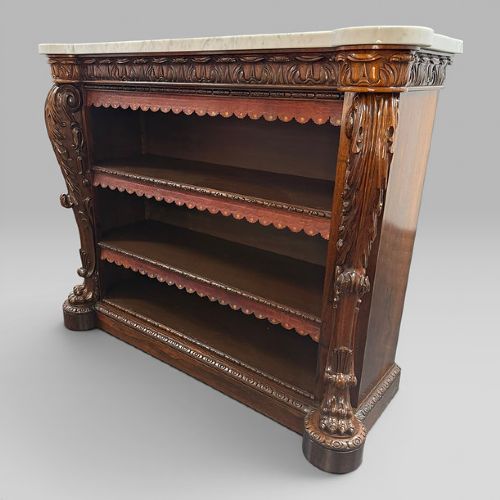


William IV Side Cabinet
A william iv side cabinet brings heavy timber and precise brass detailing to a formal interior, offering substantial display and storage space.
What William IV Side Cabinets Are
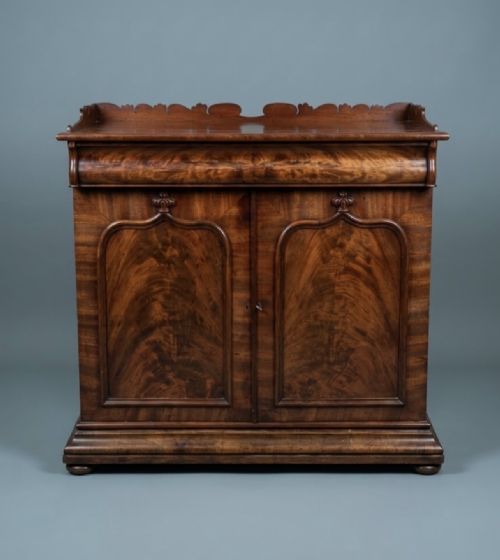
A william iv side cabinet is a substantial storage piece produced during the early nineteenth century, bridging Regency elegance and early Victorian mass. Buyers encounter various formats on this page, ranging from single-door cupboards and chiffoniers to larger breakfront bookcases.
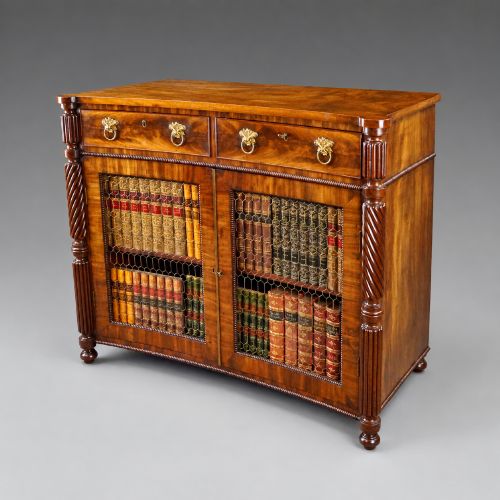
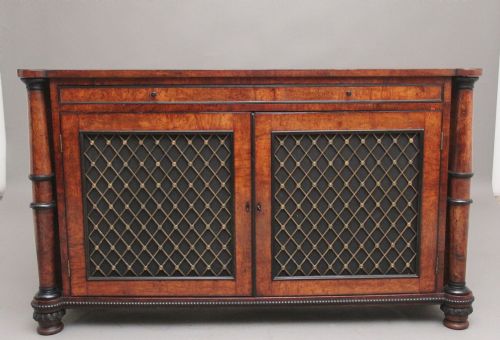
The most frequent form seen here is constructed from rosewood or mahogany, often featuring glazed or fabric-backed grill doors. These pieces frequently incorporate marble tops, open shelving for books, or internal compartments designed for drinks.
While the prevailing style remains William IV, overlapping influences from the Regency and Late Georgian periods appear across the inventory. Makers also utilised figured elm, burr walnut, and goncalo alves for select commissions.
How They Were Made
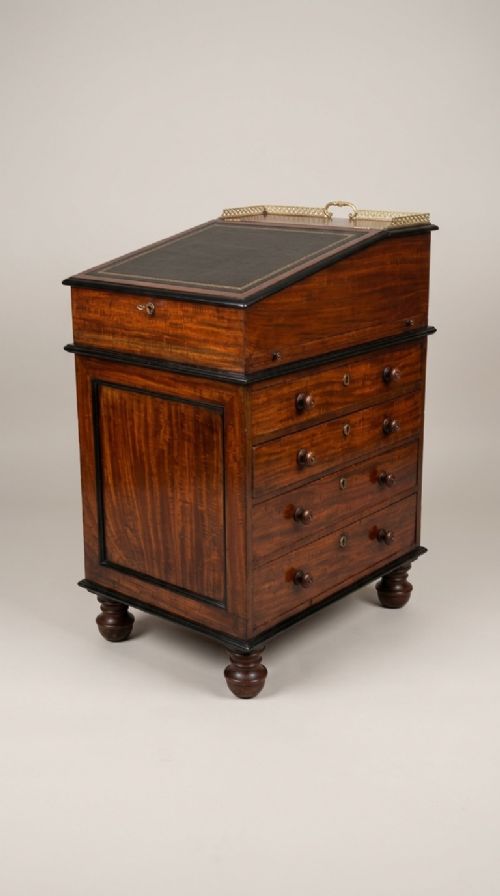
Cabinetmakers constructed these pieces using dense tropical hardwoods such as rosewood and flame mahogany, frequently applied as veneers over sturdy secondary timbers. Solid oak and elm also appear in regional pieces and smaller bedside variants.
Decoration relied on structural joinery and applied metalwork rather than excessive carving, utilising brass inlay, brass grills, and cast bronze mounts. Glass panels were secured within wooden or metal frames to protect stored collections.
Retail Price Guide 2026
Typical UK retail prices for william iv side cabinet, calculated from the Sellingantiques database of over a million retail prices indexed since 2003. This retail price guide relies exclusively on Sellingantiques data; no external sources or auction records are used, so the figures do not describe the wider market.
Current listings feature nineteenth-century side cabinets in rosewood, mahogany, burr walnut, and figured elm, alongside styles spanning Regency to Victorian.
What Varies in Quality
The distinction between standard utility pieces and high-end commissions rests in timber selection and timber matching. Cabinets featuring continuous grain across breakfront doors or heavily figured burr walnut demonstrate superior workshop execution.
Hardware and secondary detailing further separate the tiers of production. Finely chased brass inlay, robust lock mechanisms, and integrated marble tops indicate workshops operating at the upper end of the trade, whereas simpler cupboards rely on standard brass grilles and plain timber.
Gillows of Lancaster
The William IV Side Cabinet Glossary
- Chiffonier
- A low sideboard cabinet typically fitted with enclosed shelving below and sometimes a raised tier above. This form evolved during the Regency and William IV periods to serve dining and drawing rooms.
- Breakfront
- A cabinet design where the central section projects forward from the flanking wings. This configuration creates visual depth and allows for varied internal storage capacities.
- Goncalo alves
- A dense exotic hardwood with striking contrasting grain patterns utilised in select nineteenth-century cabinetmaking. It offers a dramatic visual alternative to standard rosewood or mahogany.
- Grill door
- A cabinet door fitted with brass wire mesh instead of wood or glass, frequently backed with pleated fabric. This allowed ventilation for contents while maintaining a refined facade.
Frequently Asked Questions
What is a William IV side cabinet used for?
These cabinets served primarily for storing tableware, linens, books, or beverages within formal dining rooms and libraries. Their enclosed cupboards and upper display surfaces accommodated the domestic needs of nineteenth-century households.
Today, they function effectively as credenzas in living spaces, media units, or hallway storage. Their flat tops provide ample space for lamps and decorative objects.
How do I identify a William IV period piece?
William IV furniture typically dates from the eighteen-thirties, showing heavier proportions than Regency pieces but retaining classical restraint before Victorian elaboration takes over. Look for architectural cornices, restrained scrollwork, and substantial mahogany or rosewood timbers.
Details such as brass grill doors, marble tops, and plinth bases are characteristic of the era. Regional variations might employ figured elm or oak rather than imported tropical hardwoods.
Are these cabinets suitable for small rooms?
While many examples are substantial breakfront or multi-door pieces, the inventory also includes compact single-door cupboards, chiffoniers, and bedside cabinets. These smaller formats fit narrow hallways or modest bedrooms without overwhelming the floor plan.
Choosing a model with mirrored or glass doors can also help reflect light and maintain an open feel in restricted spaces.
How should I care for rosewood and mahogany?
Maintain nineteenth-century hardwoods by keeping them away from direct heat sources and strong sunlight, which can dry out timber and fade delicate veneers. Regular dusting with a soft, dry cloth is usually sufficient for daily maintenance.
Apply a traditional wax polish sparingly only when the wood appears dry to nourish the surface. Avoid using silicone-based sprays or excessive moisture on antique finishes.