

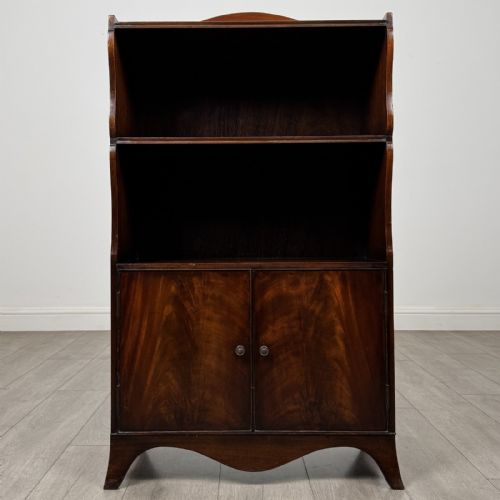
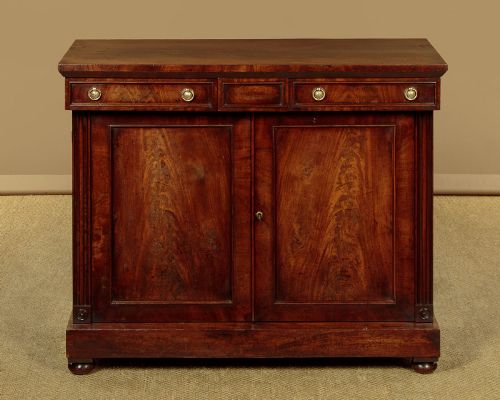
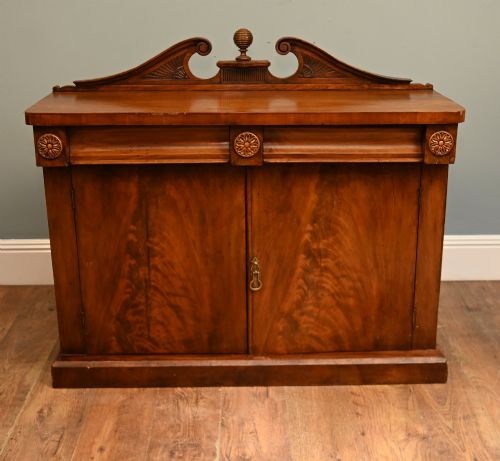
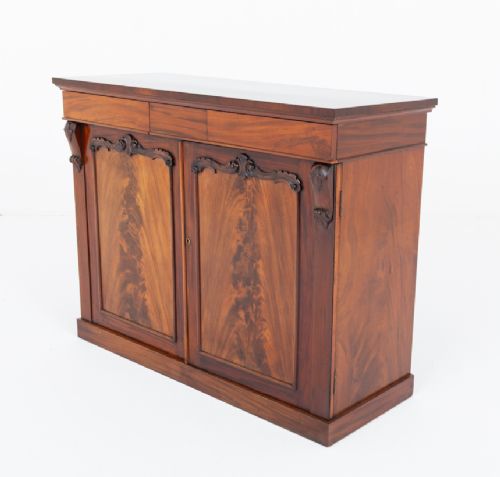
Flame Mahogany Chiffonier
When you search for a flame mahogany chiffonier, you are looking at a low cabinet designed for dining rooms and parlours during the Regency, William IV and Victorian periods.
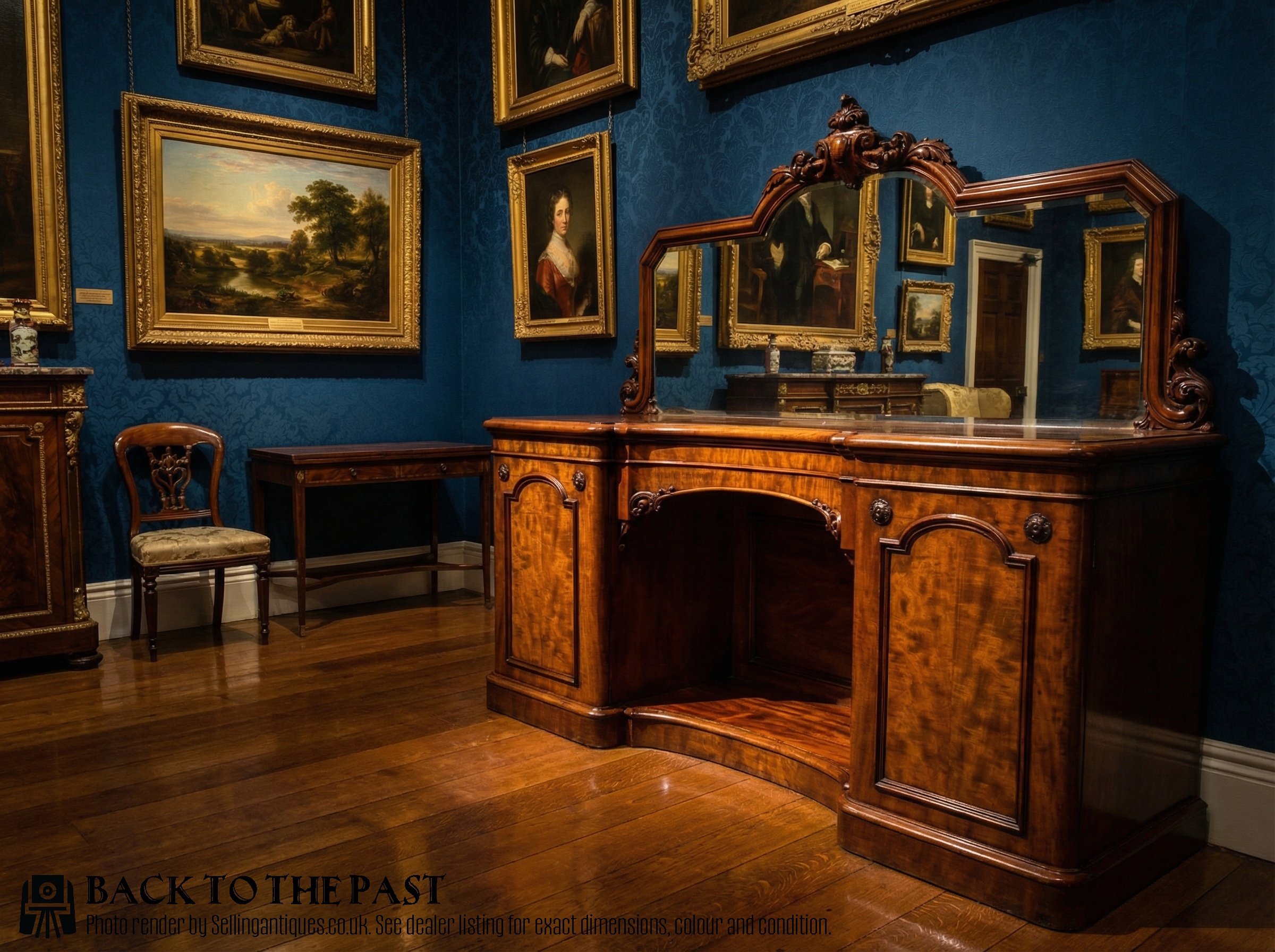
Flame Mahogany Chiffonier
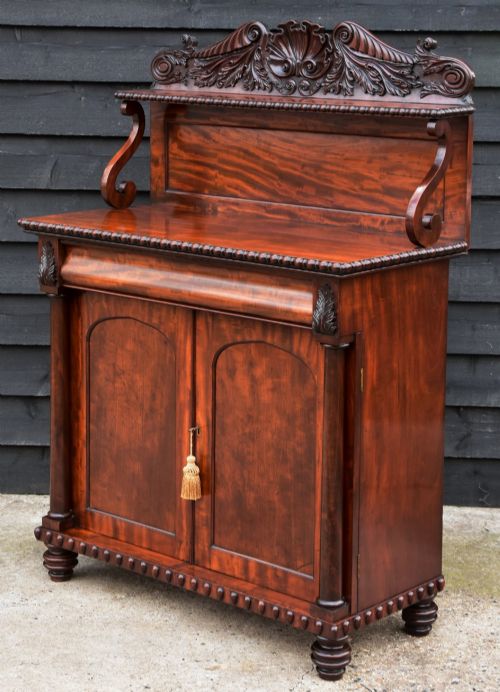
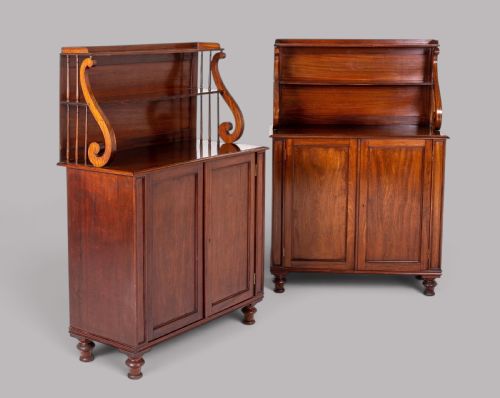
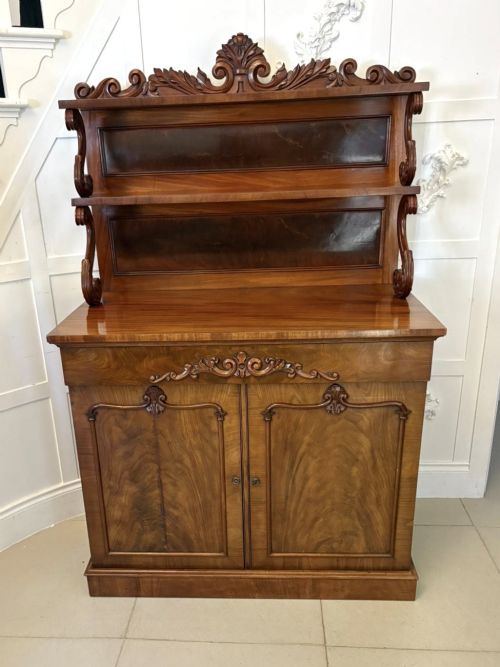
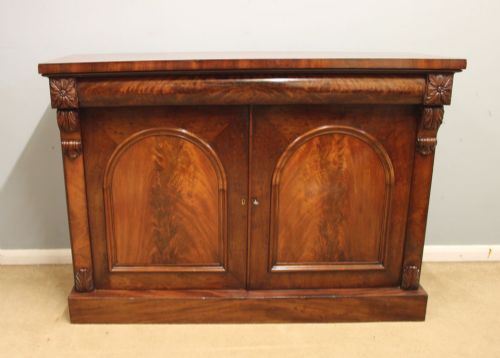
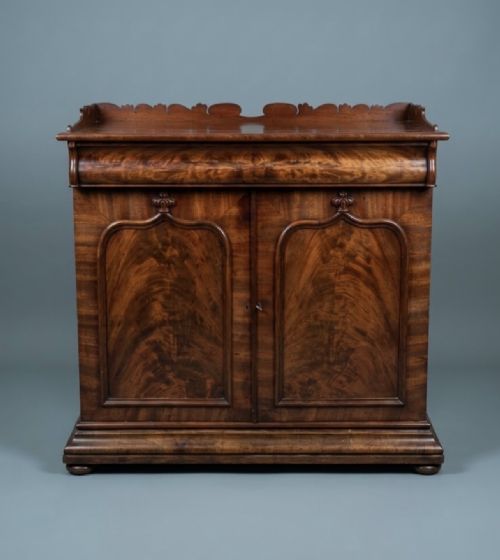
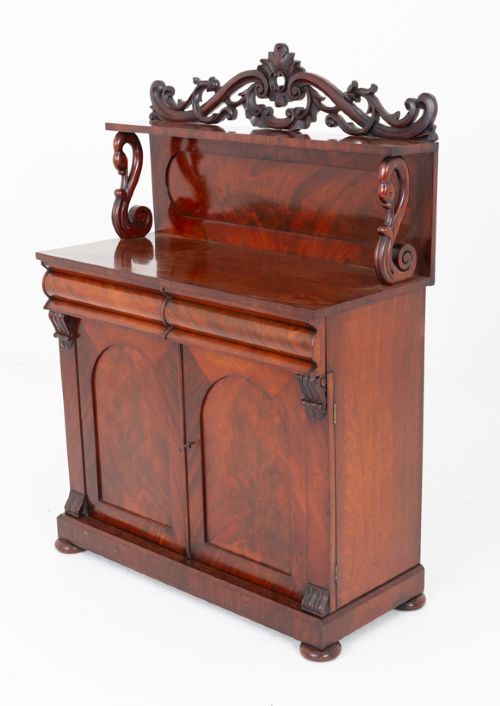
A flame mahogany chiffonier is a low dining room or parlour cabinet, typically fitted with a pair of doors below and frequently surmounted by a shelf or mirror back. These pieces evolved during the early nineteenth century from sideboards, offering compact storage for silver, linen and glassware.
The pieces appearing on this page span the Regency, William IV and Victorian periods, with examples dated from the early nineteenth century through to the 1870s. Alongside standard chiffoniers, the selection includes related side cabinets, low cupboards and occasional bookcase variants.
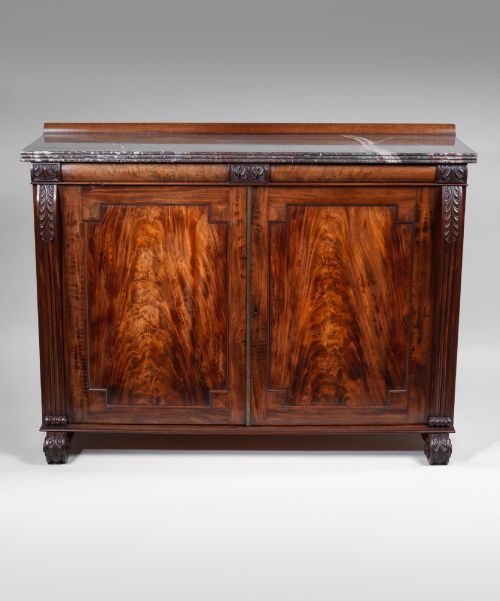
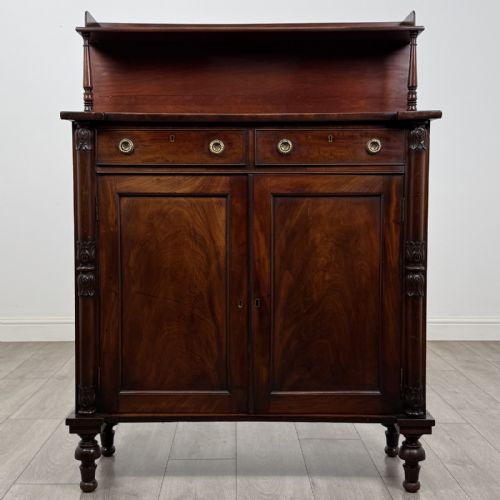
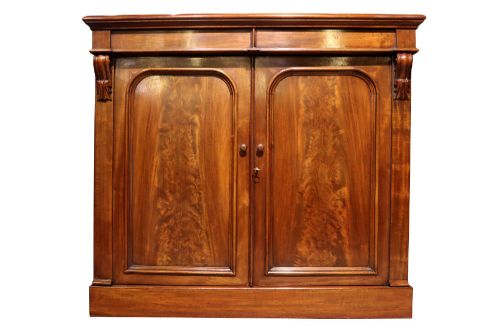
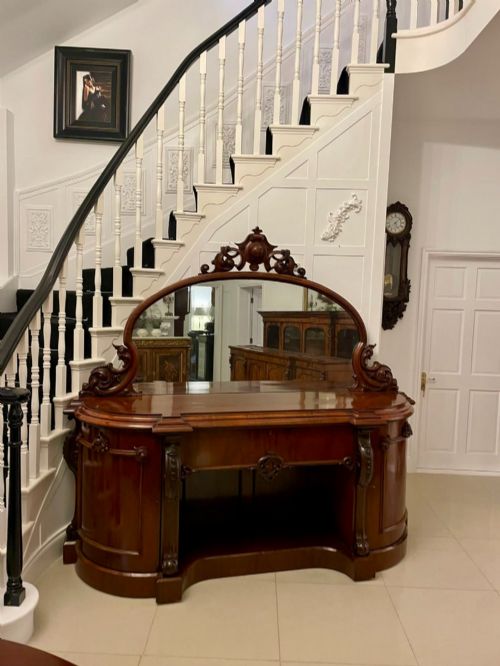
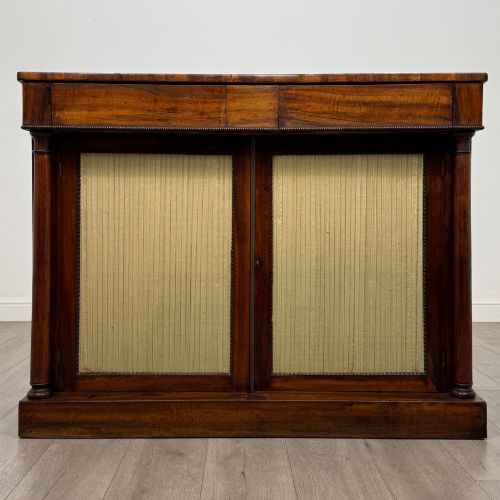
Most entries display the characteristic two-door cupboard base, occasionally accompanied by upper tiers, scrolling corbels or glazed doors. Their proportions range from small, compact examples to larger breakfront servers suited to more substantial rooms.
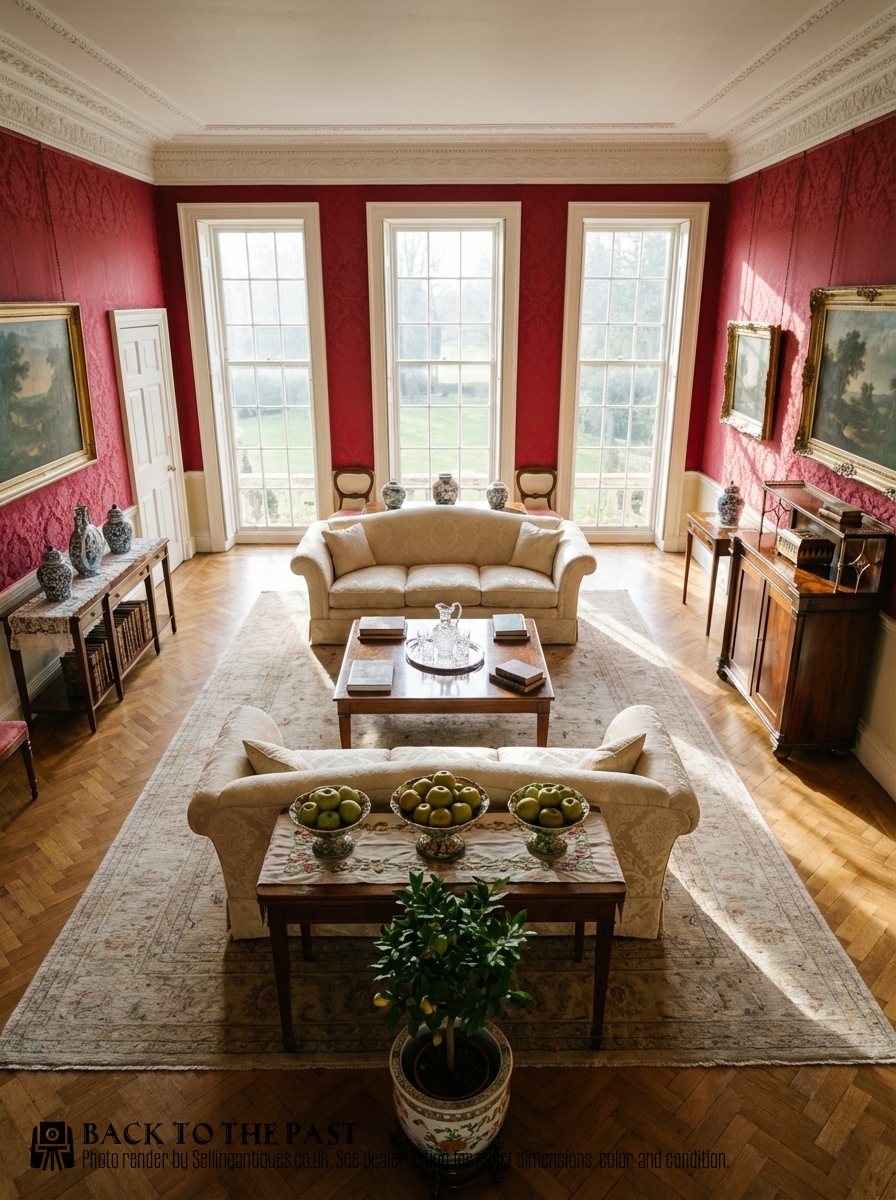
What varies in quality
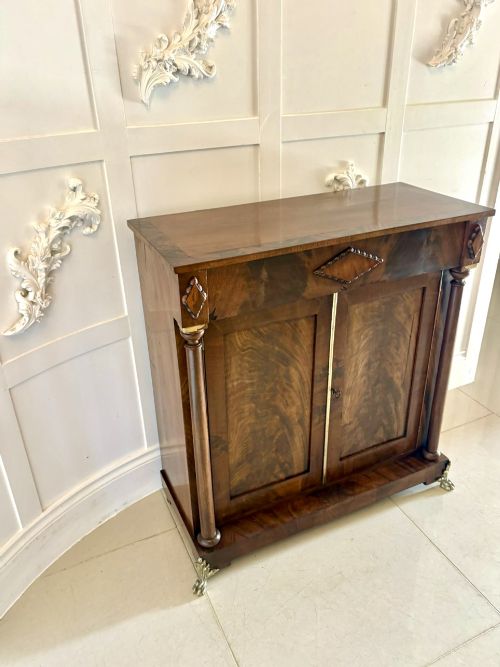
The visual impact of a flame mahogany chiffonier depends primarily on the selection and book-matching of the veneer across the door panels. Superior examples display symmetrical, highly figured grain patterns that catch the light, while simpler pieces utilise straighter, plainer cuts of mahogany.
Construction detail distinguishes workshop output, particularly in the thickness of the timber, the precision of the drawer dovetails and the integration of architectural elements like corbels and columns. Maker attribution, such as pieces bearing the mark of Gillows, elevates the standing of a cabinet through documented joinery and refined proportions.
Flame Mahogany Chiffonier Retail Price Guide 2026
Typical asking prices for flame mahogany chiffonier among the pieces listed under this phrase on Sellingantiques today, from the lower quarter to the upper quarter. They describe what is for sale here now, not the wider market.
Listings span the Regency, William IV and Victorian eras, demonstrating the evolution of the chiffonier from 1800 through the 1870s.
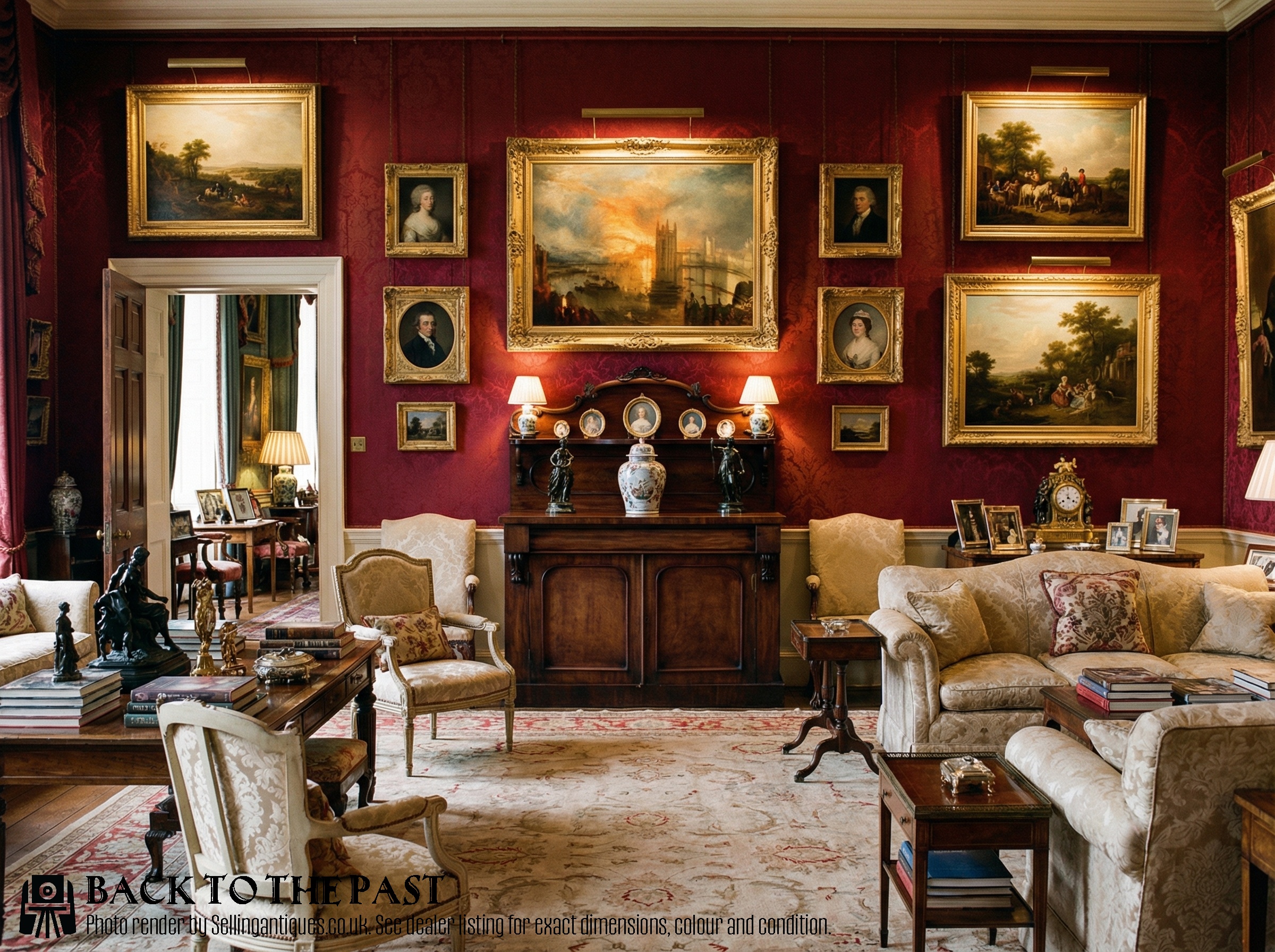
Gillows
The Flame Mahogany Chiffonier Glossary
- Flame mahogany
- A veneer cut from the branch junctions of the mahogany tree, producing a distinctive, flickering grain pattern. This timber was prized for principal surfaces such as cabinet doors.
- Corbel
- A projecting bracket carved from wood, used to support an upper shelf or overhang on Regency and Victorian cabinets. They often take the form of scrolls or acanthus leaves.
- Secretaire
- A pull-out writing drawer containing small compartments and pigeonholes, found integrated into the upper section of certain cabinets and sideboards.
Flame Mahogany Chiffonier: Frequently Asked Questions
What is a flame mahogany chiffonier used for?
These cabinets were originally placed in dining rooms and parlours to store tableware, linens and serving items. The surface served for displaying decorative objects or serving food during gatherings.
Today, they function well as side tables in hallways or as media consoles in living spaces, offering enclosed storage while occupying minimal floor space.
How do I tell a Regency chiffonier from a Victorian one?
Regency pieces, dating from the early nineteenth century, generally exhibit cleaner architectural lines, restrained brass inlay and classical proportions. They lean toward neoclassical restraint.
Victorian examples, produced from the 1830s onward, tend to feature heavier proportions, bolder grain figures, and applied details such as barley twist columns or mirrored backs.
What woods are used besides flame mahogany?
While the primary decorative surfaces feature flame mahogany veneer, underlying carcases and secondary timbers often comprise solid mahogany or pine. Glass panels appear in upper bookcase sections.
Brass hardware, including key escutcheons, hinges and occasional grilles, provides metallic contrast to the polished timber surfaces across all periods.
Where should I place a chiffonier at home?
Their shallow depth makes them suitable for narrow spaces such as hallways, landings or dining room walls where standard sideboards would project too far into the room.
Pairing them with a mirror or placing a lamp on the top surface highlights the figured grain of the wood and the proportions of the cabinet.