
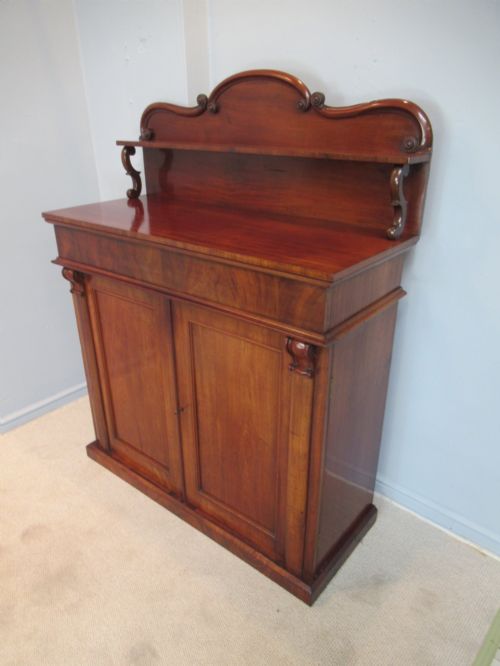
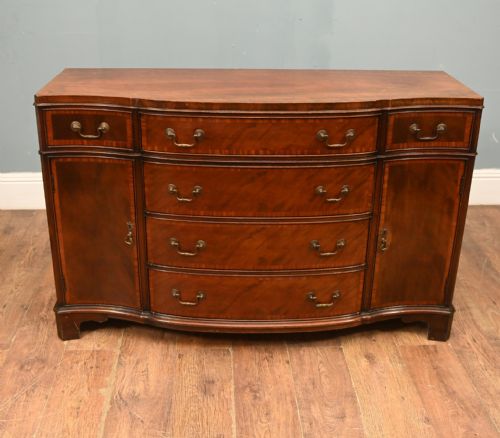
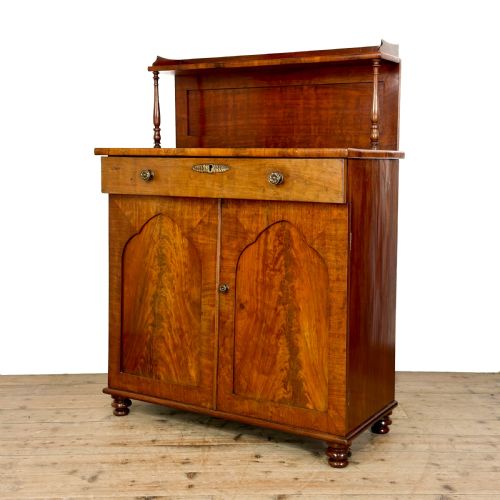


Mahogany Dining Room Cupboard
A mahogany dining room cupboard brings architectural timber and deep red grain to the dining space, offering practical storage for silver, linen and glassware.
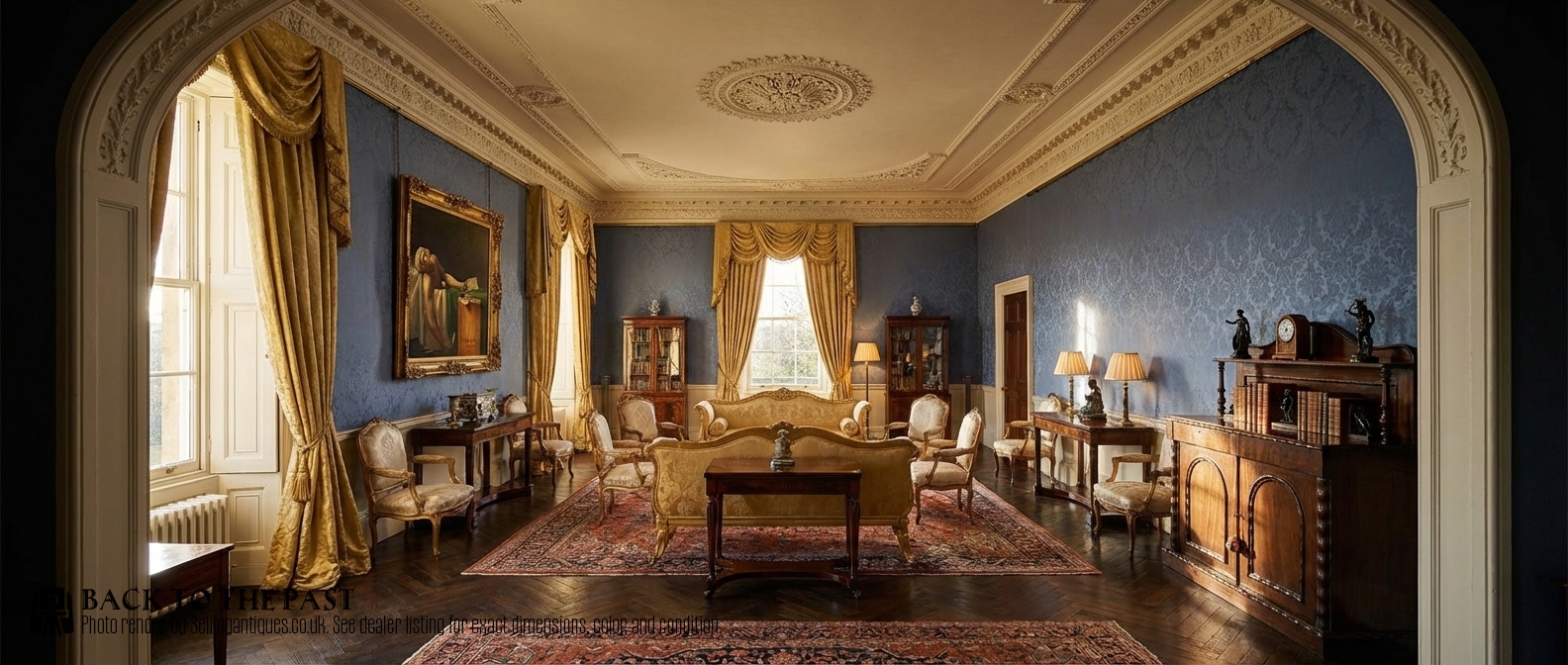
Mahogany Dining Room Cupboard
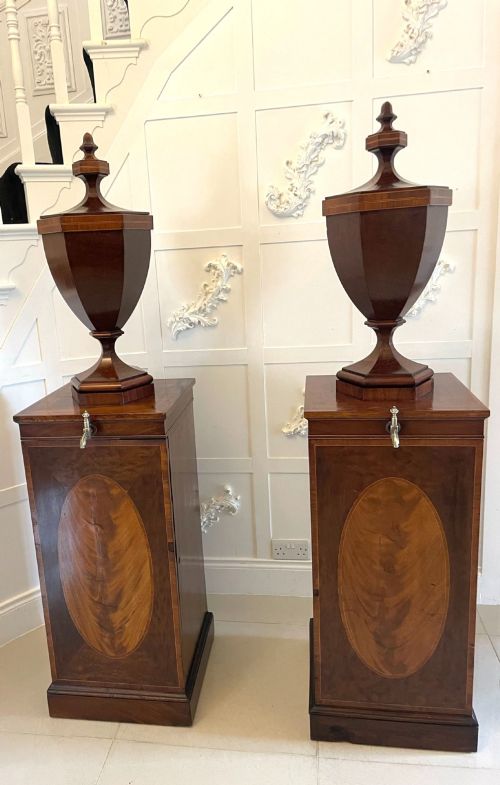
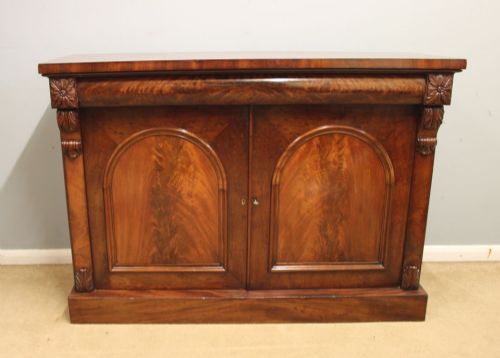
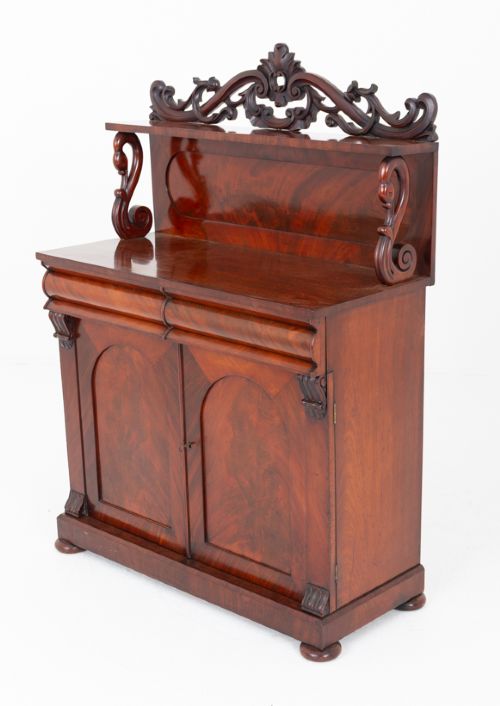
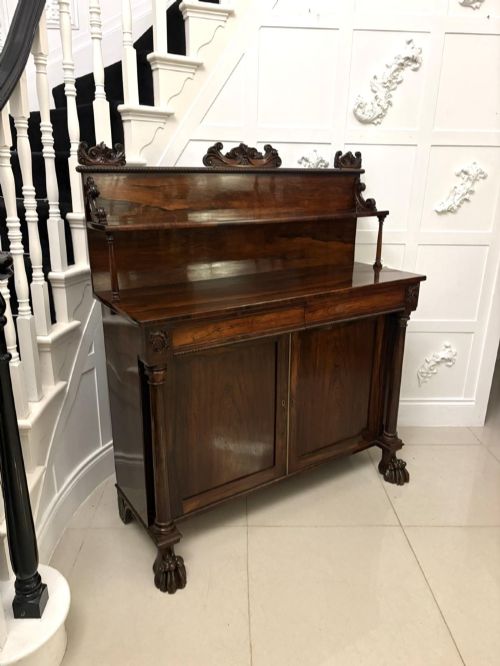
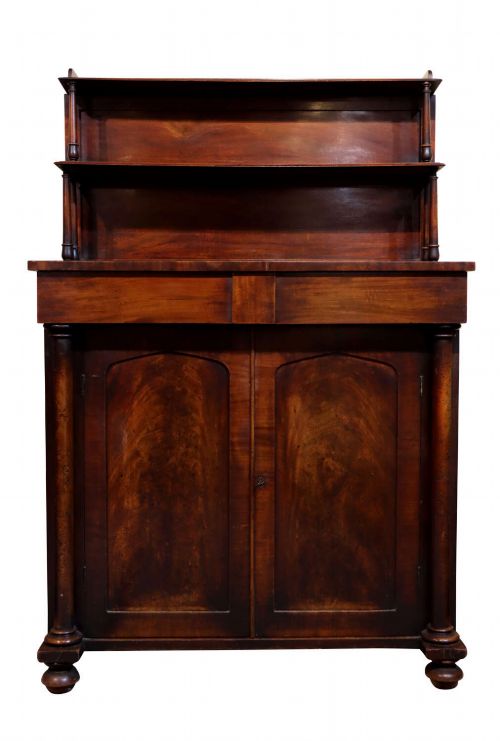
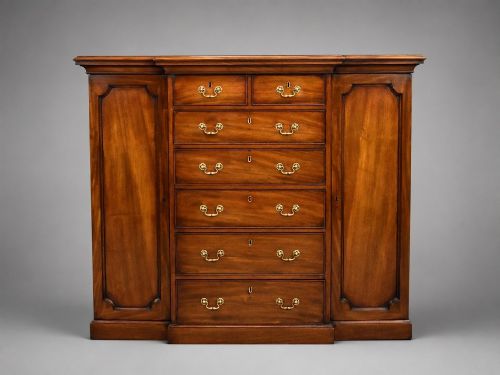
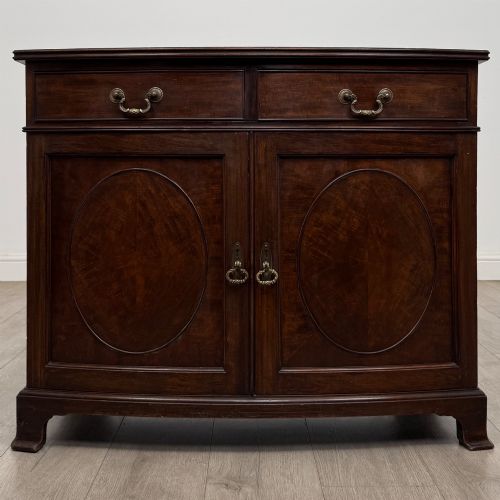
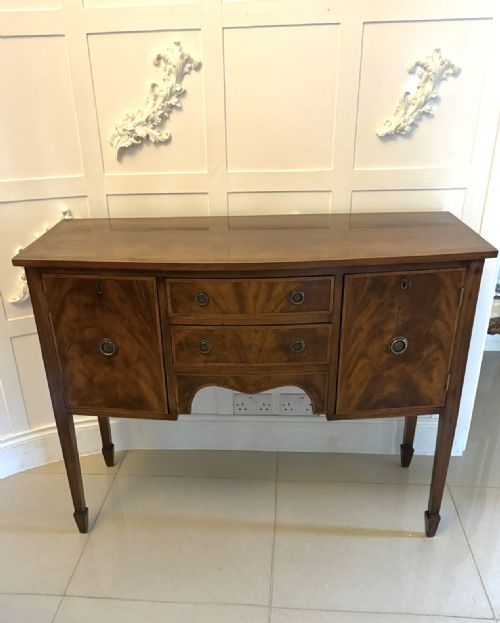
A mahogany dining room cupboard comprises large functional forms designed for storage and serving within the dining room. These pieces range from substantial breakfront sideboards to petite chiffoniers and paired serving pedestals.
Victorian and nineteenth-century examples appear most frequently across this selection, alongside Regency, Georgian, and Edwardian specimens. The chiffonier emerges as the predominant format among these dining room storage pieces.
Craftsmen built these items to serve as sideboards, buffets, credenzas, and side cabinets. Many incorporate tiered shelves, enclosed lower cupboards, or mirrored backs for display.
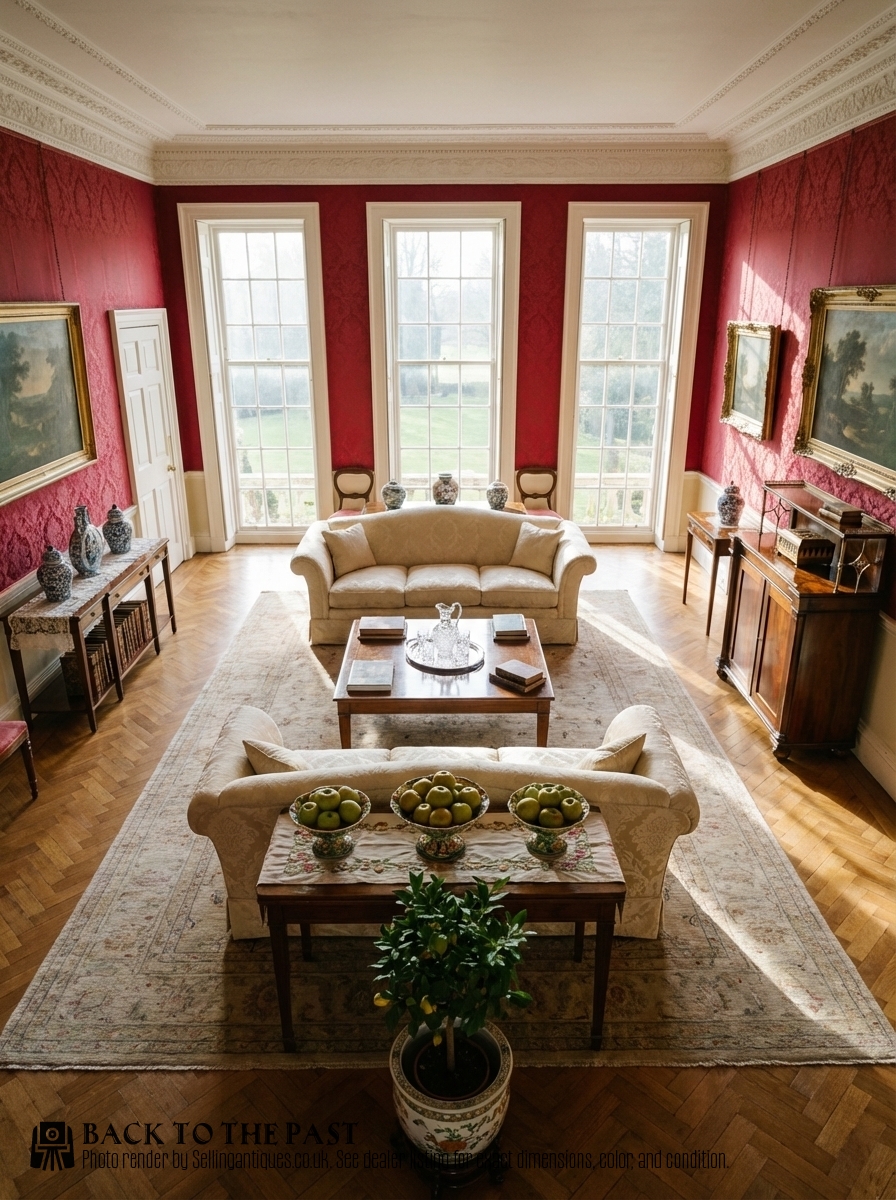
How they were made
Cabinet makers utilised solid timber alongside flame mahogany veneer to create deep, figured surfaces on the primary panels. Boxwood and satinwood inlay often provide sharp contrast along the borders and edges.
Brass fittings such as handles, hinges, and gallery rails secure the structural elements while adding metallic detail. Glass panels appear in doors and upper sections where display takes precedence over enclosed storage.
Certain pedestals double as wine urns, ready to chill bottles beside the dining table.
What varies in quality
The selection of timber grain defines the visual impact, with matched flame mahogany veneer requiring superior skill compared to plain stock. Fine joinery in the drawer linings and carcase construction determines longevity.
The precision of boxwood and satinwood inlay separates standard workshop production from high-grade cabinet work. Original brass hardware and intact structural glazing elevate the standing of an individual piece.
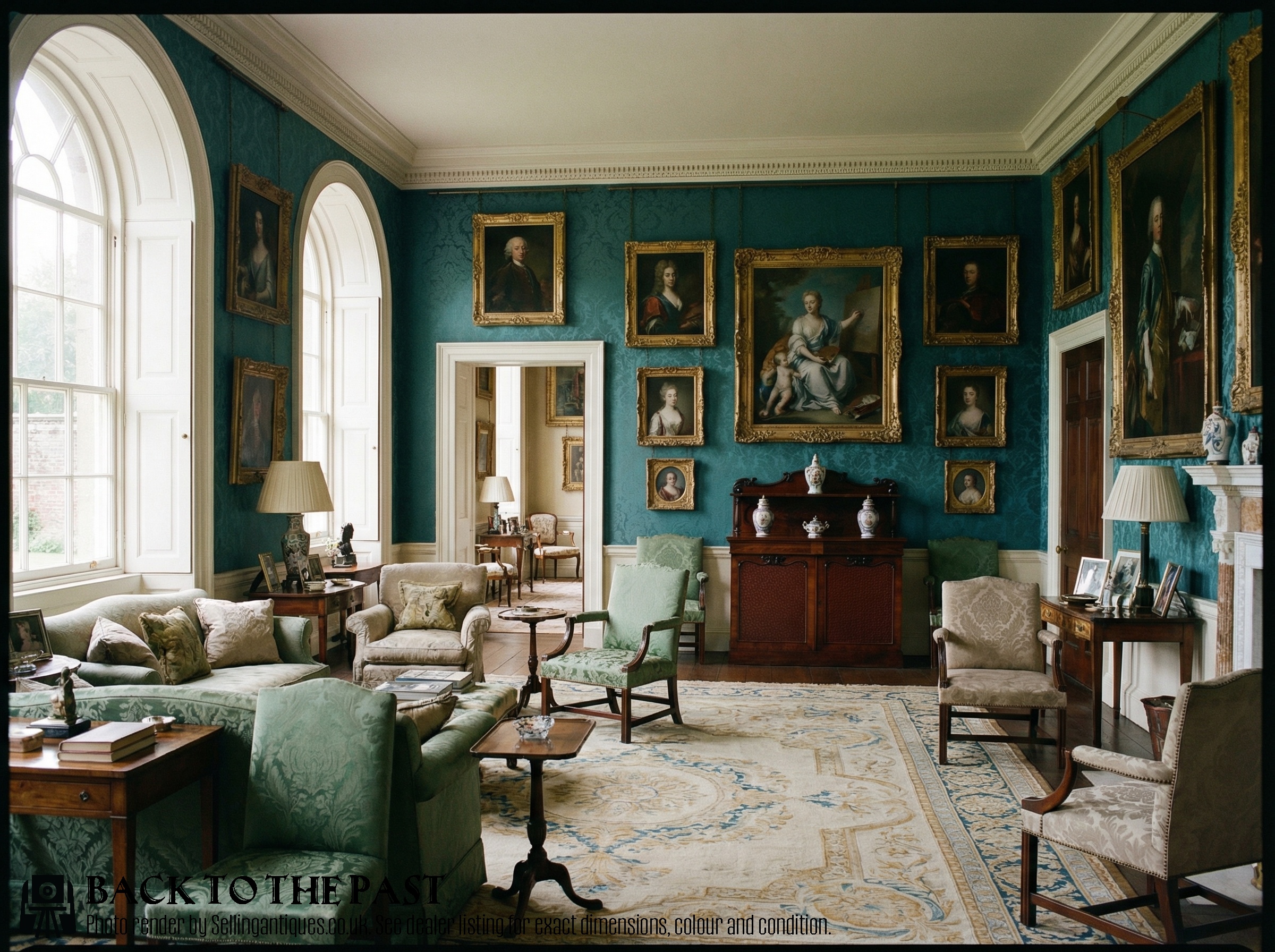
The Mahogany Dining Room Cupboard Glossary
- Chiffonier
- A low sideboard or cabinet, typically featuring enclosed cupboards beneath a shelf or drawer, designed for dining room storage.
- Flame mahogany
- A highly figured timber veneer sliced from the branch wood junctions, creating a distinctive flame-like pattern.
- Breakfront
- A piece of furniture whose central section projects forward from the recessed wings on either side.
- Pedestal
- An upright architectural support column, occasionally hollowed to function as a storage cupboard or serving stand.
- Inlay
- A decorative technique where contrasting woods like boxwood or satinwood are set flush into the mahogany surface.
Mahogany Dining Room Cupboard: Frequently Asked Questions
What is a mahogany chiffonier?
A chiffonier is a low dining room cupboard combining lower enclosed storage with upper display space or shelving.
Cabinet makers produced these pieces extensively during the Victorian and nineteenth-century periods for practical use in dining spaces.
How do I date a sideboard?
Dating relies on stylistic clues, timber preparation, and construction methods characteristic of periods like Regency, Georgian, or Victorian.
Details such as boxwood inlay, brass hardware, and veneer selection help place a piece within its era of manufacture.
Where were these cupboards used?
These pieces served primarily in formal dining rooms for storing tableware, linens, cutlery, and serving dishes.
Their surfaces also provided a convenient platform for serving food and displaying silver during meals.
What is flame mahogany?
Flame mahogany is a decorative wood veneer derived from specific growth points in the tree that produce undulating grain patterns.
Cabinet makers utilised this figured timber on prominent drawer fronts and cupboard doors to create striking visual depth.