
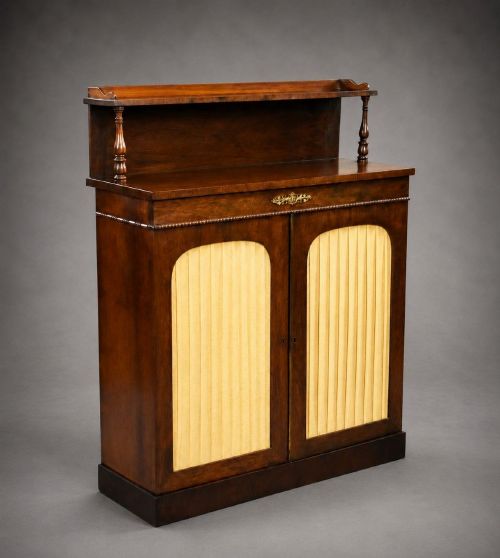
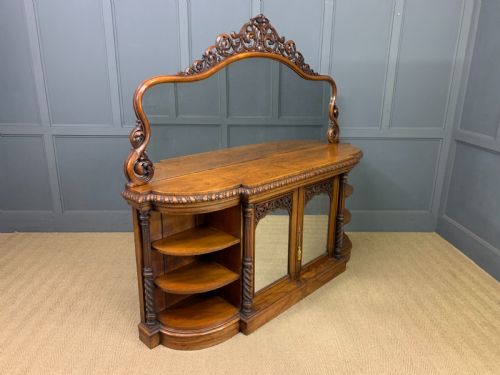


Victorian Shelf Back Sideboard
These victorian shelf back sideboard pieces bring architectural presence and practical surface space to a room, offering the enclosed storage every collector needs.
Victorian Shelf Back Sideboard
When you search for a victorian shelf back sideboard, you encounter substantial timber furniture designed to stand against a dining room or parlour wall. These items combine a low cabinet base with an upper tier or mirror back, serving varied domestic functions.
The pieces listed on this page span the Victorian and Edwardian periods, including specific years such as eighteen-fifty and eighteen-seventy, alongside nineteenth-century examples. The forms include chiffoniers, display cabinets, credenzas, side cabinets, and serving table buffets.
You are most likely to meet mahogany and walnut pieces, frequently featuring mirror backs or display shelving. These varied forms provide both enclosed cupboards and elevated display surfaces for ceramics and glassware.
How they were made
Cabinet makers constructed these pieces primarily using solid timbers and decorative veneers like burr walnut, mahogany, and rosewood. These woods provided both structural stability and rich, figured surfaces for formal interiors.
Makers integrated glass panels, brass hardware, and fabric elements into the cabinetry, alongside large inset mirror glass plates for the elevated shelf backs. These secondary materials enhanced the reflective light and visual depth of the furniture.
Materials recorded on this site include brass, glass, mahogany, burr walnut, walnut, rosewood, fabric, and mirror.
What varies in quality
The refinement of the timber figure and the complexity of the cabinetry distinguish individual examples. Higher quality items utilise carefully selected burr walnut or figured mahogany, demonstrating superior natural grain patterns across the primary surfaces.
The architectural ambition of the superstructure also separates standard examples from finer ones. Elaborate mirror backs, integrated display cabinets, and specialised combinations like the whatnot or chiffonier indicate higher manufacturing standards.
The Victorian Shelf Back Sideboard Glossary
- Chiffonier
- A low sideboard or cabinet featuring a raised shelf or mirror back, developed during the nineteenth century for the dining room or parlour. This form typically includes enclosed lower storage beneath a useful surface.
- Credenza
- A sideboard or side cabinet originating in Italy, adapted in the nineteenth century as a low-standing display piece with doors. These often incorporate fine mirror backs and glass-fronted compartments.
- Burr walnut
- A prized timber veneer harvested from the knot growths of walnut trees, yielding intricate, swirling grain patterns. Cabinet makers applied this material to decorative furniture fronts to showcase natural figure.
- Whatnot
- A piece of freestanding or superstructure shelving designed for displaying ornaments, books, or china. In these listings, the term describes tiered display sections integrated above sideboards.
Victorian Shelf Back Sideboard: Frequently Asked Questions
What is a victorian shelf back sideboard?
A victorian shelf back sideboard is a low cabinet base topped with a raised mirror or shelving tier, designed for dining rooms and parlours.
These pieces offer both enclosed cupboard storage and elevated surfaces for displaying decorative objects.
How do I date these sideboards?
Dating relies on identifying period characteristics, stylistic markers, and timber choices recorded across the nineteenth and early twentieth centuries.
Specific construction methods and wood selections like rosewood, burr walnut, and mahogany help narrow the decade of origin.
Where were these pieces used?
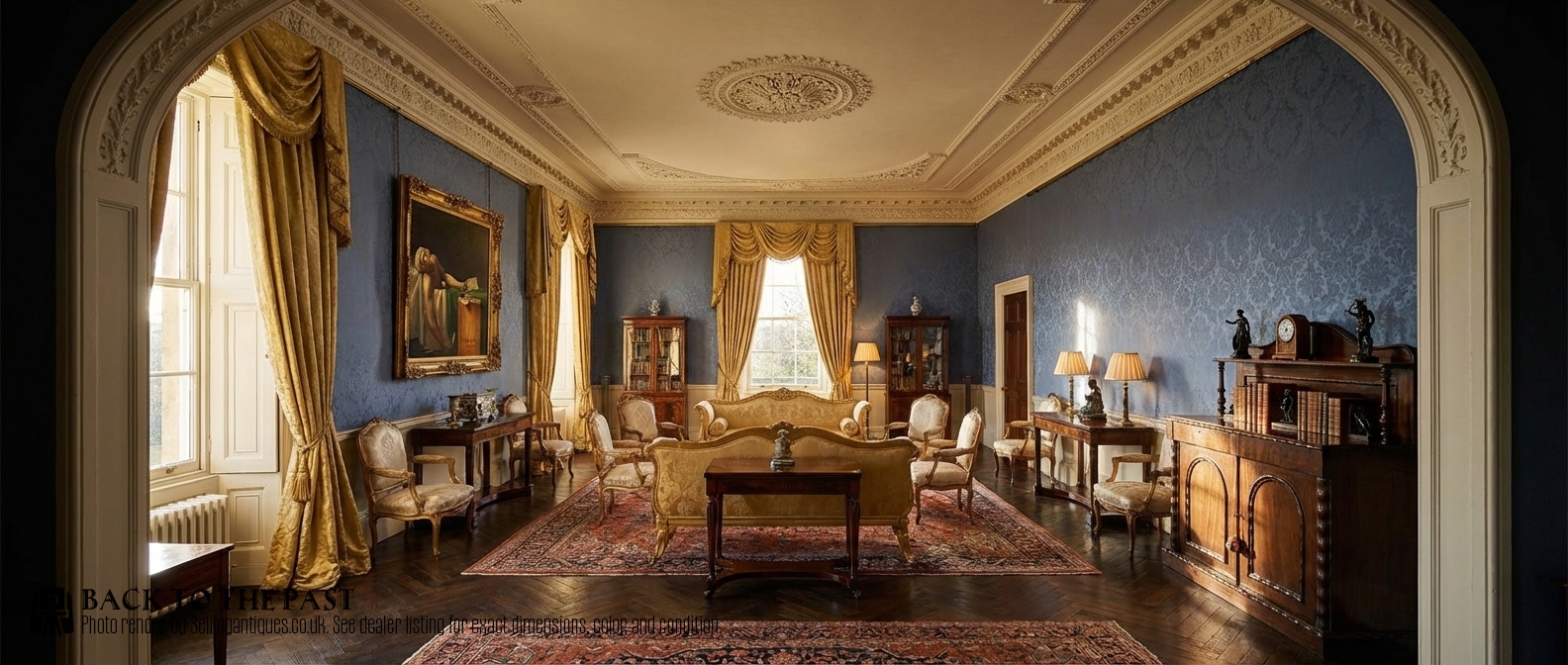
These sideboards and chiffoniers stood principally in nineteenth-century dining rooms, reception rooms, and grand parlours.
They served to store table linens and silverware while displaying choice ceramics upon their upper shelves.