
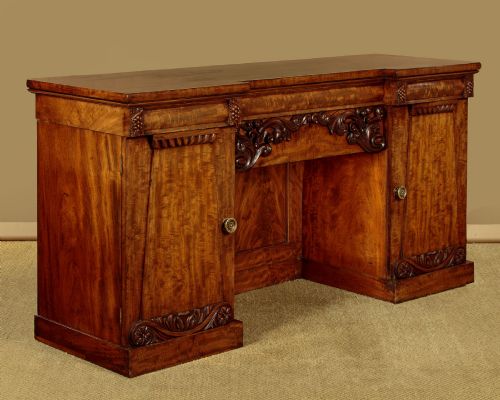
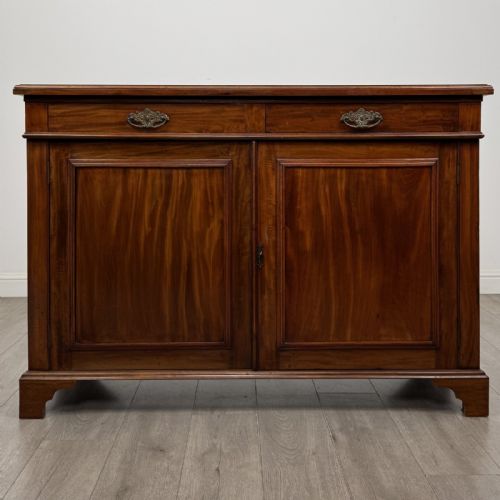
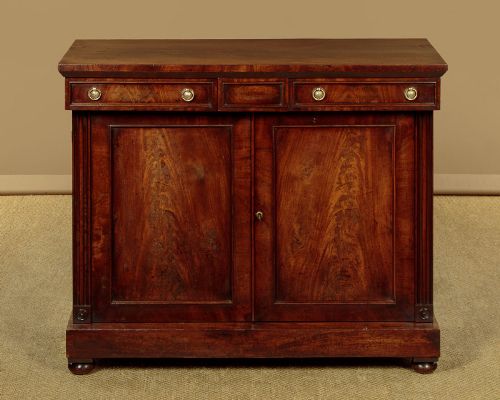
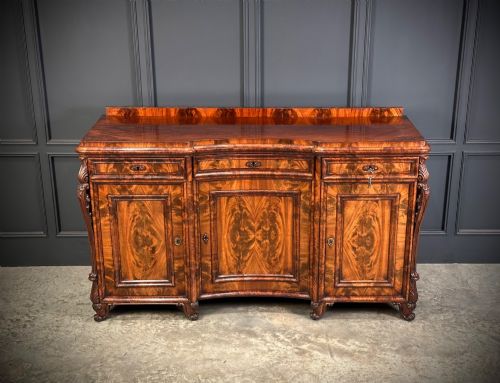
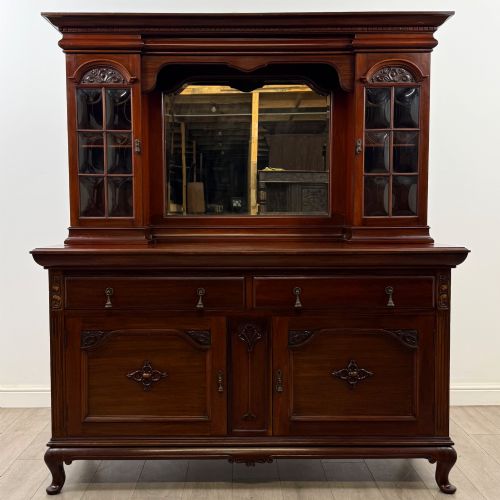
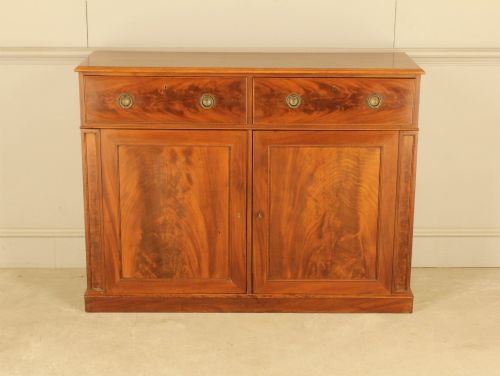
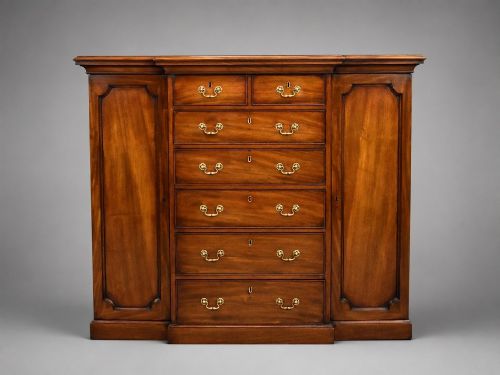
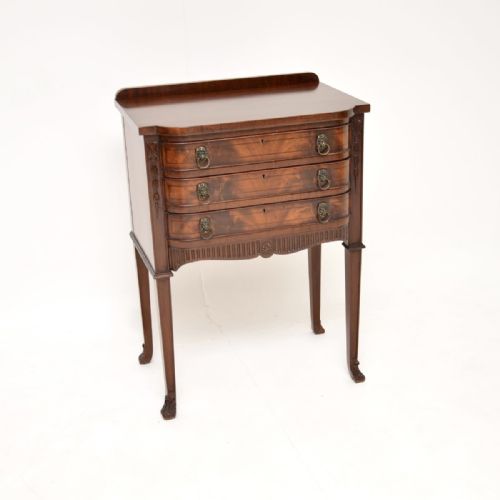
Mahogany Server Cupboard
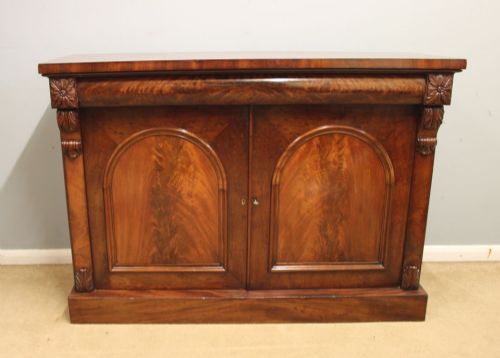
A mahogany server cupboard bridges the dining room and the drawing room, offering deep storage beneath a generous timber top.
Mahogany Server Cupboard
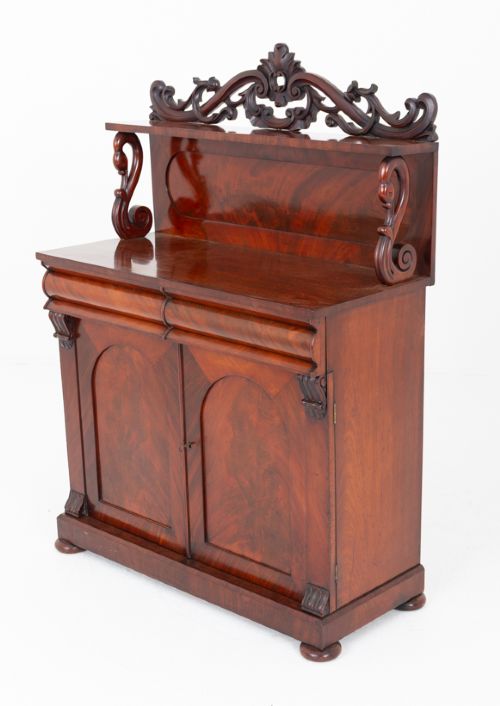
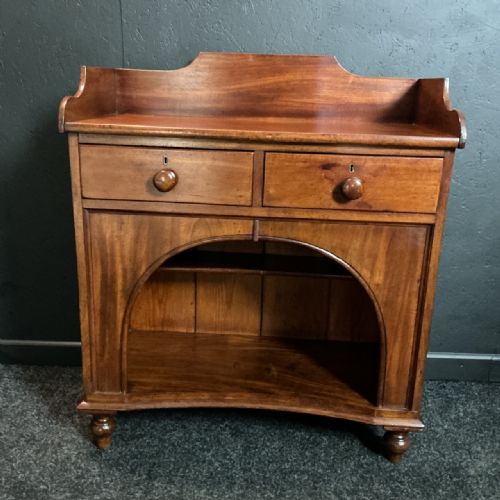
A mahogany server cupboard combines the enclosed storage of a cabinet with the surface utility of a sideboard, appearing frequently across Victorian, Regency, and Georgian periods. These versatile pieces cross categories with chiffoniers, sideboards, and buffets in the current selection, reflecting how dining room storage evolved over time.
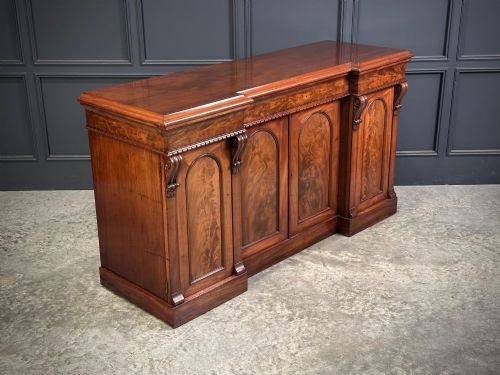
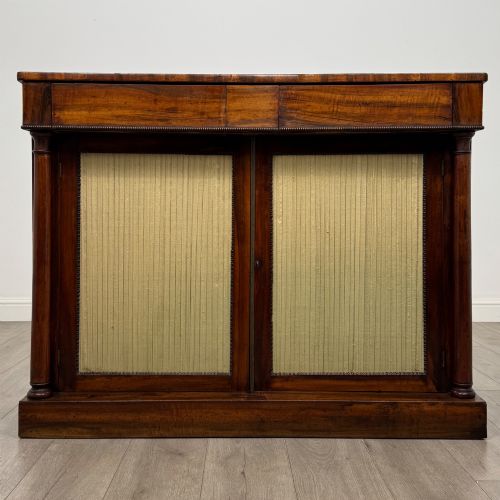
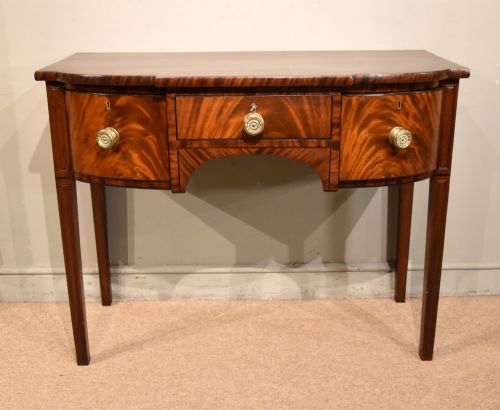
Buyers encounter items ranging from compact two-door chiffoniers to grand breakfront sideboards and bowfront cabinets. The form adapts from early nineteenth-century pedestal designs to Edwardian interpretations, maintaining timber construction as its defining characteristic.
Materials and construction
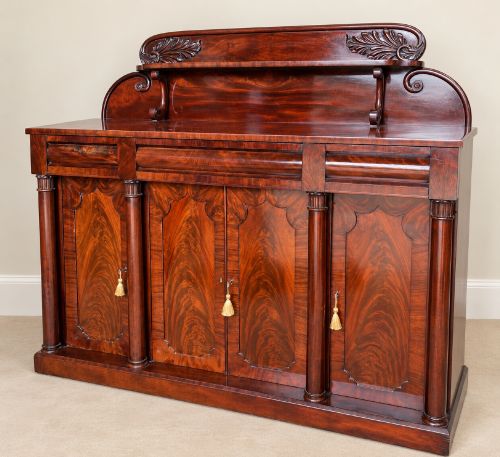
Cabinet makers utilised solid mahogany alongside figured veneers like flame and curl mahogany to create depth and movement across large door panels and drawer fronts. Brass hardware, including handles, key escutcheons, and gallery rails, provides functional contrast to the dark timber.
Internal elements sometimes incorporate glass, marble tops, and fabric-backed shelving, particularly in French and Edwardian variants. Carved details and inlaid borders define stylistic revivals from the Sheraton and Adam traditions.
Listings feature mahogany server cupboards spanning the Georgian, Regency, Victorian, and Edwardian eras, incorporating marble, glass, and brass.
Distinctions in quality
The selection of timber grain drives visual distinction, where highly figured flame mahogany veneer sets higher tier pieces apart from plain stock. Book-matching across multiple doors demonstrates deliberate planning by the cabinet maker.
Structural integrity reveals itself in the weight of the timber and the precision of the joinery on bowfront and breakfront carcases. Original brass fittings and well-fitted internal shelving indicate a higher grade of production.
The Mahogany Server Cupboard Glossary
- Chiffonier
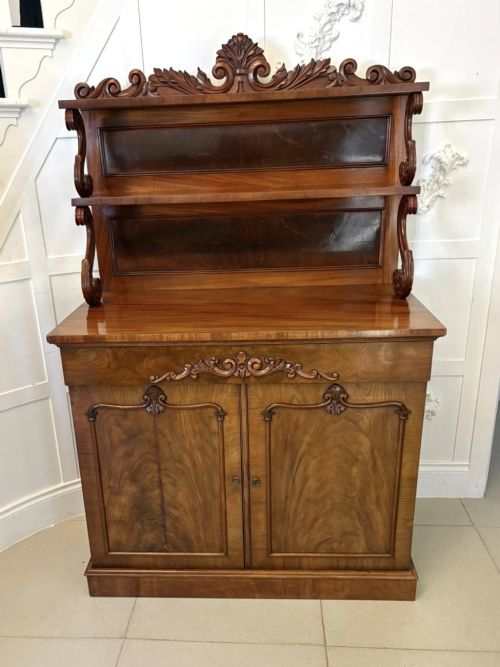
- A low sideboard or cupboard, often featuring a shelfed superstructure on top, popular during the Regency and Victorian eras. These pieces served to store glassware and dining accessories.
- Bowfront
- A convex, curved front profile that projects outward in an arc, frequently seen on Georgian and Edwardian server cupboards. This shape softens the room's geometry while adding internal depth.
- Breakfront
- A cabinet design where the central section projects forward from the flanking outer sections. This architectural arrangement creates shadow lines and varied depths across the piece.
- Escutcheon
- A flat plate of brass surrounding a keyhole to protect the surrounding timber from wear. They range from simple geometric shapes to elaborate cast brass designs.
Mahogany Server Cupboard: Frequently Asked Questions
What is a server cupboard?
A server cupboard is a low dining room storage unit designed for holding serving dishes, cutlery, and linens. It provides a flat top surface for presenting food or drinks during meals.
These pieces bridge the gap between large sideboards and smaller side cabinets, suiting both formal dining spaces and modern living rooms.
How do I date a mahogany cupboard?
Dating relies on stylistic clues such as the presence of Regency reeding, Victorian proportions, or Edwardian inlaid decoration. Construction methods and secondary timbers inside drawers also provide chronological markers.
Purchasing records show these items span from the George III period through the early twentieth-century revival eras.
Where should I place a chiffonier?
A chiffonier works well in a dining room for tableware or in a hallway as a statement piece with a mirror or painting above it. Its shallow depth compared to a full sideboard makes it practical for tighter spaces.
The enclosed lower cupboards keep everyday clutter hidden while the top surface displays decorative objects.
What is flame mahogany?
Flame mahogany is a specialised wood veneer sliced from the junction where a branch meets the main trunk. This cutting method reveals wild, undulating grain patterns that resemble flickering fire.
Cabinet makers used this figure selectively on primary surfaces like doors and drawer fronts to catch the light.