

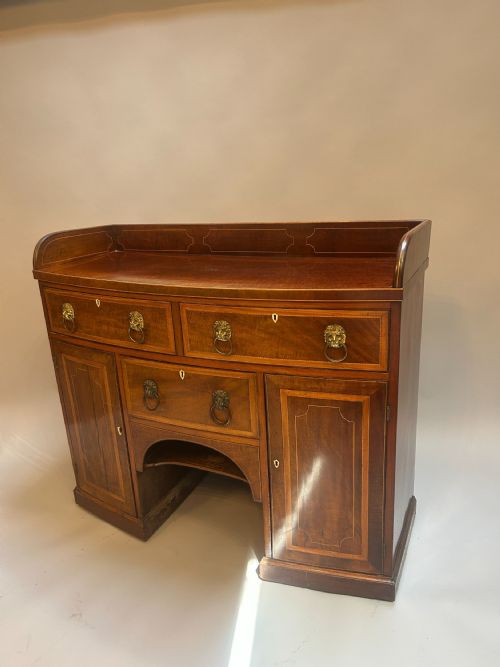
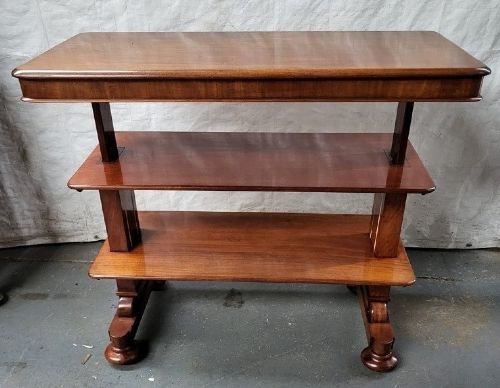


Nineteenth Century Mahogany Sideboard
A nineteenth century mahogany sideboard anchors a dining room with rich timber and practical storage, offering enduring utility for the serious collector.
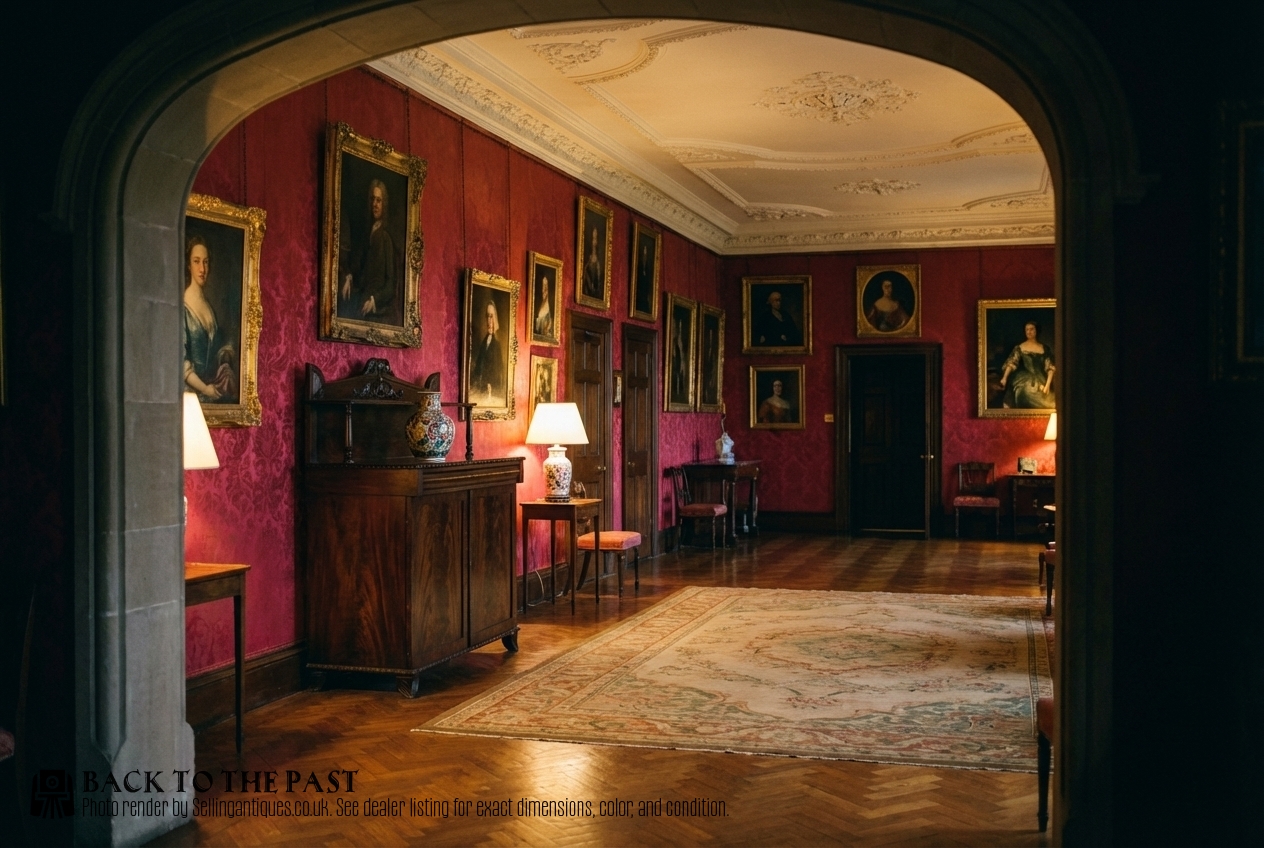
What a nineteenth century mahogany sideboard is
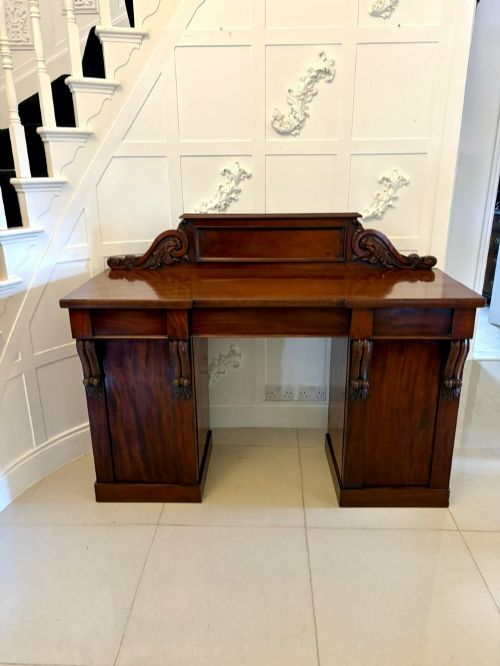
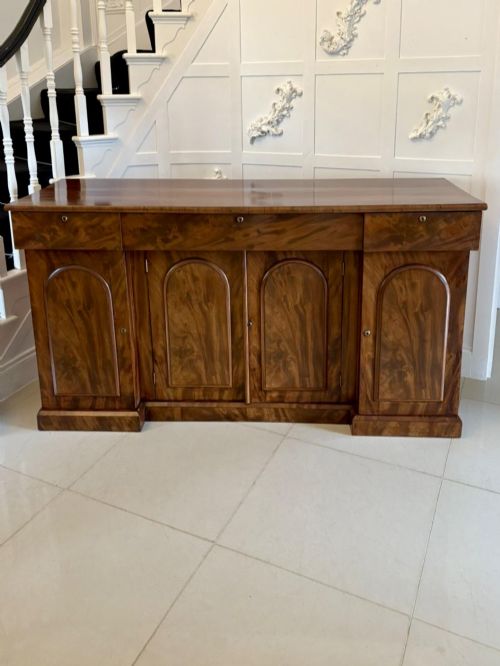
A nineteenth century mahogany sideboard provides substantial surface space and cabinetry for a dining room, uniting formal design with everyday utility. These items appear across Regency and Victorian periods, taking forms from side cabinets to expansive chiffoniers and buffets.
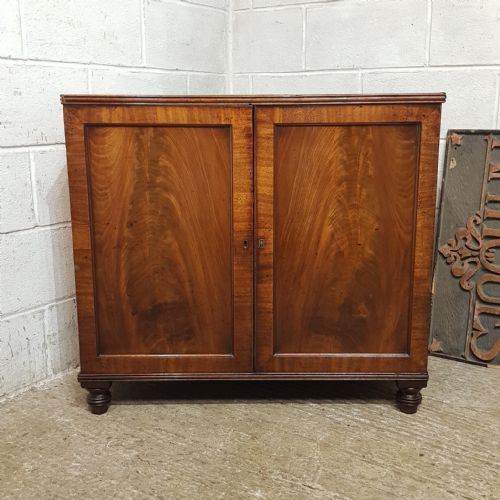
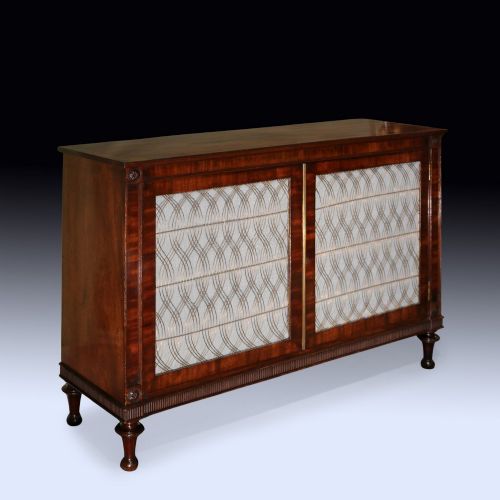
The pieces on this page span Regency and Victorian eras, including distinct sideboards, side cabinets, and chiffoniers. Buyers frequently encounter two-door and four-door formats, alongside serpentine fronts and neat-sized variations suited to diverse interiors.
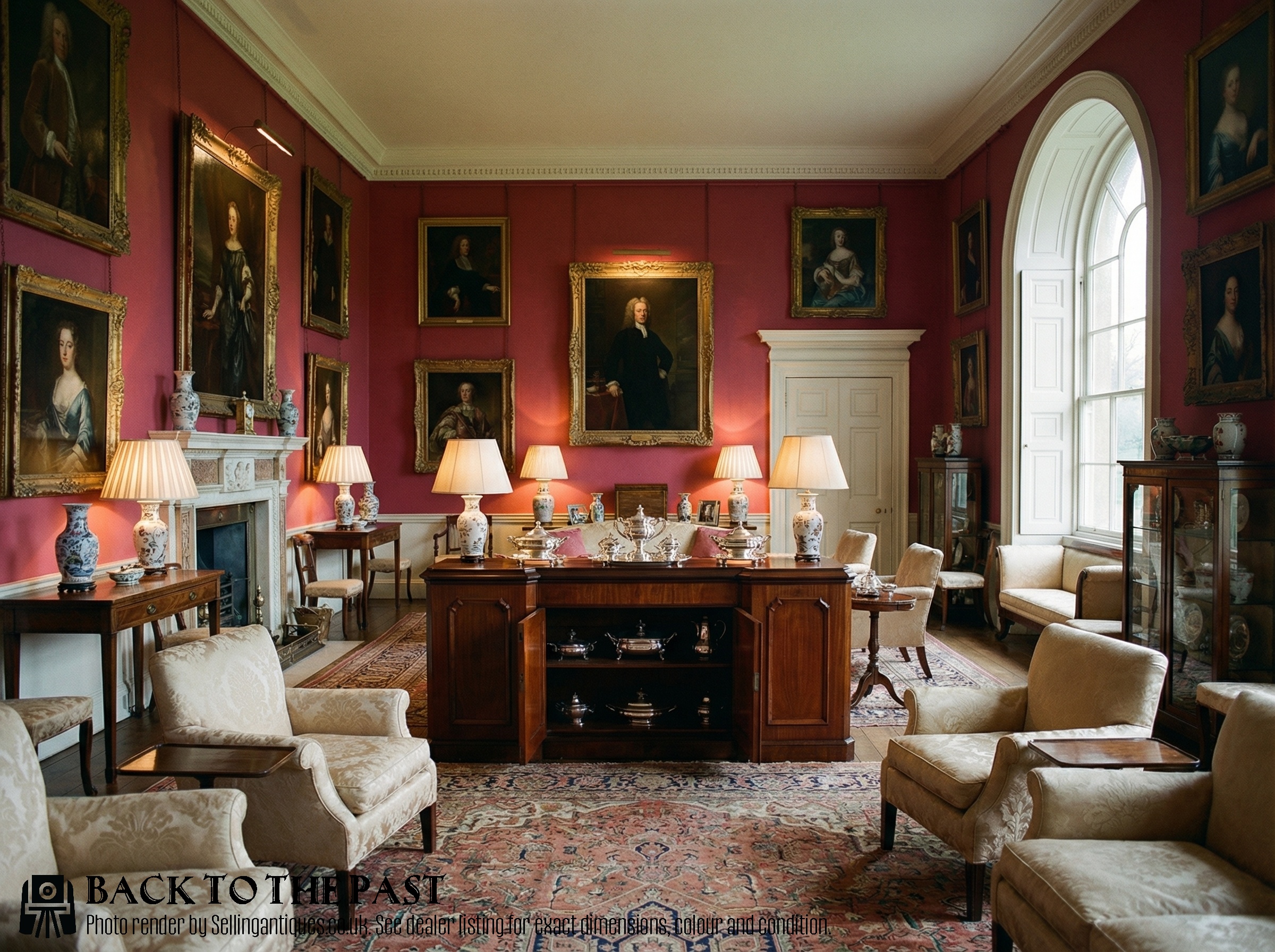
How they were made
Construction relies heavily on solid mahogany and mahogany veneer, often enhanced by striking flame mahogany figures for visual depth. Cabinetmakers selected these dense timbers to create stable structures capable of bearing heavy display objects.
Fine decorative detailing incorporates contrasting boxwood inlay and polished brass hardware, while certain pieces integrate fabric panels or marble tops. These materials reflect traditional cabinet-making methods of the nineteenth century, combining structural robustness with refined surface ornament.
Retail Price Guide 2026
Typical UK retail prices for nineteenth century mahogany sideboard, calculated from the Sellingantiques database of over a million retail prices indexed since 2003. This retail price guide relies exclusively on Sellingantiques data; no external sources or auction records are used, so the figures do not describe the wider market.
What varies in quality
Quality rests upon the choice of timber figure and the precision of decorative inlay. Pieces featuring highly figured flame mahogany or delicate boxwood work represent the upper tier of craftsmanship, showing superior selection of raw materials.
Proportion and architectural balance further distinguish finer examples from standard production. A neat, well-scaled sideboard with harmonious door arrangements and integrated brass fittings demonstrates greater design discipline.
The Nineteenth Century Mahogany Sideboard Glossary
- Flame mahogany
- A veneer cut from timber where the branch meets the trunk, creating a fiery, undulating pattern. This figure is prized for its dramatic visual movement across large cabinet doors.
- Chiffonier
- A compact sideboard or low cabinet equipped with drawers and doors, often featuring a raised shelf superstructure. It gained popularity during the Regency and Victorian periods for smaller dining spaces.
- Serpentine front
- A piece of furniture featuring a convex central section flanked by two concave curves. This undulating shape requires advanced woodworking skill to construct accurately in solid mahogany.
- Boxwood inlay
- Narrow strips of pale wood inserted into dark mahogany surfaces to create linear borders or geometric motifs. It provides sharp visual contrast against the deep reddish-brown timber.
Frequently Asked Questions
How do I clean mahogany?
Dust surfaces regularly with a soft, dry cloth to prevent dirt accumulation on the timber and veneer.
Apply a quality beeswax periodically to nourish the mahogany and maintain a natural, soft sheen without building up heavy chemical residues.
Where should I place it?
Position the cabinet against a sturdy dining room wall away from direct heat sources and strong sunlight.
Keep the timber stable by avoiding damp environments, which can damage mahogany veneer and weaken internal frame joints.
What is a chiffonier?
A chiffonier is a specific type of side cabinet featuring lower enclosed storage paired with a compact footprint.
These pieces emerged to serve urban dining rooms where full-sized buffets proved too large for the available floor space.
How do I spot Regency style?
Regency design typically exhibits clean architectural lines, classical restraint, and subtle boxwood inlay details.
Proportions remain balanced and elegant, avoiding the heavier ornamentation associated with later Victorian production.