


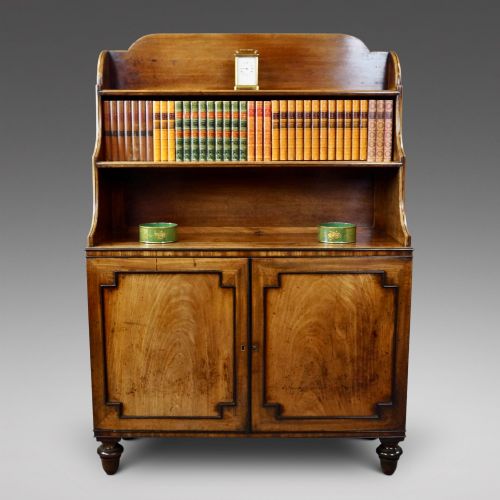
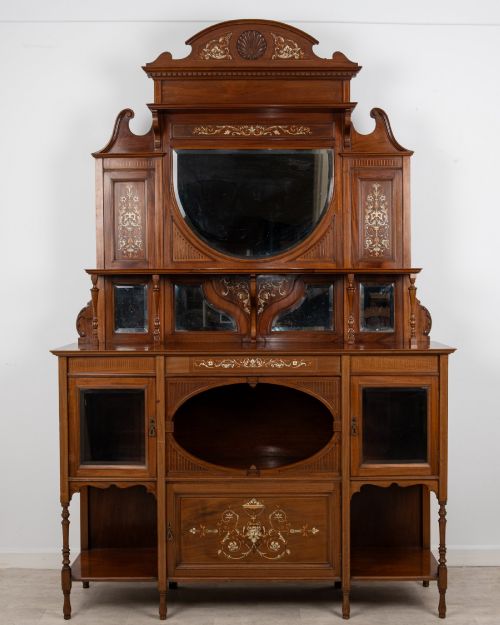


Brown Wooden Chiffonier
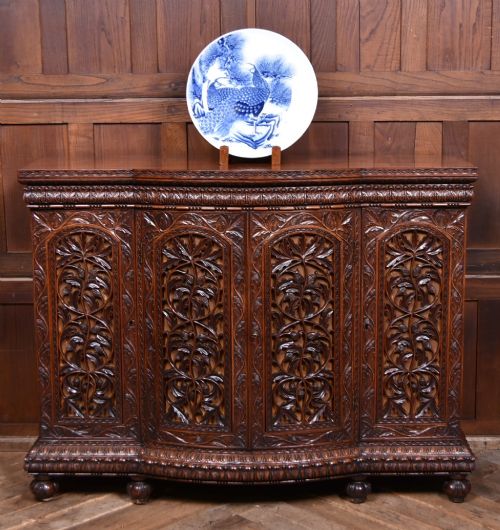
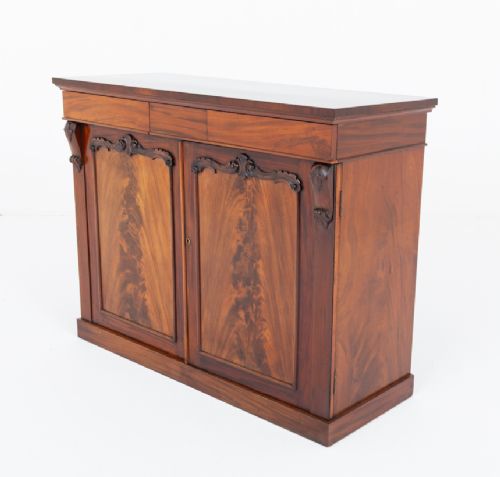
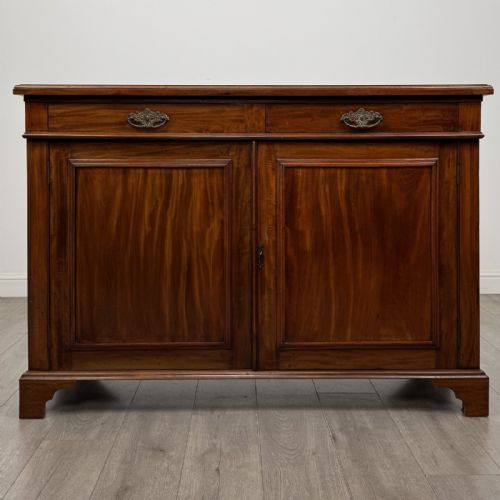
A brown wooden chiffonier offers practical storage with a distinct nineteenth-century silhouette, making it a functional centrepiece for a dining room or hall.
Brown Wooden Chiffonier
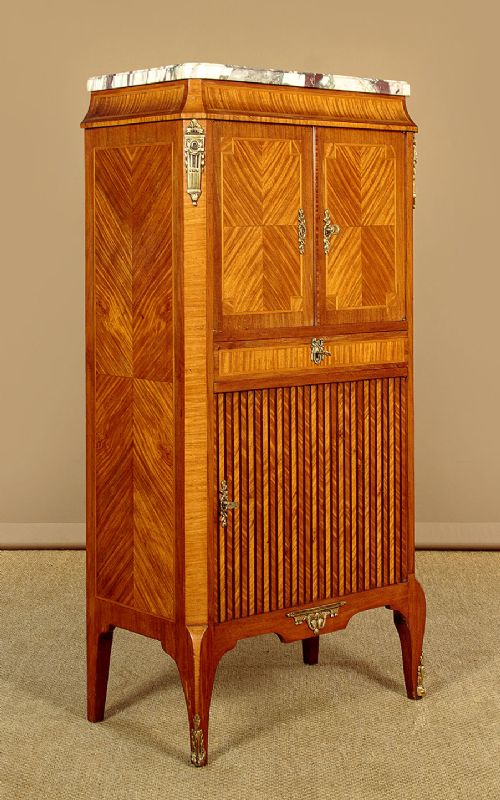
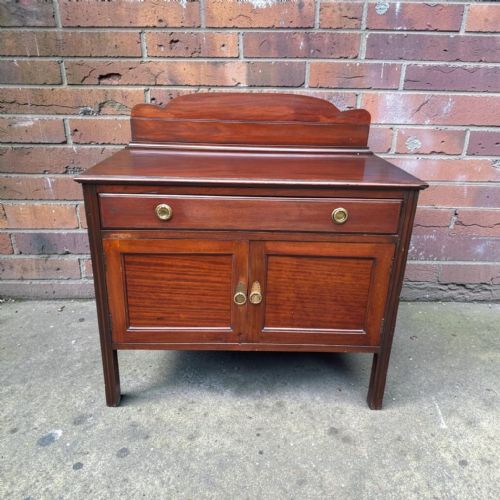
A brown wooden chiffonier is a low sideboard or side cabinet designed primarily for nineteenth-century parlours and dining rooms. The pieces gathered here span periods from the Georgian era through to the Edwardian period, with the Victorian iterations appearing most frequently alongside Regency and William IV examples.
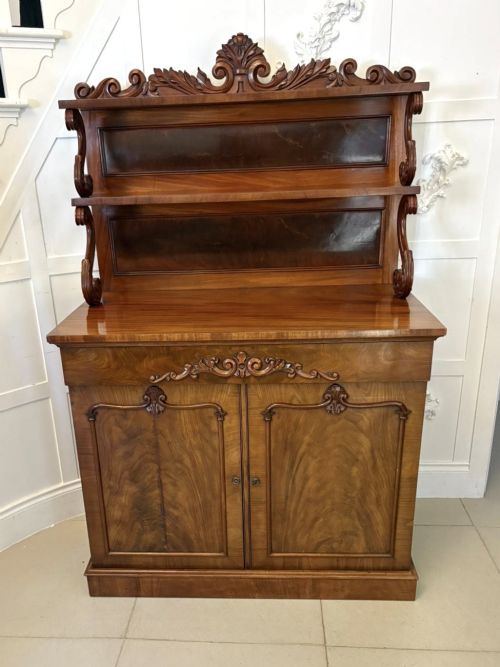
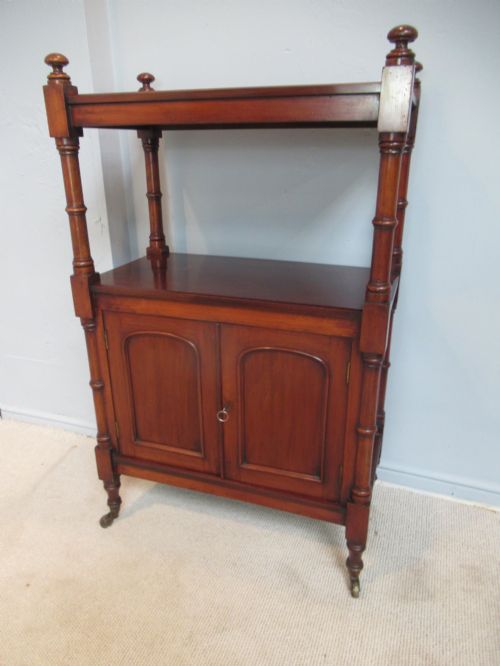
Most entries take the form of enclosed cupboards beneath open shelving or a tiered superstructure, while others present as sideboards, buffets or mirror-backed cabinets. Timber selection defines the category, moving from standard mahogany through to figured veneers, burr walnut and pollard oak.
How they were made
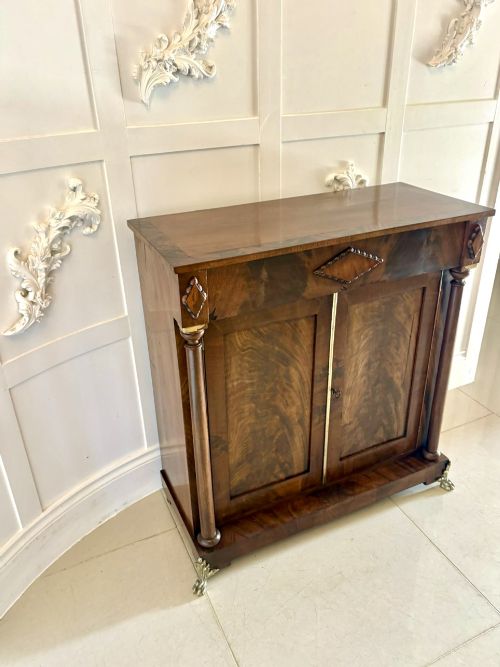
Cabinetmakers relied heavily on solid mahogany and oak as structural timbers, applying flame mahogany, burr walnut, amboyna or goncalo alves veneers to visible surfaces. These decorative veneers were carefully cut and laid to create striking grain patterns across the primary doors and drawers.
Secondary materials such as brass fittings, mirrored glass panels and fabric inserts appear across the nineteenth-century examples to accent the timber frames. Joinery methods combined traditional carcase construction with delicate inlay work in contrasting woods.
Brown Wooden Chiffonier Retail Price Guide 2026
Typical asking prices for brown wooden chiffonier among the pieces listed under this phrase on Sellingantiques today, from the lower quarter to the upper quarter. They describe what is for sale here now, not the wider market.
Some nineteenth-century makers included secret compartments behind the columns, giving discrete storage for house keys or ledgers.
What varies in quality
Quality rests chiefly in the choice of timber figure and the precision of the veneer matching on the cabinet doors. Finer examples display highly figured flame mahogany or burr walnut with consistent grain continuity across the front elevation.
The sophistication of the carved details, such as console supports, turned columns or applied mouldings, separates standard utility furniture from exceptional cabinet work. Proportion also dictates standing; neat, compact proportions command greater appreciation than heavier, unrefined carcases.
The Brown Wooden Chiffonier Glossary
- Chiffonier
- A low sideboard or cabinet, typically featuring enclosed lower doors and often topped with shelves or a mirror. It evolved during the nineteenth century as a useful dining room piece.
- Flame Mahogany Veneer
- A thin slice of mahogany timber cut from the fork of the tree where branches meet. This produces a flamelike pattern highly prized by cabinetmakers.
- Goncalo Alves
- An exotic dense tropical timber with striking dark brown and light brown contrasting markings. It was occasionally selected for high-status Regency side cabinets.
- Pollard Oak
- Timber taken from a tree that has been pruned close to the trunk to encourage dense, gnarled branching. The resulting wood displays a speckled, swirling grain pattern.
- Whatnot
- A piece of freestanding furniture consisting of a set of open shelves for displaying ornaments. It is frequently incorporated into the superstructure of Victorian chiffoniers.
Brown Wooden Chiffonier: Frequently Asked Questions
What is a chiffonier?
A chiffonier is a compact nineteenth-century cabinet combining lower enclosed storage with upper display shelves or a mirror. It served smaller drawing rooms where a full-sized sideboard proved too large.
Cabinetmakers built them primarily in mahogany, walnut and oak, adapting their ornamentation to suit shifting Georgian, Regency and Victorian tastes.
How do I date a chiffonier?
Dating relies on identifying stylistic markers and timber choices. Regency and William IV pieces often feature bold architectural columns and exotic veneers, while Victorian examples introduce mirror backs and elaborate marquetry inlay.
Construction methods also shift across the decades, moving from hand-cut dovetails in earlier pieces to machine-assisted joints by the late nineteenth century.
Where should I place a chiffonier?
These cabinets suit dining rooms, hallways or living spaces where surface display and concealed storage are both required. Their shallow depth allows them to sit comfortably against walls in narrow circulation areas.
Pairing a timber chiffonier with older furniture echoes its nineteenth-century origins as a practical utility piece for domestic interiors.
How do I care for mahogany?
Maintain mahogany surfaces by dusting gently with a dry, soft cloth and avoiding silicone-based polishes. Keep the timber away from direct sunlight and strong heat sources to prevent the veneer from drying and lifting.
Applying a traditional beeswax occasionally helps nourish the grain and preserve the warm lustre of the wood.