

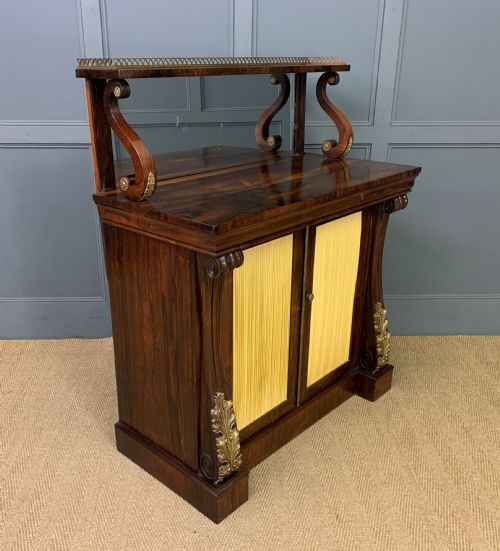

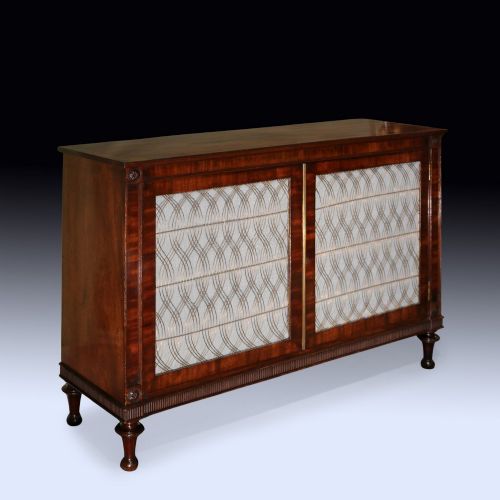
Regency Period Side Cabinet
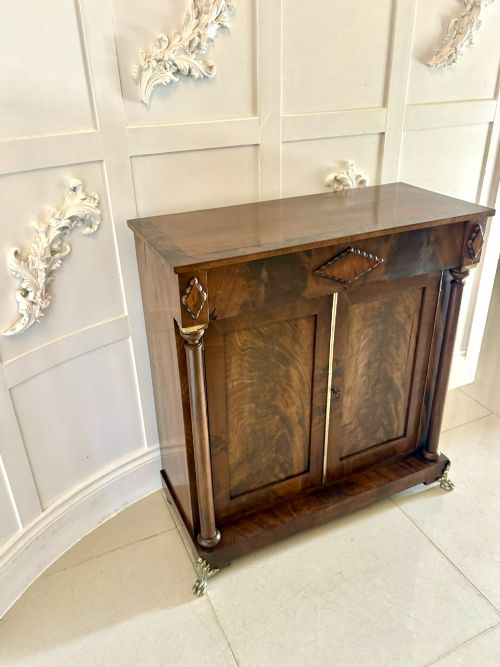
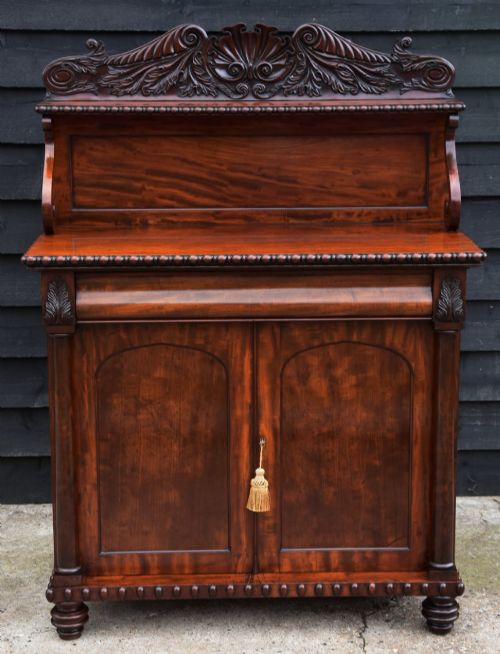
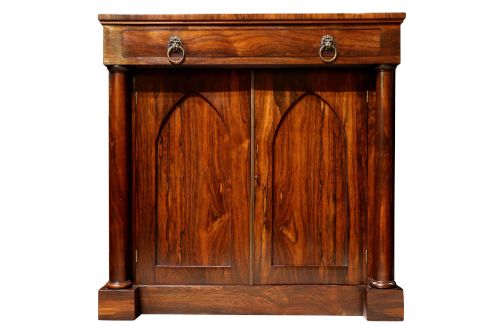
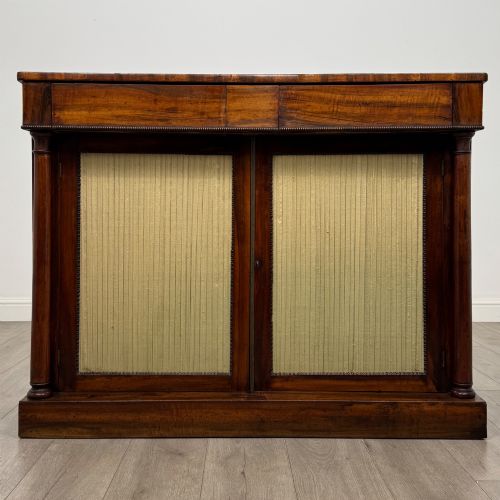
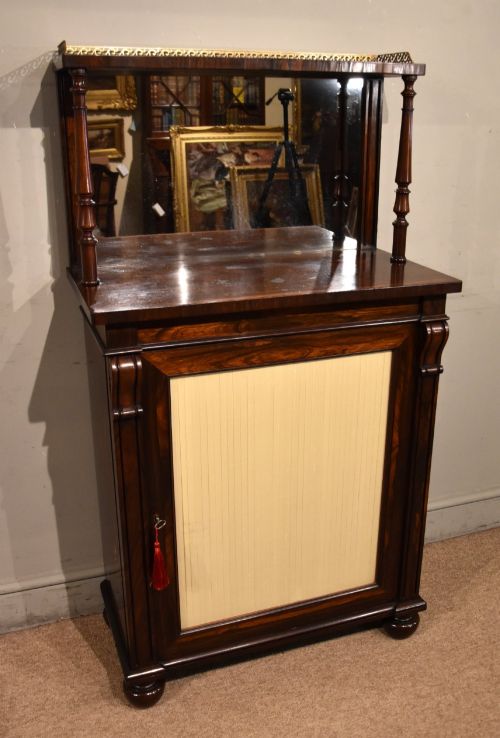
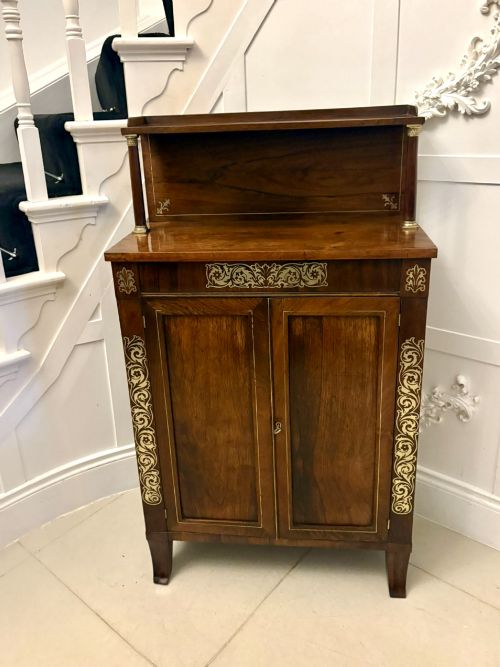
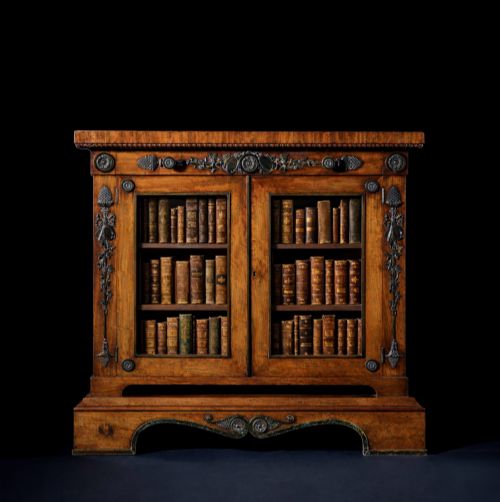
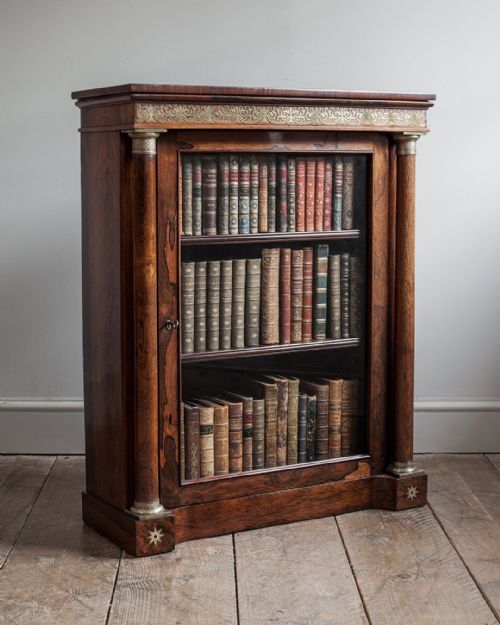
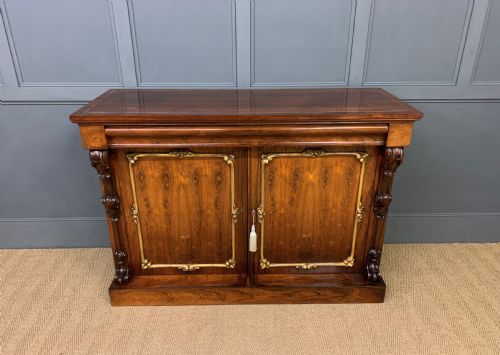
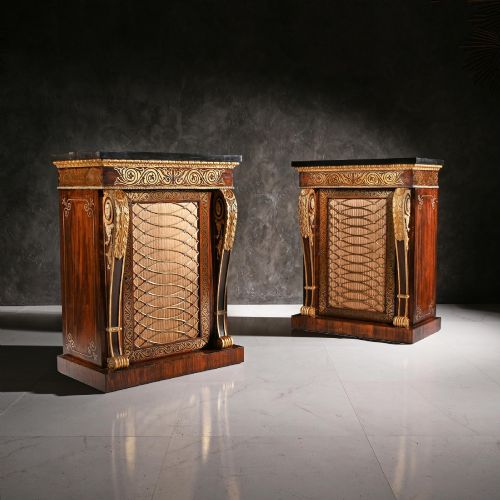
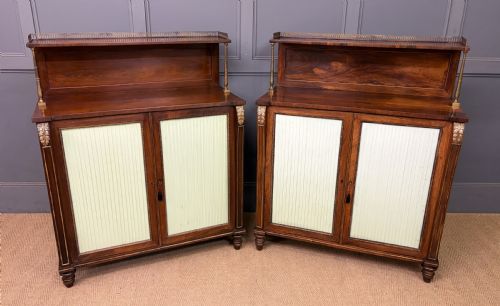
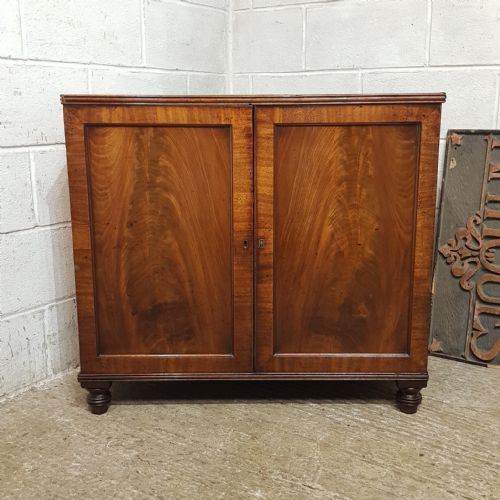
These pieces are a regency period side cabinet, built for formal storage and display with classical lines.
Identifying a regency period side cabinet
A regency period side cabinet stands as a formal piece of furniture designed for storage and surface display within the principal rooms of a house. When you search for a regency period side cabinet, you encounter forms that serve similar domestic functions to chiffoniers and low storage units.
The versions you are most likely to meet on this page span the Regency period itself as well as the Victorian era and the broader nineteenth century. These pieces appear in forms such as side cabinets, chiffoniers, bedside cabinets, and breakfront cabinets.
Makers and workshops constructed these items in mahogany, rosewood, and simulated rosewood, often incorporating brass inlay, giltwood, fabric panels, and mirror glass. The selection ranges from neat-sized single-door cupboards to paired cabinets and marble-topped variants.
Materials and construction
Cabinet makers built the primary carcase and doors using solid and figured mahogany or rosewood veneers over secondary timbers. They applied brass inlay, brass mounts, and brass grill doors to accent the dark grain of the wood.
Surfaces frequently feature additions of marble, glass mirror plates, and fabric linings behind doors. Simulated rosewood surfaces demonstrate surface painting techniques used to mimic expensive timbers.
Retail Price Guide 2026
Typical UK retail prices for regency period side cabinet, calculated from the Sellingantiques database of over a million retail prices indexed since 2003. This retail price guide relies exclusively on Sellingantiques data; no external sources or auction records are used, so the figures do not describe the wider market.
One neat-sized bedside cabinet arrived with a tray-top, ready to catch any rolling midnight essentials.
Distinctions in quality
The standard of a regency period side cabinet depends upon the selection of timber veneers, such as figured mahogany or rich rosewood, and the precision of the brass inlay work. Pieces that integrate materials like marble tops or detailed brass grills sit at a different level from plain timber carcases.
Execution of brass mounting and the survival of original brasses distinguish higher grade examples. The proportion and neatness of sizing also influence the distinction between standard utilitarian cupboards and finer reception room pieces.
Pitcher
The Regency Period Side Cabinet Glossary
- Chiffonier
- A low sideboard or cabinet featuring shelves or a raised superstructure, commonly fitted with fabric-backed doors.
- Breakfront
- A cabinet design where the central section projects forward from the flanking outer sections.
- Simulated rosewood
- A painted surface finish designed to imitate the grain and colour of genuine rosewood timber.
- Giltwood
- Timber that has been coated with gold leaf or a gold-coloured finish for decorative effect.
- Tray-top
- A raised rim surrounding the upper surface of a cabinet or table to prevent items from rolling off.
Frequently Asked Questions
What is a regency period side cabinet?
A regency period side cabinet is a low storage unit designed for formal reception rooms during the early nineteenth century. These pieces provide surface display space alongside enclosed shelving behind doors.
They often incorporate brass inlay, fine mahogany or rosewood timbers, and sometimes marble tops or mirror glass. The form overlaps closely with chiffoniers and low sideboard storage.
How were these cabinets used?
Original domestic use involved storing tableware, linens, or books in formal dining rooms and drawing rooms. The flat top surface allowed for the display of decorative objects, lamps, or serving items.
Bedside variants provided enclosed storage for personal items within sleeping chambers. Larger breakfront examples served as principal display and storage furniture in larger reception spaces.
How do I live with one?
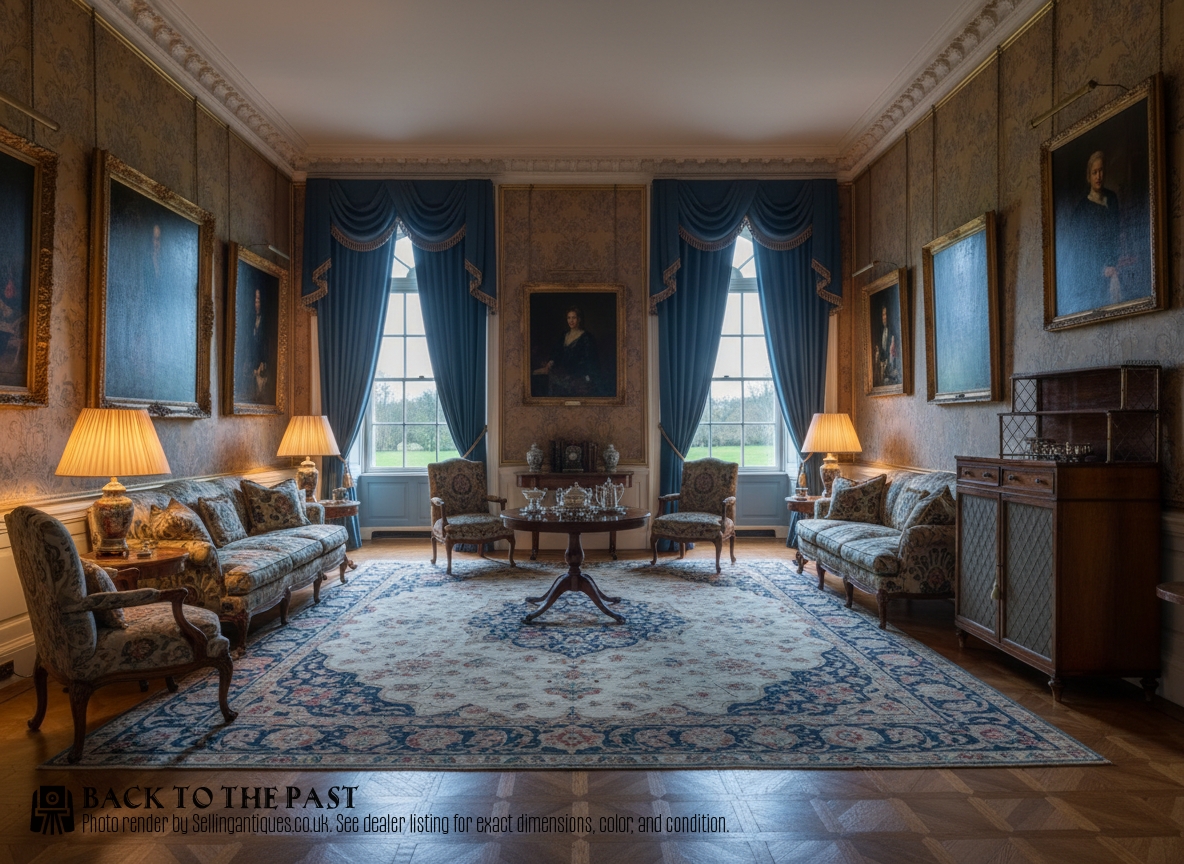
Integrating a regency period side cabinet into a modern room works well when it is placed against a plain wall where its timber grain and brass details can be seen. The top surface provides a practical platform for lamps, books, or plants.
Care involves keeping timber away from direct heat sources and sunlight to protect rosewood and mahogany finishes. Regular dusting with a dry cloth maintains the polish of the wood and metal mounts.
How do I tell periods apart?
Pieces from the Regency era itself display classical proportions and specific wood choices like figured mahogany and rosewood with precise brass inlay. Victorian interpretations often exhibit slightly heavier proportions or neat-sized adaptations made later in the nineteenth century.
Examining the secondary timbers, construction joints, and the style of brass mounts helps distinguish pieces made around eighteen hundred from those produced decades later.