

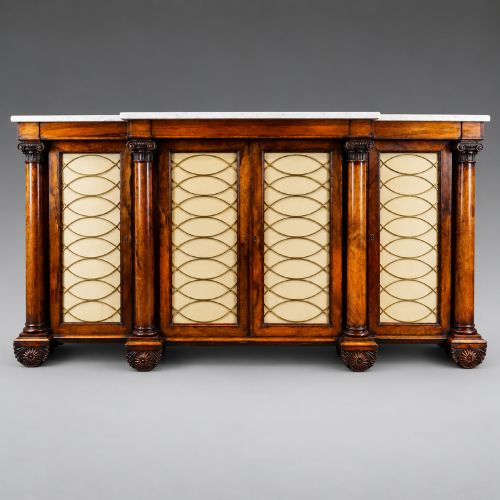
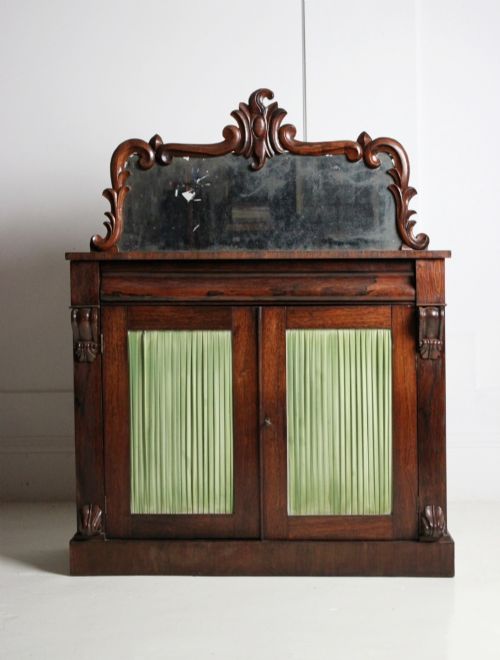
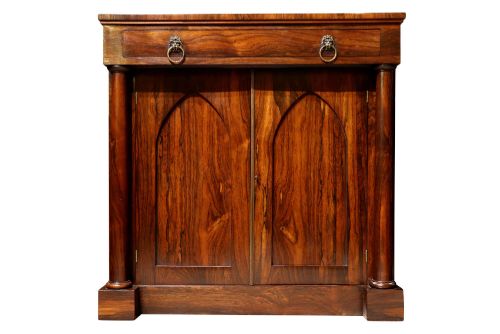
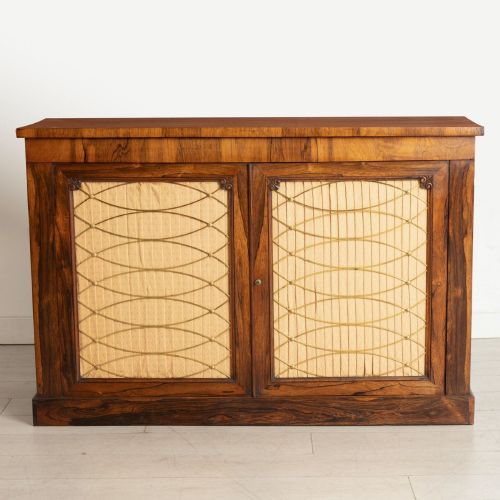

Regency Rosewood Chiffonier
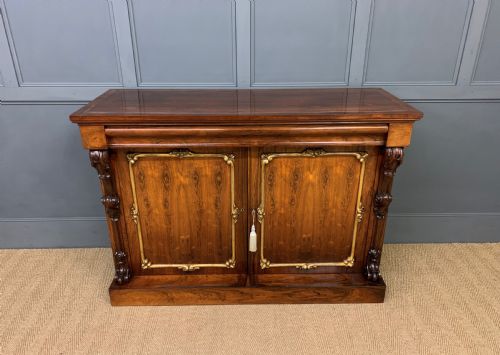
When you select a regency rosewood chiffonier, you acquire a sophisticated low cabinet combining display and concealed storage from the early nineteenth century.
Regency Rosewood Chiffonier
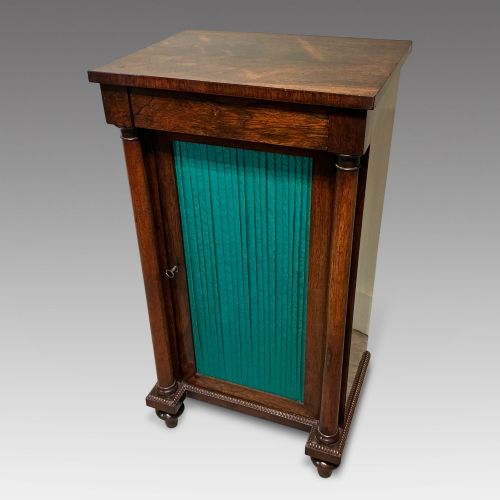
A regency rosewood chiffonier is a compact low sideboard or cabinet featuring a combination of enclosed lower cupboards and often upper shelves or a superstructure. These pieces emerge predominantly from the Regency, George IV, and William IV periods, extending into mid-nineteenth-century Victorian interpretations.
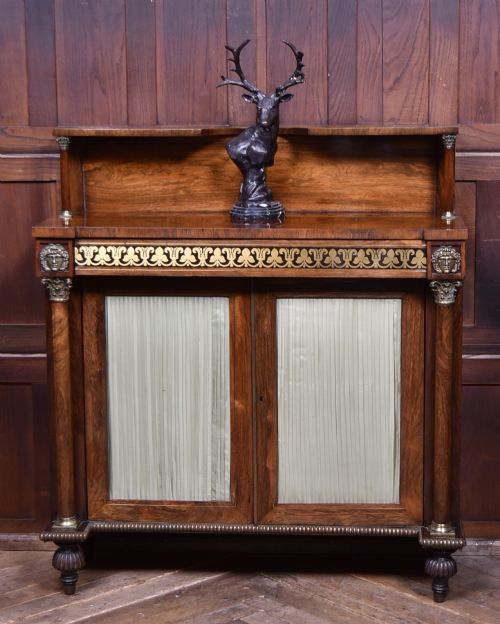
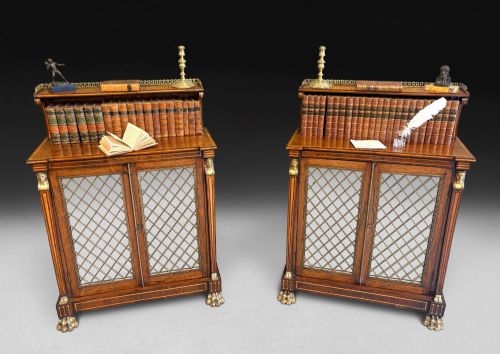
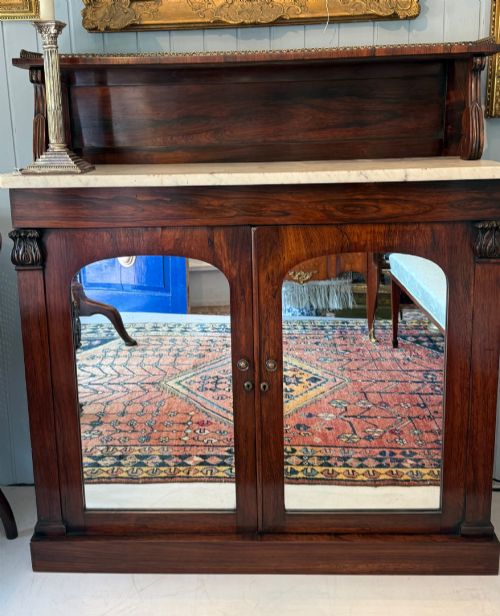
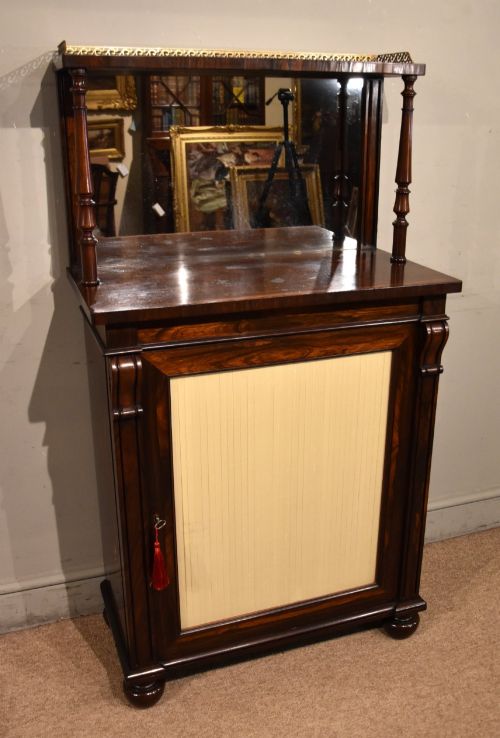
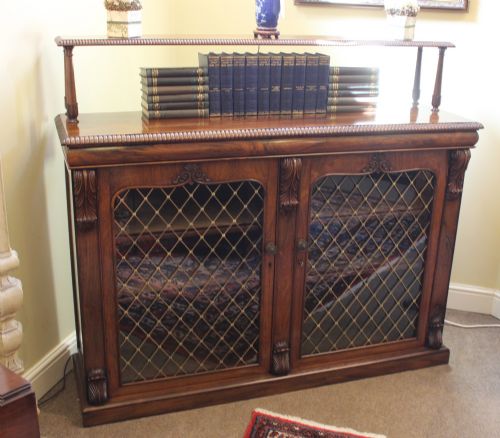
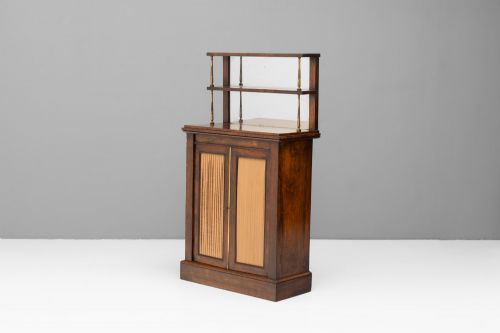
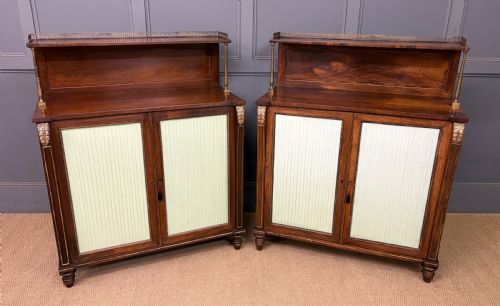
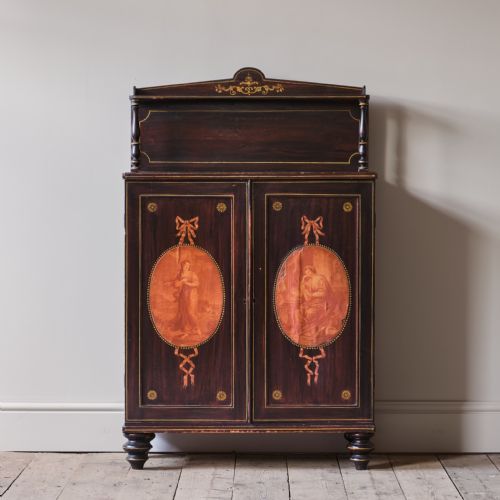
The primary forms found here range from simple two-door storage cupboards to elaborate breakfront cabinets, open bookcases, and examples incorporating matching mirrors or fabric-backed panels. Buyers frequently encounter versions with brass inlay, Gothic panelling, or fine grille-front doors designed for domestic display.

Materials and construction techniques
Cabinet makers utilised dense, richly figured rosewood veneers applied to secondary timbers, frequently complemented by contrasting boxwood or satinwood stringing and elaborate brass inlay. Simulated rosewood paint upon pine also appears, alongside alternative exotic hardwoods like goncalo alabaster or ebony.
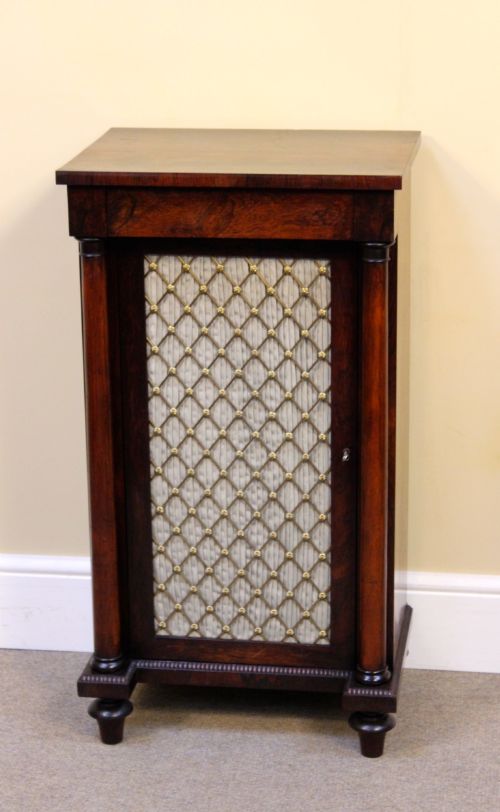
Structural embellishments integrate cast brass mounts, mirror glass panels, marble tops, and silk or fabric pleated door inserts. The architectural framework often reflects classical influences, Egyptian revival motifs, or Gothic panel architecture.
Regency Rosewood Chiffonier Retail Price Guide 2026
Typical asking prices for regency rosewood chiffonier among the pieces listed under this phrase on Sellingantiques today, from the lower quarter to the upper quarter. They describe what is for sale here now, not the wider market.
Materials recorded across current items include brass, silk, marble, mirror glass, fabric, and simulated rosewood paint on pine.
Distinctions in craftsmanship and materials
Quality separates through the natural grain density and symmetry of the rosewood veneers, alongside the precision of brass inlay and joinery. Superior examples demonstrate refined proportions, crisp carving, and original fittings rather than later alterations.
Attribution to documented makers or workshops elevates certain pieces, distinguishing standard cabinet work from high-end metropolitan craftsmanship found in period sideboards and breakfront cabinets.
Gillows·John McClean·William Trotter
The Regency Rosewood Chiffonier Glossary
- Chiffonier
- A low cabinet distinct from a full sideboard, typically featuring lower storage cupboards surmounted by one or more upper display shelves. This form evolved during the early nineteenth century to suit compact drawing rooms.
- Regency
- A stylistic period spanning the early nineteenth century defined by classical restraint, neoclassical motifs, and bold use of exotic veneers. Pieces from this era often incorporate architectural lines and contrasting brass details.
- Goncalo Alves
- A dense, heavily figured exotic hardwood utilised for cabinet making during the Regency era. Its striking dark brown and pale contrasting grain mimics or rivals rosewood.
- Breakfront
- A cabinet configuration where the central section projects forward from the flanking wings. This architectural arrangement creates depth and visual rhythm across larger sideboards and bookcases.
- Superstructure
- The tiered shelving or mirrored assembly rising above the main cabinet top. It provided space for displaying porcelain and decorative objects in nineteenth-century interiors.
Regency Rosewood Chiffonier: Frequently Asked Questions
What is a regency rosewood chiffonier used for?
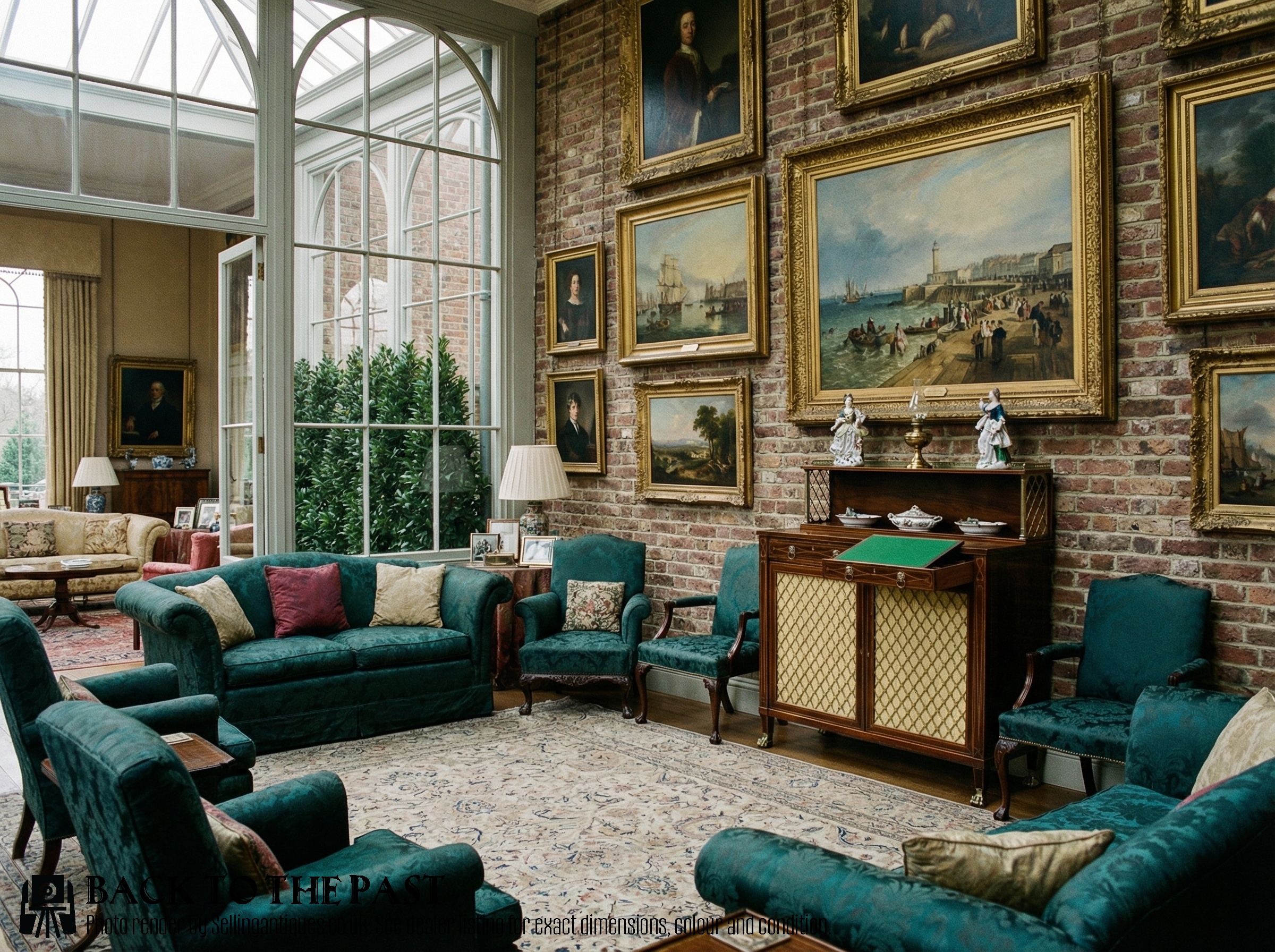
These cabinets served primarily in dining rooms and drawing rooms to store table linen, silver, or documents. The upper shelves provided a convenient surface to display ornamental ceramics and glass.
Today, they function effectively as television stands, sideboards, or decorative storage units in contemporary living spaces, offering practical surface area alongside concealed compartments.
How do you date a rosewood chiffonier?
Dating relies on examining the secondary timbers, construction methods, and stylistic cues such as brass inlay patterns or leg shapes. Regency and George IV examples usually date between eighteen hundred and eighteen thirty.
Later Victorian pieces from eighteen fifty often display heavier proportions or different internal secondary woods compared to their lighter, more restrained early nineteenth-century predecessors.
What is the difference between a chiffonier and a sideboard?
A chiffonier is typically smaller and more compact than a formal dining room sideboard, frequently incorporating upper shelves or a mirror superstructure. Sideboards generally focus purely on wide base storage and serving surfaces.
In domestic settings, chiffoniers were designed for smaller reception rooms, whereas sideboards occupied grander dining spaces.
Are these cabinets made of solid rosewood?
Cabinet makers almost exclusively applied fine rosewood veneers over secondary construction timbers such as mahogany, pine, or oak. This technique prevented warping and allowed craftsmen to display symmetrical, highly figured grain patterns.
Solid rosewood was rarely used for entire large carcasses due to the weight and movement of the dense hardwood.