


Brass Grille Chiffonier
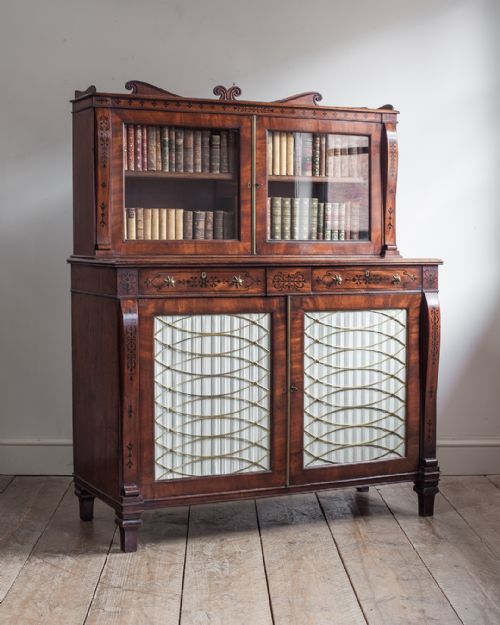
A brass grille chiffonier brings refined storage to a room, combining rich timber with distinctive metalwork to hold books or display objects.

Brass Grille Chiffonier
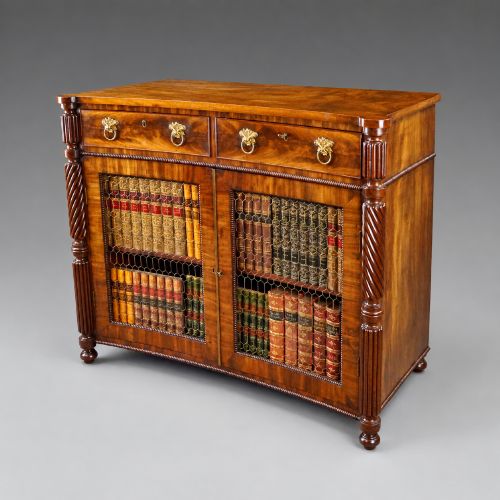
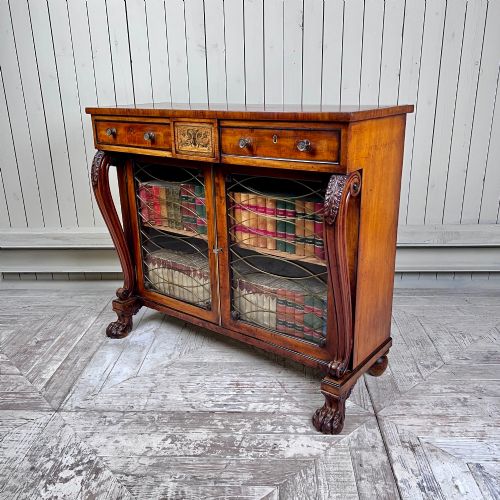
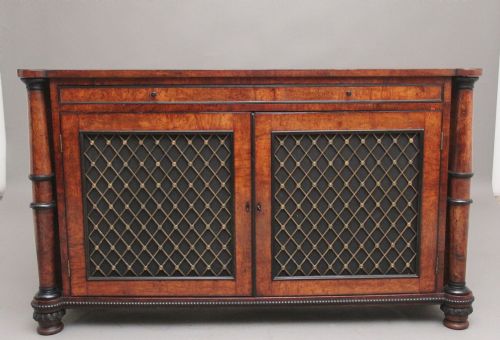
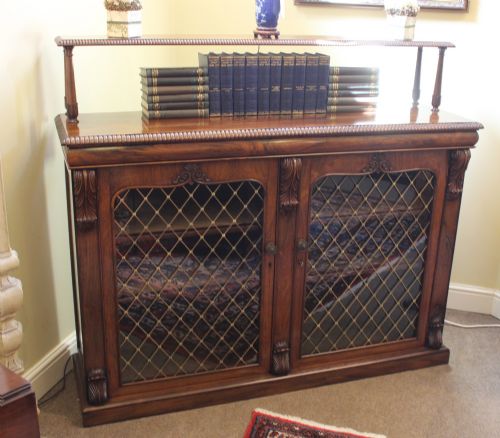
A brass grille chiffonier is a low cabinet designed for the principal living rooms of the house, frequently offering enclosed shelving behind metal mesh doors. These pieces serve as practical sideboards or bookcases where visibility of the interior contents is partially concealed yet subtly permitted.
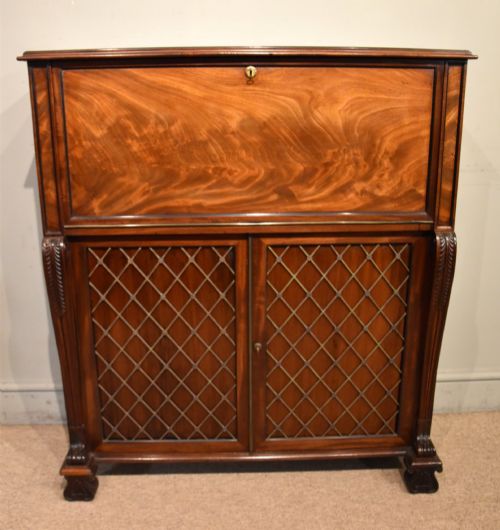
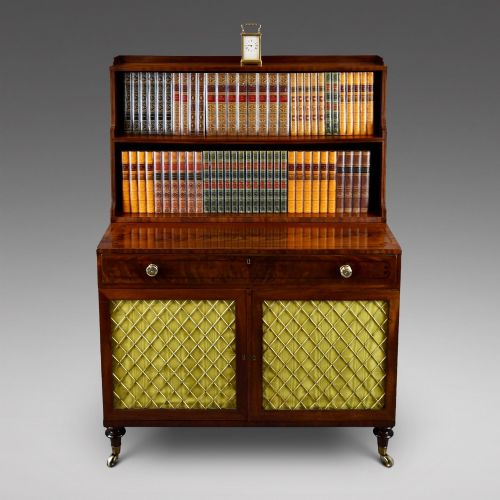
The versions met on this page span the Regency, William IV, and Victorian periods, with rosewood and mahogany serving as the dominant timbers. Makers constructed these cabinets in forms that range from compact two-door units to grand breakfront sideboards equipped with marble tops or secretaire drawers.
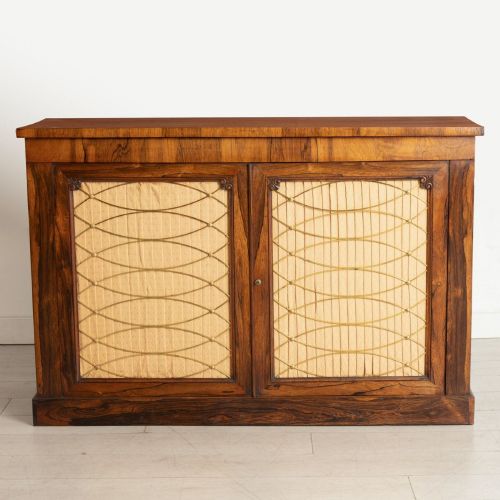
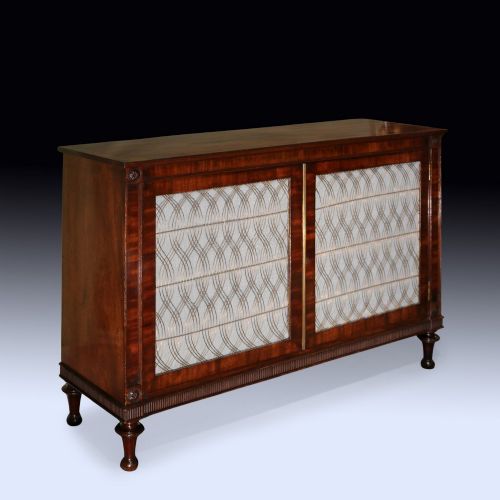
Many examples incorporate fabric behind the brass mesh to further obscure the contents, a traditional method that protects books or papers from dust while softening the visual weight of the metal. The structure typically sits low against a wall, leaving the upper surface free for lamps, ceramics, or decorative objects.
How they were made
Cabinet makers utilised dense hardwoods such as rosewood and mahogany as the foundational structures, often selecting figured veneers to create striking grain patterns across the doors and panels. Ebony stringing and brass inlay frequently accent the primary timber, marking out geometric borders or architectural divisions.
The characteristic grilles consist of woven or pierced brass wire fitted directly into wooden door frames, sometimes backed with pleated fabric to protect the interior. Structural joints relied on traditional cabinet-making techniques, ensuring stability across wide bookcase bases and breakfront side cabinets.
Brass Grille Chiffonier Retail Price Guide 2026
Typical asking prices for brass grille chiffonier among the pieces listed under this phrase on Sellingantiques today, from the lower quarter to the upper quarter. They describe what is for sale here now, not the wider market.
Listings feature cabinets spanning the Regency, William IV, and Victorian periods, constructed primarily from rosewood, mahogany, and walnut with glass and marble elements.
What varies in quality
The caliber of a chiffonier rests heavily on the selection of timber veneers and the precision of the brass work integrated into the facade. Superior pieces display carefully matched grain patterns across multiple panels alongside finely detailed brass grilles that fit flush within their frames.
Proportion and secondary woods also distinguish finer cabinet work, where mahogany linings and robust internal shelving indicate a higher standard of original manufacture. The presence of integrated marble tops or functional secretaire drawers elevates certain examples beyond standard storage units.
Gillows·Holland & Sons
The Brass Grille Chiffonier Glossary
- Chiffonier
- A low cabinet or sideboard, typically fitted with doors enclosing shelves and standing against a living room wall. This form evolved during the nineteenth century to provide versatile storage beneath display surfaces.
- Grille
- A lattice or open-work screen made of brass wire, fitted into cabinet doors to allow partial visibility of the interior. It replaces solid wood panels while maintaining a refined architectural appearance.
- Secretaire
- A desk component incorporated into a cabinet, featuring a fall-front writing flap that conceals small drawers and pigeonholes. This addition turns a standard sideboard into a dual-purpose writing station.
- Breakfront
- A cabinet design where the central section projects forward from the flanking wings. This configuration adds visual depth and structure to larger sideboards and bookcases.
- Stringing
- Thin inlay lines of contrasting wood or metal set flush into the surface of a piece. Makers used this technique to outline drawers, doors, and borders.
Brass Grille Chiffonier: Frequently Asked Questions
What is a brass grille chiffonier used for?
These cabinets serve as practical sideboards or low bookcases, providing enclosed storage space while keeping interior contents partially visible through the wire mesh. They sit against living room walls to hold books, papers, or household collections.
The flat upper surface functions as a display area for decorative objects, lamps, or ceramics, matching the traditional role of a sideboard in domestic interiors.
How do I date a nineteenth century chiffonier?
Dating relies on observing timber choices, hardware styles, and structural characteristics associated with the Regency, William IV, and Victorian periods. Rosewood and heavy brass inlay strongly suggest the earlier decades of the century.
Later Victorian examples often incorporate walnut or simpler mahogany frames alongside marble tops, reflecting shifts in interior taste and manufacturing techniques across the era.
Why do some grilles have fabric behind them?
Fabric placed behind the brass mesh traditionally served to keep dust away from books and delicate items stored inside the cabinet. It also softened the appearance of the wirework and obscured the contents from direct view.
Original pleated silks or damasks form an integral part of the piece's history, often matching the interior lining of the shelving compartments.
Where should I place a chiffonier in my home?
A chiffonier suits dining rooms, sitting rooms, or hallways where its low profile allows it to sit comfortably against a wall without dominating the space. The surface at the top provides a natural focal point for a mirror or artwork.
Because these pieces were originally built to hold books and tableware, they continue to function well as practical storage units in modern living areas.