

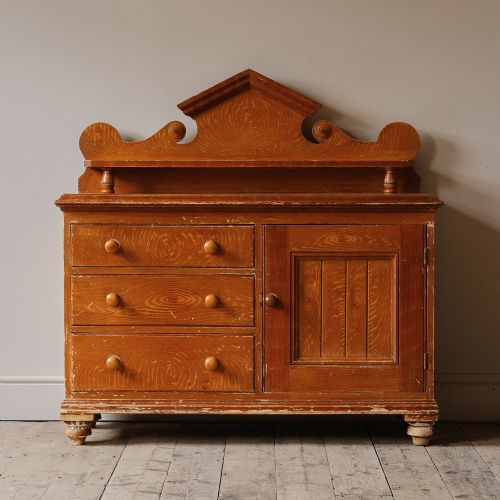

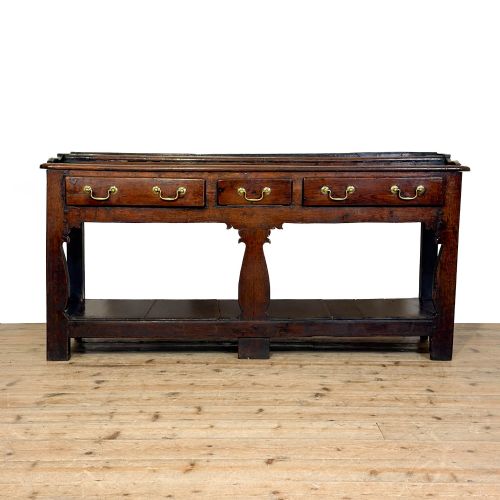
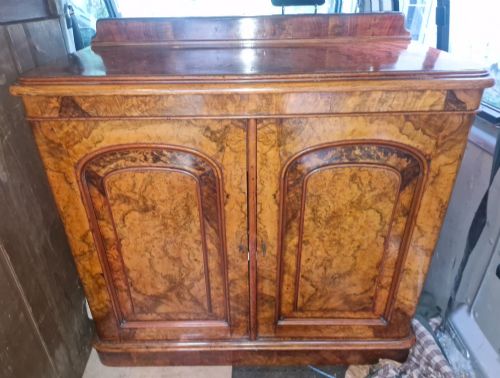
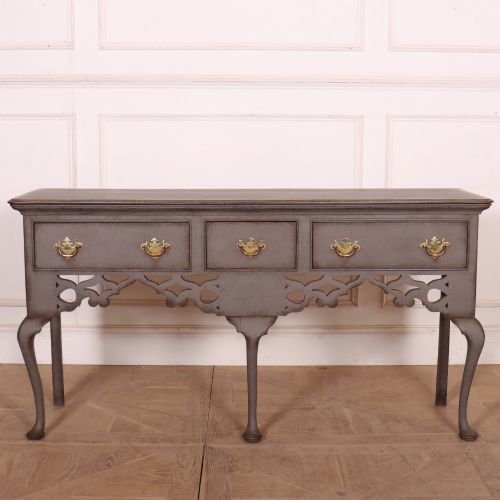
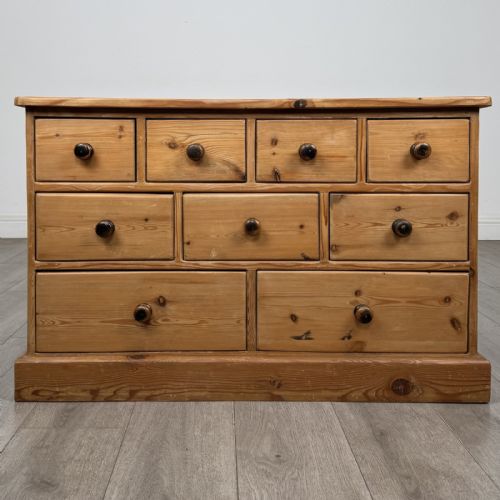
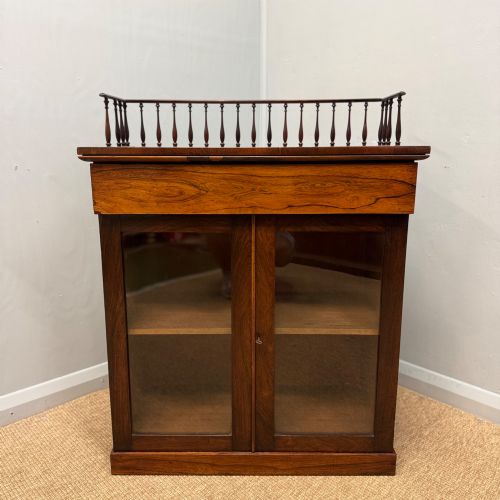
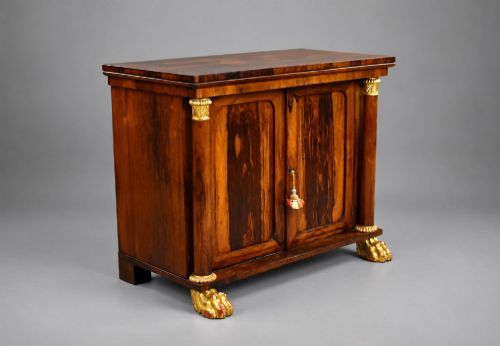
Antique Low Sideboard
When searching for an antique low sideboard, you seek a grounded storage piece that anchors a room with period proportion and practical weight.
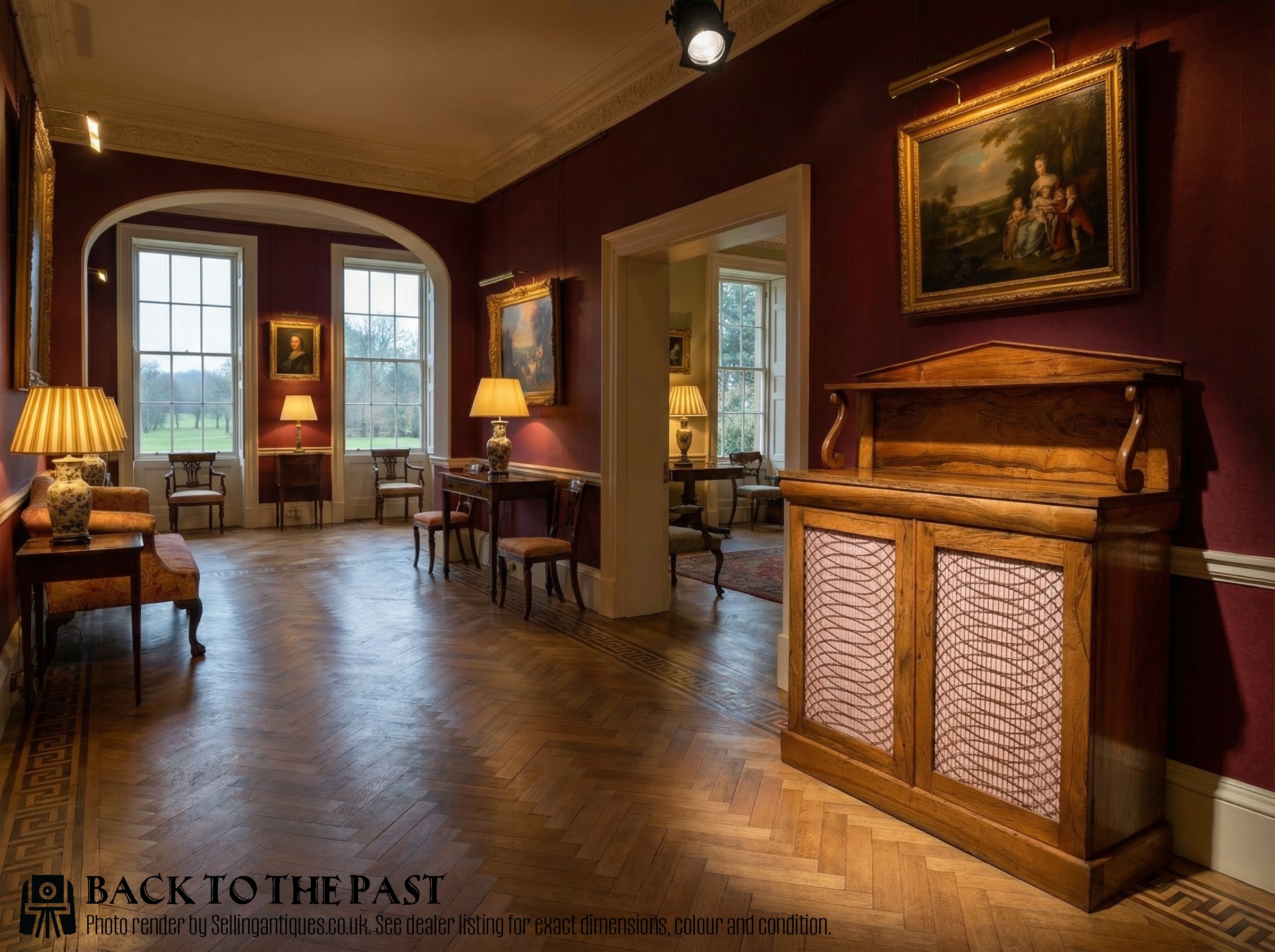
Antique Low Sideboard
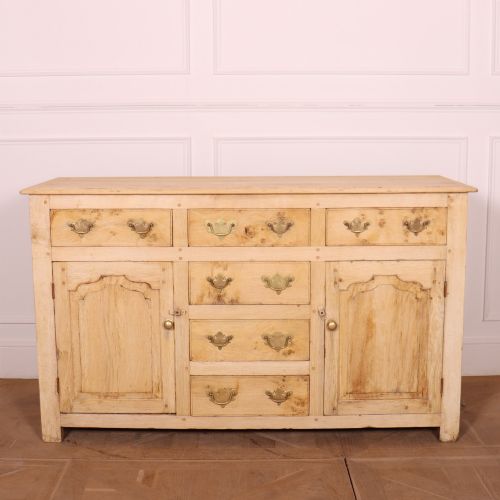
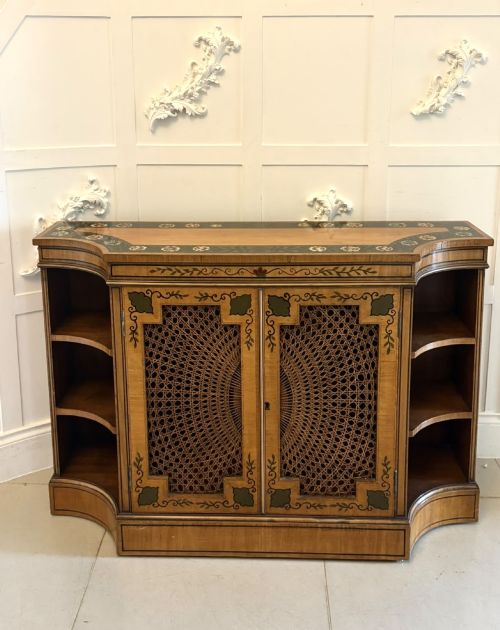
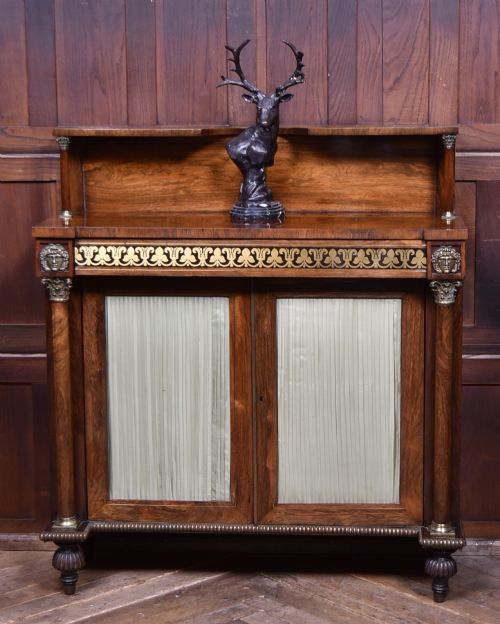
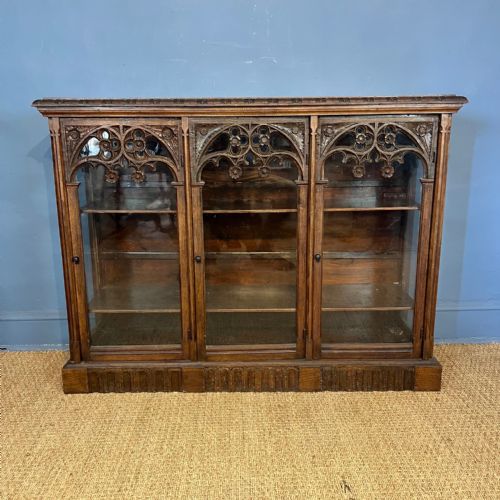
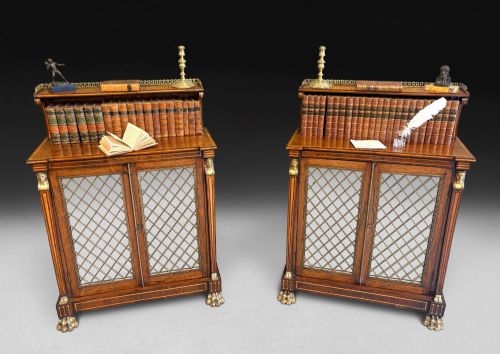
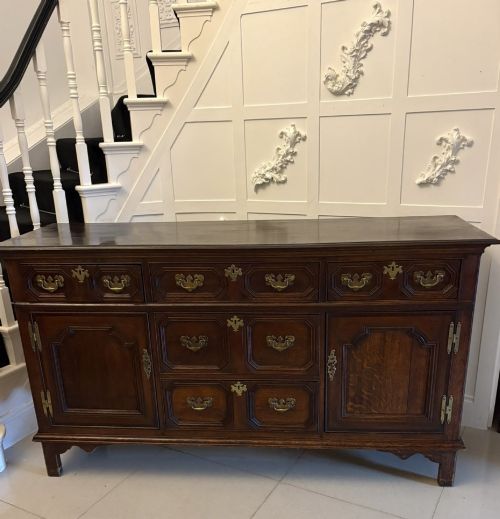
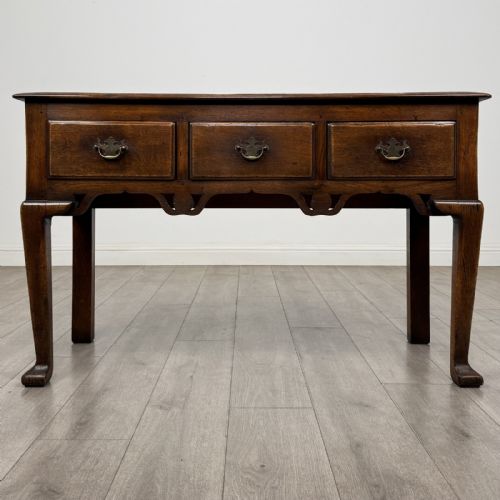
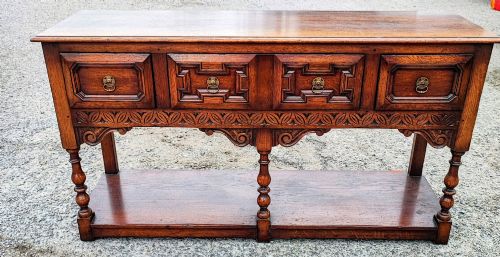
An antique low sideboard encompasses robust oak dresser bases from the eighteenth century, formal Regency mahogany chiffoniers, and low Victorian walnut cabinets designed for domestic utility and display. These items bridge the gap between heavy country furniture and refined formal rooms, offering compact surface space alongside enclosed cupboards or drawers.
The versions most commonly met on this page are eighteenth- and nineteenth-century oak dresser bases featuring potboards or drawers, alongside mahogany and rosewood chiffoniers from the Regency and William IV periods. Regional examples, including Lancashire, Cheshire, and Shropshire pieces, appear frequently alongside English country styles and formal cabinet work.
How They Were Made
Cabinet makers relied primarily on solid oak for regional country pieces, utilising joined construction, pegged tenons, and deep board timber to handle heavy daily kitchen use. In more formal urban workshops, craftsmen selected figured mahogany, rosewood, and burr walnut, applying fine veneers over secondary timbers.
Detailing often included brass inlay, ebony stringing, or Gothic panelled doors, particularly during the Regency and Victorian eras. Surface finishes were traditionally wax or oil applied to highlight the natural grain of the wood without heavy modern varnishes.
Antique Low Sideboard Retail Price Guide 2026
Typical asking prices for low sideboard among the pieces listed under this phrase on Sellingantiques today, from the lower quarter to the upper quarter. They describe what is for sale here now, not the wider market.
Listings feature regional oak pieces from Lancashire, Cheshire, and Shropshire alongside formal Regency mahogany and rosewood chiffoniers.
What Varies in Quality
The division between standard utility furniture and superior cabinet work lies in the selection of timbers and the handling of secondary details. Pieces originating from prominent workshops display meticulous timber matching, subtle cockbeading around drawers, and architectural proportions that remain balanced despite the low stature.
Regional country pieces depend for their merit on untouched original surfaces, honest patination accumulated over centuries, and minimal timber replacement. Structural integrity in the potboards, feet, and drawer linings distinguishes domestic survivals from heavily restored examples.
Gillows·Gillow and Co·Waring and Gillows·Whytock and Reid
The Antique Low Sideboard Glossary
- Dresser Base
- A low rectangular cabinet fitted with drawers and frequently a lower potboard shelf, traditionally used in farmhouse kitchens for food preparation and storage.
- Chiffonier
- A compact low sideboard or cabinet developed during the Regency period, usually featuring enclosed doors below and sometimes a small bookshelf tier above.
- Potboard
- An open lower shelf built into a dresser base, designed originally to hold heavy pots, platters, and domestic earthenware.
- Breakfront
- A cabinet front where the central section projects forward from the flanking outer sections, creating architectural depth.
- Marquetry
- Decorative veneer work formed by fitting together small pieces of different coloured wood or other materials to create pictorial patterns.
Antique Low Sideboard: Frequently Asked Questions
How were low sideboards used originally?
These pieces served practical roles in dining rooms and kitchens for storing serving dishes, cutlery, and linens while providing a sturdy surface for food preparation or display.
Country versions held heavy earthenware on lower potboards, whereas formal urban pieces housed wine, silver, and books behind locked doors.
How do I tell an 18th-century piece from a 19th-century one?
Eighteenth-century examples typically feature solid oak construction with hand-planed surfaces, pegged joints, and simple panelled doors reflecting regional country traditions.
Nineteenth-century pieces often incorporate exotic veneers like mahogany and rosewood, machine-sawn secondary elements, and more refined decorative hardware such as brass inlay.
Will a low sideboard fit in a modern dining room?
Their reduced height and modest proportions make them exceptionally well-suited for contemporary spaces, offering surface area for lamps or art without dominating the wall.
The enclosed cupboards and drawers provide concealed storage for modern electronics, tableware, or paperwork while maintaining a distinct historical presence.
What is the difference between a dresser base and a chiffonier?
A dresser base is a heavy, utilitarian table form with drawers and sometimes a potboard, rooted in seventeenth- and eighteenth-century domestic kitchens.
A chiffonier is a lighter, more formal nineteenth-century cabinet piece, frequently finished in rosewood or mahogany and designed for the refined Regency or Victorian parlour.