


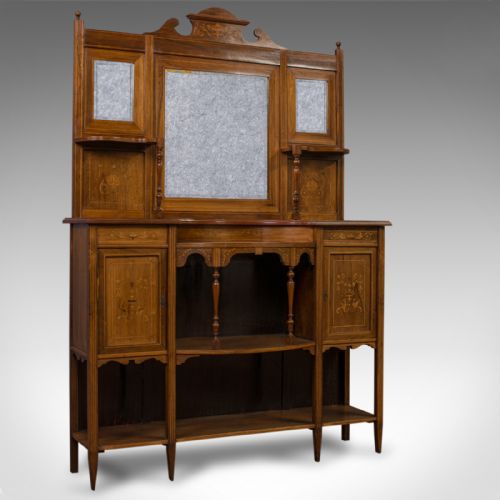
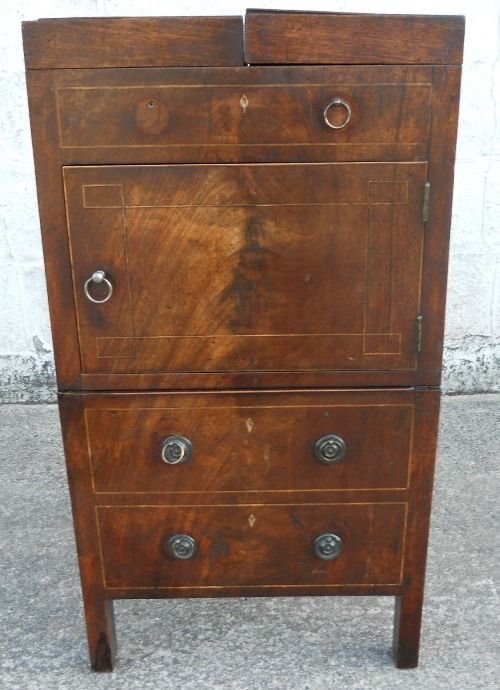
Boxwood Inlaid Cabinet
A boxwood inlaid cabinet brings sharp linear contrast to dark woods, offering refined storage for the discerning collector.

Boxwood Inlaid Cabinet
A boxwood inlaid cabinet unites dense timbers with pale contrasting stringing or marquetry, appearing in forms such as chiffoniers, pier cabinets, cupboards, and bedside cabinets. These pieces span Georgian, Regency, Victorian, and Edwardian periods, demonstrating how cabinetmakers applied light boxwood details to dark carcases over successive centuries.
The version most frequently encountered on this page is the walnut or mahogany pier cabinet and chiffonier, often featuring delicate floral or geometric boxwood inlay. Alongside these display items, the selection includes chests of drawers, washstands, and piano stools incorporating the same pale decorative contrast.
Originating predominantly from English workshops, these items serve as both practical storage and decorative focal points. The integration of boxwood adds a crisp definition to mahogany, rosewood, and walnut surfaces across various nineteenth-century and early twentieth-century designs.
How they were made
Craftsmen built the primary carcase using foundational woods like mahogany, walnut, and rosewood, applying contrasting boxwood veneers or solid stringing into precision-cut channels. This technique demanded steady hands and sharp chisels to ensure the pale boxwood sat flush with the darker surrounding timber.
Surface ornamentation often extended to marquetry involving boxwood alongside brass and ormolu mounts, particularly on refined pier cabinets and chiffoniers. Glass panels, fabric linings, and hinged or folding tops further completed the construction of these functional display and storage items.
John McLean stamped his fine rosewood chiffoniers, ensuring his woodwork outlasted his ledger books.
What varies in quality
Quality rests upon the precision of the boxwood inlay and the selection of the primary timber figures, distinguishing standard utility furniture from high-status workshop production. Crisp, tight mitres in the stringing and balanced grain patterns in the mahogany or walnut indicate superior cabinetmaking.
The integration of secondary materials such as ormolu mounts, brass details, and glass panels dictates the refinement of the piece. Well-preserved marquetry motifs show minimal shrinkage or lifting, maintaining a smooth tactile surface across the entire cabinet.
John McLean
The Boxwood Inlaid Cabinet Glossary
- Boxwood inlay
- A decorative technique where pale boxwood is inserted into recesses cut into a darker wood base. It creates sharp visual contrast and intricate linear patterns.
- Pier cabinet
- A tall, narrow display cabinet designed to fit wall spaces between windows. These pieces frequently incorporate glass doors and delicate marquetry.
- Chiffonier
- A low sideboard or cabinet featuring shelves or a shelved superstructure above. Regency examples often employ rosewood and boxwood stringing.
- Marquetry
- The art of applying pieces of veneer to a structure to form decorative patterns. Boxwood is frequently utilised for floral or geometric elements within these designs.
- Stringing
- Thin strips of contrasting wood inlaid into furniture surfaces in narrow channels. Boxwood stringing defines the edges and panels of drawers and doors.
Boxwood Inlaid Cabinet: Frequently Asked Questions
How do I date a cabinet?
Dating relies on examining the secondary timbers, construction methods, and the prevailing style of the period. Regency and Georgian pieces often display heavier carcases with linear boxwood stringing, whereas Edwardian versions can be more compact.
Matching the object type, such as a pier cabinet or gentleman's washstand, with recorded historical periods helps narrow the decade of manufacture.
Where were these cabinets placed?
These cabinets occupied principal reception rooms, parlours, and bedrooms depending on their specific form. Pier cabinets stood neatly between architectural windows to display porcelain and glassware.
Chiffoniers and sideboards served dining and living spaces, offering surface serving areas alongside enclosed storage for household items.
How do I care for inlaid wood?
Inlaid furniture requires stable environmental conditions away from direct sunlight and sudden humidity changes to prevent the wood veneers from shrinking. Regular dusting with a soft, dry cloth preserves the polished finish.
Avoid excessive moisture and modern chemical polishes, applying traditional beeswax sparingly to nourish both the dark carcase and the pale boxwood details.