


Brass Wire Grille Chiffonier
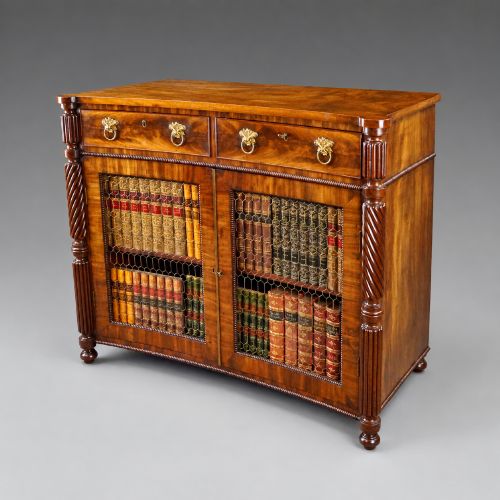
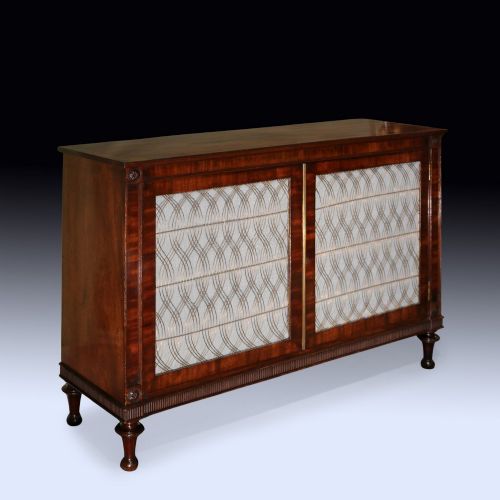
A brass wire grille chiffonier brings refined nineteenth century utility into a room with its signature woven metal panels.
Brass Wire Grille Chiffonier
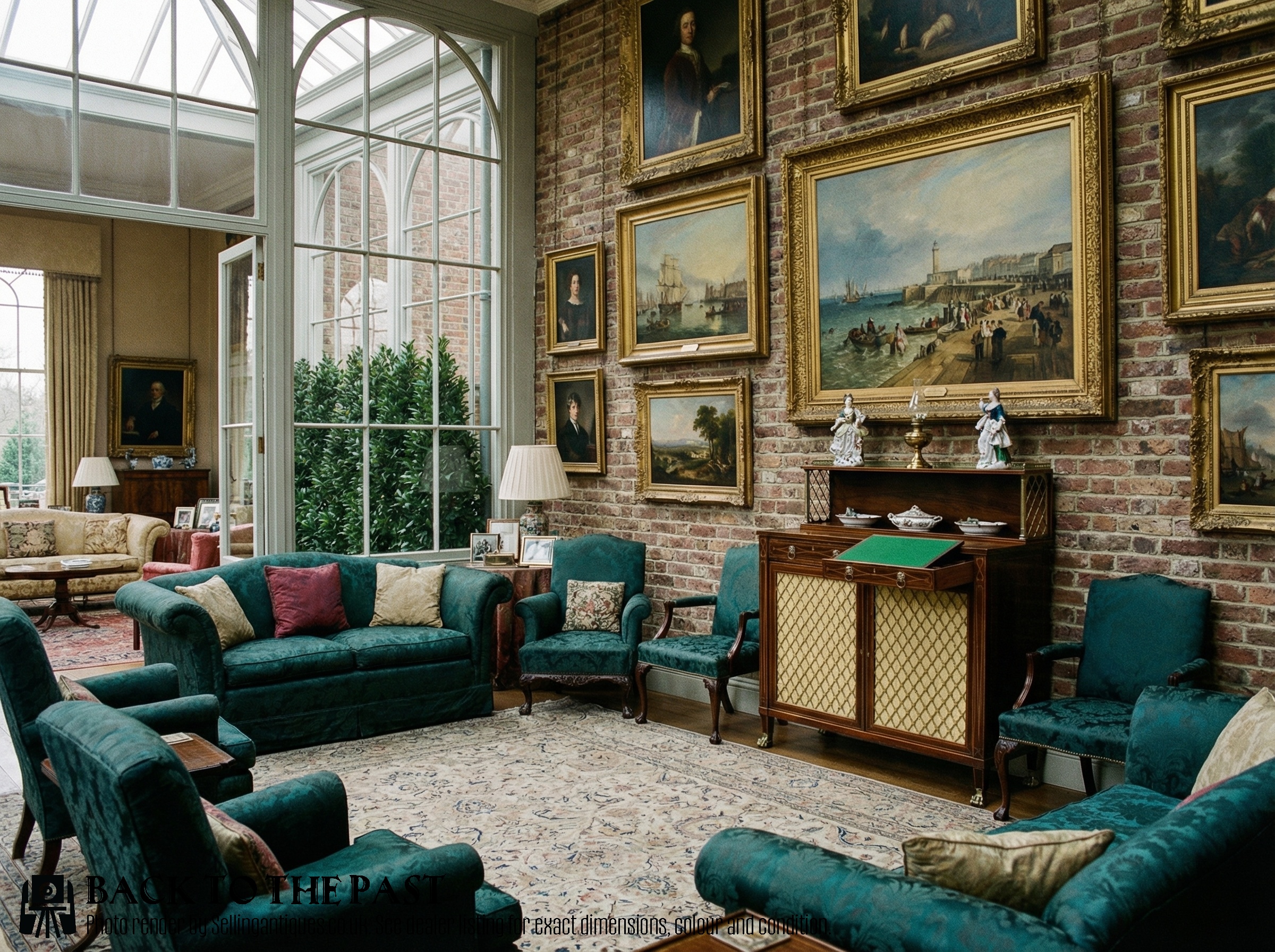
A brass wire grille chiffonier is a low cabinet designed for storage and display, appearing primarily in Regency and William IV forms on this page. These pieces function as sideboards, side cabinets, and cupboards within dining rooms or living spaces.
The objects listed here span the Regency and William IV periods, alongside a later nineteenth century interpretation and a 1930 piece built in a Regency style. Mahogany and rosewood form the main timber body across these examples.
Buyers meet variations that include two-door cabinets, single-door cupboards, and concave side cabinets. Some iterations integrate brass inlay, boxwood inlay, and mirror glass alongside the defining brass wire grilles.
How they were made
Cabinet makers utilised dense hardwoods like mahogany and rosewood to construct the structural carcasses of these side cabinets. Boxwood and brass inlays were meticulously set into the timber surfaces for decorative effect.
Fine brass wire was woven into grilles and fitted into the cabinet doors, often backed with fabric or silk to conceal the interior contents while allowing ventilation. Mirror glass panels additionally appear within the construction of specific pieces.
Materials recorded across these cabinets include mahogany, rosewood, brass, boxwood, fabric, silk, glass, and mirror glass.
What varies in quality
Quality separates through the selection and figure of the timber, where rich rosewood grain or carefully chosen mahogany displays superior cabinet work. The precision of the brass wire grille and any accompanying boxwood inlay further distinguish finer examples.
Construction details such as a concave cabinet shape or documented attribution elevate certain pieces above standard utilitarian sideboards. The integrity of the original fabric backing behind the brass grille also marks a higher grade of preservation.
John McLean
The Brass Wire Grille Chiffonier Glossary
- Chiffonier
- A low cabinet or sideboard equipped with cupboards, developed during the nineteenth century. These pieces often feature shelves or brass grilles on the doors.
- Regency
- An English design period spanning the early nineteenth century, characterised by classical restraint and elegance. Furniture from this era frequently incorporates mahogany and rosewood.
- William IV
- A British design style of the 1830s that bridges Regency lightness and early Victorian mass. Pieces from this era often show robust mahogany and rosewood construction.
- Concave
- Curved inwards like the interior of a sphere. Cabinet makers utilised this shape to create sweeping fronts on side cabinets.
- Inlay
- A decorative technique where contrasting materials like boxwood or brass are inserted into hollowed-out sections of the timber surface.
Brass Wire Grille Chiffonier: Frequently Asked Questions
What is a brass wire grille chiffonier?
A brass wire grille chiffonier is a low nineteenth century cabinet featuring doors set with woven metal grilles. These pieces served as refined storage in dining rooms and parlours.
Cabinet makers constructed them primarily in mahogany and rosewood, frequently incorporating silk backings behind the wire panels to soften the interior view.
How do I date a Regency chiffonier?
Dating relies on timber selection, structural proportions, and decorative motifs characteristic of the early nineteenth century. Regency examples often display clean classical lines in rosewood or mahogany.
Later interpretations from the twentieth century reproduce these specific stylistic elements rather than employing period construction methods.
Where were these cabinets used?
These cabinets were designed for principal reception rooms, serving as sideboards and serving tables. Their enclosed cupboards held dining silver, linens, or books.
The inclusion of brass wire grilles allowed air circulation while keeping contents dust-free and partially concealed.
What woods were used?
Mahogany and rosewood dominate the construction of these pieces, providing stable and deeply coloured surfaces. Cabinet makers selected these dense hardwoods for their durability and rich grain.
Boxwood and brass were frequently added as contrasting inlay details along the borders and panels.
Are the grilles always brass?
The grilles on these cabinets consist of fine brass wire woven into geometric patterns. This material resisted tarnishing while complementing the dark tones of rosewood and mahogany.
Fabric or silk linings were traditionally placed behind the brass mesh to obscure the shelves inside.