
Regency Credenza Sideboard
These regency credenza sideboard examples bring refined nineteenth-century dining and drawing room storage into modern interiors.

Regency Credenza Sideboard
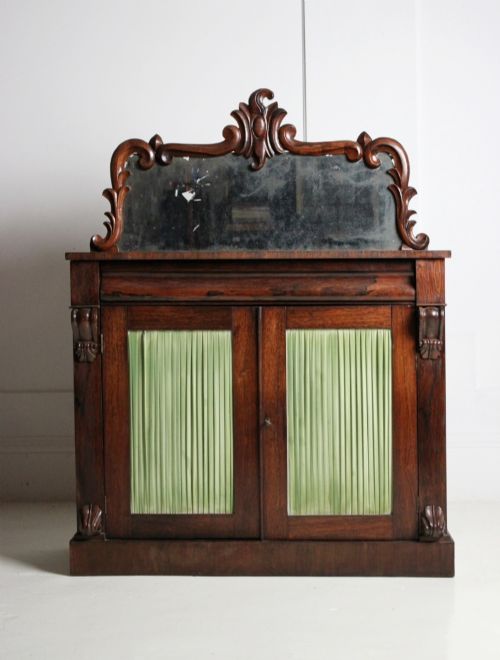
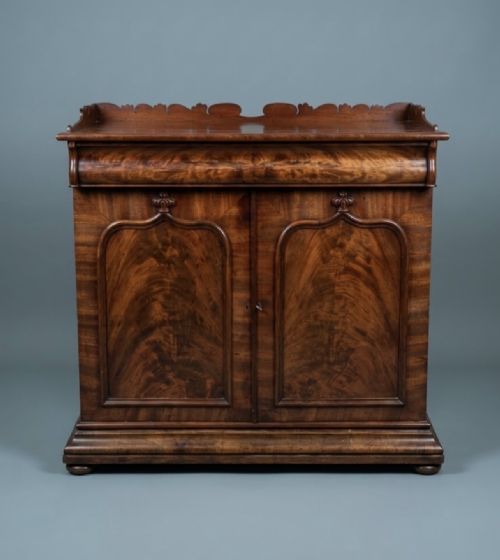
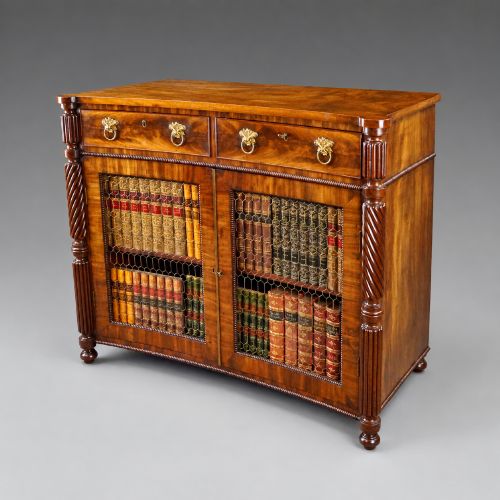
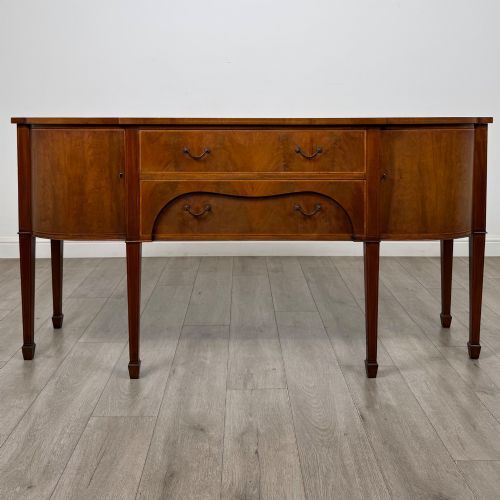
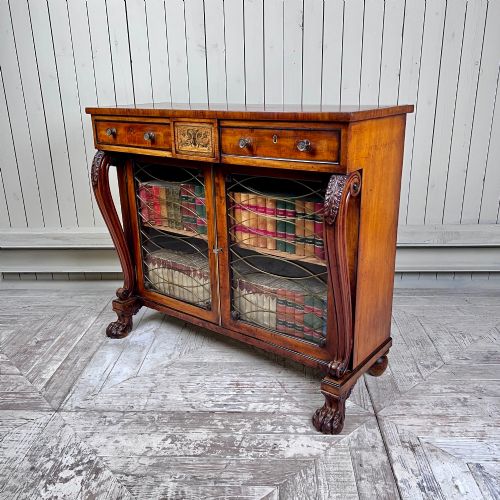
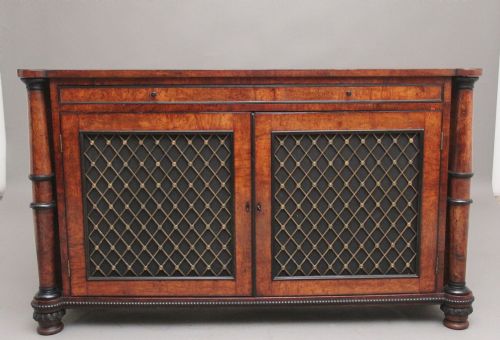
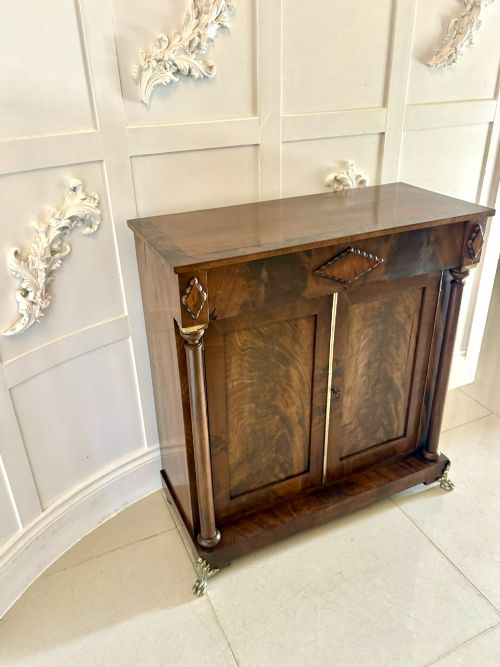
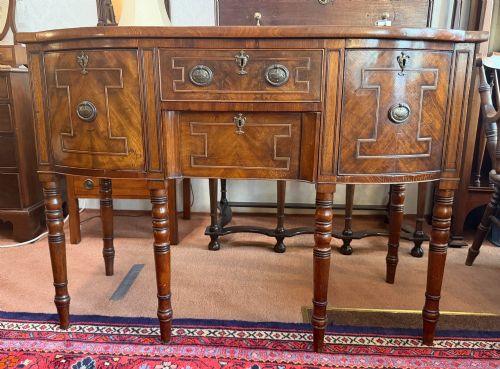
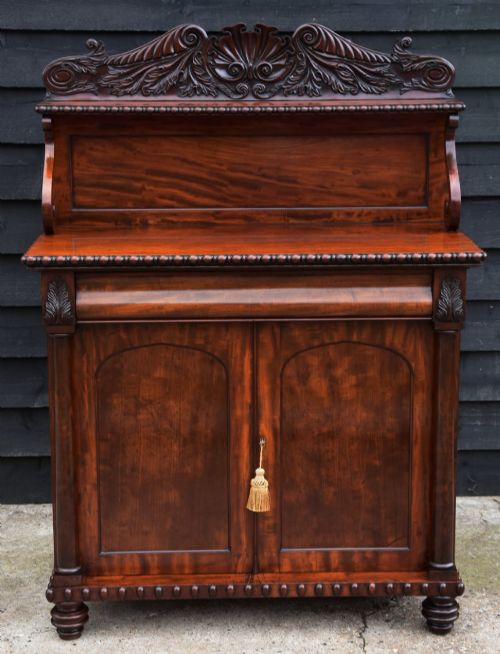
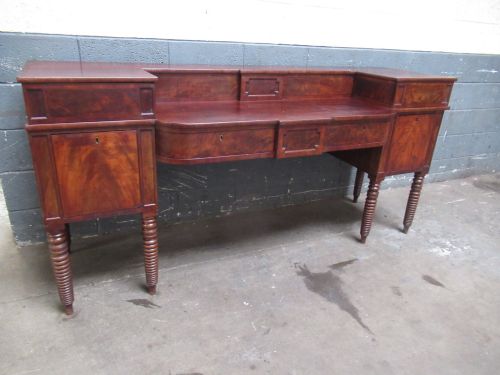
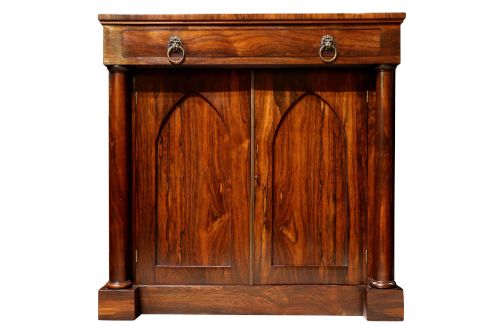
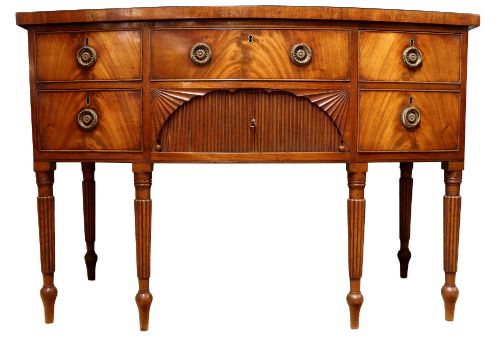
A regency credenza sideboard search opens a diverse array of nineteenth-century serving pieces, cabinets, and chiffoniers. The selections span formal dining room sideboards, smaller side cabinets, and low library bookcases.
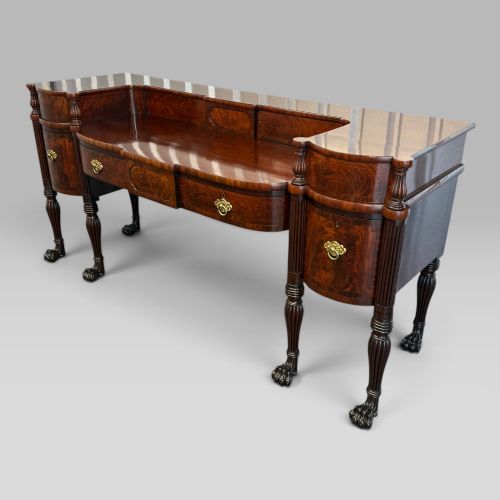
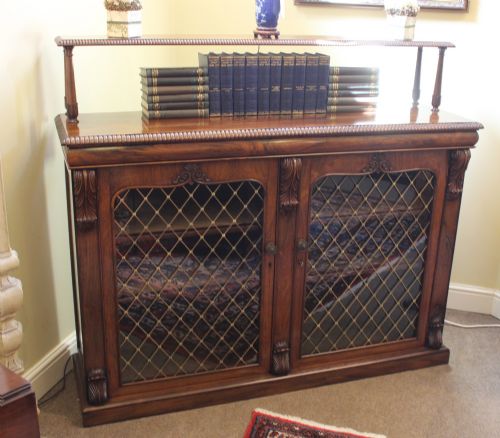
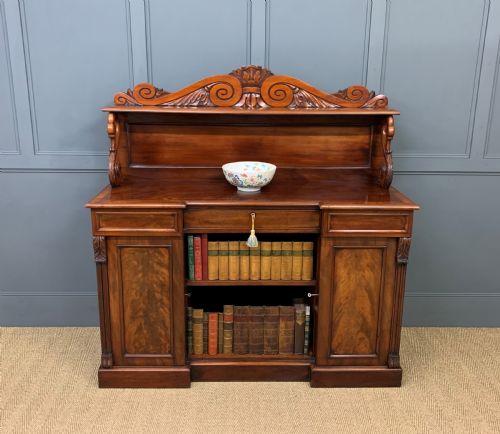
Mahogany and rosewood dominate the material palette, appearing alongside flame mahogany veneer and pollard oak. Pieces range from bow-fronted sideboards to pedestal designs and architectural chiffonier bookcases.
The objects frequently date from the early nineteenth century, particularly the Regency, George IV, and William IV periods. Later nineteenth-century interpretations and twentieth-century reproductions also appear among the offerings.
Materials and construction
Cabinetmakers utilised solid timbers and applied veneers, selecting figured mahogany and rosewood for their rich grain patterns. Secondary woods support structural elements, while boxwood and ebony provide contrasting stringing and inlay details.
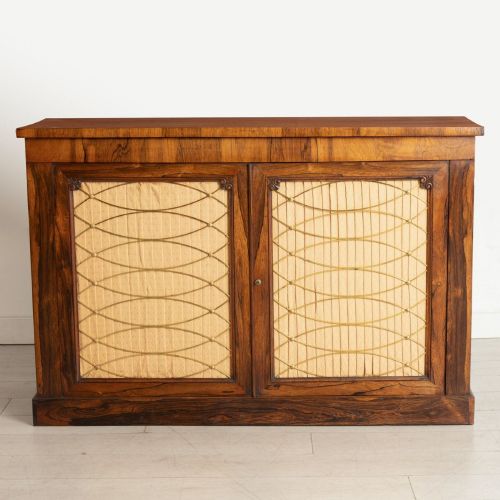
Brass fittings, including handles, grills, and inlaid brass stringing, punctuate the dark timber surfaces. Selected pieces incorporate marble tops, glass door panels, and fabric linings behind grill fronts.
Listings feature mahogany and rosewood predominantly, accompanied by brass, boxwood, glass, and fabric elements.
Evaluating standard and execution
The refinement of the timber selection largely dictates the standing of a piece, particularly the depth and figure in flame mahogany and rosewood surfaces. Skill in matching veneers across drawer fronts and doors separates standard utility items from masterworks.
Detailing in the brass inlay, carved lion paw feet, and architectural mouldings reveals the competence of the workshop. Superior execution shows in the crispness of the joinery and the harmonious proportion of the pedestals, brackets, and superstructure.
Gillows
The Regency Credenza Sideboard Glossary
- Chiffonier
- A low cabinet, typically fitted with shelves enclosed by doors, originating in the early nineteenth century for the drawing room. These pieces often incorporate a small raised shelf or mirrored superstructure.
- Pedestal sideboard
- A large dining room form comprising two flanking pedestals joined by a central table base or board. They frequently conceal cellarettes or cupboards within the pedestals.
- Flame mahogany
- A veneer cut from the fork of the mahogany tree where the branch meets the trunk. This creates a distinctive, fiery ripple pattern prized by nineteenth-century cabinetmakers.
- Demi-lune
- A half-moon shape utilised for the top and base of specific side tables and cabinets. This curved form allowed pieces to sit flush against a wall in smaller spaces.
Regency Credenza Sideboard: Frequently Asked Questions
What is a regency credenza sideboard?
The term covers a broad category of low nineteenth-century storage furniture, including sideboards, chiffoniers, and enclosed cabinets. They were built primarily to serve dining rooms and drawing rooms.
Craftsmen constructed these forms in mahogany, rosewood, and pollard oak, often incorporating brass inlay and panelled doors. They function today as principal storage and display surfaces in domestic interiors.
How do I date a sideboard?
Dating relies on stylistic markers, timber choices, and construction methods associated with periods such as the Regency, George IV, and William IV reigns. Early nineteenth-century pieces often feature bracket feet, brass stringing, and flame mahogany veneers.
Later Victorian and twentieth-century interpretations tend to mix stylistic elements or utilise different secondary woods. Examining internal drawer construction and backboards provides further chronological clues.
Where were these pieces used?
Original placement depended on the specific form, with grand pedestal sideboards occupying formal dining rooms to store wine, silver, and linen. Smaller chiffoniers and side cabinets sat in drawing rooms, morning rooms, and libraries.
They housed books, tea equipment, and collected curiosities behind timber or glass doors. Today, buyers place them in hallways, dining spaces, and living rooms for similar storage purposes.
How do I care for rosewood and mahogany?
These dense tropical hardwoods require stable environmental conditions away from direct heat sources and strong sunlight to prevent timber movement and fading. Regular dusting with a dry, soft cloth maintains the finish.
Application of traditional wax polish periodically nourishes the grain without building up heavy residues. Moisture should be kept away from veneered surfaces at all times.