


Regency Breakfront Cabinet
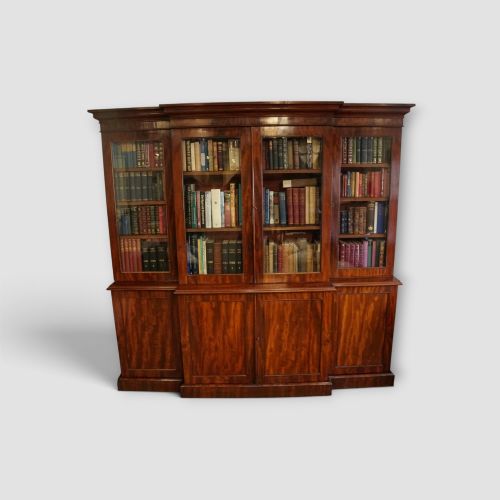
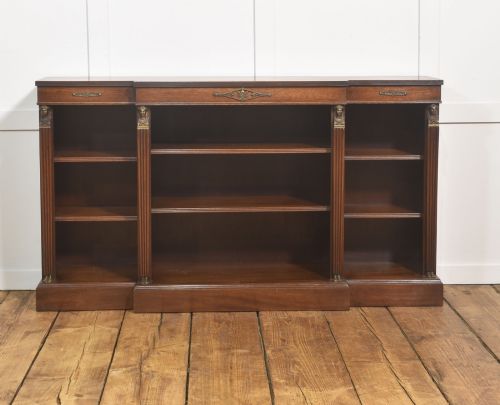
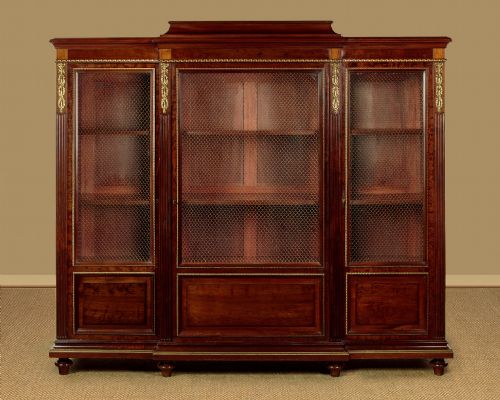
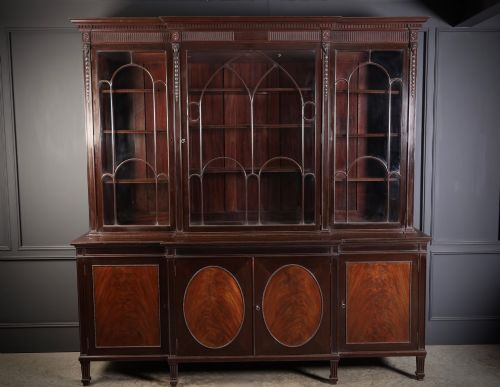
These regency breakfront cabinet pieces are substantial statement furniture defined by their projecting central sections, offering both commanding presence and practical display storage.
Form and Period
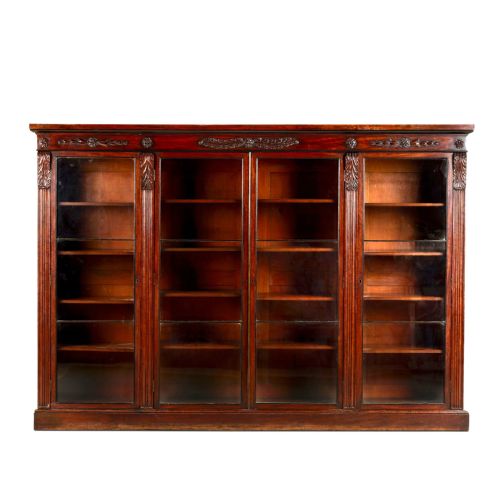
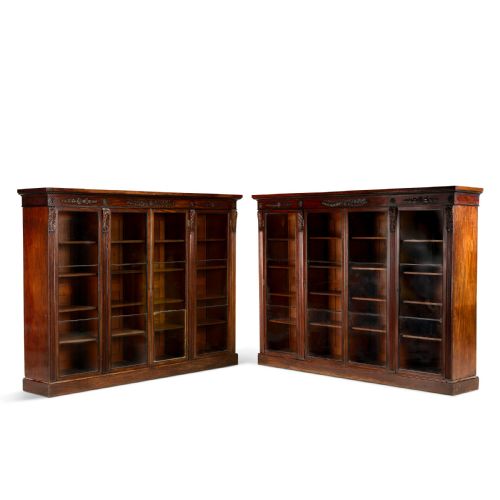
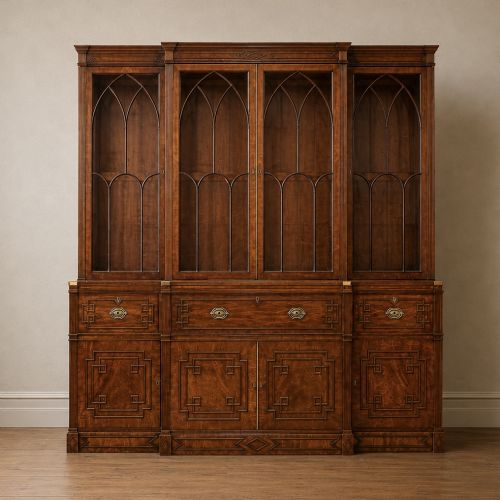
A regency breakfront cabinet is a large formal storage piece defined by its characteristic stepped facade, where the central section projects forward from the flanking wings. The examples found here span the Regency era and the broader nineteenth century, encompassing both grand architectural bookcases and low credenzas.
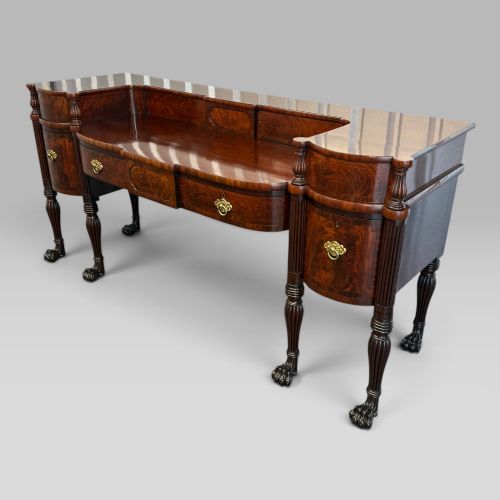
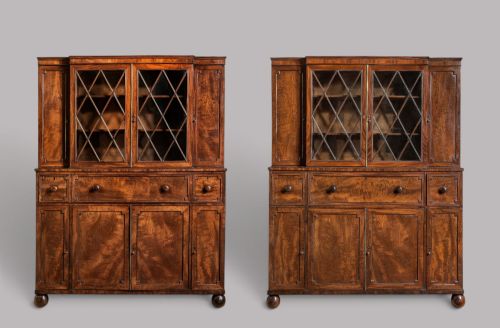
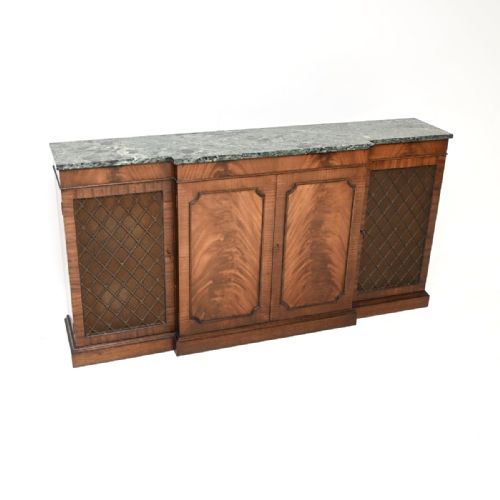
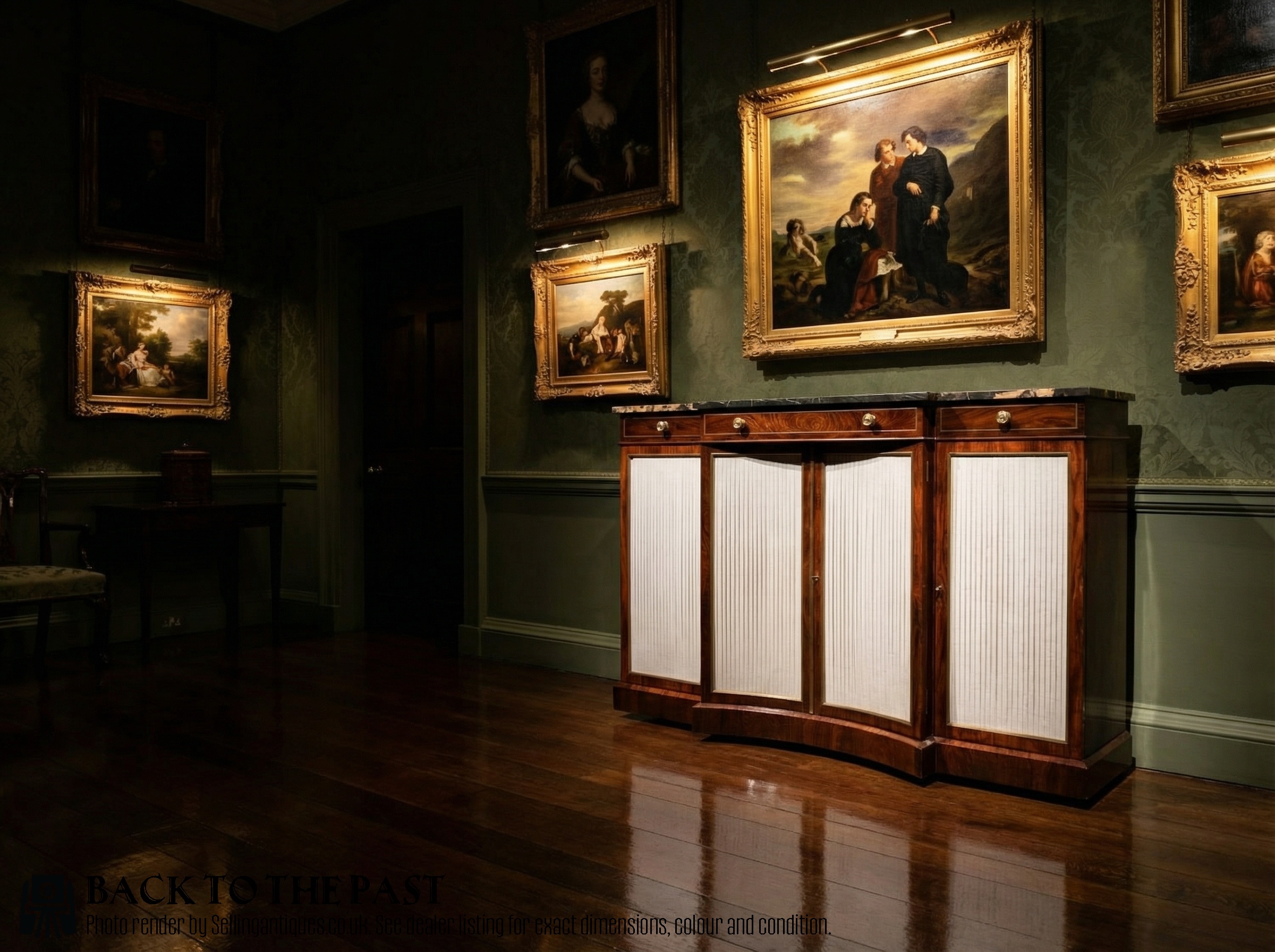
The range of forms includes four-door side cabinets, dwarf bookcase cabinets, and open-fronted sideboards with chiffonier styling. Many incorporate glazed doors fitted with brass wire grilles or fabric panels behind, alongside marble tops in white or green varieties.
Most pieces date from the height of the Regency period or reflect subsequent nineteenth-century revivals, drawing on Georgian proportions and grand Regency styling. Scottish regional variations and pieces attributed to major workshops also appear within the selection.
Materials and Construction
Cabinetmakers constructed these pieces primarily from dense timbers, relying heavily on figured mahogany and rich rosewood veneers over solid carcases. Alternative woods such as yew and simulated rosewood also provide the dark, polished surfaces characteristic of the period.
Decorative detail relies on precision joinery and applied ornamentation, including contrasting boxwood stringing, intricate wood inlay, and cast brass line inlays. Metal components extend to brass grilles on door fronts and occasional carved sphinx supports.
Retail Price Guide 2026
Typical UK retail prices for regency breakfront cabinet, calculated from the Sellingantiques database of over a million retail prices indexed since 2003. This retail price guide relies exclusively on Sellingantiques data; no external sources or auction records are used, so the figures do not describe the wider market.
Several cabinets conceal their contents behind delicate brass wire grilles originally backed with pleated silk to keep library dust off the pages.
Evaluating the Pieces
The distinction between standard and superior pieces rests on the choice of timber and the ambition of the internal and external detailing. Highly figured rosewood veneers and well-executed brass inlay elevate a cabinet beyond standard mahogany versions.
Structural complexity also dictates standing, with four-door configurations and integrated marble tops representing more elaborate commissions. Attribution to notable makers like Gillow further separates workshop-marked pieces from anonymous production.

Gillow·Gillows
The Regency Breakfront Cabinet Glossary
- Breakfront
- A cabinet facade where the central section projects forward relative to the flanking outer sections.
- Chiffonier
- A low sideboard or cabinet with shelves or cupboards, popular during the Regency period.
- Stringing
- Thin lines of contrasting wood inlay used to outline panels and drawers on fine furniture.
- X-grille
- A lattice pattern formed of intersecting diagonal metal wires fitted into cabinet doors.
Frequently Asked Questions
Where did these cabinets sit in a house?
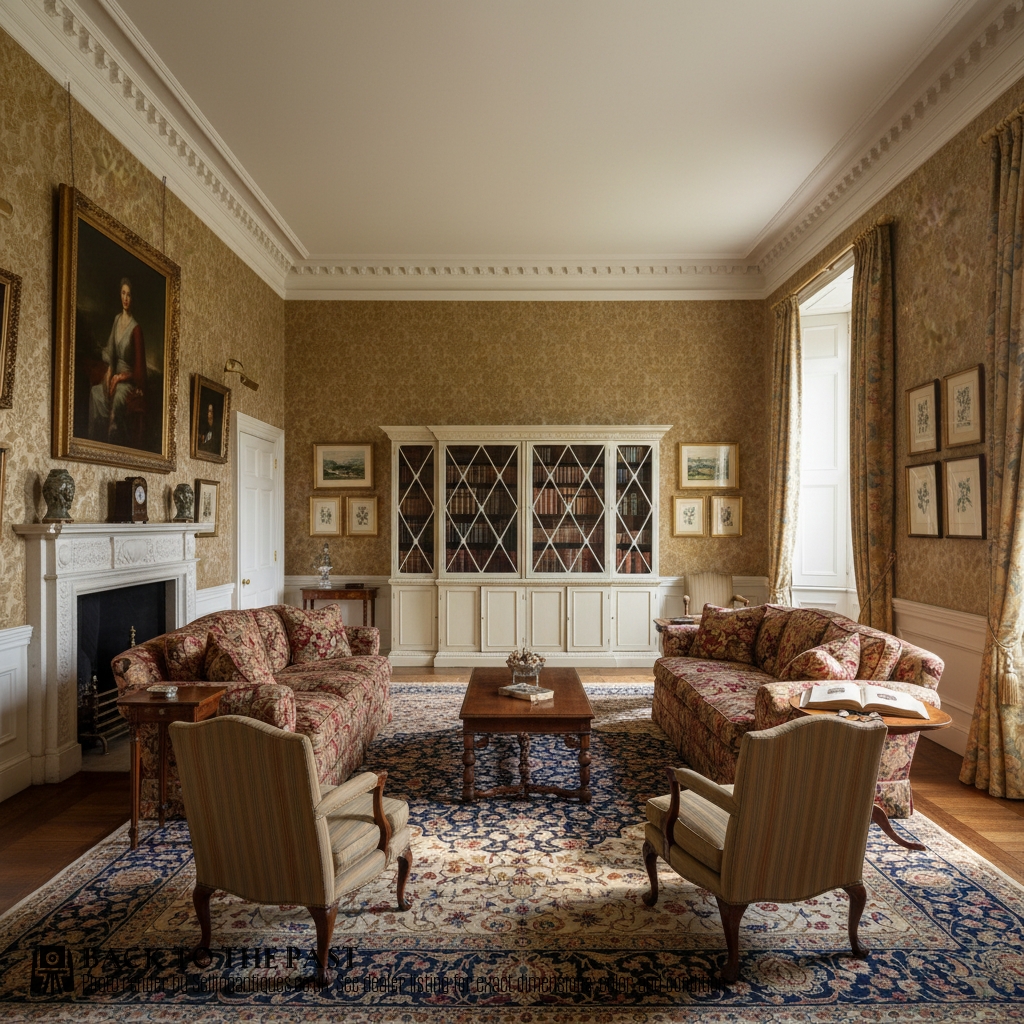
These large cabinets typically stood against the longest walls of principal rooms such as formal dining rooms, libraries, and drawing rooms. Their imposing scale suited them to reception spaces where they displayed books or valuable porcelain.
In modern interiors, they continue to serve as principal storage and display items in large living areas or hallways, utilising their flat tops for lamps and decorative objects.
What is the difference between a bookcase and a side cabinet?
Bookcase variants feature tall glazed upper sections designed specifically for the organised storage and display of bound volumes. Side cabinets are lower pieces, often topped with marble or wood, focusing on enclosed cupboard storage rather than open book shelving.
Both maintain the signature projecting central section, but their height and internal configurations dictate whether their primary function is library storage or general display.
How do I care for rosewood and mahogany surfaces?
Polished timber surfaces require protection from direct sunlight and excessive heat fluctuations to prevent the underlying veneers from drying and lifting. Regular dusting with a soft, dry cloth maintains the lustre without building up heavy wax residues.
Marble tops need similar caution against acidic spills and harsh cleaning agents, utilising simple damp wiping followed by thorough drying to preserve the stone.
Are marble tops original to these cabinets?
Marble tops on Regency side cabinets were specified by makers for high-status pieces intended for formal reception rooms. White and green marble slabs were carefully fitted to the timber carcase to provide a durable and luxurious surface.
Examining the rebate and the fit against the mahogany or rosewood framing helps determine whether a stone top belongs to the original construction period.