
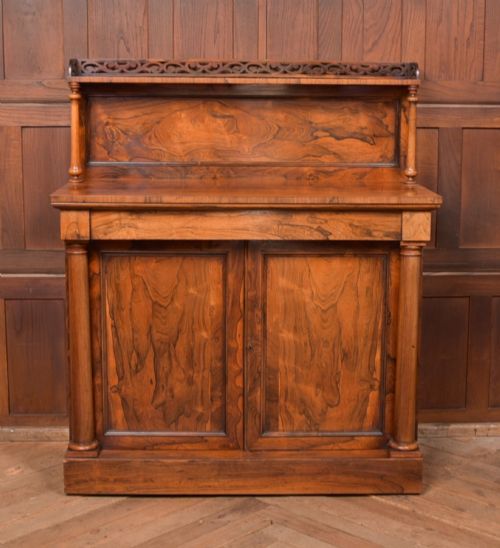


Antique Rosewood Buffet
An antique rosewood buffet brings rich, dark timber grain and formal nineteenth-century presence into a room.
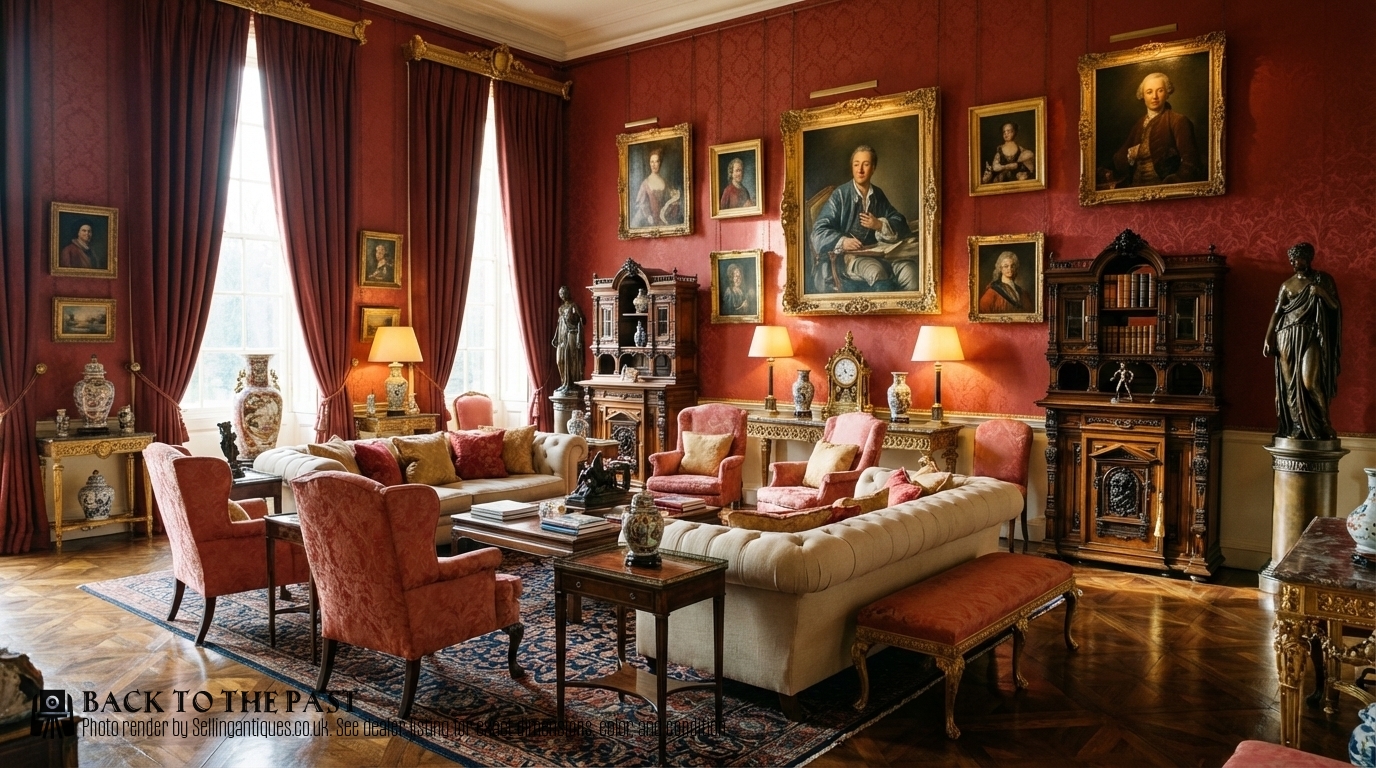
Antique Rosewood Buffet
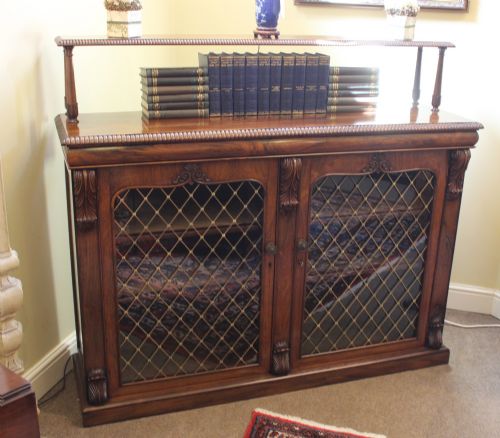
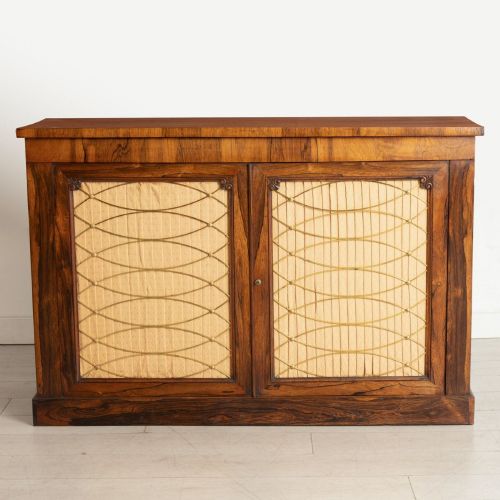
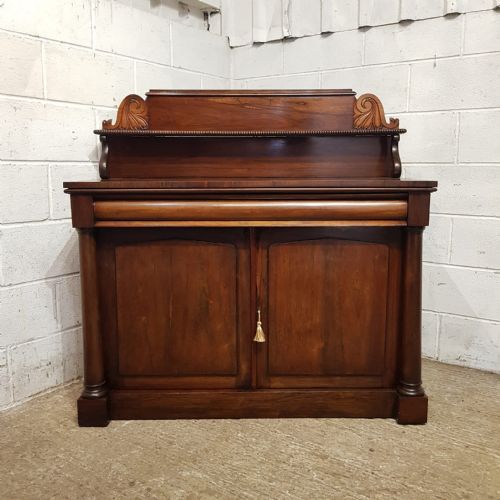
When you search for an antique rosewood buffet, you encounter a selection of heavy storage furniture designed for nineteenth-century dining rooms and living spaces. These pieces appear under various historical terms such as sideboards, chiffoniers, credenzas and side cabinets.
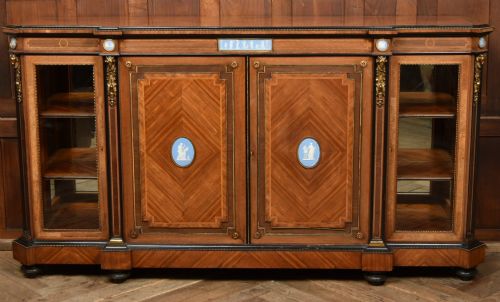
The versions most commonly met on this page date from the Regency and Victorian periods, alongside later revival pieces. They range from compact two-tier serving stands and low chiffoniers to large four-door breakfront cabinets.
Makers and workshops constructed these items primarily for display and storage, incorporating internal shelving, glazed doors, mirrored backs and sometimes raised buffet shelves. Their forms reflect formal dining customs and the refined interior taste of the nineteenth century.
Materials and construction
Cabinet makers utilised dense rosewood timber, often selected for its deep colour and pronounced figuring, sometimes laid as veneers over secondary woods. Workshops enhanced these surfaces with contrasting details in satinwood and boxwood inlay.
Structural embellishments frequently include cast brass mounts, mirrored glass panels and fabric backings behind grill-front doors. Certain pieces incorporate ceramic jasperware plaques or incorporate marble and mahogany elements within their internal linings.
Antique Rosewood Buffet Retail Price Guide 2026
Typical asking prices for rosewood buffet among the pieces listed under this phrase on Sellingantiques today, from the lower quarter to the upper quarter. They describe what is for sale here now, not the wider market.
Some items feature clever metamorphic tier systems that transform static side tables into tiered serving stands at a moment's notice.
Distinctions in quality
Quality in these items rests upon the depth of the timber figuring and the precision of the cabinet work. Superior pieces display seamless jointing, balanced proportions and crisp execution in carved elements or inlaid borders.
The standard of secondary materials, such as heavy brass hardware, clean mirrored glass and well-fitted internal shelving, distinguishes workshop production from standard commercial output.
Gillows·Edwards and Roberts·Sigmund Jaray Wien·Howard and Sons·James Plunckett
The Antique Rosewood Buffet Glossary
- Chiffonier
- A low nineteenth-century sideboard or cabinet typically featuring enclosed shelving below and sometimes a raised tier above. These pieces served as practical serving surfaces in dining rooms.
- Credenza
- A formal low cabinet or sideboard, frequently featuring mirrored doors or glazed compartments. They gained popularity during the Victorian era for displaying decorative porcelain and silver.
- Breakfront
- A cabinet design where the central section projects forward from the flanking outer cupboards. This configuration adds architectural depth and visual weight to the piece.
- Palisander
- A historical trade term applied to dense, richly figured rosewoods and related tropical timbers. Cabinet makers valued it for high-status furniture surfaces.
- Satinwood
- A pale, lustrous timber utilised for contrasting stringing, marquetry and inlay work on dark rosewood carcases. It provides sharp visual definition against the primary wood.
Antique Rosewood Buffet: Frequently Asked Questions
How do I date a rosewood buffet?
Dating relies on stylistic markers, construction methods and timber characteristics typical of periods such as Regency or Victorian. Examining secondary woods and interior linings provides further chronological clues.
Cabinet architecture shifted from restrained classical Regency lines to more exuberant Victorian carving and later revival detailing as the nineteenth century progressed.
What is the difference between a buffet and a chiffonier?
A buffet generally refers to a serving surface or low sideboard intended for dining rooms. A chiffonier specifically denotes a compact cabinet with enclosed lower storage and often a raised shelf superstructure.
In historical listings, these terms often overlap depending on regional vocabulary and the specific configuration of doors and shelves.
How do I care for antique rosewood?
Rosewood benefits from stable indoor humidity and protection from direct sunlight to prevent timber movement or fading. Regular dusting with a soft, dry cloth preserves the polished surface.
Occasional application of appropriate wax polish maintains the moisture and deep lustre of the historical finish without building up heavy residues.
Can these buffets fit in modern interiors?
These pieces function effectively as media consoles, hallway storage or dining room sideboards in contemporary homes. Their dark grain provides a strong grounding element against neutral walls.
Internal depths and adjustable shelving accommodate modern storage requirements while retaining historical character.