

Dark Rosewood Credenza
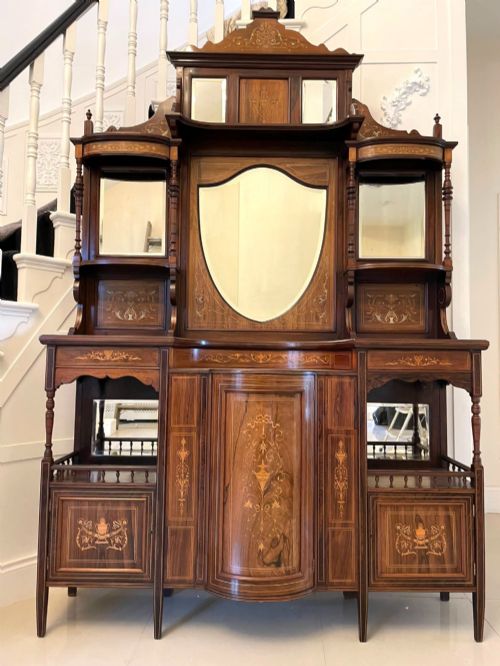
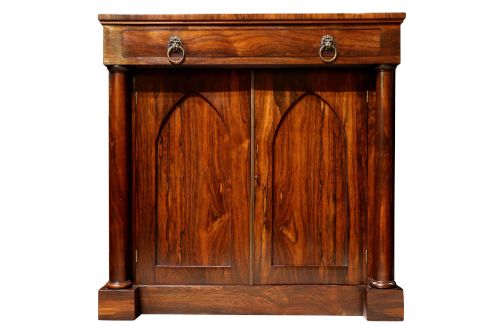
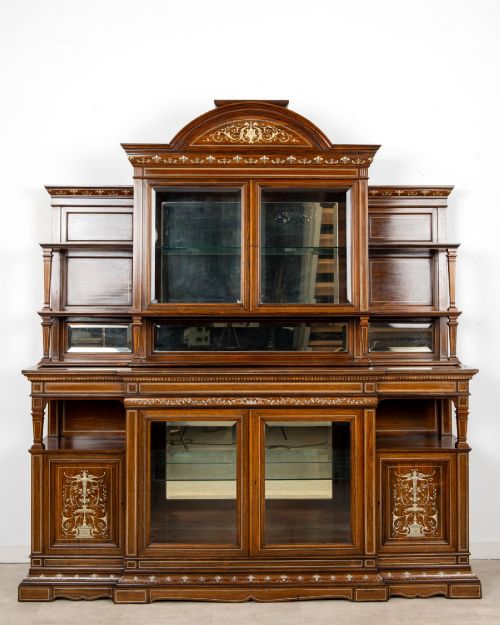
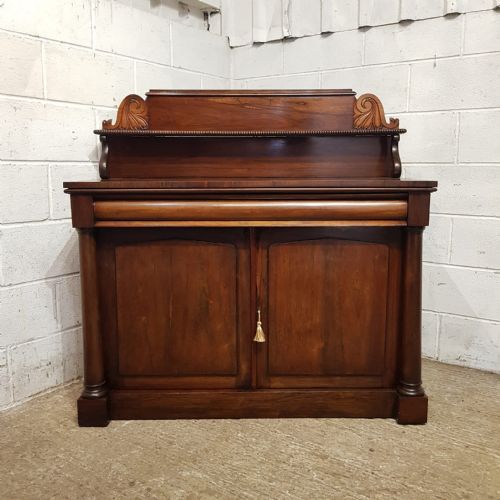
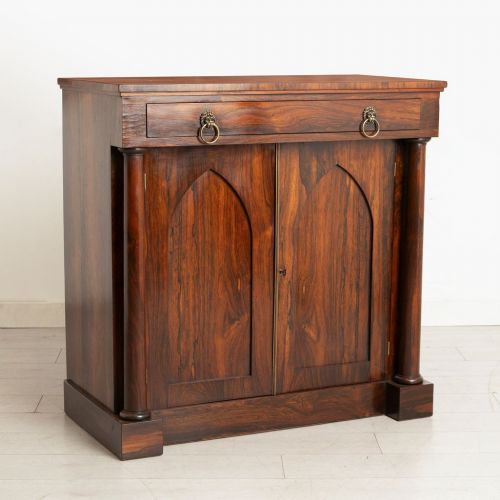
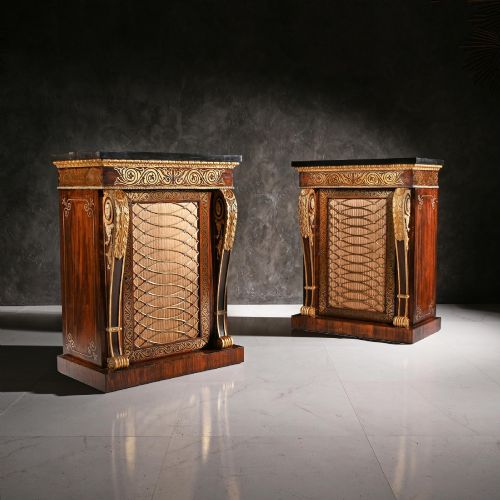
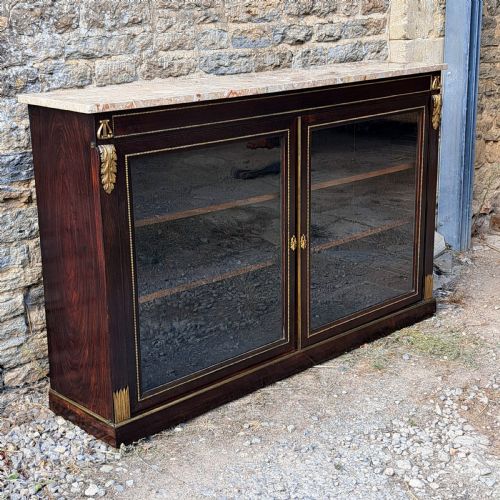
These dark rosewood credenza pieces are substantial side cabinets and chiffoniers in dark rosewood, prized for their rich timber and brass details.
What They Are
A dark rosewood credenza search uncovers side cabinets, chiffoniers, and sideboards originating from the Regency, George IV, William IV, and Victorian periods. These pieces serve as functional low storage furniture designed for reception rooms and dining spaces, featuring prominent timber surfaces and enclosed cabinet space.
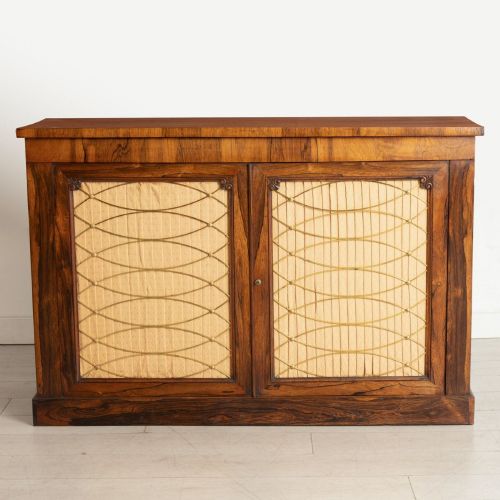
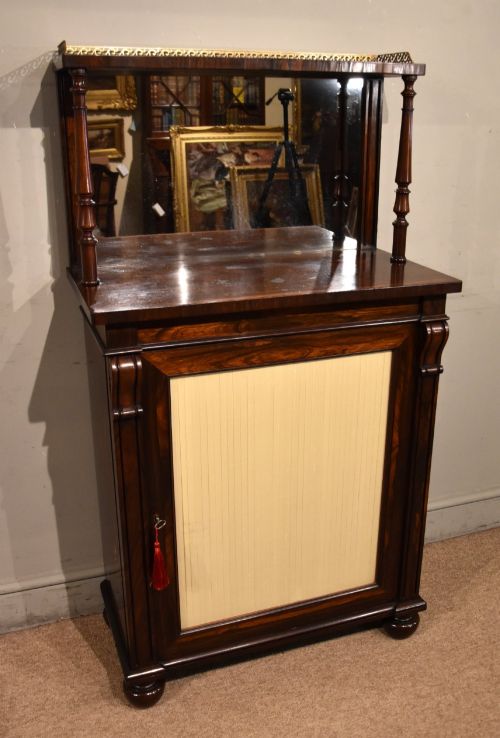
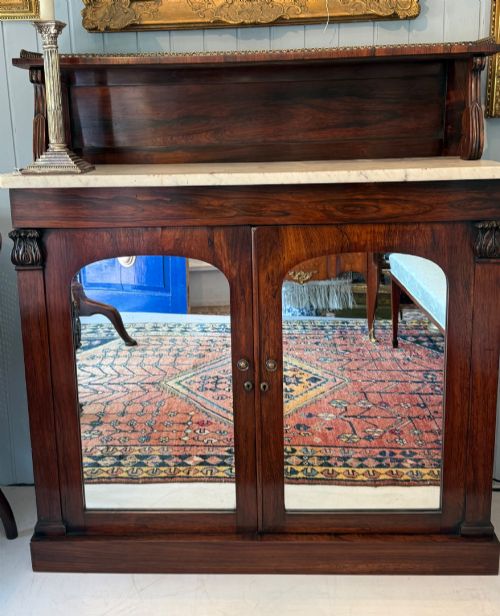
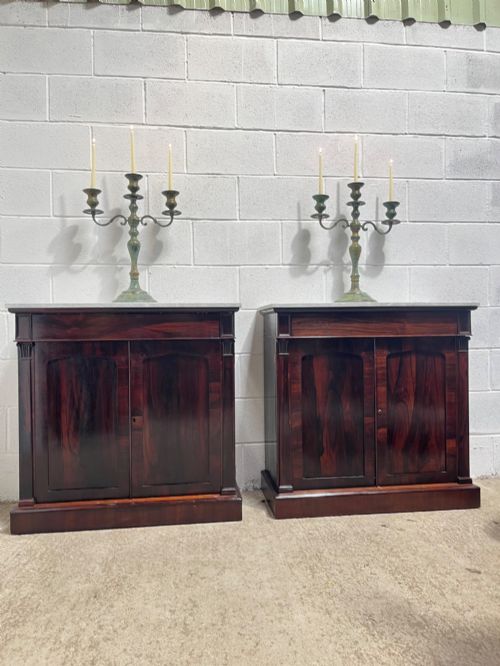
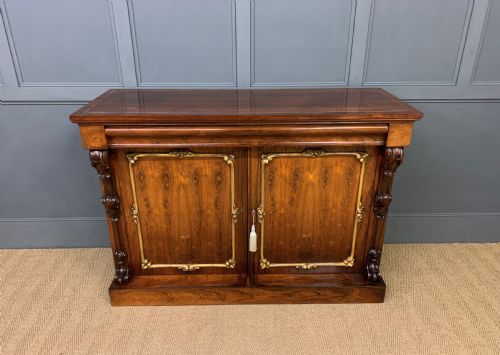
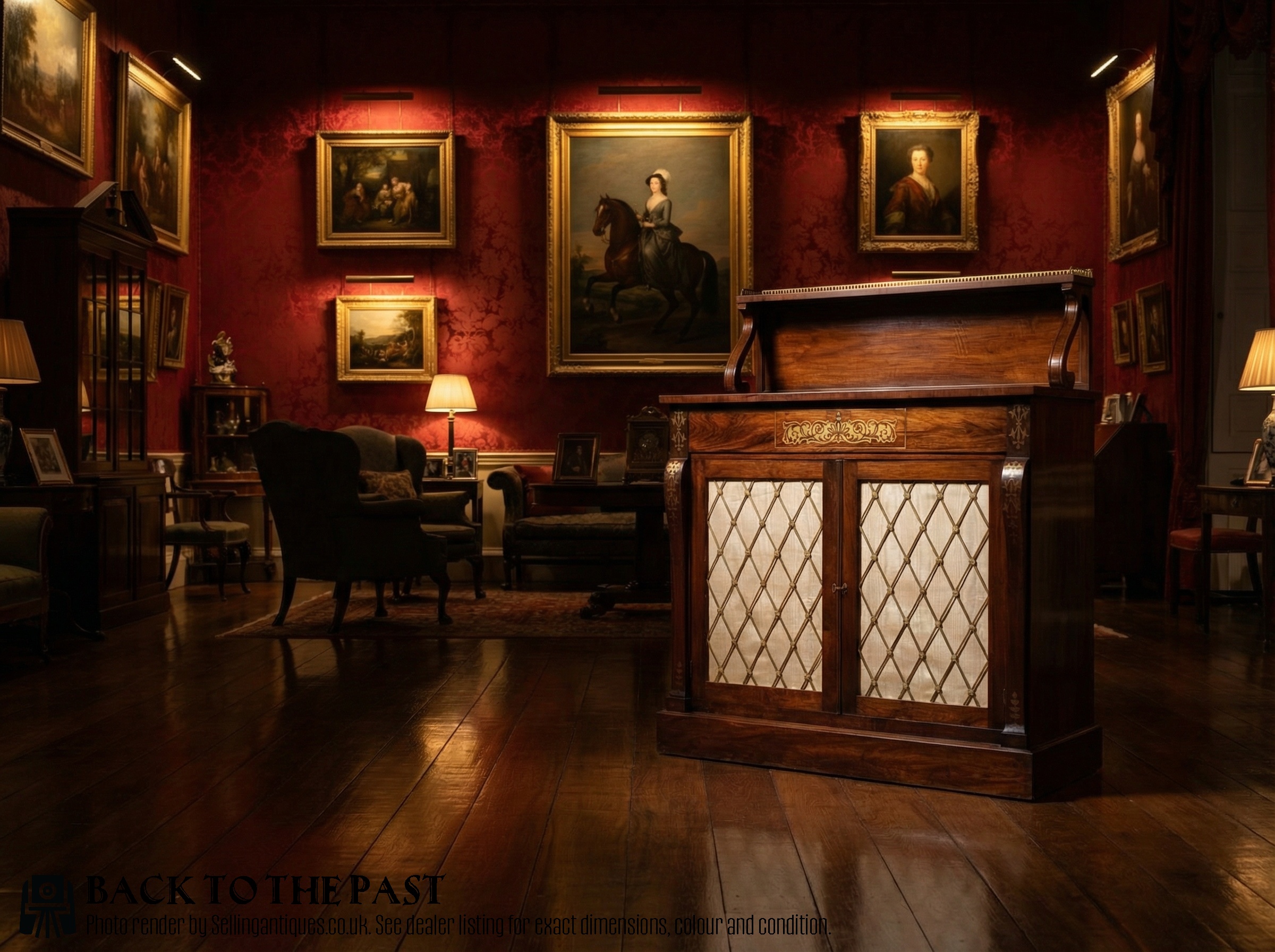
The pieces on this page are predominantly chiffoniers and side cabinets from the Regency and Victorian eras. They display forms that range from simple brass inlaid carcases to architectural side cabinets with mirror glass and marble elements.
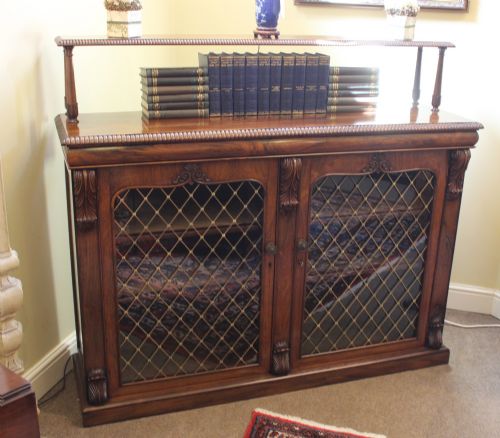
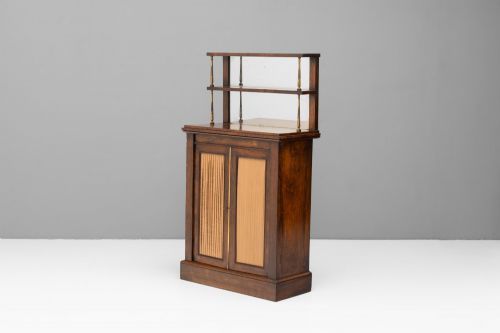
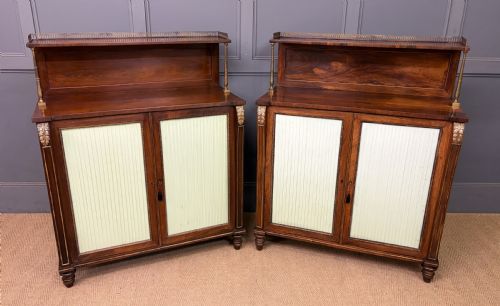
Makers from the period, such as Gillow, produced sophisticated examples that set the standard for these forms. Buyers encounter both compact chiffoniers with fabric-backed door grilles and grand side cabinets intended for formal display.
How They Were Made
Cabinet makers utilised dense rosewood veneer over supportive carcase timbers to achieve deep dark grains and rich polished finishes. Brass inlay and brass mounts provide sharp contrast against the dark timber surfaces, following the Regency and Victorian design idioms.
Internal structures incorporate fitted shelving, while specialist components such as mirror glass panels and marble tops appear on select refined examples. Door panels frequently utilise pleated fabric backed behind brass grilles to soften the heavy timber appearance.
Retail Price Guide 2026
Typical UK retail prices for dark rosewood credenza, calculated from the Sellingantiques database of over a million retail prices indexed since 2003. This retail price guide relies exclusively on Sellingantiques data; no external sources or auction records are used, so the figures do not describe the wider market.
Behind delicate brass grilles, pleated fabric hides the clutter of nineteenth-century belongings.
What Varies in Quality
Quality reveals itself in the selection of rosewood veneer and the precision of brass inlay work across the front facade. Superior examples exhibit continuous grain matching and immaculate hand-cut brass detailing that remains flush with the timber.
The architectural presence of the carcase, including the integration of marble tops and original mirror glass, separates standard utility pieces from high workshop productions. Attribution to respected makers like Gillow further elevates the standing of a piece within this category.
Gillow
The Dark Rosewood Credenza Glossary
- Credenza
- A low dining room side cabinet used for serving food and displaying plate. It evolved during the nineteenth century to incorporate extensive glazing and enclosed shelving.
- Chiffonier
- A compact sideboard featuring enclosed cupboards below, sometimes surmounted by a small shelf or mirror. This form dominated Regency and Victorian drawing rooms.
- Veneer
- A thin layer of figured rosewood applied to a stable secondary timber carcase. This technique allowed cabinet makers to display dramatic grain patterns without using solid scarce hardwoods.
- Brass Inlay
- Strips of brass set flush into the timber surface to create geometric or floral patterns. It defines much of the Regency decorative vocabulary.
- George IV
- The stylistic period spanning the reign from 1820 to 1830, bridging Regency elegance and early Victorian mass.
Frequently Asked Questions
What is a dark rosewood credenza?
A dark rosewood credenza is a low nineteenth-century storage cabinet built from dense rosewood timber. These pieces function as sideboards and chiffoniers in period interiors.
They provide enclosed shelving and display surfaces, often ornamented with brass inlay, mirror glass, or marble tops.
How do I date a rosewood chiffonier?
Dating relies on stylistic markers associated with periods such as Regency, George IV, William IV, and Victorian. Regency examples frequently feature delicate brass inlay and fabric door grilles.
Later Victorian pieces display heavier proportions and more robust architectural mouldings while retaining dark rosewood surfaces.
Where were these cabinets placed?
These cabinets stood against dining room or drawing room walls to store silver, linen, and glassware. Their flat tops served as surfaces for serving dishes or decorative objects.
Chiffoniers with low upper shelves also held books and small ornaments in formal reception spaces.
How do I care for rosewood furniture?
Care involves maintaining stable indoor humidity and avoiding direct sunlight to protect the dark rosewood veneer. Gentle dusting with a dry cloth preserves the polished finish.
Harsh chemical cleaners strip the historic polish and damage the underlying timber and brass elements.