



Rosewood Buffet Cabinet
A rosewood buffet cabinet grounds a dining room or drawing room with rich dark timber and generous storage.
Rosewood Buffet Cabinet
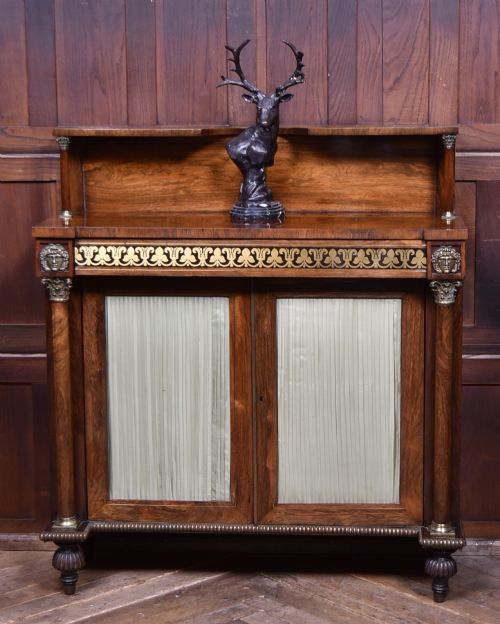
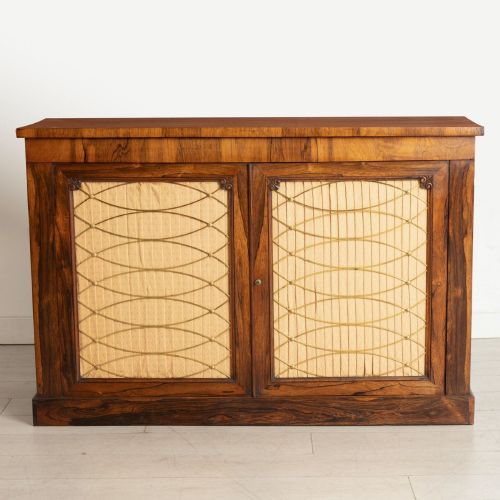
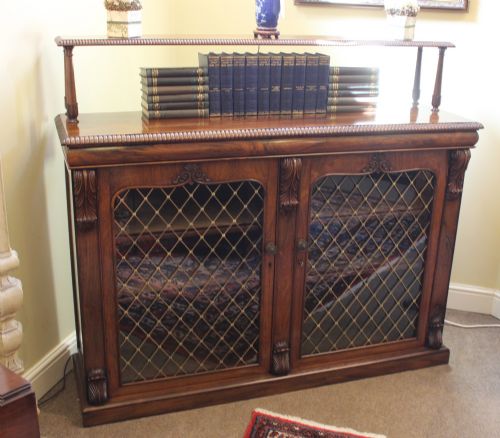
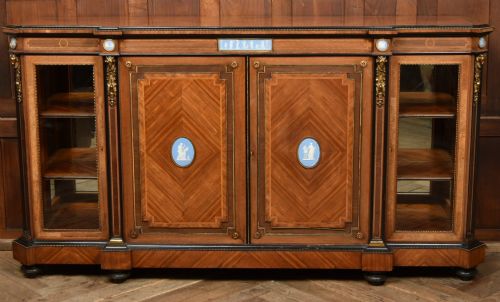
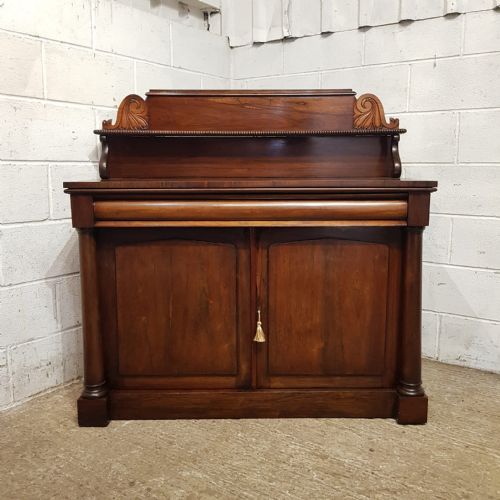
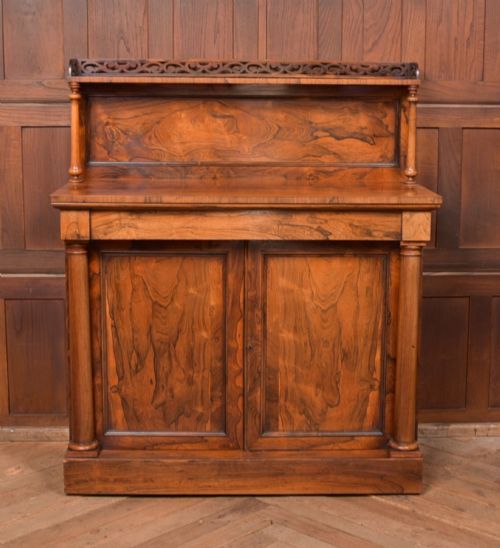
When you search for a rosewood buffet cabinet, you enter a field of low-standing storage furniture primarily originating from the nineteenth century, including Regency, William IV, and Victorian eras. These pieces bridge the gap between open sideboards and enclosed cabinets, frequently combining shelving, drawers, and cupboards behind panelled, glazed, or grille doors.
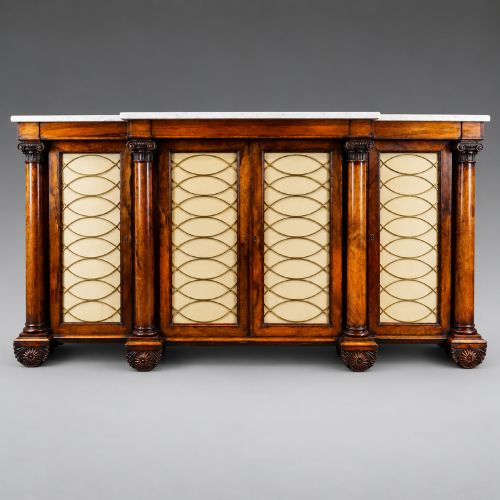
The most common forms you will encounter on this page are chiffoniers and credenzas alongside formal sideboards and breakfront cabinets. Makers of these periods often utilised the dense, highly figured grain of the timber to create imposing yet refined items designed to display silver or porcelain on top while concealing dining linen and plate below.
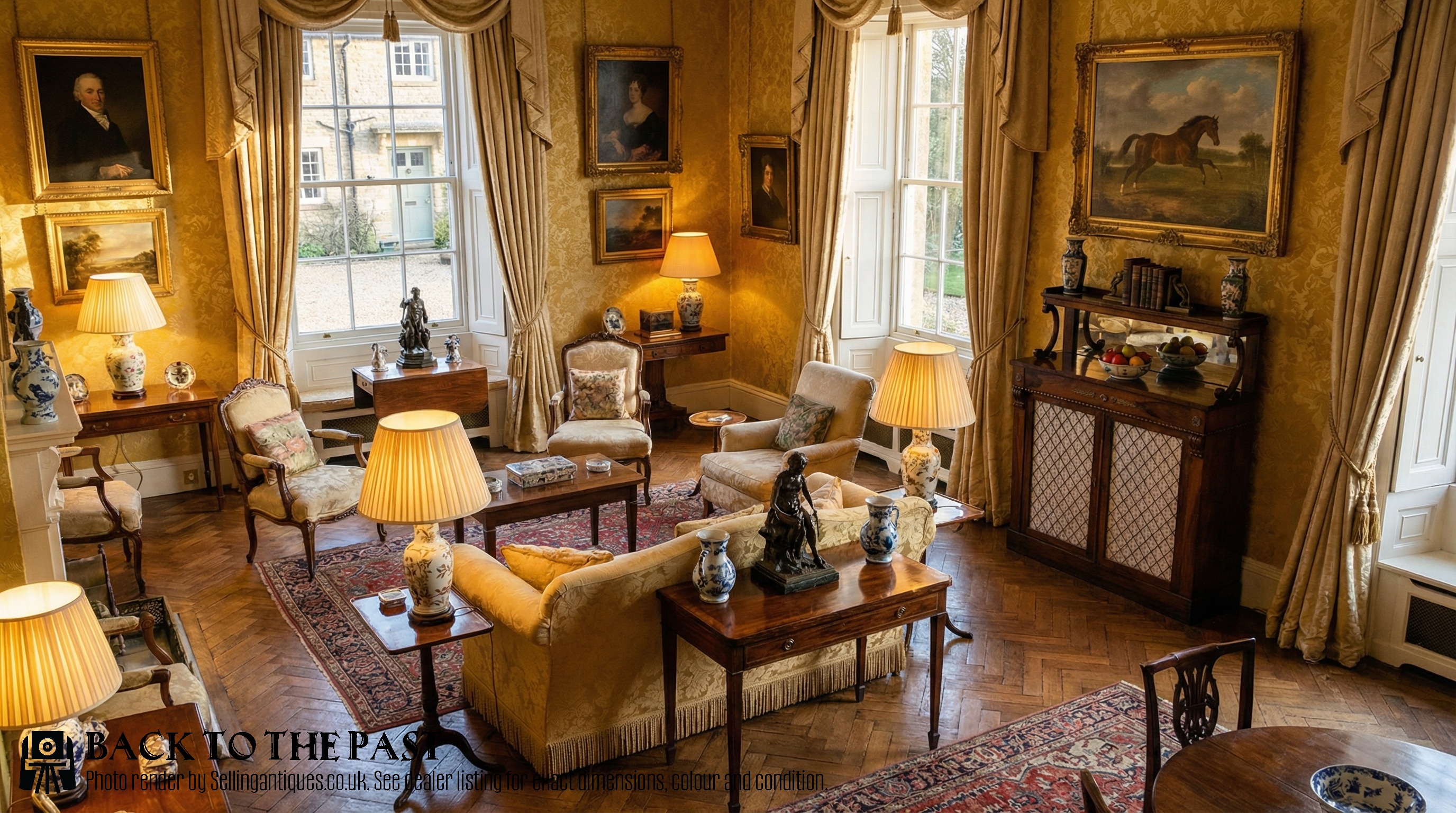
Materials and Construction
Cabinet makers built these pieces using solid rosewood and supportive secondary timbers, frequently applying carefully selected veneers to achieve symmetrical grain patterns across large surfaces. Contrasting stringing and inlay work in boxwood and satinwood highlight the structural lines and door panels.
Functional details rely on traditional cabinet-making hardware, incorporating brass mounts, glazed panels, mirrored glass backs, and woven fabric behind brass grilles. Carved wooden scrolls, pilasters, and columns frequently frame the central doors and drawers.
Rosewood Buffet Cabinet Retail Price Guide 2026
Typical asking prices for rosewood buffet cabinet among the pieces listed under this phrase on Sellingantiques today, from the lower quarter to the upper quarter. They describe what is for sale here now, not the wider market.
Some nineteenth-century cabinet makers thoughtfully lined their drawers in fragrant cedar to keep dining linens smelling fresh.
Judging Quality
The distinction between standard commercial output and the finest workshop productions rests upon the choice of timber and the precision of the joinery. Superior examples display intensely figured, book-matched veneer grains that flow naturally across multiple doors and drawers.
Hand-carved ornamentation, original brass hardware, and secondary linings executed in premium timbers such as mahogany rather than deal mark out pieces from superior makers. The integration of complex elements like serpentine fronts, breakfront carcases, and fine marquetry inlay further separates the exceptional from the ordinary.
Gillows·Edwards and Roberts·Sigmund Jaray, Wien·Howard and Sons·James Plunckett
The Rosewood Buffet Cabinet Glossary
- Chiffonier
- A low sideboard or cabinet, typically featuring a raised shelf or back panel with a mirror and small shelf above enclosed cupboards. This form became a staple of nineteenth-century drawing rooms.
- Credenza
- A low dining-room cabinet or sideboard, frequently featuring glass-fronted display sections flanking a central cupboard. The form evolved during the Victorian period from continental European models.
- Breakfront
- A piece of furniture whose central section projects forward from the flanking outer sections. This architectural arrangement creates depth and shadow across the front elevation.
- Marquetry
- Decorative patterns formed by the insertion of contrasting pieces of wood, ivory, or metal into a veneered surface. Cabinet makers used this technique to create floral or geometric motifs.
- Palisander
- A term frequently applied to dense tropical timbers including Brazilian and East Indian rosewood. The wood is prized for its dark purple-brown coloration and striking black grain figuring.
Rosewood Buffet Cabinet: Frequently Asked Questions
What is a rosewood buffet cabinet?
A rosewood buffet cabinet is a low storage piece combining cupboard space and surface display area, constructed from dense tropical rosewood during the nineteenth and early twentieth centuries.
These pieces served functional roles in dining rooms and drawing rooms, housing tableware, linens, or books while providing a surface for decorative objects.
How do I tell Regency from Victorian cabinets?
Regency pieces generally exhibit cleaner classical lines, architectural brass mounts, and restraint in ornament, often reflecting ancient Greek or Roman influences.
Victorian cabinets tend towards heavier proportions, richer carved scrolling, mirrored backs, and more elaborate marquetry or boxwood inlay work.
Were these cabinets used in dining rooms?
Many served specifically in dining spaces to store porcelain, cutlery, and serving dishes, acting as precursors to the modern sideboard.
Others functioned in drawing rooms or libraries as chiffoniers and credenzas, holding books, papers, and display items behind panelled or glazed doors.
How do I care for antique rosewood?
Protect the timber by keeping the cabinet away from direct sunlight and sudden temperature shifts, which can dry out the wood and split veneers.
Apply a traditional beeswax polish sparingly and buff with a soft cloth to maintain the natural lustre of the grain without building up a heavy residue.