
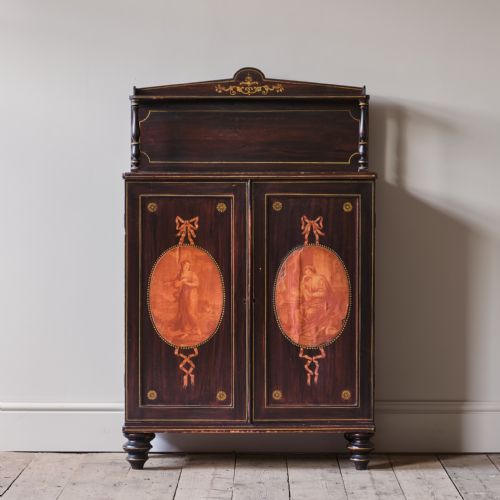

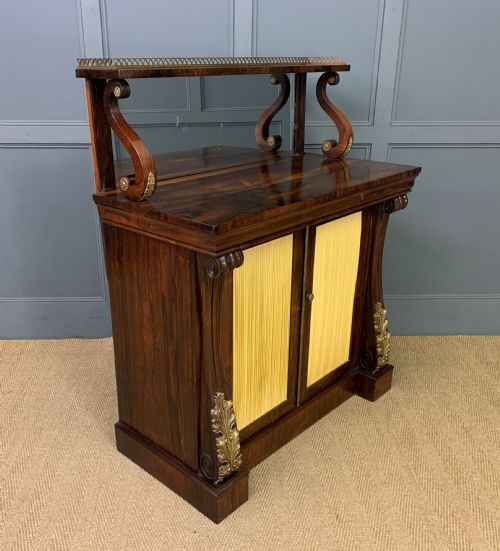
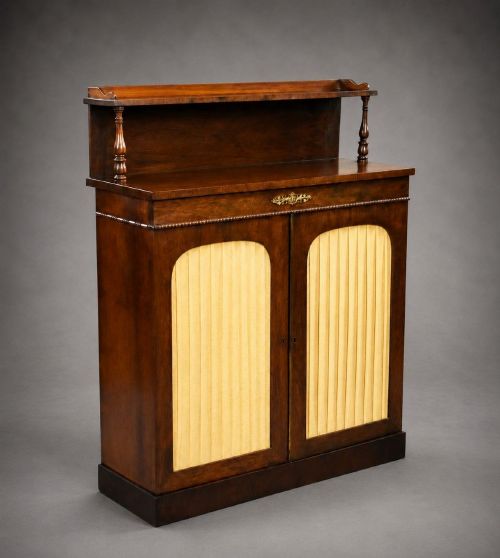
Dark Rosewood Chiffonier
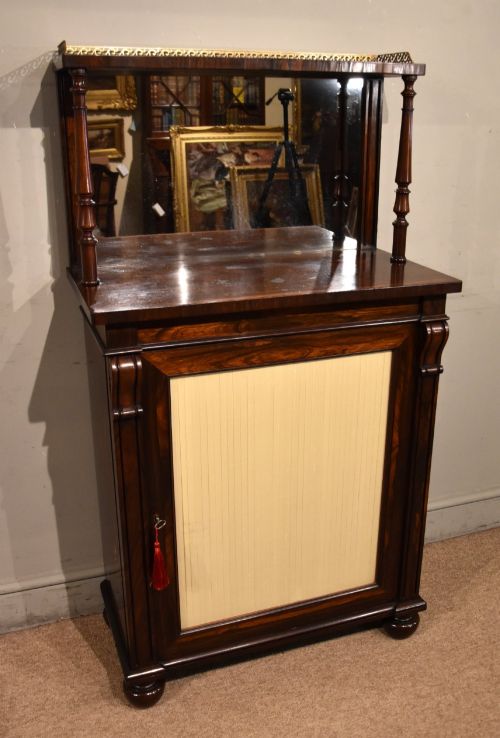
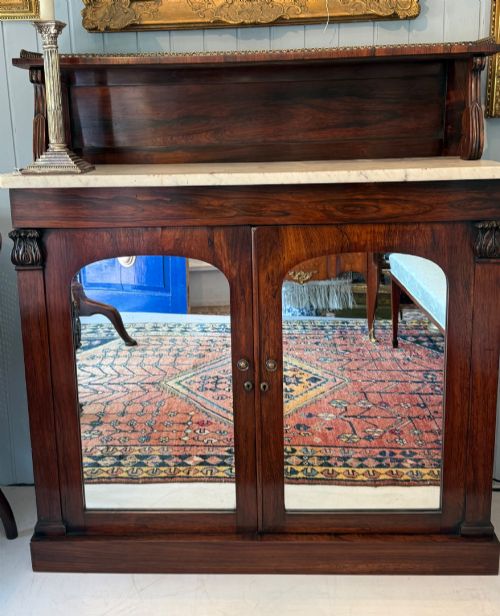
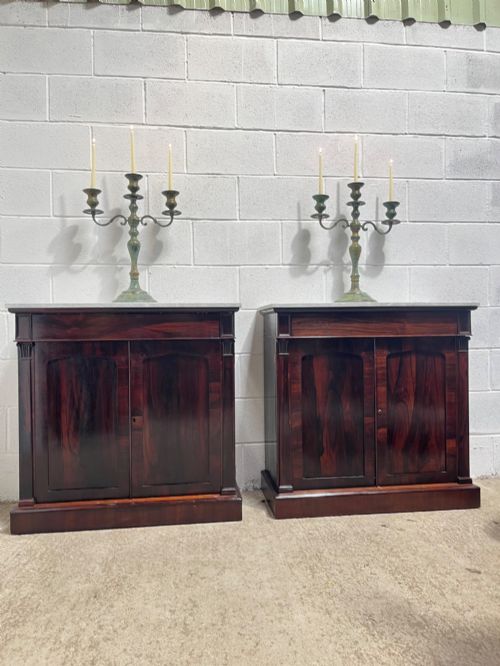
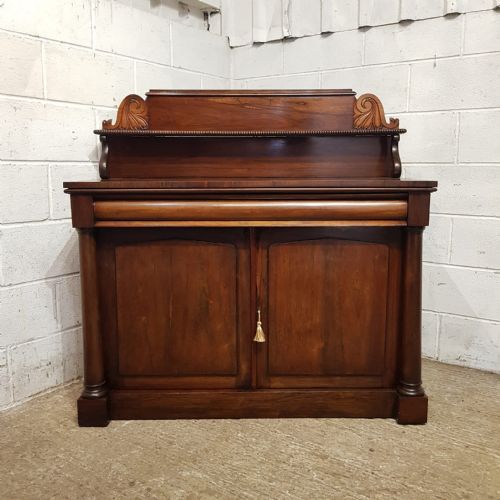
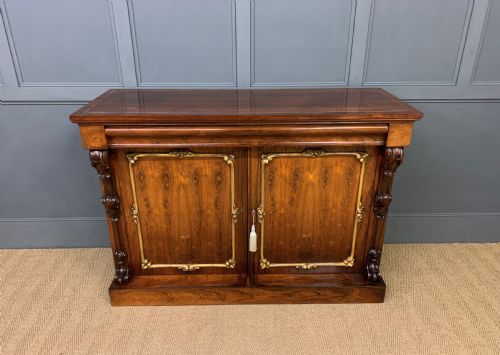
These dark rosewood chiffonier pieces are compact low side cabinets offering enclosed lower storage and upper display, prized for their rich timber figures.
Dark Rosewood Chiffonier
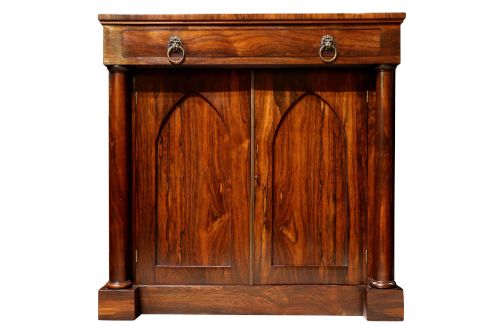
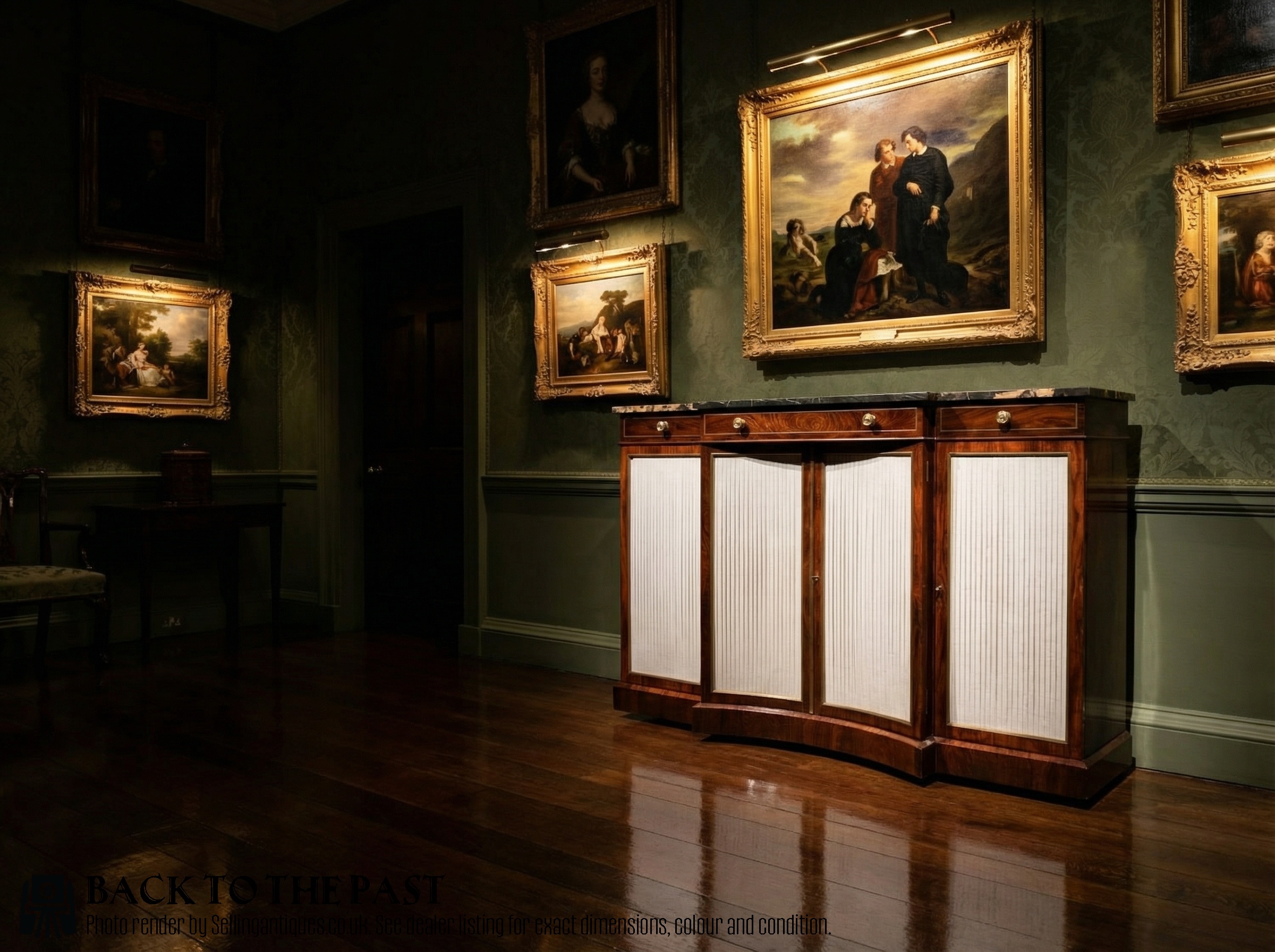
A dark rosewood chiffonier is a low cabinet designed for domestic interiors during the Regency, William IV, and Victorian periods. Most examples found on this page date from the nineteenth century, spanning from the Regency era through to the late Victorian period.
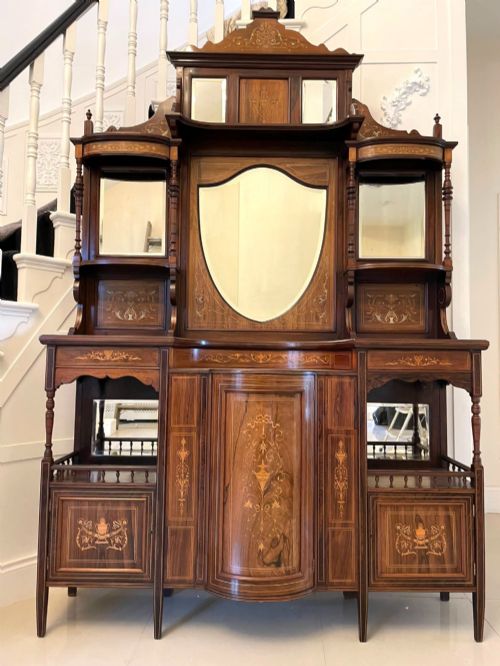
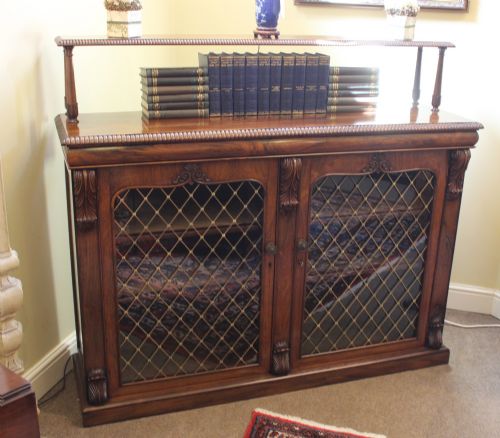
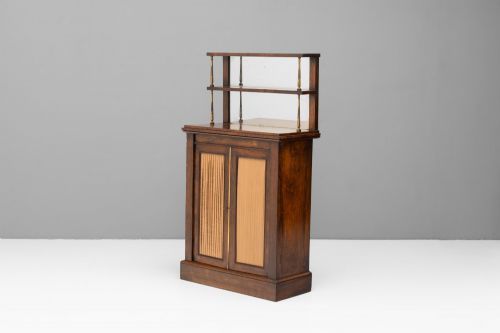
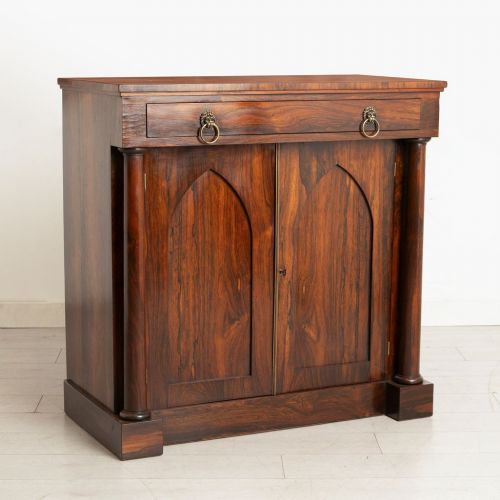
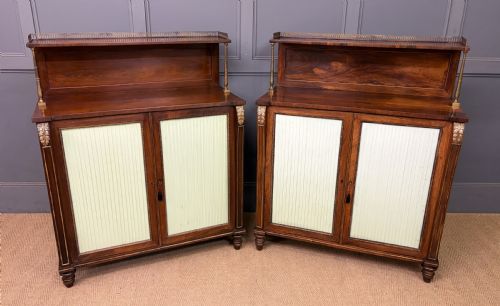
The form typically combines a lower cupboard section enclosed by panelled or glazed doors, sometimes surmounted by a small shelf or mirrored superstructure. Alongside traditional chiffoniers, the listings include related side cabinets, bookcases, and console tables sharing the same timber vocabulary.
Materials and construction
Cabinet makers utilised dense tropical rosewood timber, frequently applied as veneers over secondary woods like pine or mahogany to create rich dark surfaces. Selected pieces incorporate contrasting satinwood or exotic timbers within inlaid decoration.
Construction details include cast brass mounts, brass inlay, glass panels, mirrored glass backs, and marble tops. Certain Regency examples employ simulated rosewood paint applied over a pine carcass.
Dark Rosewood Chiffonier Retail Price Guide 2026
Typical asking prices for dark rosewood chiffonier among the pieces listed under this phrase on Sellingantiques today, from the lower quarter to the upper quarter. They describe what is for sale here now, not the wider market.
One resourceful Regency maker achieved a dark rosewood effect simply by painting a humble pine carcass with simulated grain.
Evaluating quality and proportion
Quality rests upon the selection of the rosewood veneer, where deep grain figures and skilful book-matching elevate the visual impact of the cabinet. The precision of brass inlay and the crispness of carved wooden details distinguish finer workshops from standard production.
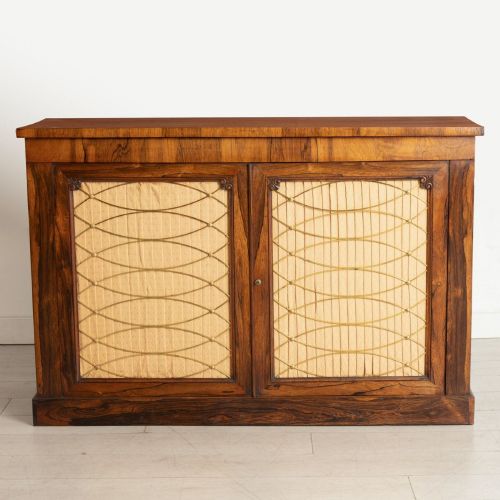
Structural integrity and the retention of original components, such as glass panes, mirrored glass, marble slabs, and fabric panels, determine the standing of an individual piece.
Holland & Sons·Gillows
The Dark Rosewood Chiffonier Glossary
- Chiffonier
- A low side cabinet equipped with cupboards, often featuring a shelf superstructure on top. It evolved during the early nineteenth century to serve dining and drawing rooms.
- Regency
- An English design period spanning the early nineteenth century, characterised by classical revival influences and refined cabinet work. Pieces from this era often display restrained brass mounts and elegant proportions.
- Goncalo Alves
- A dense exotic timber sometimes utilised in place of rosewood during the nineteenth century. It exhibits a striking contrasting grain pattern.
- Marquetry
- The art of applying decorative veneer pieces in wood, brass, or other materials to form geometric or floral patterns on the cabinet surface.
Dark Rosewood Chiffonier: Frequently Asked Questions
What is a dark rosewood chiffonier used for?
These cabinets served primarily as dining room or drawing room furniture for storing serving items, books, and display pieces. The upper surfaces and shelves held decorative objects or porcelain collections.
Today, they function as practical sideboards in living spaces or hallways, offering enclosed storage below and display space above.
How do I distinguish a Regency chiffonier from a Victorian one?
Regency pieces, dating from the early nineteenth century, typically exhibit cleaner architectural lines, classical brass mounts, and simpler grille or panelled doors. They often reflect a lighter, more restrained aesthetic.
Victorian examples tend to be heavier in proportion, sometimes incorporating elaborate marquetry, mirrored superstructures, and more pronounced carving as seen in later nineteenth-century styles.
What woods are used besides rosewood?
While solid rosewood and rosewood veneers dominate these pieces, cabinet makers incorporated supporting secondary timbers like pine within the internal carcase construction.
Additionally, decorative accents utilise contrasting woods such as satinwood for inlay work, alongside alternative dense hardwoods like goncalo Alves.
How should I care for a rosewood surface?
Rosewood requires stable indoor humidity levels away from direct heat sources and strong sunlight to prevent the timber and veneers from drying or fading. Regular dusting with a soft, dry cloth preserves the polished finish.
Avoid silicone-based polishes and excessive moisture, treating the antique timber with traditional wax only when the surface appears dry.