
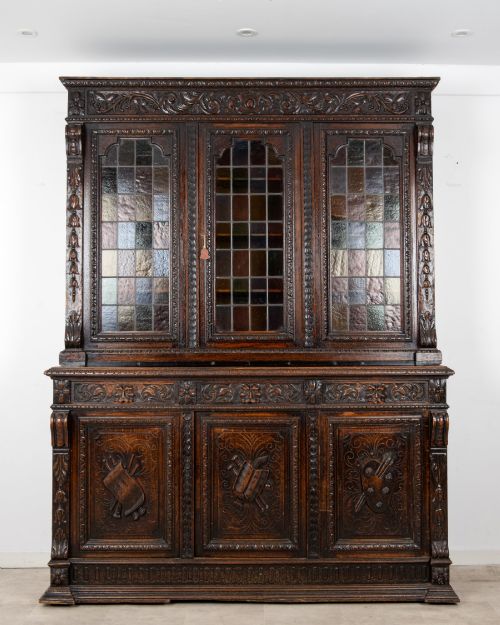
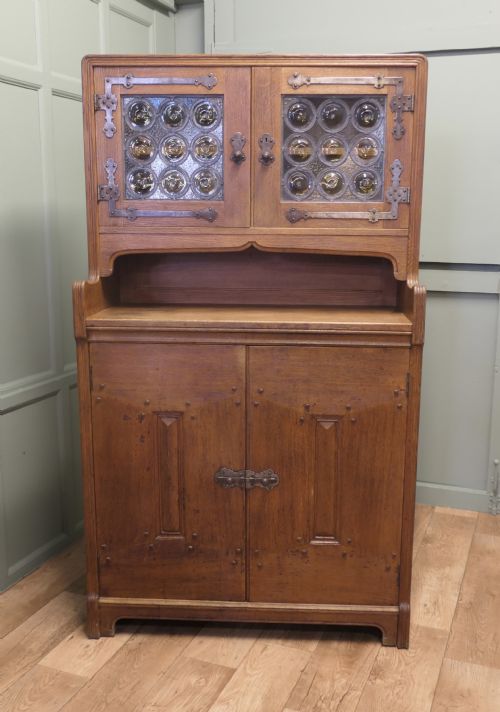
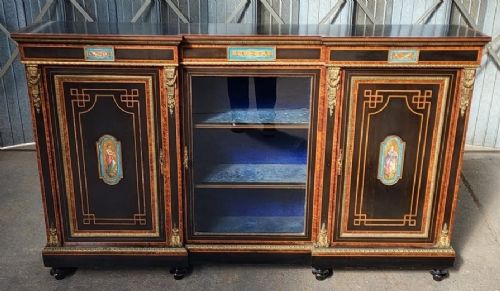
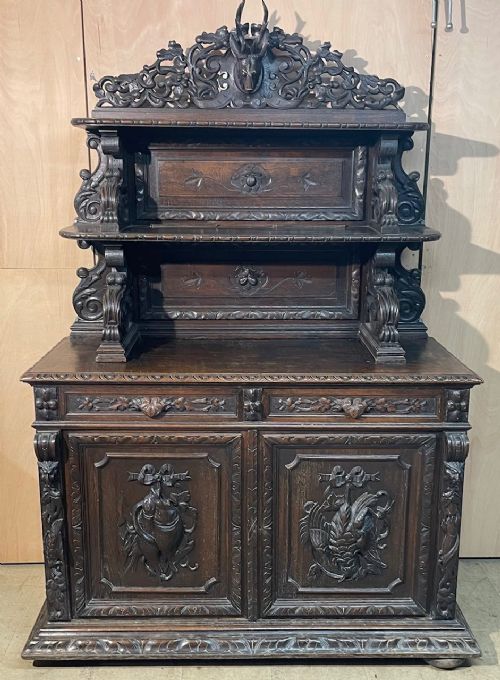


Antique Display Sideboard
When you search for an antique display sideboard, you encounter substantial timber furniture designed to present and store prized possessions.
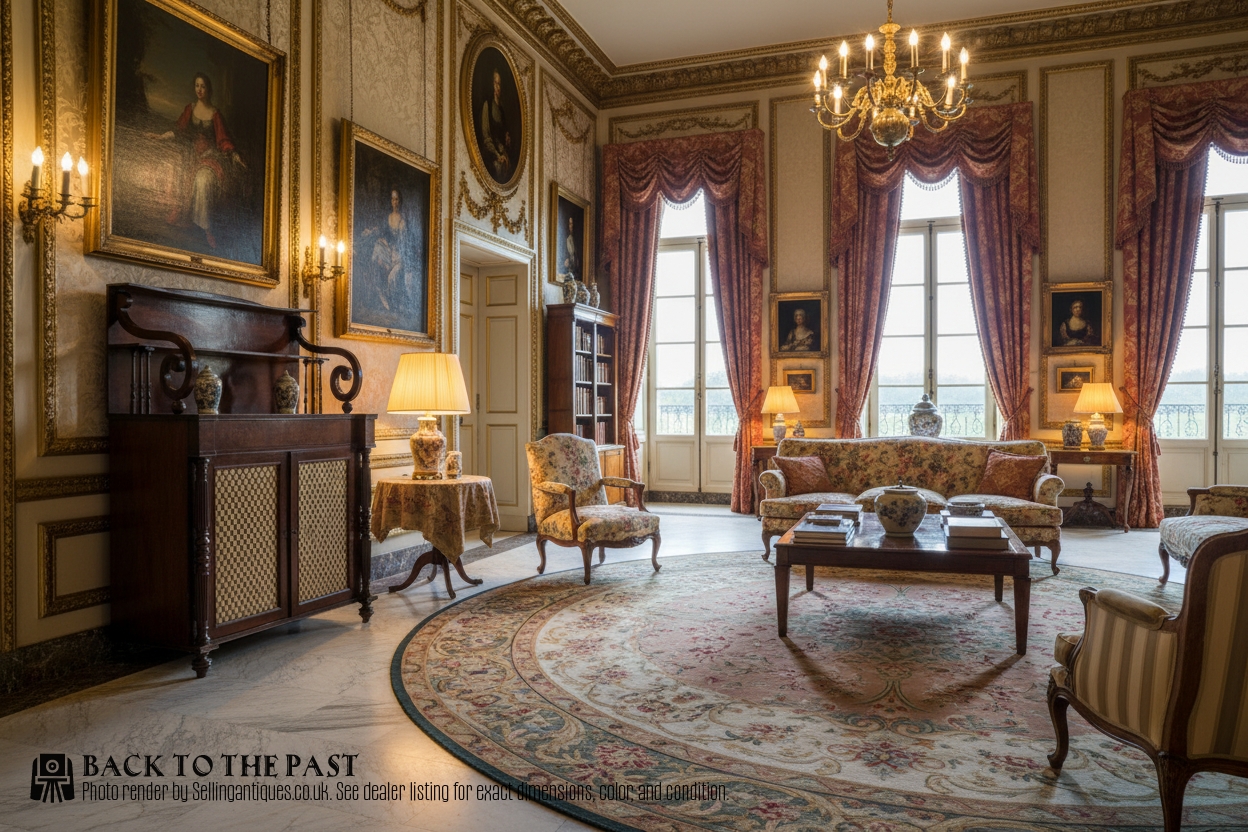
Antique Display Sideboard
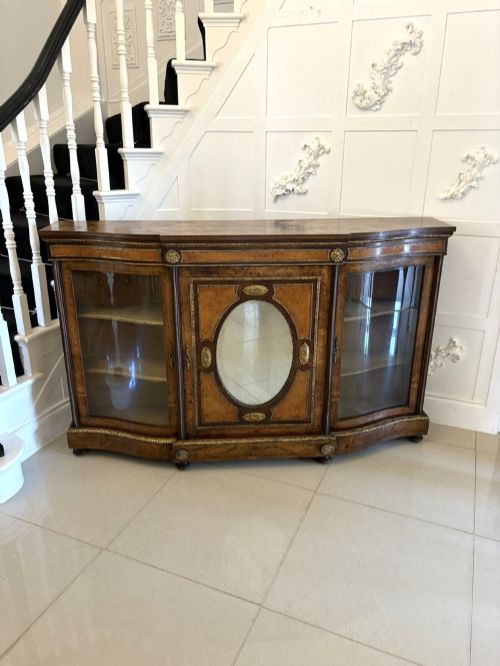
An antique display sideboard merges the utility of a traditional storage base with the visual showcase of a glass-fronted cabinet or open shelving. Pieces span the nineteenth and early twentieth centuries, drawing heavily on Victorian and Edwardian periods.
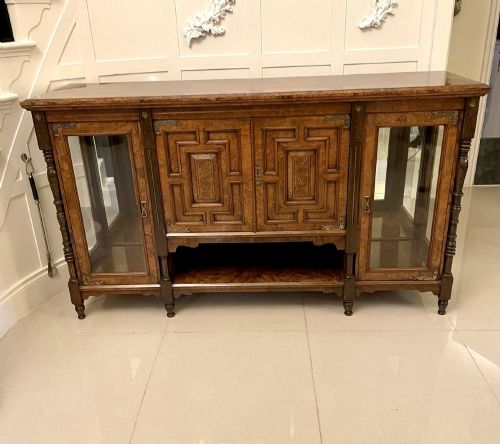
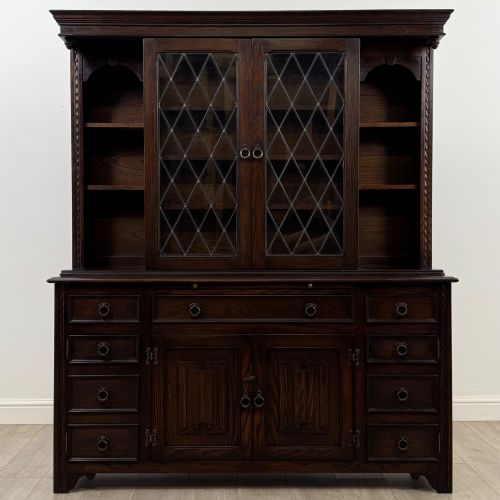
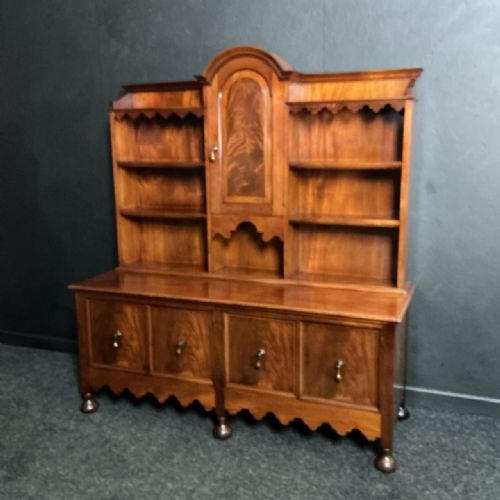
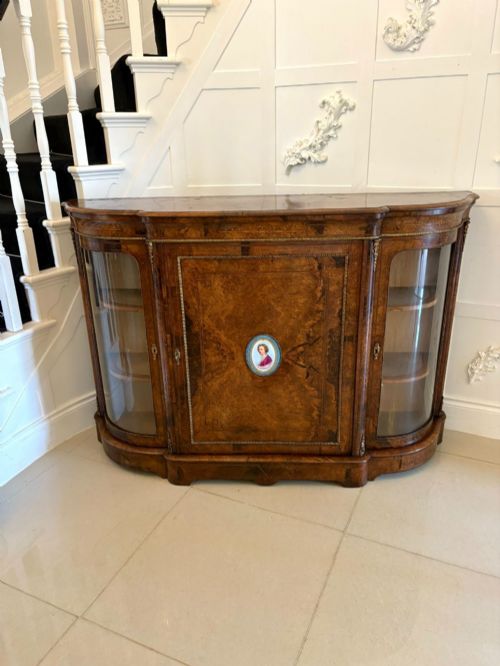
The form appears in various guises across this selection, most commonly as low credenzas with glass doors, tall Welsh dressers featuring open plate racks, and breakfront cabinets. Walnut, oak, and mahogany form the structural backbone of these diverse domestic items.
How they were made
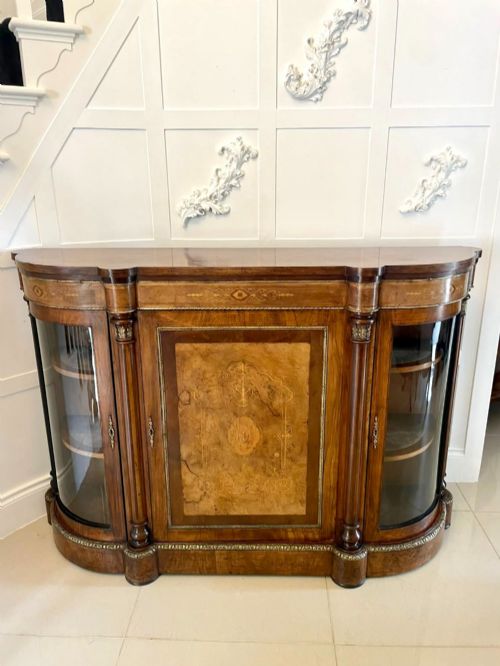
Cabinetmakers utilised dense native and exotic timbers, laying striking veneers such as burr walnut, amboyna, and kingwood over stable secondary woods. Marquetry inlays and carved details frequently adorn the primary surfaces of these large storage units.
Metal mounts in cast brass and ormolu accent the corners, doors, and borders of finer credenzas. Glass panels, occasionally stained or bevelled, enclose the display sections to protect silver and porcelain from dust.
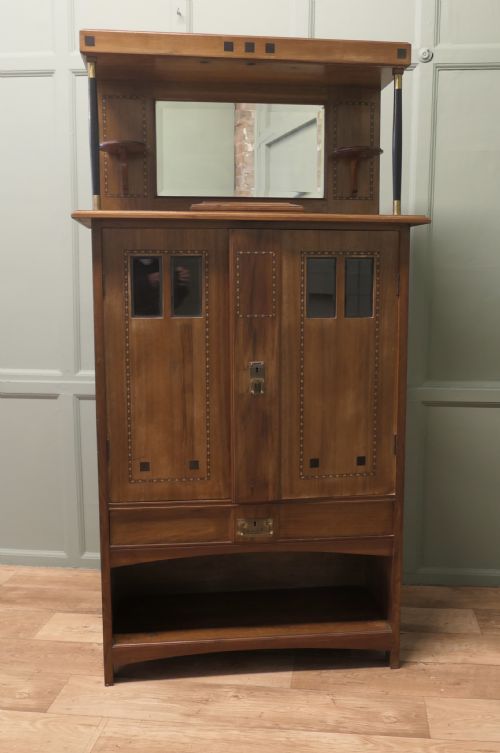
Listings feature eighteenth, nineteenth, and early twentieth-century examples in oak, walnut, pine, mahogany, and rosewood.
What varies in quality
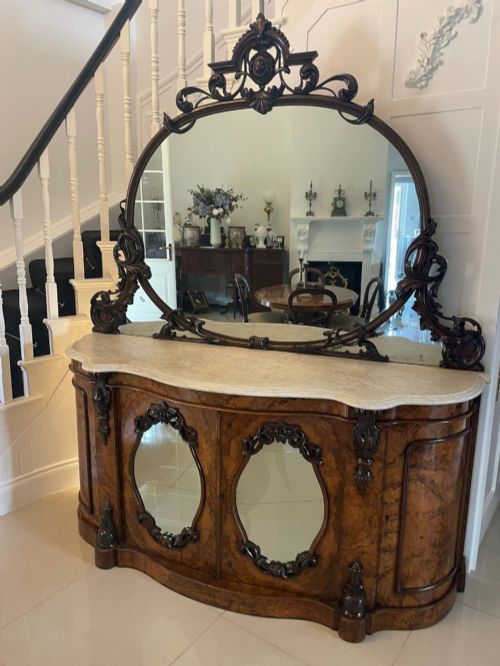
The sophistication of the timber selection and the precision of the marquetry define the upper tier of these pieces. Elaborate ormolu mounts and serpentine shaped fronts indicate considerable workshop investment and superior skill.
Simpler pine or oak kitchen dressers rely on honest construction and original patination rather than ornamental excess. The harmony of proportions and the integrity of the integrated glass distinguish the finer examples from utility items.
Collinson & Lock·Edwards & Roberts·Lamb of Manchester
The Antique Display Sideboard Glossary
- Credenza
- A low cabinet, typically enclosed by doors, used for storage and display. Victorian examples often feature curved glass side compartments and porcelain plaques.
- Marquetry
- The art of applying decorative pieces of veneer to a structure to form intricate patterns. Floral and geometric designs appear frequently on walnut surfaces.
- Ormolu
- Gilded bronze applications utilised as mounts on furniture. These decorative elements add metallic contrast to dark timber frames.
- Welsh Dresser
- A kitchen or dining room storage unit combining base cupboards with upper plate racks or shelving. Pine and oak are the predominant materials.
Antique Display Sideboard: Frequently Asked Questions
How do I style a display sideboard?
Position the piece against a principal wall in a dining room or living space where its proportions can anchor the room. Use the internal shelves to exhibit ceramics, glassware, or books while keeping everyday items hidden in the base cupboards.
Ensure adequate clearance for doors that swing outward or slide, particularly with serpentine or breakfront configurations.
How do I date a display sideboard?
Examine the timber species, construction joints, and decorative style to narrow the period of origin. Victorian pieces often display rich burr walnut veneers and heavy ormolu mounts, while Edwardian examples lean toward lighter mahogany or satinwood.
Secondary woods inside drawers and the presence of hand-cut versus machine-cut elements provide additional chronological clues.
What is the difference between a credenza and a sideboard?
A credenza traditionally sits lower to the ground and frequently includes curved glass side cabinets designed specifically for displaying ornaments. Sideboards focus more heavily on surface serving space and large lower cupboards for dining linen.
Many nineteenth-century iterations blur these lines by incorporating glazed display tops onto traditional sideboard bases.