



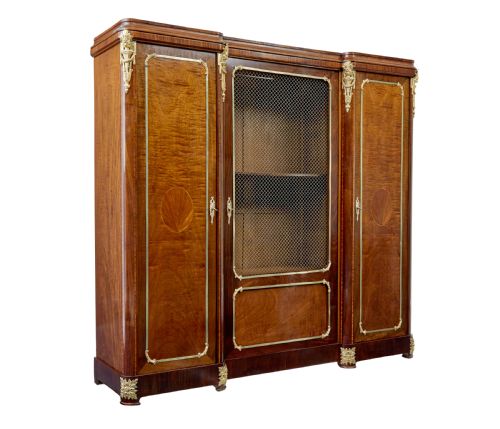


Antique Brass Mesh Cupboard
These antique brass mesh cupboards and associated side cabinets bring architectural warmth to a room while keeping contents subtly veiled behind fine metalwork.
Antique Brass Mesh Cupboard
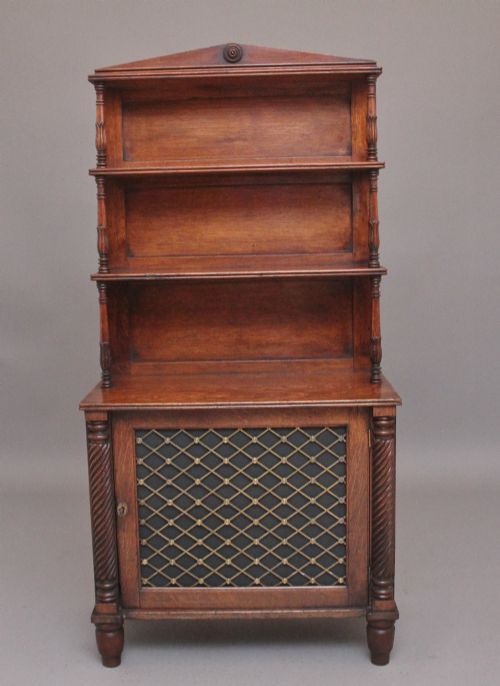
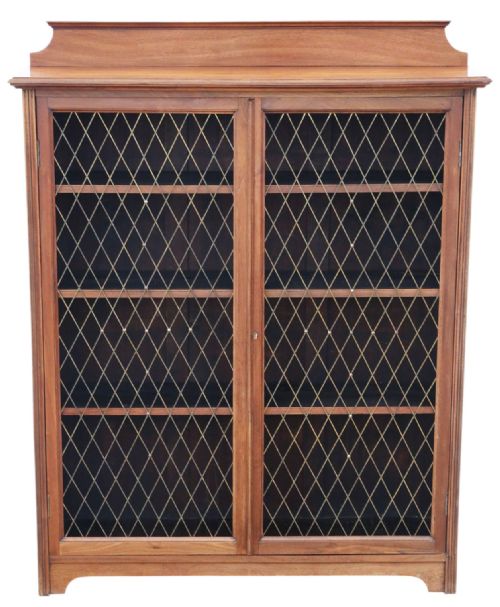
When searching for an antique brass mesh cupboard, buyers encounter side cabinets, bookcases, and chiffoniers dating from the eighteenth century through to the early twentieth century. These pieces function primarily for display and storage, utilising woven wire grilles in place of clear glass or solid timber panels.
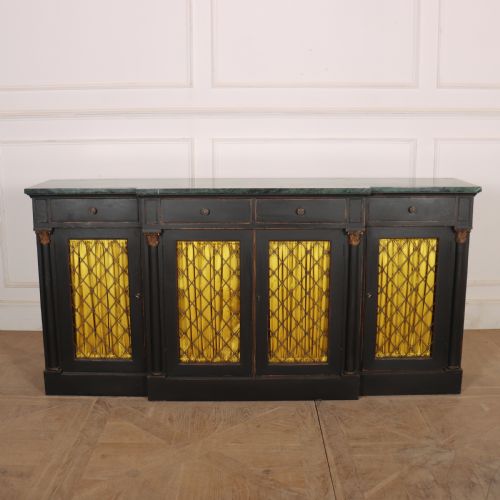
The selections available here lean heavily towards Regency, Victorian, and Edwardian periods, manifesting in woods such as mahogany, rosewood, walnut, and satinwood. Forms range from low side cabinets and tall bookcases to gentleman's hanging wardrobes and breakfront dresser bases.
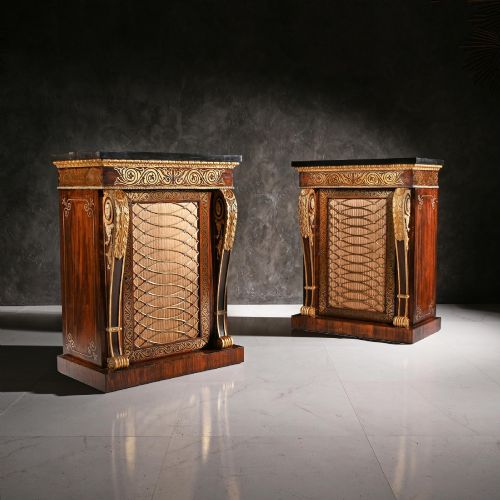
Buyers are most likely to meet refined Regency side cabinets featuring brass inlay and Neoclassical or Egyptian Revival influences, alongside simpler nineteenth century oak and walnut iterations. Each piece balances practical enclosed storage with the lighter aesthetic provided by brass mesh door inserts.
Materials and construction methods
Cabinetmakers constructed these pieces using dense hardwoods including mahogany, rosewood, and walnut, often applying delicate satinwood veneers and intricate brass inlay work. Timber frames were joined with traditional cabinetry methods to house the heavy glass or mesh panels securely.
Fine brass wire was woven into tight mesh screens and secured behind wooden or metal door frames to protect books and delicate objects while permitting airflow. Marble tops occasionally surfaced on robust side cabinets, adding weight and a contrasting tactile surface to the polished timber bodies.
Gentlemen of the Regency period preferred their wardrobes discreetly ventilated.
Distinctions in craftsmanship and design
The distinction between standard utility furniture and superior cabinetmaking lies in the precision of the timber matching, the crispness of brass inlay, and the refinement of period styling such as Regency or French Empire influences. Finer examples display meticulous attention to interior fittings, adjustable shelving, and well-proportioned architectural cornices.
Workmanship is further judged by the integrity of the woven brass mesh panels and how cleanly they integrate into the door frames without distortion. Superior pieces maintain original hardware, sound structural joinery, and patinated surfaces that reflect the intended elegance of their historical period.
Louis Constantin Le Gaigneur
The Antique Brass Mesh Cupboard Glossary
- Brass mesh
- Woven metal wire forming a flexible grille used in cabinet doors to conceal contents while allowing visibility and ventilation. It frequently replaces glass panels in library bookcases and side cabinets.
- Chiffonier
- A small sideboard or low cabinet developed in the nineteenth century, typically featuring enclosed storage below and sometimes a shelf above. These pieces served practical functions in drawing rooms and dining areas.
- Regency
- A British design style spanning the early nineteenth century characterised by classical motifs, dark timbers, and brass ornamentation. Pieces from this era often show Neoclassical or Egyptian Revival influences.
- Satinwood
- A durable, lustrous timber native to India and Sri Lanka, prized for its golden yellow colour and fine grain. Cabinetmakers utilised it extensively for veneers and decorative inlay work.
Antique Brass Mesh Cupboard: Frequently Asked Questions
What is an antique brass mesh cupboard?
These items are storage furniture pieces featuring doors inset with woven wire grilles instead of solid wood or glass panels. They encompass side cabinets, bookcases, and chiffoniers originating from the eighteenth to early twentieth centuries.
Cabinetmakers utilised them primarily in libraries, drawing rooms, and dining spaces to store books and valuables while maintaining ventilation.
How were these cupboards used historically?
Households utilised these pieces to house valuable books, linens, and ceramic collections safely away from dust. The mesh doors allowed air to circulate while keeping contents partially obscured.
They served as functional furniture in principal rooms, combining display surfaces on top with secure enclosed shelving below.
How do I care for wooden cabinets?
Maintain timber surfaces by dusting with a dry, soft cloth and applying appropriate wax sparingly to nourish the grain. Avoid placing pieces near direct heat sources or strong sunlight to prevent veneer splitting.
Inspect the brass mesh periodically and clean gently with a dry brush to remove dust accumulation without disturbing the wire weave.
How do I identify a Regency cabinet?
Regency pieces often display classical proportions, dark hardwoods like rosewood and mahogany, and precise brass inlay work. Look for architectural details inspired by Neoclassical or Egyptian Revival styles.
Construction methods typically involve traditional joinery and heavy timbers characteristic of the early nineteenth century.