


Regency Oak Cabinet
These regency oak cabinet pieces bring solid timber and architectural proportion to a room, offering sturdy storage with a refined finish.
Regency Oak Cabinet
A regency oak cabinet brings together utilitarian storage and the refined aesthetic of the early nineteenth century. Buyers searching this phrase encounter side cabinets, display cases, bookcases, and regional vernacular pieces.
The pieces on this page span the Georgian, Regency, William IV, and Victorian eras, reflecting a broad tradition of cabinet-making. Welsh country and vernacular forms sit alongside grander urban examples.
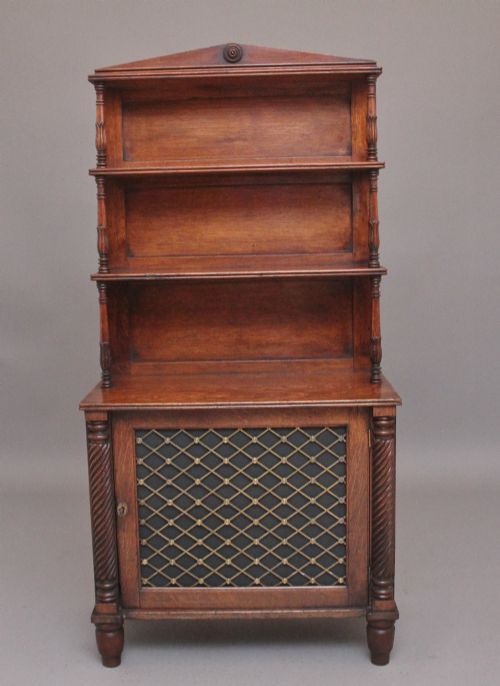
Forms range from bread and cheese cupboards and tack cupboards to tall glazed bookcases on stands and credenzas. Pollard oak and burr oak variants appear frequently alongside plainer timber.
How they were made
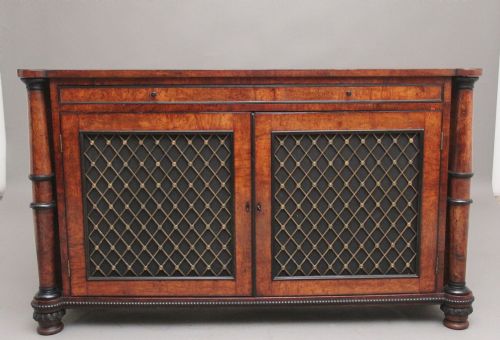
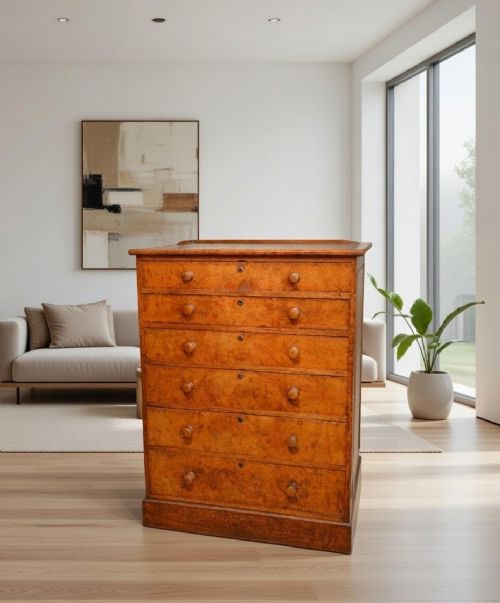
Makers utilised solid oak as the structural foundation, often pairing it with decorative veneers of pollard or burr oak to create striking grain patterns on the principal surfaces. Ebony and holly stringing or inlaid decoration provide crisp linear contrast.
Brass fittings, including handles, hinges, and grilles, add functional detail to glazed doors and secretaire drawers. Glass panels allow display cabinets and bookcases to showcase contents while protecting them from dust.
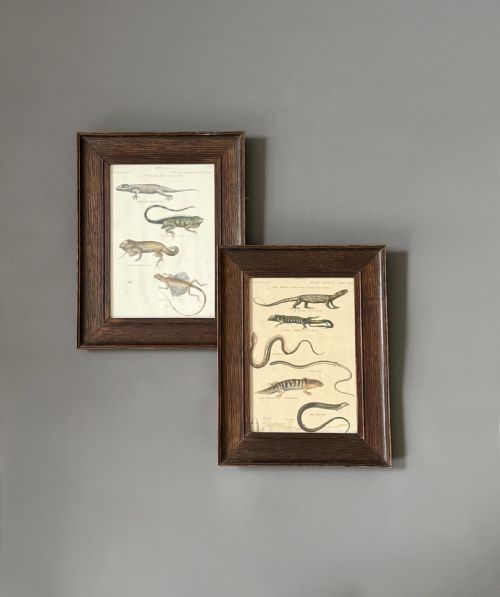
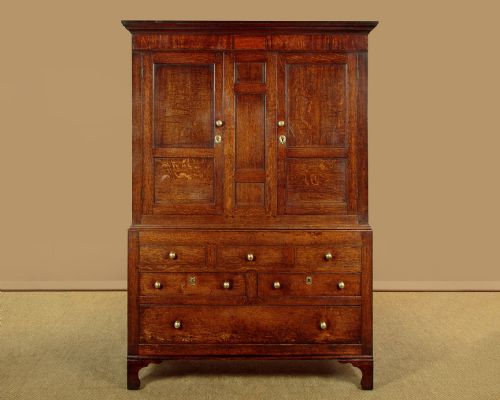
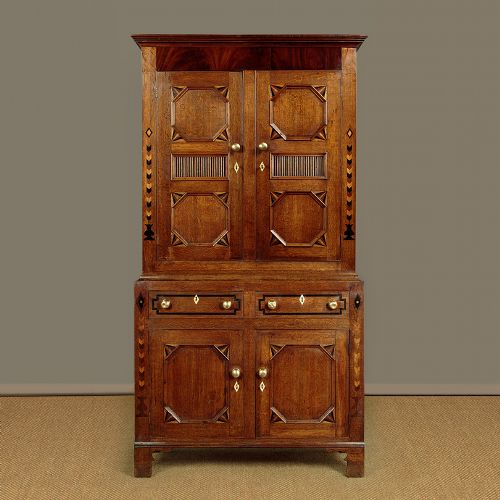
A Welsh country cupboard c.1830 shares space with nineteenth-century coloured reptile engravings by a medical doctor.
What varies in quality
Quality rests upon the selection of timber, where regular oak boards differ significantly from highly figured pollard and burr oak veneers. The sophistication of the grain matching across drawer fronts and doors distinguishes standard work from finer productions.
Construction methods and secondary details like inlaid decoration, ebony stringing, and cast brass hardware reveal the maker's hand. Regional vernacular pieces rely on robust joinery and practical proportion, whereas urban Regency cabinets emphasise polished architectural lines.
William Trotter·William Bird
The Regency Oak Cabinet Glossary
- Pollard oak
- Timber taken from a tree that has been pruned at a height above livestock grazing reach, producing a dense, knotty grain pattern. This highly figured wood was favoured for decorative cabinet fronts during the Regency period.
- Secretaire
- A desk disguised as a chest of drawers or cabinet, featuring a drop-down front that reveals a writing surface and small interior compartments. It combines workspace with concealed storage.
- Press cupboard
- A large storage piece with upper and lower cupboard sections, traditionally used for household linens and garments. Welsh vernacular examples often show distinct regional construction methods.
- Credenza
- A sideboard or low cabinet for dining rooms, frequently featuring glazed or panelled doors. Victorian and Regency versions in pollard oak offer substantial display and storage space.
- Stringing
- A narrow strip of contrasting wood, such as ebony or holly, inlaid into the surface of a cabinet to form borders or geometric patterns. It provides a sharp visual edge to door panels and drawer fronts.
Regency Oak Cabinet: Frequently Asked Questions
What is pollard oak?
Pollard oak comes from trees pruned specifically to encourage dense, knotty growth, resulting in a highly decorative grain pattern.
Cabinet-makers used these figured veneers on drawer fronts and doors to create striking visual contrast against plainer timbers.
How do I spot regional styles?
Regional pieces like Welsh country cupboards display simpler, robust construction methods suited to domestic farmhouses.
Urban Regency cabinets feature more classical architectural proportions and refined decorative veneers.
Where were these cabinets used?
These pieces served practical storage and display functions in libraries, dining rooms, and parlours across the home.
Bookcases held volumes, while side cabinets and credenzas stored household goods and displayed decorative objects.
How do I date an oak cabinet?
Dating relies on observing structural characteristics, timber choices, and stylistic details associated with the Georgian, Regency, and Victorian eras.
Inlaid stringing, brass hardware, and veneer types provide further clues to the period of manufacture.