
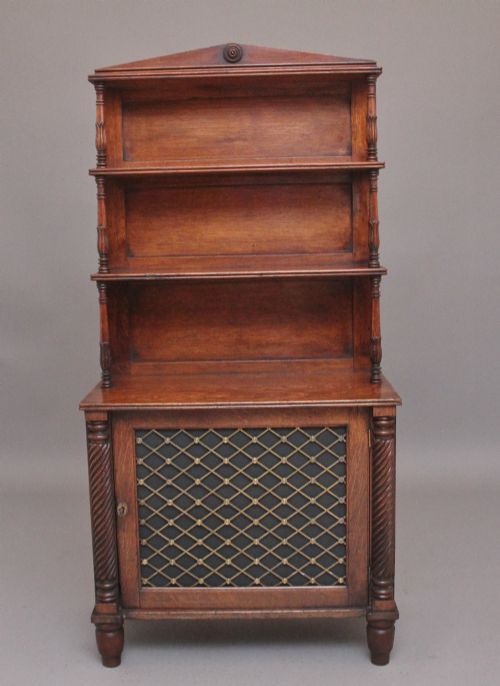
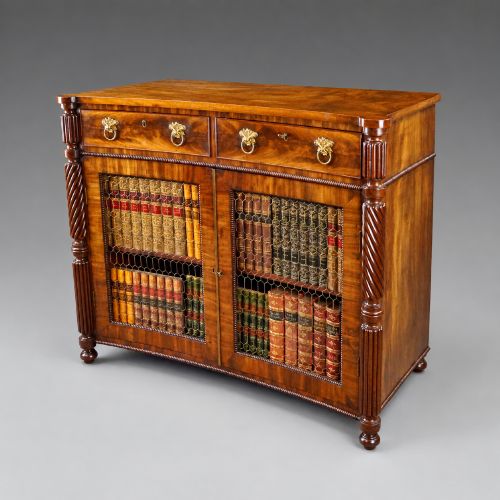
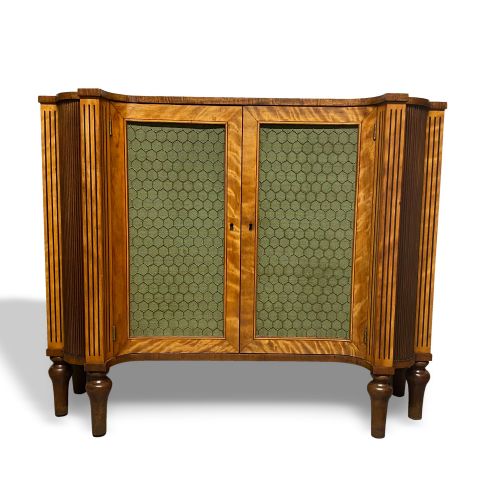
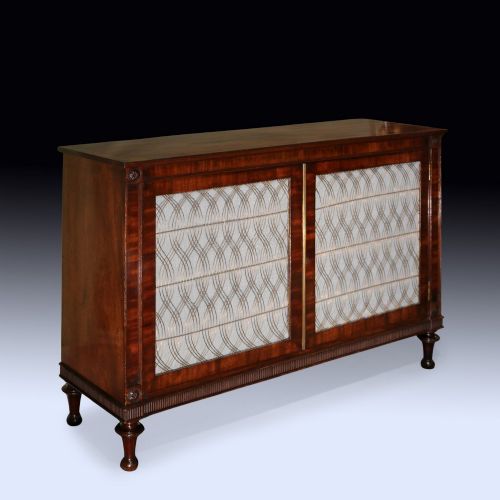


Wire Grille Chiffonier
A wire grille chiffonier brings elegant low-level storage to a room, offering brass mesh doors that reveal lined interiors while keeping contents neatly concealed.
Wire Grille Chiffonier
When you search for a wire grille chiffonier, you are looking at low side cabinets and bookcases designed primarily during the Regency and William IV periods, alongside Georgian and 1930 interpretations. These low-profile pieces combine display space with enclosed storage, frequently featuring fabric-backed wire mesh doors.
The versions you are most likely to meet on this page are constructed from rich timbers like rosewood and mahogany, with occasional examples in satinwood, oak, or walnut. They serve as versatile sideboard alternatives in dining rooms, living spaces, or hallways.
Makers often incorporated brass inlay, delicate boxwood stringing, or columns to elevate the design. The interiors typically contain adjustable shelving behind the distinctive wire or brass grille panels.
How they were made
Cabinet makers utilised dense native and imported timbers, notably solid mahogany and rosewood veneers laid over secondary framing. Satinwood and oak appear across specific Georgian and 1930 pieces, demonstrating traditional joinery and carcase construction.
Fine brass wire or woven brass grilles were fitted into timber door frames, frequently backed with pleated silk or fabric to soften the interior view. Brass inlay, stringing, and cast mounts provided structural contrast and decorative emphasis.
Materials recorded across current pieces include mahogany, rosewood, satinwood, oak, brass, glass, fabric, and silk.
What varies in quality
The distinction between standard and superior pieces rests upon the choice of timber and the precision of cabinetwork. Dense, well-figured rosewood veneers and finely executed brass inlay indicate higher workshop standards.
Proportion and the execution of secondary details, such as turned columns, fitted interior shelves, and original brass grilles, separate ordinary furniture from exceptional cabinet-making.
John McLean·Ince & Mayhew
The Wire Grille Chiffonier Glossary
- Chiffonier
- A low cabinet evolved from the sideboard, featuring cupboards below and often shelving above. It became a staple of Regency and William IV interiors for dining and drawing rooms.
- Grille
- A lattice of fine wire or metal set into cabinet doors to provide ventilation or visibility. In these pieces, brass is the predominant metal used for the mesh.
- Regency
- A British design period spanning the early nineteenth century, characterised by classical restraint, architectural motifs, and scrolled supports. Pieces from this era often display delicate brass stringing.
- Rosewood
- A heavy, dark timber with distinct figuring, favoured for high-status cabinet-making during the nineteenth century. Its rich grain takes a high polish.
- Stringing
- Thin lines of contrasting wood or light-coloured inlay used to outline panels and drawers. It adds linear definition to mahogany and rosewood surfaces.
Wire Grille Chiffonier: Frequently Asked Questions
What is a wire grille chiffonier?
A wire grille chiffonier is a low nineteenth-century cabinet featuring doors inset with fine brass mesh instead of solid wood or glass. They were used to store books, linens, or glassware while allowing subtle visibility through the mesh.
These pieces typically sit below table height and often include lined interiors behind the brass wire doors. They function well as low sideboards or media consoles in modern homes.
How do I style a chiffonier at home?
Place a chiffonier against a living room or dining room wall where its low profile allows artwork or mirrors to hang comfortably above it. The top surface provides an ideal platform for lamps, decorative bowls, or small sculptures.
Inside, the combination of timber shelves and wire doors lets you store tableware or books out of sight while maintaining textural interest in the room.
How do I tell Regency from William IV?
Regency pieces often display refined classical proportions, delicate brass stringing, and restrained mounts. They lean towards elegance and linear grace.
William IV furniture tends to be heavier and more robust, featuring larger scrollwork, bolder carved columns, and denser timbers. The proportions shift towards a sturdier aesthetic.
What timbers were used for these cabinets?
Makers predominantly used dark, highly figured timbers such as rosewood and mahogany for high-status commissions. Satinwood and oak appear less frequently, offering a lighter palette.
These woods were selected for their strength and ability to take a deep polish, often enhanced with brass inlay or fine stringing.