
Library Cabinet
When you search for a library cabinet, you are looking for substantial timber storage designed to house books and papers.
Library Cabinet
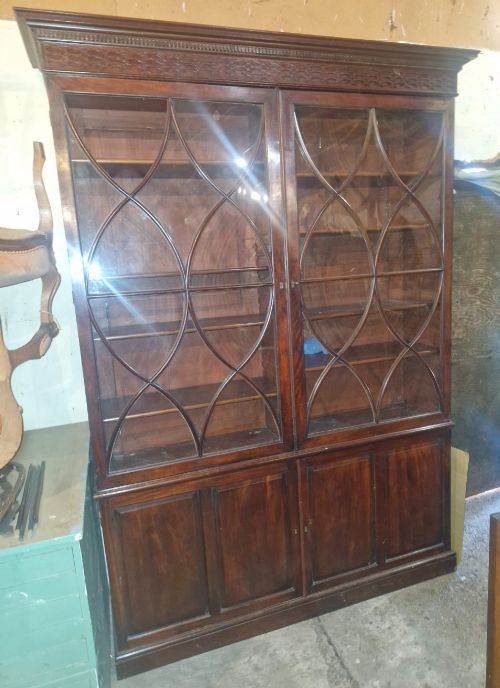
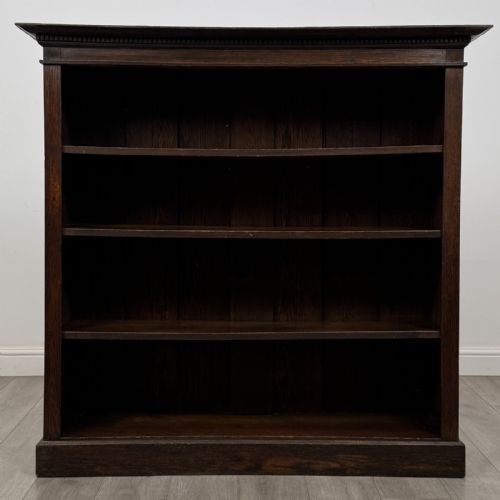
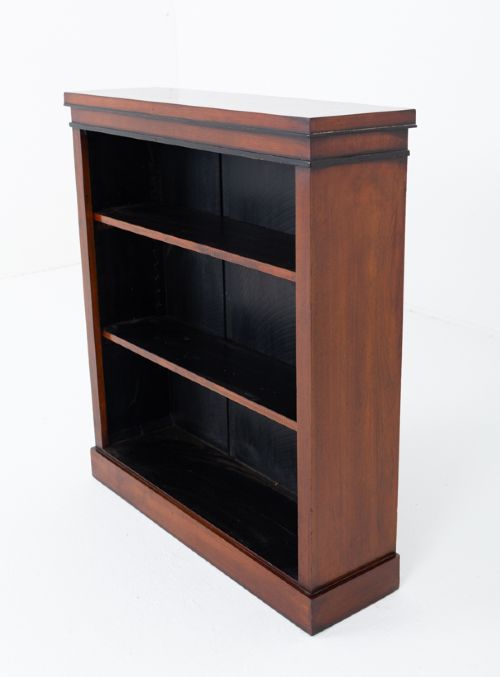
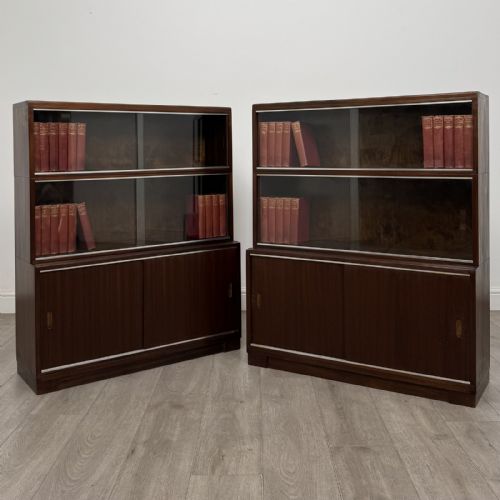
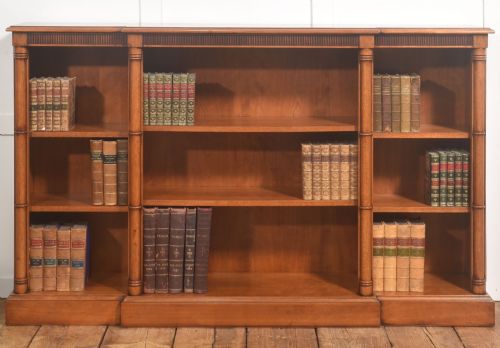
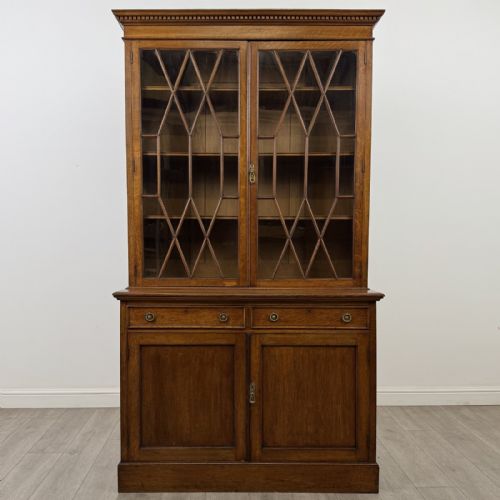
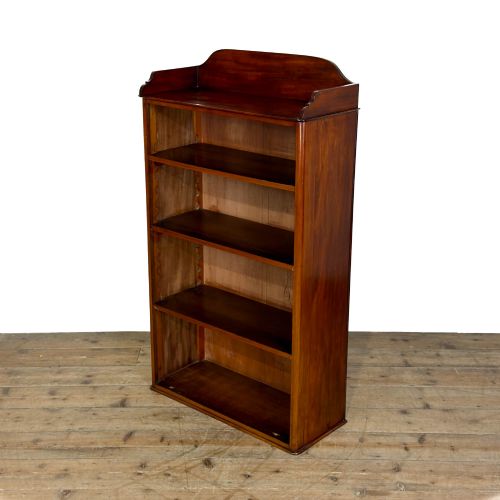
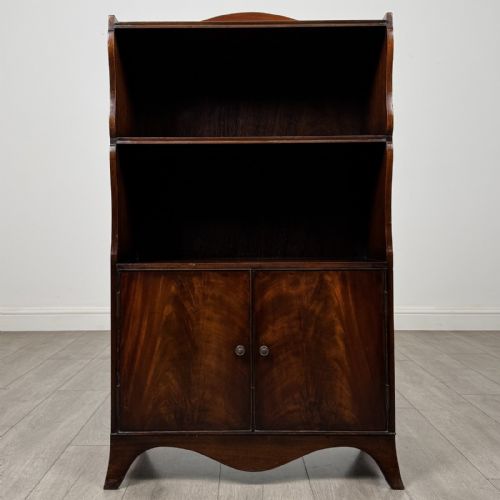
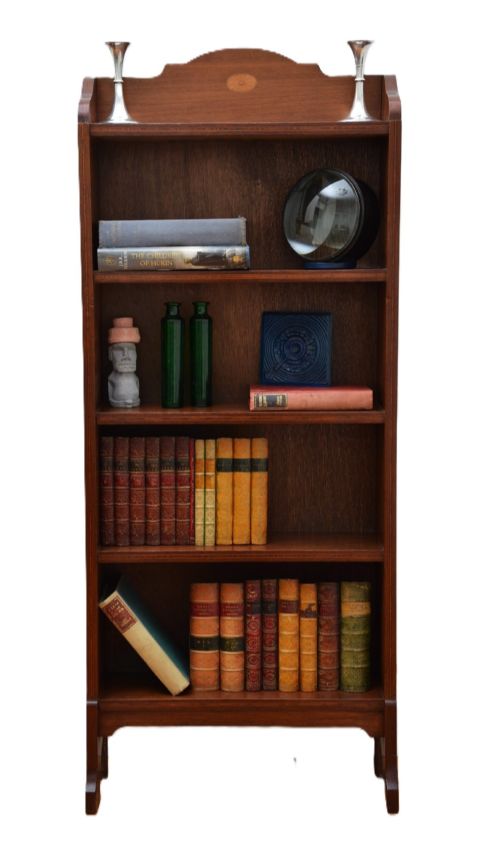
A library cabinet serves to organise books and documents, appearing most frequently in mahogany, oak, and walnut across this selection. These pieces range from open bookcases and glazed display cabinets to secretaire bookcases equipped with drop-down writing desks.
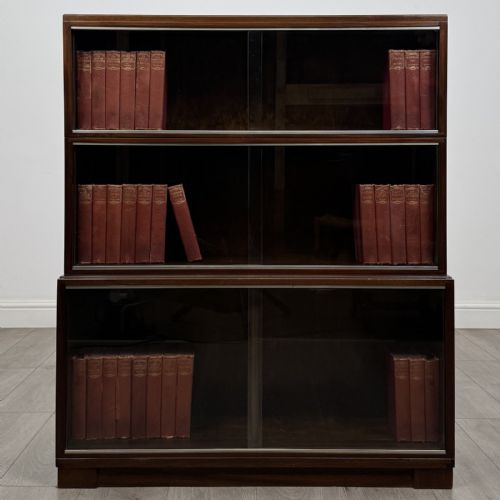
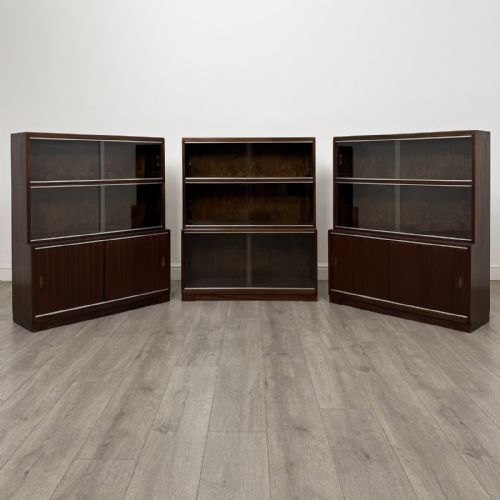
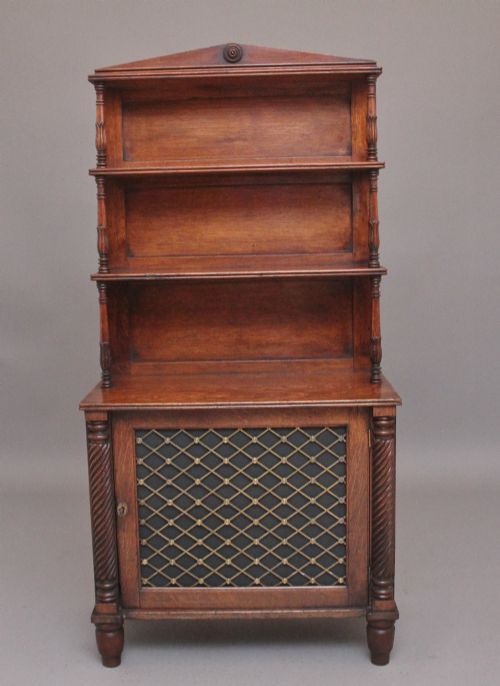
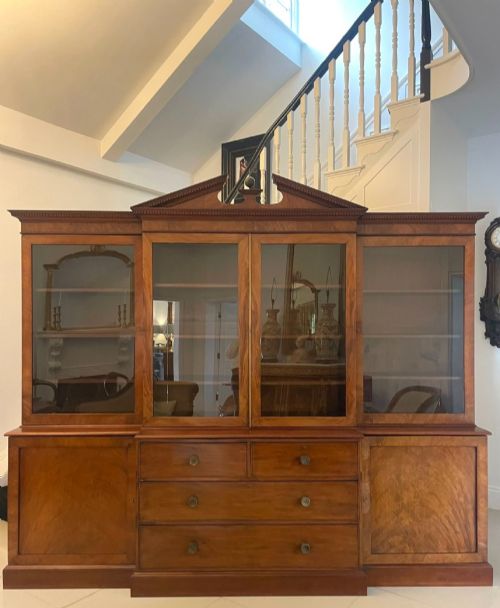
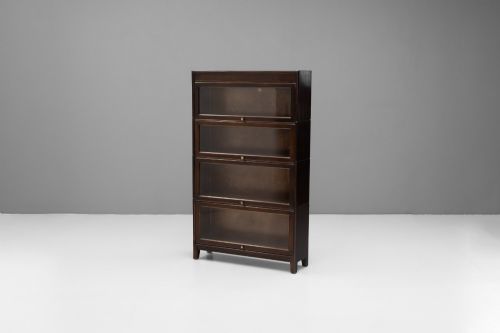
The dominant examples hail from the nineteenth century, including Victorian and Edwardian periods, alongside Regency designs and early twentieth-century sectional furniture. Buyers will encounter breakfront configurations, modular stacks, and tall vertical timber shelving units.
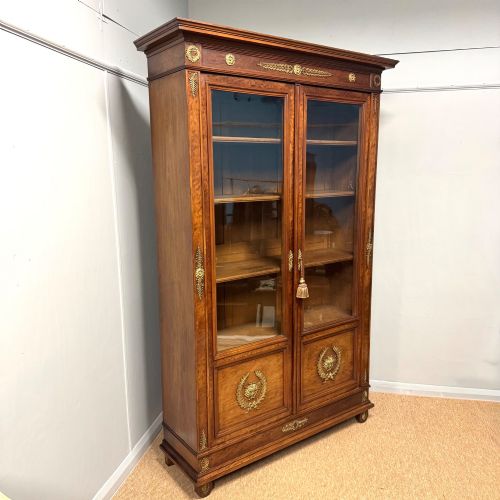
Makers and workshops of the past utilised various stylistic revivals, incorporating Chippendale, Jacobean, and French Empire influences into heavy timber cabinetry. Many items feature adjustable shelving to accommodate diverse volumes of literature.
Materials and Construction
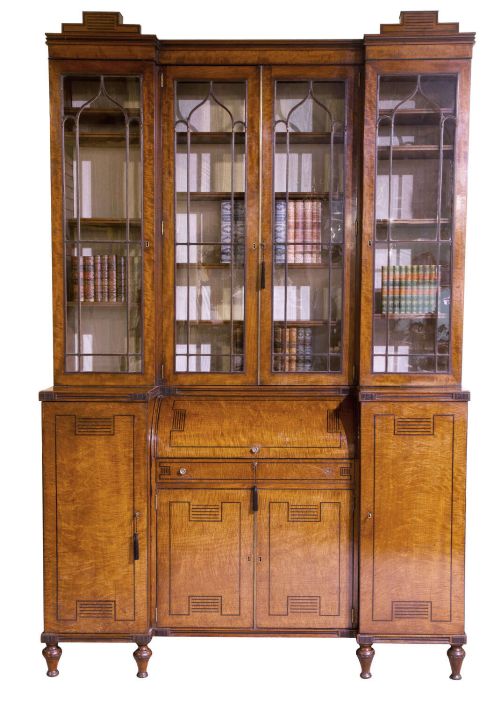
Cabinet makers relied primarily on solid mahogany, oak, and burr walnut, frequently applying veneers to larger flat surfaces to highlight timber grain. Brass hardware, ormolu mounts, and inlaid satinwood or ebony details provide contrast to the primary woods.
Glass panels feature heavily in upper doors, whilst internal mechanisms such as sliding doors or stacking modular sections demonstrate mechanical ingenuity in later nineteenth and early twentieth-century designs.
One school library cabinet spent decades holding heavy textbooks before retiring to someone's private reading room.
Indicators of Quality
The caliber of a library cabinet rests on the selection of timber veneers, the precision of inlay work, and the structural integrity of breakfront carcases. Superior examples display careful grain matching on large expanses of mahogany or burr walnut.
Finer pieces incorporate integrated brass mechanisms for adjustable shelving and solid timber drawer linings with clean dovetail joints. The integration of quality glazed doors and heavy cornices, such as dentil moulding, elevates the standing of the piece.
Gunn Furniture·Lebus·Gillows·Bowman Brothers London·Hille
The Library Cabinet Glossary
- Breakfront
- A large cabinet design where the central section projects forward from the flanking wings. This configuration breaks up the flat façade of substantial library furniture.
- Secretaire
- A cabinet incorporating a fitted writing drawer or drop-front desk compartment. It combines book storage with a functional writing surface.
- Astragal
- Moulding profiles used to hold panes of glass within cabinet doors. These wooden bars create geometric glazed patterns typical of period bookcases.
- Ormolu
- Gilt-bronze mounts applied as ornamentation to furniture. This decorative technique appears on French Empire and nineteenth-century pieces.
- Cornice
- The decorative horizontal moulding crowning the top of a cabinet. Dentil cornices feature small rectangular tooth-like blocks along the projection.
Library Cabinet: Frequently Asked Questions
How do I spot a secretaire bookcase?
Look for a middle drawer that pulls out and folds down to reveal a fitted interior of small pigeonholes and small drawers for writing.
This drop-front mechanism transforms the upper bookcase section into a compact writing desk while keeping the lower shelves or cupboards intact for book storage.
Are the shelves adjustable in these cabinets?
Many period and vintage library cabinets feature adjustable wooden shelving supported by rack-and-pinion mechanisms or traditional wooden support strips.
This adaptability allows collectors to house books of varying heights, from small octavos to large folio volumes.
How do I care for antique mahogany and walnut?
Keep timber library furniture away from direct sunlight and steady heat sources to prevent the wood and delicate veneers from drying out or splitting.
Apply a microcrystalline wax periodically and dust gently with a soft cloth to preserve the natural lustre of the polished wood surface.