

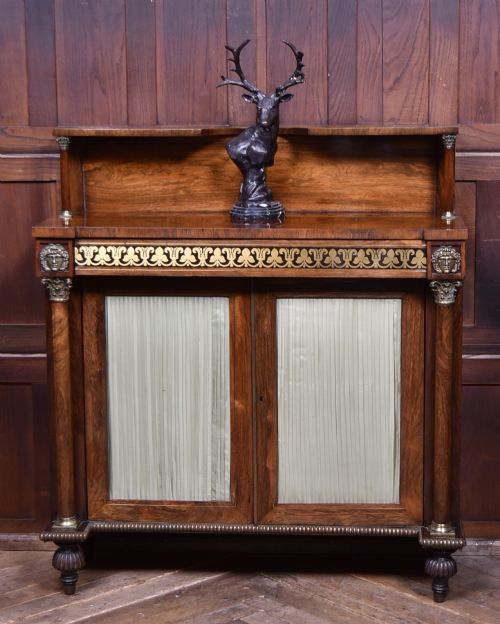
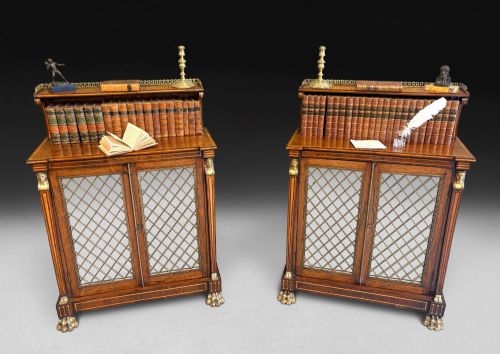
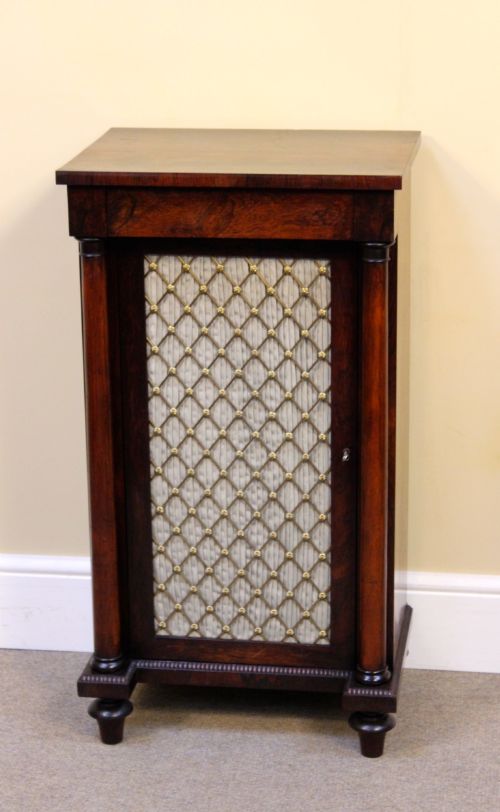
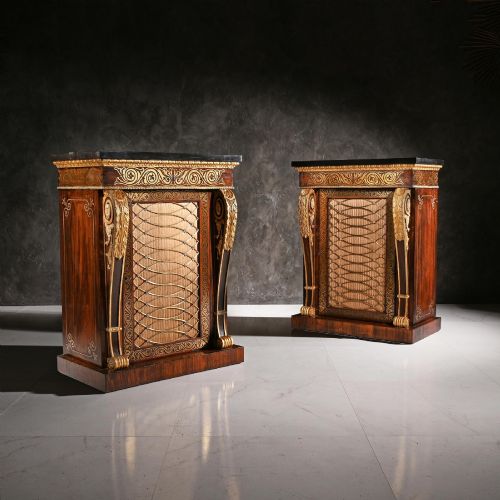
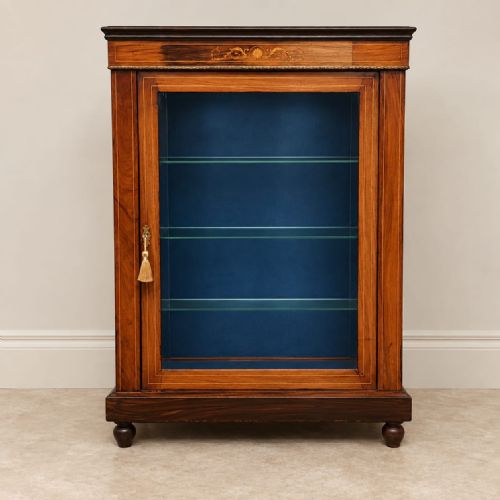
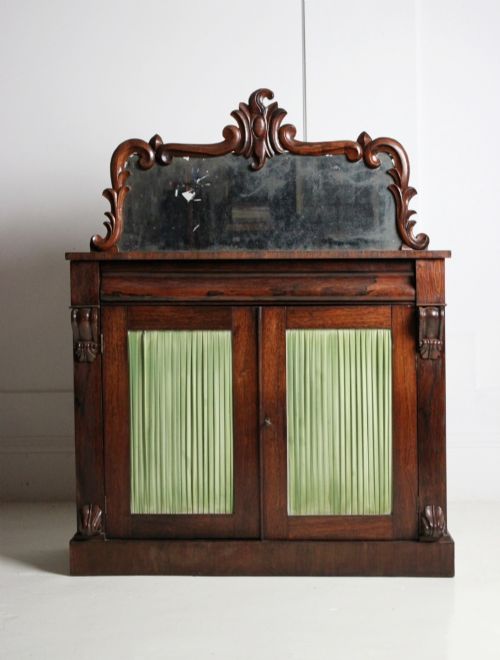
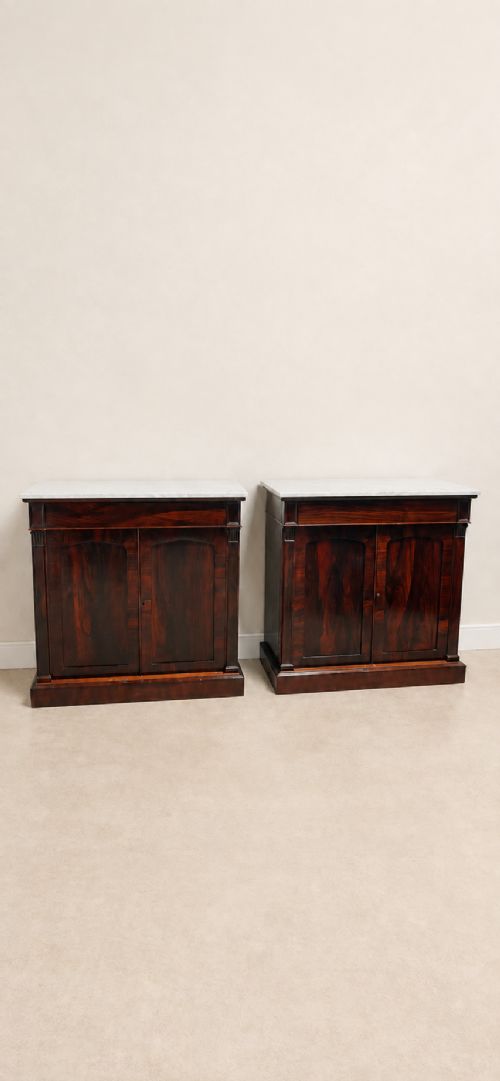
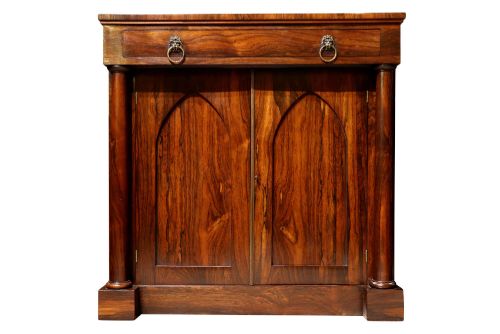
Rosewood Credenza Cabinet
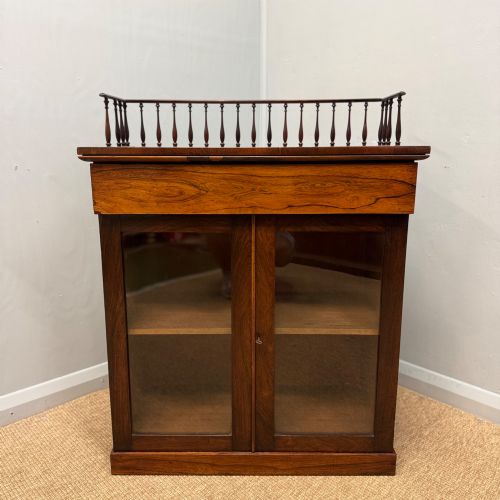
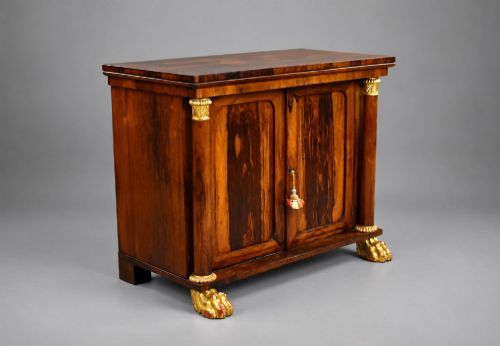
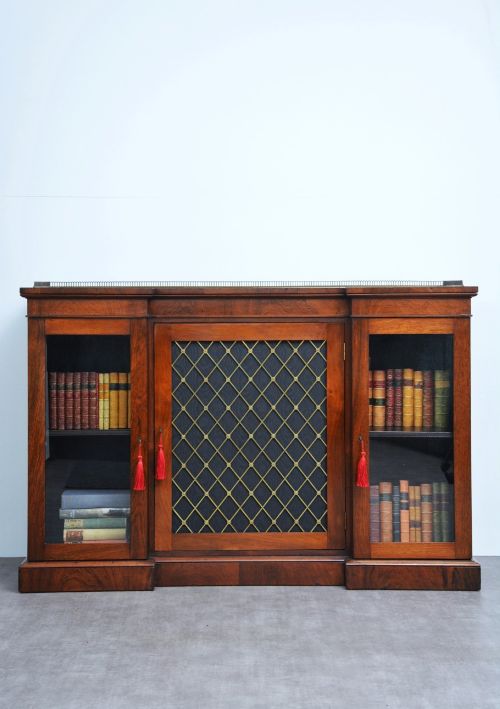
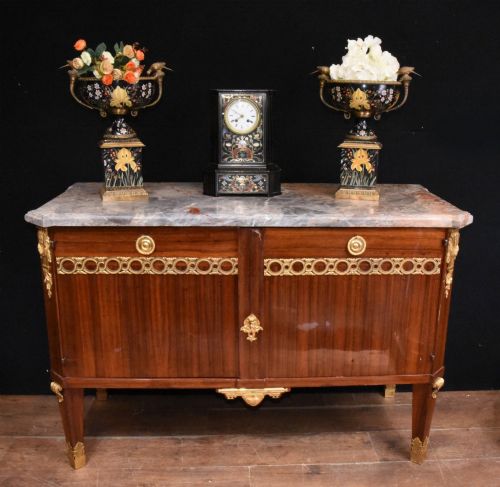
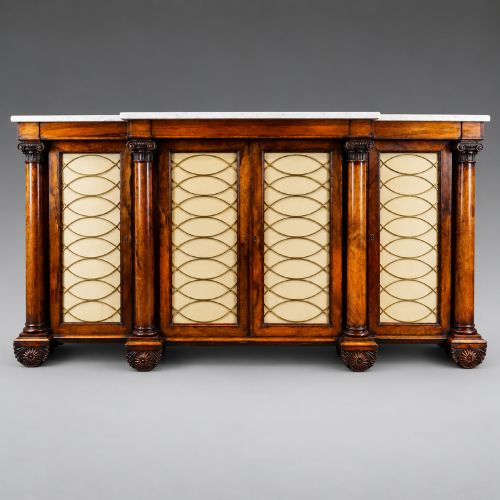
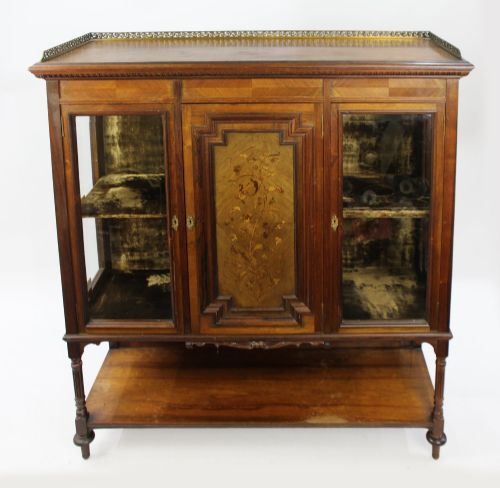
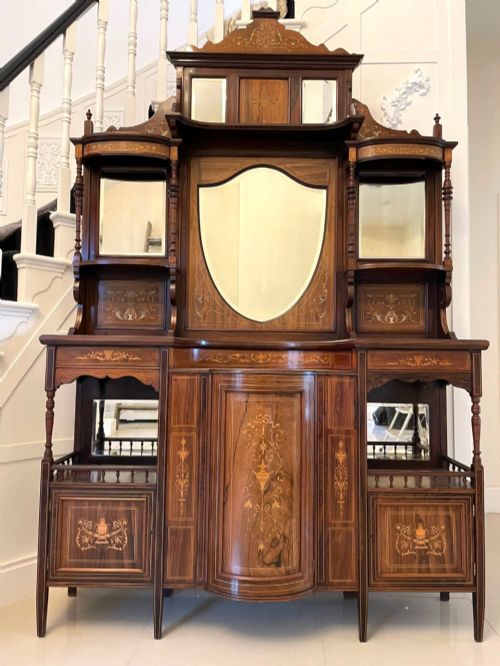
A rosewood credenza cabinet brings rich timber and brass detail to a room, offering low storage and display surface in one grand piece.
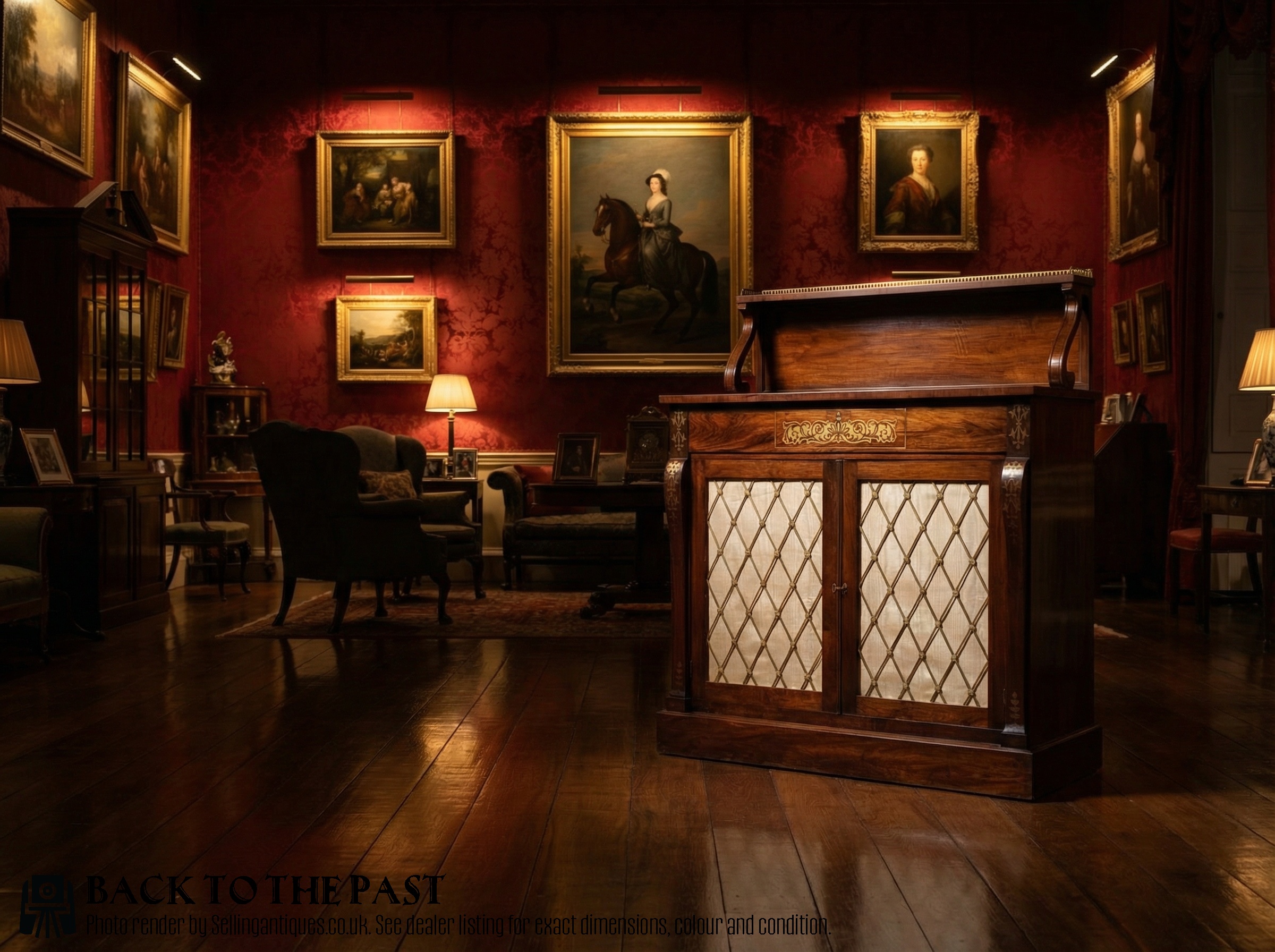
Rosewood Credenza Cabinet
A rosewood credenza cabinet sits among nineteenth-century sideboards, chiffoniers, and display cabinets that share similar low proportions and timber frames. Buyers seeking this search phrase encounter pieces spanning the Regency, William IV, and Victorian periods, alongside earlier Georgian examples.
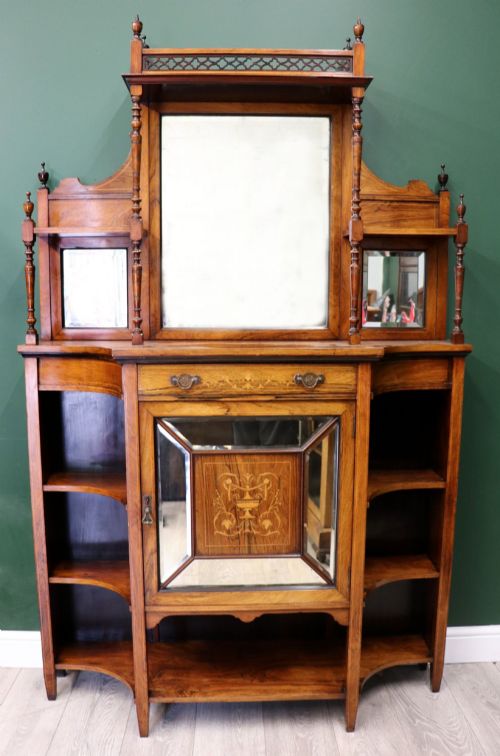
The selection on this page relies heavily on Victorian and Regency manifestations, where rosewood often pairs with satinwood, mahogany, or simulated paint effects. Chiffoniers with panelled doors and open bookcases appear alongside serpentine-shaped credenzas fitted with glass doors and mirrored backs.
Makers and cabinet-makers of the nineteenth century utilised the dense grain of rosewood to build low cabinets intended for principal reception rooms. These items function today as side storage units, media stands, or display surfaces in traditional and modern interiors.
Judging quality in nineteenth-century cabinetry
The distinction between standard production and top-tier work rests on the precision of the brass inlay, the depth of the hand-carving, and the choice of timber cuts. Superior examples display symmetrical veneer grains and tight joinery in the carcase and door frames.
Attribution to documented workshops or prominent cabinet-makers elevates certain pieces above unsigned contemporary alternatives. The integration of high-grade ormolu mounts and finely figured burr timber indicates a workshop operating at the upper end of the trade.
Rosewood Credenza Cabinet Retail Price Guide 2026
Typical asking prices for rosewood credenza cabinet among the pieces listed under this phrase on Sellingantiques today, from the lower quarter to the upper quarter. They describe what is for sale here now, not the wider market.
Materials recorded on this page include solid rosewood, brass inlay, glass, marble, ormolu, and satinwood veneer.
Collinson & Lock·Louis Constantin Le Gaigneur·Gillows·Holland & Sons
The Rosewood Credenza Cabinet Glossary
- Credenza
- A low cabinet or sideboard, frequently fitted with cupboards and glass doors, designed for display and storage in formal rooms. The form evolved significantly during the Victorian period.
- Chiffonier
- A compact sideboard or cabinet common in the Regency and Victorian eras, usually featuring panelled lower doors and a shelf superstructure supported by pillars.
- Marquetry
- Decorative patterns formed by the insertion of contrasting veneers into a primary wood ground. Craftsmen utilised floral and geometric motifs in satinwood and ebony.
- Ormolu
- Gilded bronze mounts applied to furniture corners, friezes, and feet for decorative effect. This technique is prominent on mid-Victorian serpentine credenzas.
- Vitrine
- A glass-fronted cabinet or display top intended for porcelain and decorative objects. These sections sit atop low bases in late nineteenth-century bookcases.
Rosewood Credenza Cabinet: Frequently Asked Questions
How do I date a rosewood credenza?
Dating relies on architectural styling, timber choices, and hardware details like brass inlay or ormolu mounts. Regency pieces lean toward classical restraint, while Victorian examples often feature serpentine shapes and elaborate floral marquetry.
Examining the secondary timbers inside drawers and behind back panels helps confirm the period of construction alongside exterior decorative trends.
Where should I place a credenza?
These low cabinets suit dining rooms, hallways, or living spaces where they function as serving surfaces or display areas. Their shallow depth allows them to sit against walls without dominating floor space.
Positioning them away from direct sunlight protects the rosewood veneer and prevents the natural oils in the timber from drying out over time.
How do I care for rosewood furniture?
Maintain the timber by dusting with a dry, soft cloth and applying a microcrystalline wax periodically to nourish the surface. Avoid liquid polishes that build up residue over time.
Keep the cabinet in a room with stable humidity levels to prevent the rosewood veneers from shrinking or lifting away from the carcase.