


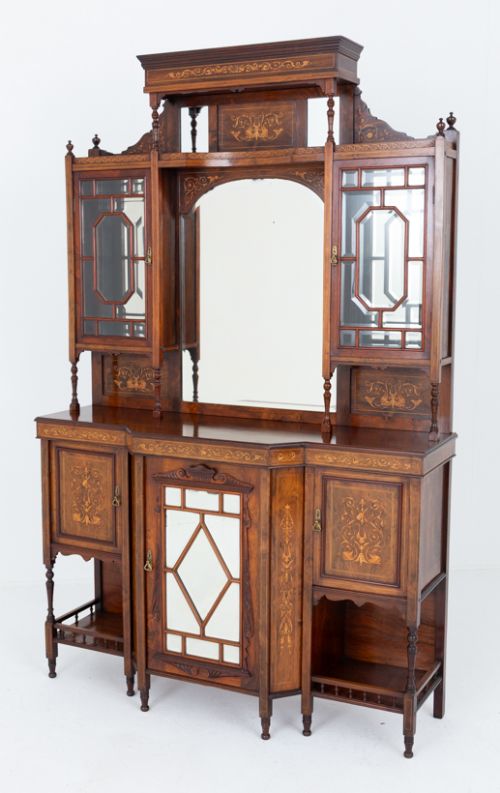

Victorian Rosewood Sideboard
A victorian rosewood sideboard brings deep grain and polished warmth to a room, offering practical storage through disciplined nineteenth-century carpentry.
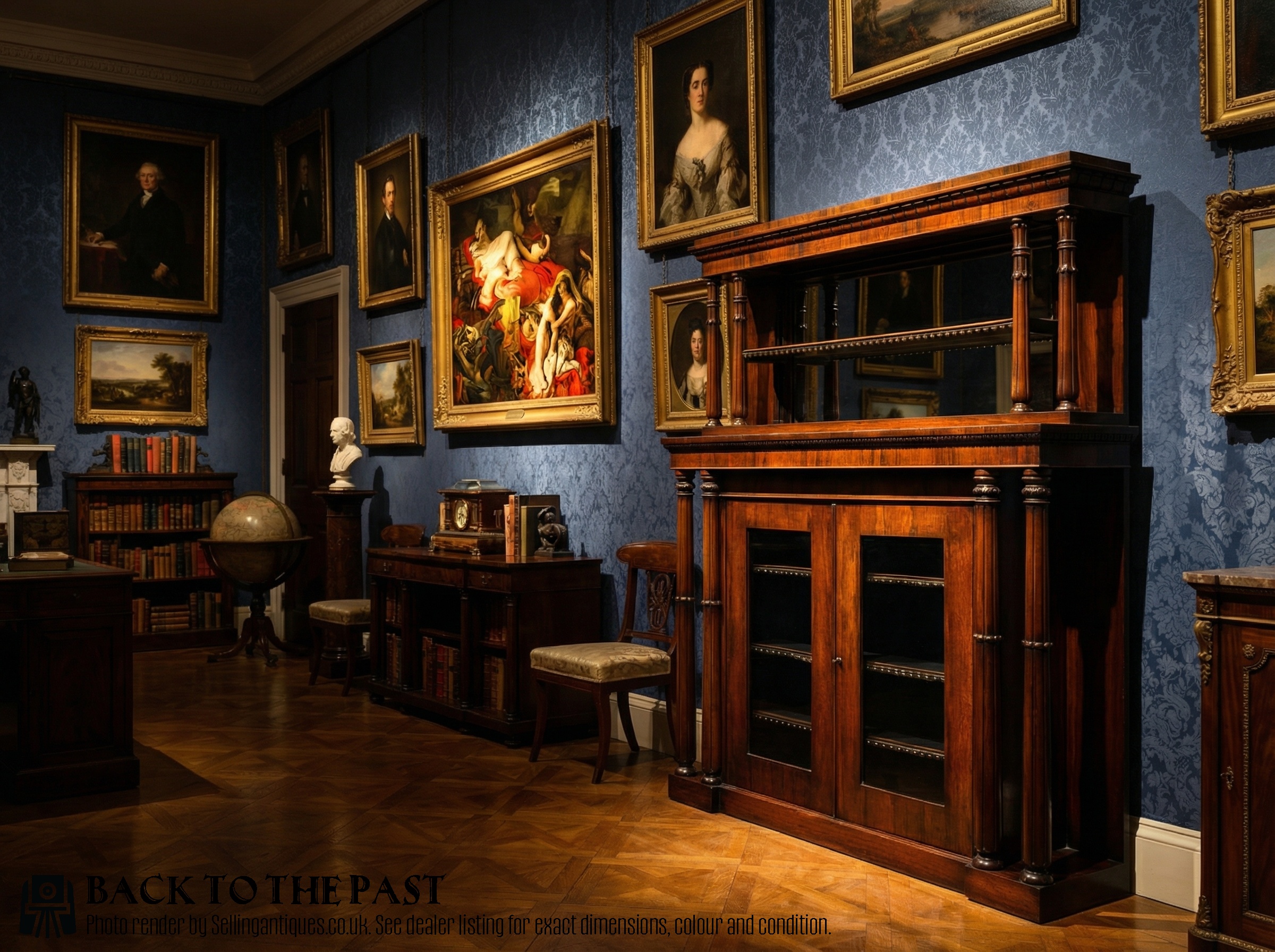
Victorian Rosewood Sideboard
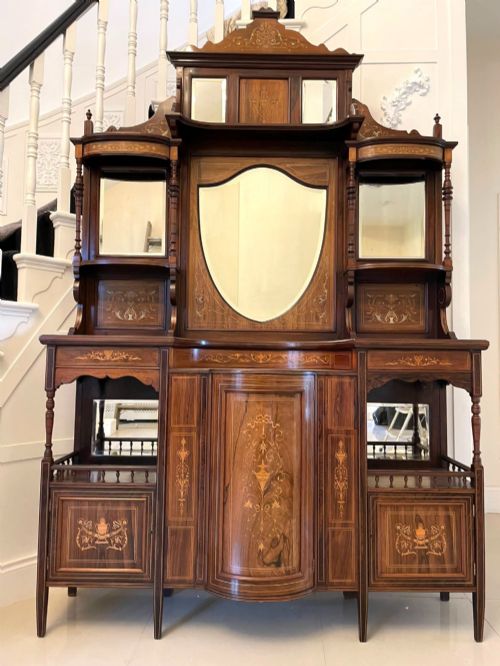
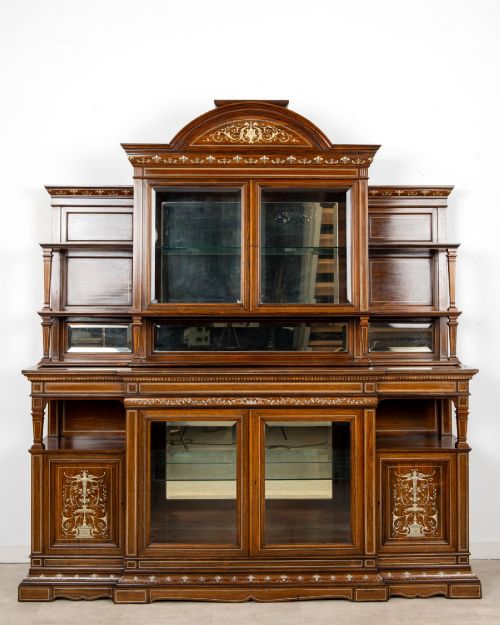
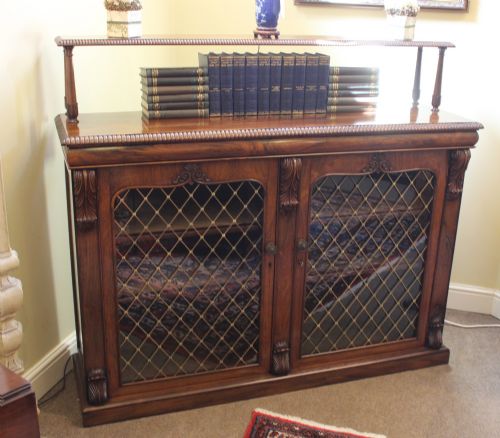
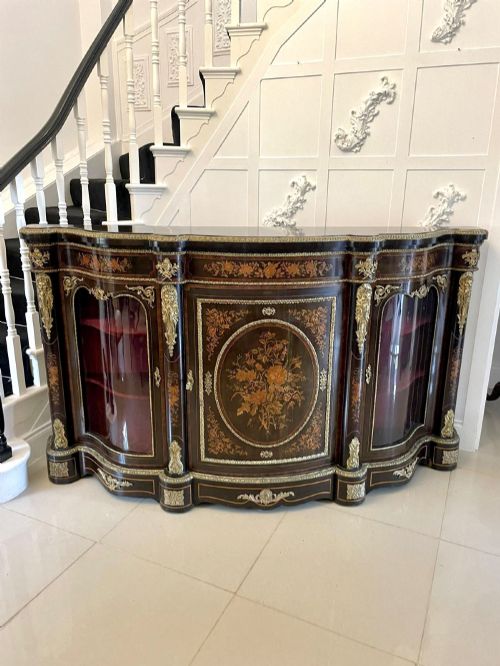
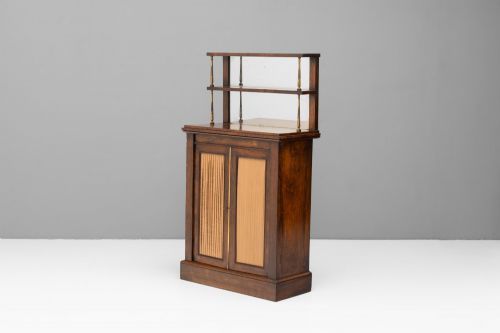
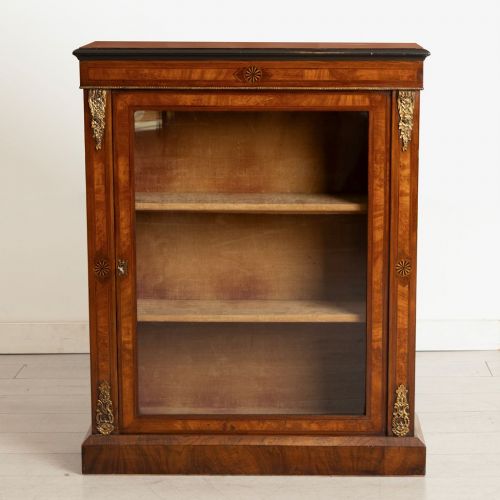
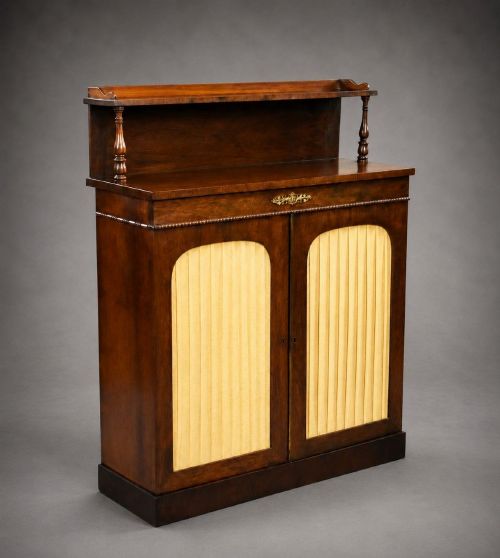
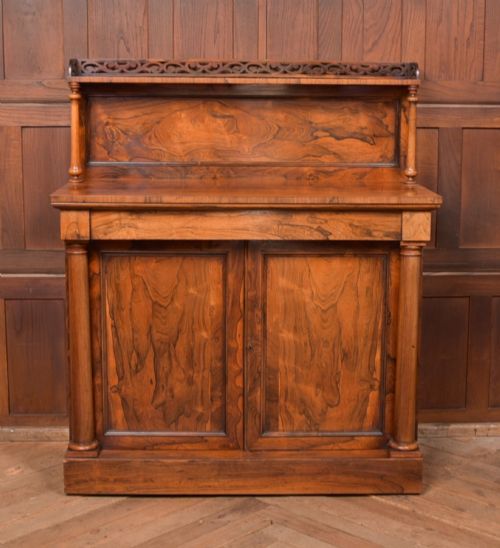
A victorian rosewood sideboard encompasses low chiffoniers, serpentine credenzas, and glazed display cabinets originating across the nineteenth century. The typical piece encountered here is a compact chiffonier or cabinet featuring panelled doors and shelved interiors designed for formal dining rooms.
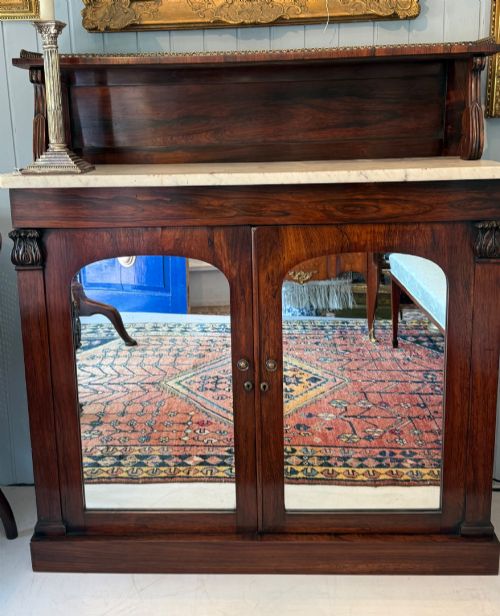
Makers utilised styles ranging from early William IV and Regency influences to later Aesthetic Movement and marquetry-heavy parlour designs. Pieces frequently incorporate mirror backs or tiered upstands suited to nineteenth-century domestic display.
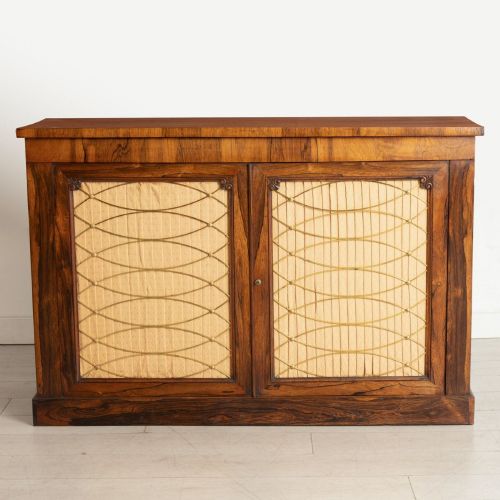
The selection moves from utilitarian dwarf chiffoniers with simple fabric-backed doors to serpentine-fronted credenzas outfitted with marble tops. These variations reflect the changing requirements of Victorian drawing rooms and dining spaces over several decades.
Materials and Construction
Makers constructed these pieces using dense rosewood veneers applied to solid secondary timbers, frequently enhancing the surfaces with satinwood inlay, brass mounts, and ormolu. Glass panels and mirrored backs were integrated into cabinets to reflect light within Victorian interiors.
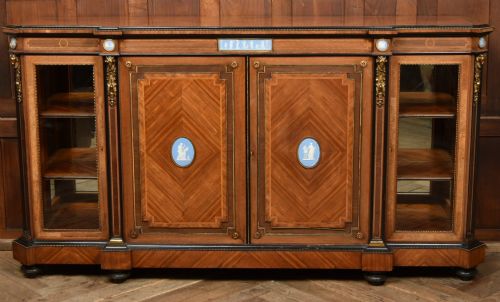
Carved details, floral marquetry, and turned columns demonstrate the joinery techniques employed by leading workshops. Marble tops appear on heavier credenzas, providing durable surfaces above fitted cupboard interiors.
Victorian Rosewood Sideboard Retail Price Guide 2026
Typical asking prices for victorian rosewood sideboard among the pieces listed under this phrase on Sellingantiques today, from the lower quarter to the upper quarter. They describe what is for sale here now, not the wider market.
Materials paired with rosewood across these pieces include marble, ormolu, satinwood, ebony, and brass.
Craftsmanship and Proportion
Quality rests in the precision of the marquetry, the thickness and figuration of the rosewood veneer, and the integration of secondary woods like satinwood and ebony. Superior examples display crisp brass mounts and carefully fitted doors that align evenly within their frames.
Proportion and architectural balance separate standard workshop production from pieces bearing attributed maker marks. Refined cabinetwork is visible in the stability of mirrored superstructures and the careful execution of serpentine curves.
Collinson & Lock·Holland & Sons·Edwards and Roberts·Sigmund Jaray, Wien·Howard and Sons·Gillows
The Victorian Rosewood Sideboard Glossary
- Chiffonier
- A compact sideboard featuring a lower cabinet with enclosed doors and frequently a raised shelf superstructure above. These pieces typically served smaller Victorian parlours.
- Credenza
- A low-standing cabinet designed without legs, often featuring curved serpentine ends and glazed central doors. This form emerged strongly during the mid-Victorian period.
- Marquetry
- Decorative veneer work created by fitting contrasting wood pieces together to form pictorial patterns. Artisans utilised satinwood and ebony to achieve floral motifs.
- Ormolu
- Gilt-bronze mounts applied to furniture edges and panels for decorative effect. These metal ornaments are characteristic of high-status Victorian pieces.
- Palisander
- A dense tropical timber historically grouped under the rosewood umbrella by nineteenth-century cabinet makers. It exhibits pronounced dark grain patterns.
Victorian Rosewood Sideboard: Frequently Asked Questions
How do I identify a chiffonier?
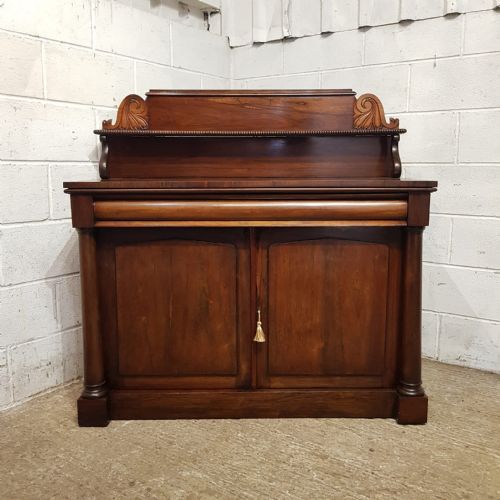
A chiffonier is defined by its enclosed lower cupboard doors and a tiered shelf back supported by small columns. It functions as a compact storage unit for dining silver and glassware.
These pieces sit lower than standard sideboards and often incorporate silk-backed grille doors instead of solid wood panels.
What is a credenza?
A credenza is a low-profile cabinet that lacks legs, resting directly on a plinth base with curved or straight side cupboards flanking a central door. They are typically associated with mid-Victorian reception rooms.
Many examples feature marble tops and elaborate marquetry inlay across the front panels.
Can I use this in a modern dining room?
These cabinets provide generous interior shelving suited to storing modern tableware, linens, and bottles while anchoring a room with dark wood tones. Their shallow depth allows them to fit efficiently against dining room walls.
Care should be taken to protect polished rosewood surfaces from excessive moisture and direct sunlight.
How do I date a rosewood sideboard?
Dating relies on observing stylistic shifts from early William IV architectural heaviness to late Victorian Aesthetic Movement linearity. The presence of specific inlay materials and mirror back designs helps narrow the decade of production.
Construction methods inside the carcase, such as drawer linings and backboard fixings, also provide chronological indicators.