





Rosewood Drinks Cabinet
These rosewood drinks cabinet examples span the nineteenth and twentieth centuries, offering storage and display for bottles and glassware.
What They Are
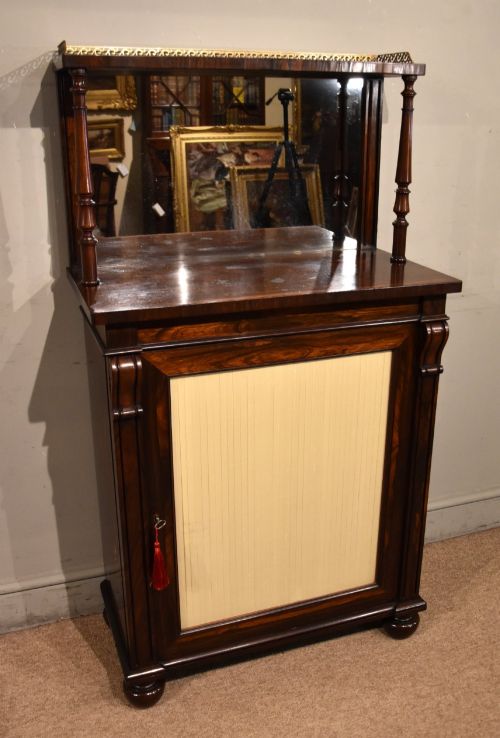
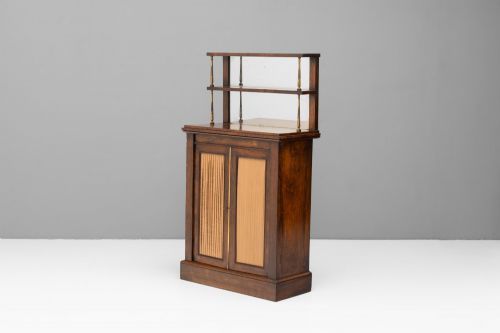
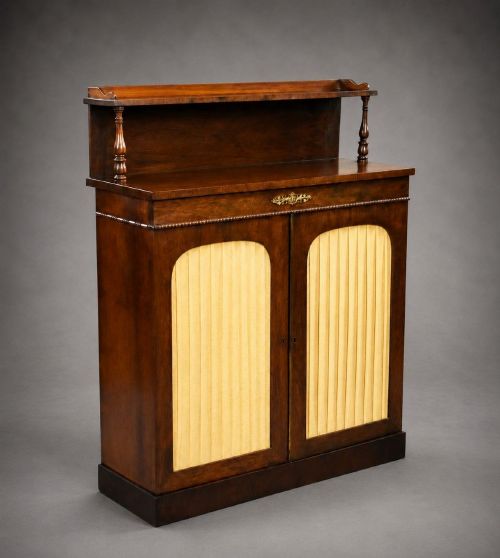
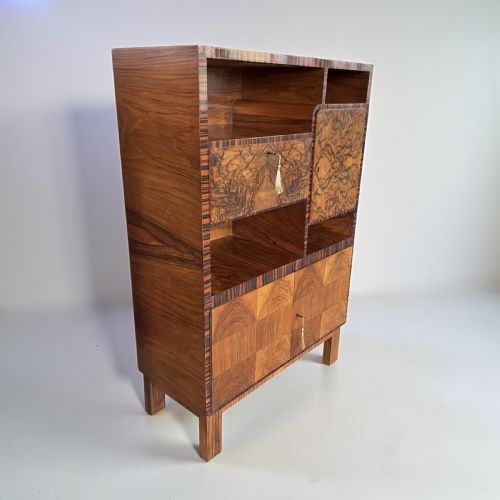
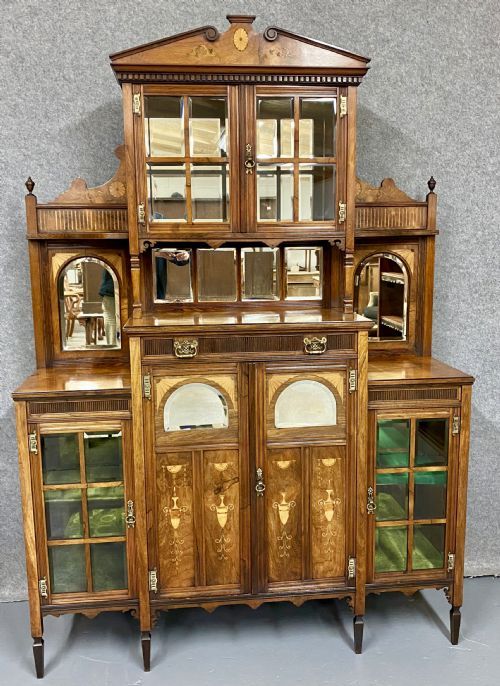
A rosewood drinks cabinet takes several forms across the periods represented on this page, including chiffoniers, cellarettes, sideboards, and cocktail cabinets. The earliest examples date from the nineteenth century, including Victorian pieces and items from around eighteen thirty.
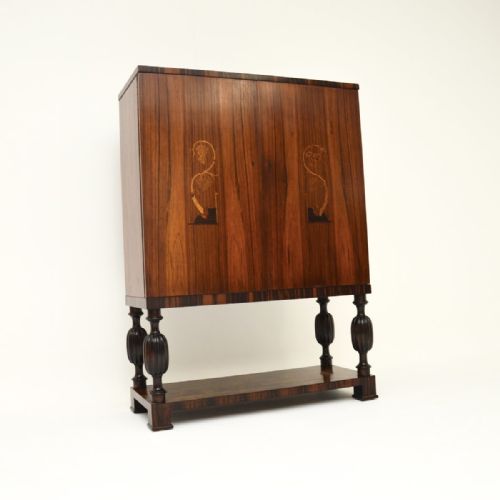
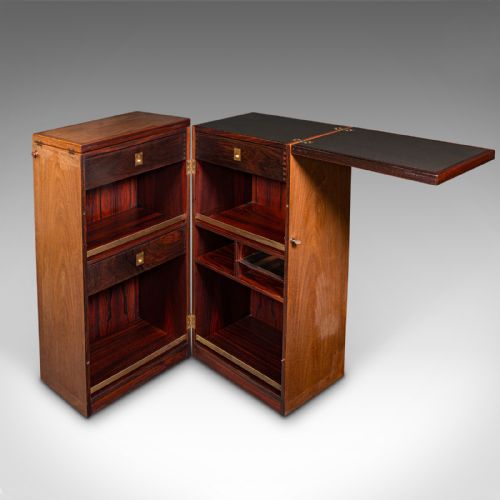
Twentieth-century production introduces Swedish Grace, Art Deco, and mid-century modern designs, such as Danish metamorphic bar cabinets. These pieces serve to store bottles and glassware while integrating into domestic reception rooms.
The selection ranges from traditional chiffoniers adapted for storage to specialised cocktail cabinets featuring marquetry panels and serving galleries. Buyers encounter both British nineteenth-century craftsmanship and continental twentieth-century design.
How They Were Made
Construction relies upon rosewood timbers and veneers applied to carcases, frequently combined with inlaid wood decoration and marquetry panels. Metal fittings such as brass appear alongside glass components and fabric elements.
Makers utilise traditional cabinet-making techniques appropriate to each period, from nineteenth-century Victorian joinery to twentieth-century Danish metamorphic mechanisms. Surface finishes highlight the natural grain and colour variations of the timber.
Retail Price Guide 2026
Typical UK retail prices for rosewood drinks cabinet, calculated from the Sellingantiques database of over a million retail prices indexed since 2003. This retail price guide relies exclusively on Sellingantiques data; no external sources or auction records are used, so the figures do not describe the wider market.
Some cabinets transform completely when opened, turning a modest side table into a fully equipped cocktail bar.
What Varies in Quality
Quality differences emerge in the selection of rosewood veneers and the precision of inlaid wood and marquetry panels. Finer pieces demonstrate superior integration of brass hardware and glass elements within the overall design.
The sophistication of the internal mechanism, particularly in metamorphic cocktail cabinets, separates standard production from exceptional design. Proportion and the handling of period styles, whether Victorian or Swedish Grace, define the standing of each piece.
The Rosewood Drinks Cabinet Glossary
- Rosewood
- A dense timber with distinct grain patterns, utilised for its rich colour and decorative surface qualities.
- Chiffonier
- A low cabinet or sideboard popular in the nineteenth century, featuring shelves or enclosed storage.
- Cellarette
- A lockable container or cabinet traditionally designed for holding bottles of wine or spirits.
- Marquetry
- Decorative veneer work forming pictures or patterns by assembling small pieces of wood.
- Metamorphic
- Describing furniture designed to transform or unfold to reveal secondary functions such as a bar.
Frequently Asked Questions
What is a rosewood drinks cabinet used for?
These cabinets serve to store bottles, decanters, and glassware in a domestic setting.
Many examples incorporate specialised interior compartments or serving surfaces designed for mixing drinks.
How do I date a rosewood drinks cabinet?
Dating relies on stylistic indicators and construction methods associated with periods like the Victorian era or the nineteen sixties.
Materials such as brass and veneer also provide clues to the era of manufacture.
Where were these cabinets made?
The pieces originate from various workshops and countries, including Britain, Sweden, and Denmark.
Regional preferences shape the distinct styles, from nineteenth-century British chiffoniers to mid-century Scandinavian designs.
How do I care for rosewood furniture?
Keep the timber away from direct sunlight and consistent heat sources to prevent the veneer from drying out.
Regular dusting with a soft cloth helps maintain the polished surface.