
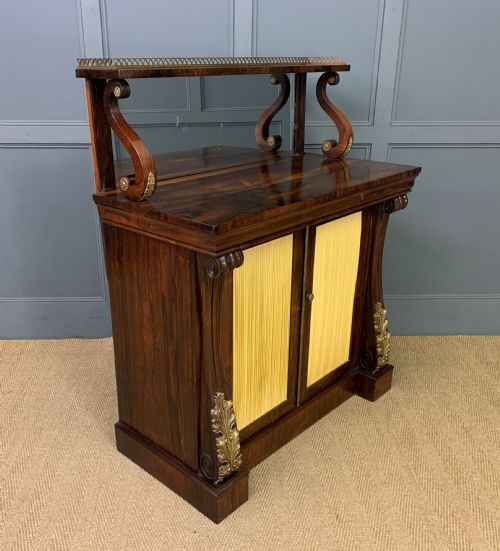


Rosewood Cabinet Brass Gallery
A rosewood cabinet brass gallery combines rich timber with a metal rail, offering a polished surface for display.

Rosewood Cabinet Brass Gallery
A rosewood cabinet brass gallery brings together dense, figured timber and a delicate metal rail designed to secure items placed on top. You will find these pieces spanning periods from the Georgian era through the Regency and Victorian periods into Edwardian times.
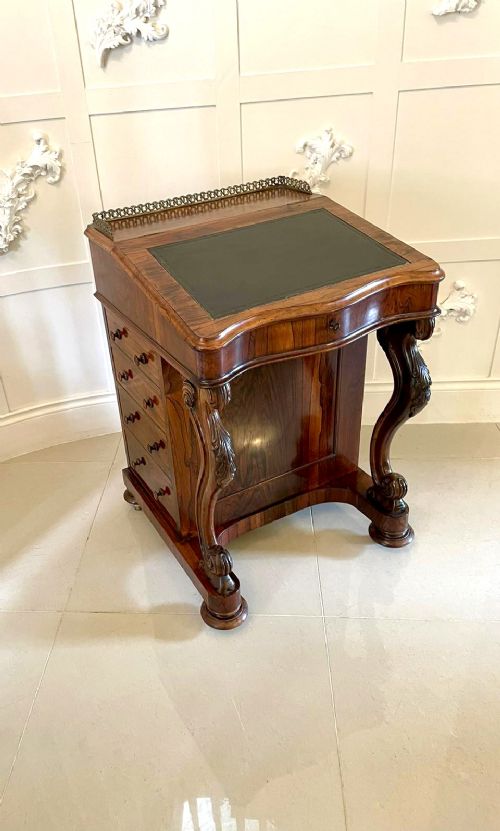
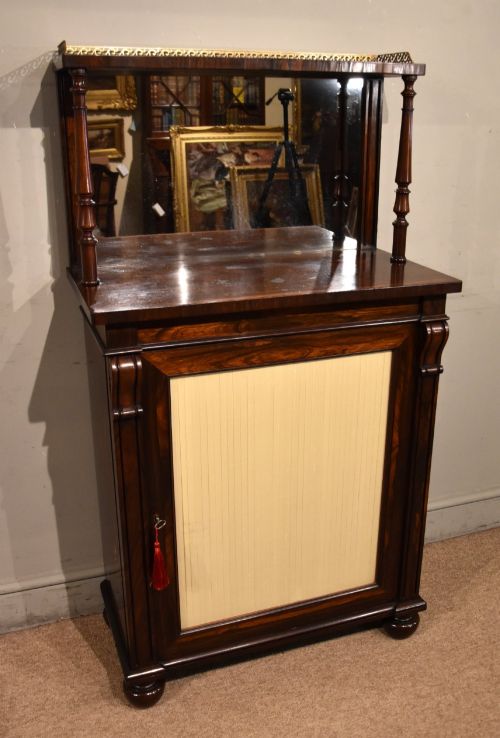
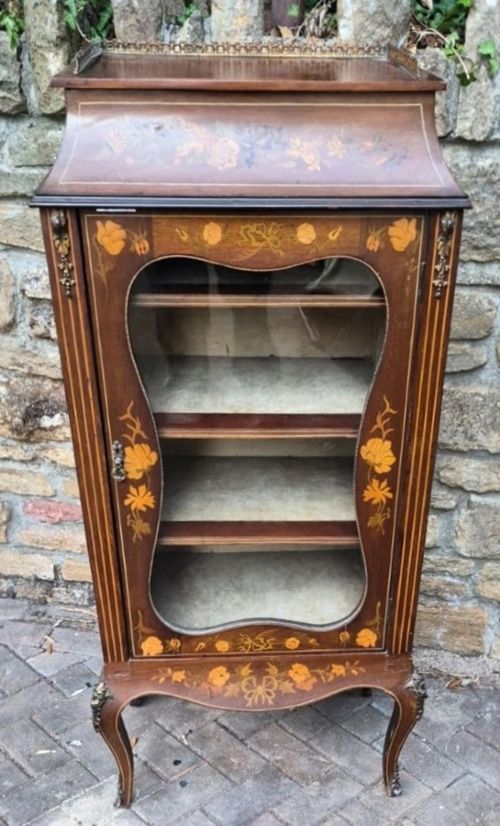
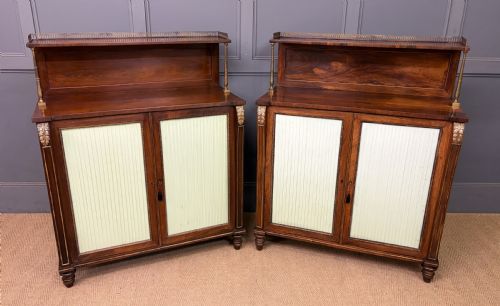
The forms on this page include chiffoniers, side cabinets, display cabinets, bookcases, and davenports. Regency examples appear frequently, often taking the form of side cabinets and chiffoniers fitted with glass or fabric panels.
Makers and workshops of the nineteenth century utilised the rich grain of rosewood, occasionally incorporating boxwood inlay or parcel gilt details. These cabinets served formal reception rooms and libraries, functioning as storage and display surfaces alike.
How they were made
Cabinet makers constructed carcasses using dense rosewood veneers over secondary timbers, applying brass mounts, wire grilles, and galleries to finish the upper tiers. Certain pieces incorporate marble tops, mirror glass panels, and leather writing surfaces.
Inlaid decoration utilises boxwood stringing, while structural elements rely on traditional joinery suitable for heavy timbers. Brass galleries are fixed to the upper surface to contain small decorative objects.
The listings show rosewood cabinets spanning the Regency, Victorian, and Edwardian periods, incorporating materials such as marble, mirror glass, and silk.
What varies in quality
The distinction between standard and superior pieces rests on the choice of timber veneer and the execution of the brass work. Grain selection across large surfaces demonstrates the maker's intent.
Casting quality in the brass gallery and mounts separates workshop production from standard output. Finer examples display crisp chasing and secure fixings that integrate harmoniously with the rosewood body.
Gillows·John McClean
The Rosewood Cabinet Brass Gallery Glossary
- Chiffonier
- A low cabinet originating in the nineteenth century, typically featuring enclosed shelving below and a raised superstructure or gallery above. It often includes fabric-backed door panels.
- Gallery
- A low decorative rail, usually cast or pierced brass, fitted around the upper perimeter of a cabinet or side table to prevent items from sliding off. This feature defines the searchable type.
- Davenport
- A compact form of writing desk featuring a sloping leather-lined writing surface above a pedestal of drawers. Examples in the evidence are constructed in rosewood.
- Gonçalo-Alvez
- A dense tropical timber with distinctive dark figuring, sometimes referred to as zebra wood, utilised in high-status Regency cabinet making.
- Breakfront
- A piece of furniture where the central section projects forward from the flanking cupboards or bookcases. This architectural layout creates depth in side cabinets.
Rosewood Cabinet Brass Gallery: Frequently Asked Questions
What is a brass gallery on a cabinet?
A brass gallery is a metal rail fitted to the top surface of a piece of furniture. It serves both a decorative purpose and a practical function by keeping objects secure.
On a rosewood cabinet, the bright metal contrasts with the dark timber grain. This detail helps identify pieces intended for refined drawing rooms.
How do I date a rosewood cabinet?
Dating relies on observing the overall style, construction methods, and material combinations present in the piece. Regency and Georgian examples often show distinct classical proportions and brass inlay.
Later Victorian and Edwardian pieces introduce alternative glazing and marquetry styles. Comparing the foot style and door configuration against known periods clarifies the timeline.
Where were these cabinets used?
These cabinets belonged in the principal rooms of nineteenth-century homes, such as drawing rooms, libraries, and parlours. Their polished surfaces and glass doors allowed owners to display ceramics and books.
Smaller forms like davenports functioned as personal writing desks in private studies. Sideboards and chiffoniers provided dining room storage and display.
How should I care for rosewood?
Rosewood requires stable humidity and protection from direct sunlight to prevent the timber from fading or drying out. Dusting with a soft, dry cloth maintains the polished finish.
Avoid using silicone-based polishes or harsh chemical cleaners on the surface. Occasional application of appropriate wax preserves the depth of the grain.