





Antique Chiffonier Desk
An antique chiffonier desk combines the enclosed storage of a low cabinet with a pull-out writing drawer, offering a practical workspace for the home.
Antique Chiffonier Desk
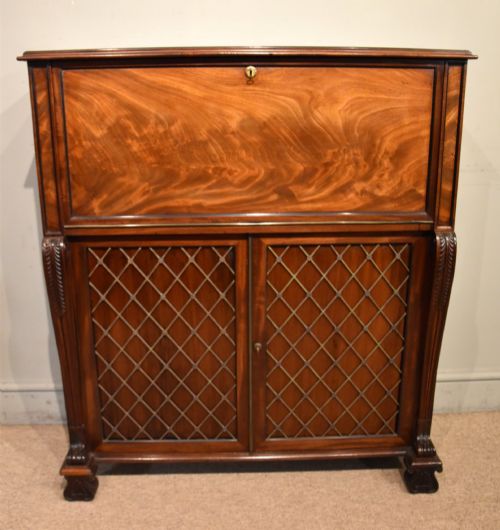
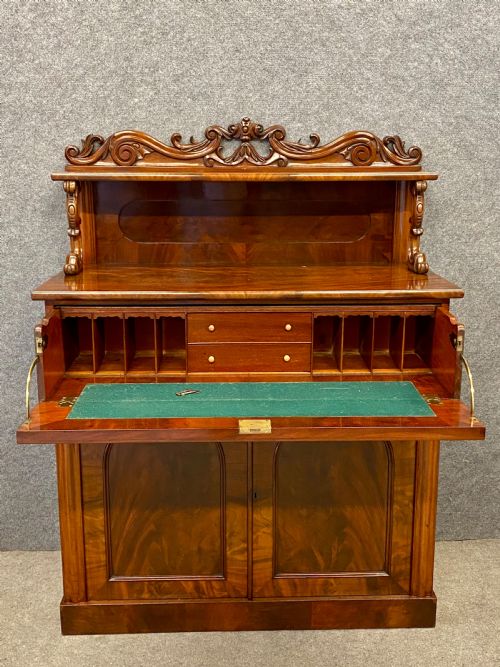
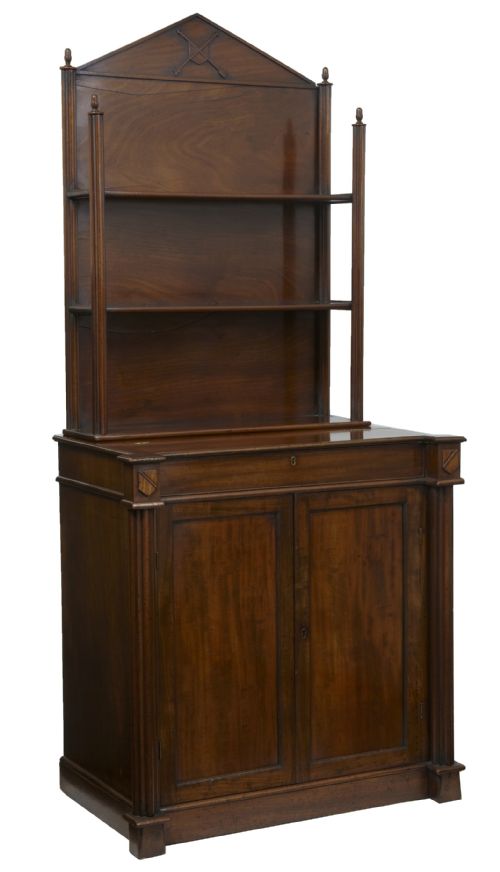
The antique chiffonier desk bridges the gap between a side cabinet and a compact writing desk, typically featuring lower cupboard doors and an integrated secretaire drawer that drops down to reveal a writing surface. Buyers exploring this category encounter a range of forms, from modest mahogany side cabinets with two-tier shelf backs to grander rosewood pieces fitted with internal pigeonholes and small drawers.
Most examples originate from the nineteenth century, spanning Regency, William IV, and Victorian periods, alongside occasional Georgian predecessors. These hybrid items served practical domestic purposes in drawing rooms and parlours, providing a surface for correspondence while concealing stationery and papers behind polished timber doors.
Construction varies from simple rectangular mahogany carcases to elaborate French Empire console tables and satinwood writing cupboards of Gillows design. The inclusion of a secretaire drawer distinguishes these items from standard chiffoniers, turning a low sideboard into a dual-purpose workspace.

How they were made
Cabinet makers utilised dense native and imported timbers, principally mahogany and rosewood, often selecting flame veneers for drawer fronts and cupboard doors to create striking grain patterns. Boxwood stringing and brass details provide contrast and edge definition across Regency and Georgian iterations.
Internal compartments of the secretaire section rely on precise joinery, housing miniature drawers and pigeonholes framed by secondary woods. Writing surfaces are frequently lined with baize, leather, or fabric to provide a suitable texture for penwork.
Listings feature items from the Georgian, Regency, and Victorian periods, constructed predominantly in mahogany, rosewood, and satinwood.
What varies in quality
The choice of timber veneers and the precision of decorative inlays set finer examples apart from standard workshop production. Selected flame mahogany or figured rosewood displays consistent grain matching across the elevation of the piece.
Internal complexity dictates the standing of a desk, with elaborate stationery compartments, satinwood drawer linings, and integrated brass galleries indicating higher levels of craftsmanship. The smoothness of the drop-front secretaire mechanism and the structural integrity of the shelving tiers also mark out superior execution.
John McClean·Gillows
The Antique Chiffonier Desk Glossary
- Secretaire
- A desk or drawer that pulls out and folds down to reveal a writing surface and small compartments. This mechanism transforms a standard cabinet into a functional writing place.
- Chiffonier
- A low sideboard or cabinet, typically featuring shelves on the back and cupboards below. It evolved during the nineteenth century to store plate and books.
- Stringing
- Thin inlay work of a contrasting wood used to outline panels and drawers. It adds linear definition to the main timber surface.
- Flame mahogany
- A veneer cut from the fork of the mahogany tree, producing a distinctive rippled flame pattern. Cabinet makers used this on prominent surfaces for visual impact.
Antique Chiffonier Desk: Frequently Asked Questions
What is an antique chiffonier desk?
An antique chiffonier desk is a low cabinet that incorporates a pull-out writing drawer or drop-front secretaire compartment alongside lower cupboard storage.
These hybrid items emerged to serve domestic writing needs while maintaining the profile of a traditional side cabinet or sideboard.
How do I identify a Regency chiffonier?
Regency examples often feature dark rosewood or mahogany timbers, accented with boxwood stringing, brass mounts, and occasionally tiered shelves supported by columns.
The proportions tend to be neat and balanced, reflecting neoclassical design influences popular during the early nineteenth century.
Where were chiffonier desks used?
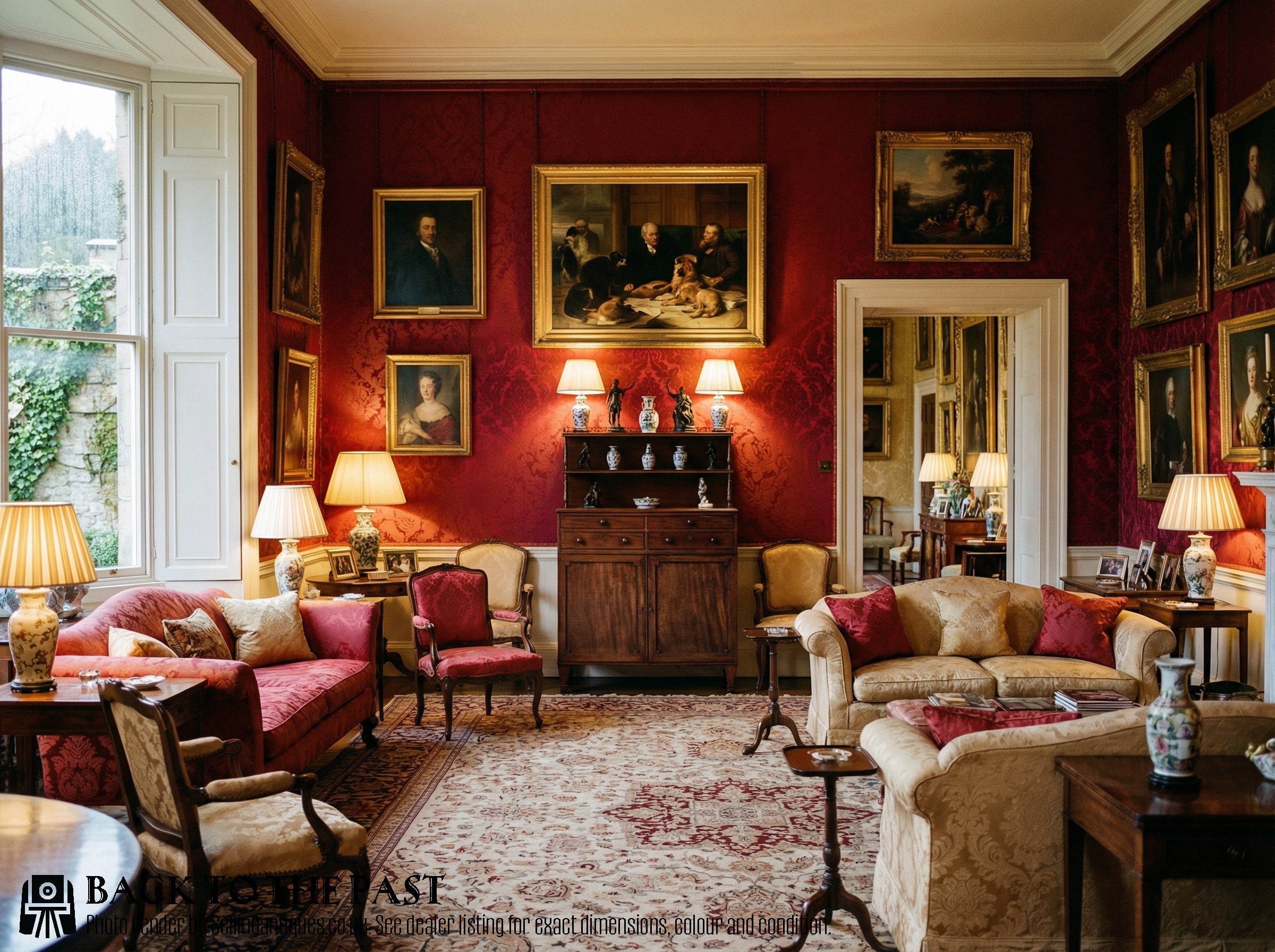
These pieces sat primarily in drawing rooms, parlours, or libraries where occupants required a surface for writing letters without needing a full-sized bureau.
The enclosed cupboards below stored books, papers, and household items out of sight.
What woods were used for these desks?
Mahogany and rosewood dominate the surviving examples, supported by decorative veneers like flame mahogany and satinwood for internal compartments.
Inlays of boxwood and hardware in brass provide contrasting details across the primary timber surfaces.