
Georgian Chiffonier Cabinet
These pieces of a georgian chiffonier cabinet offer compact storage and display surfaces, uniting utility with elegance across Regency and Georgian designs.
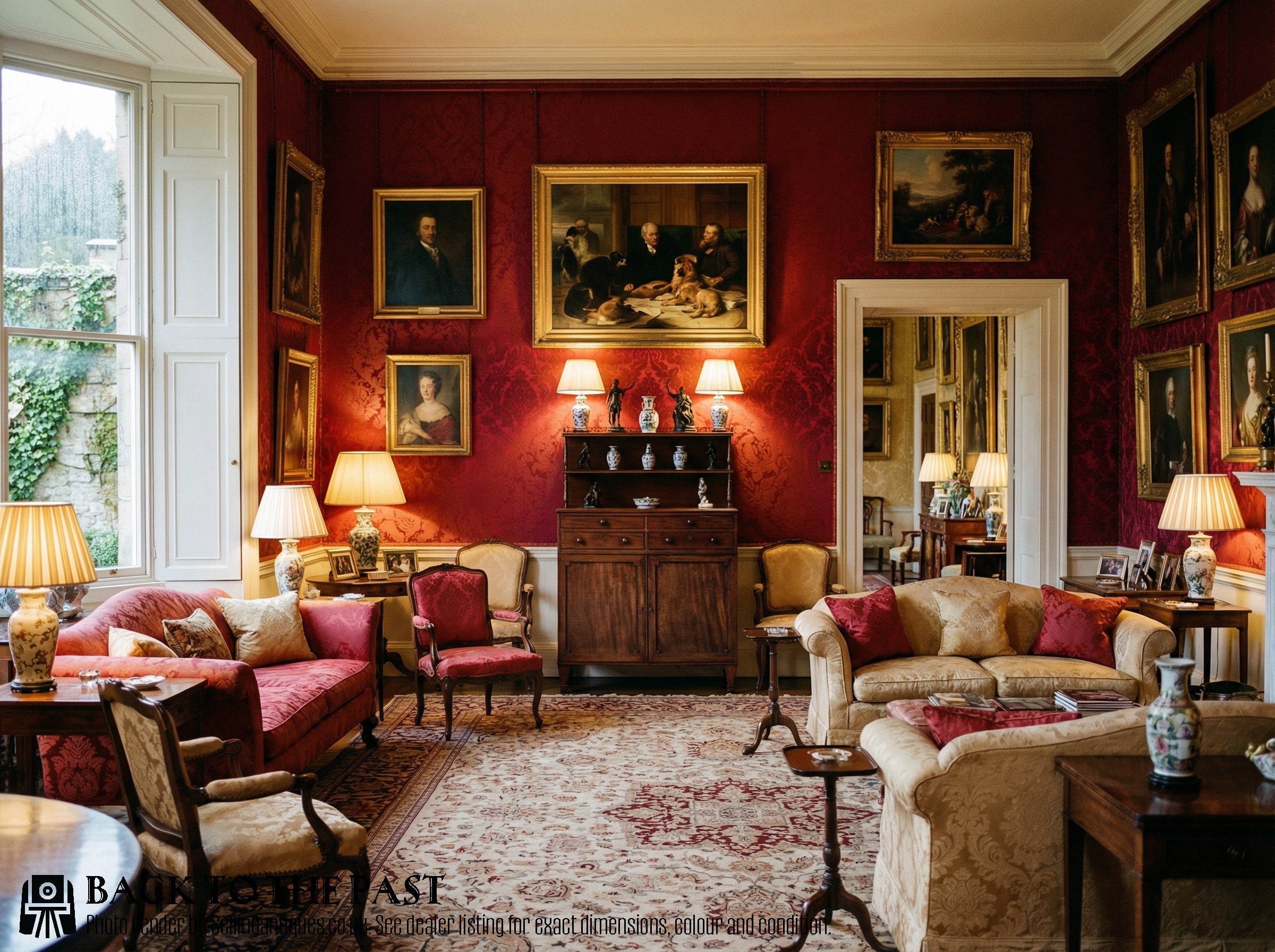
Georgian Chiffonier Cabinet
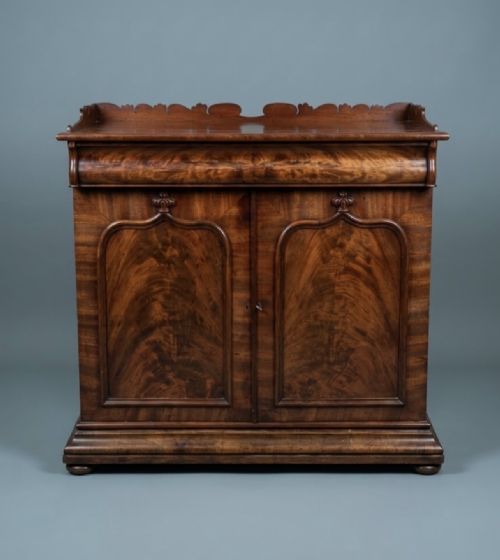
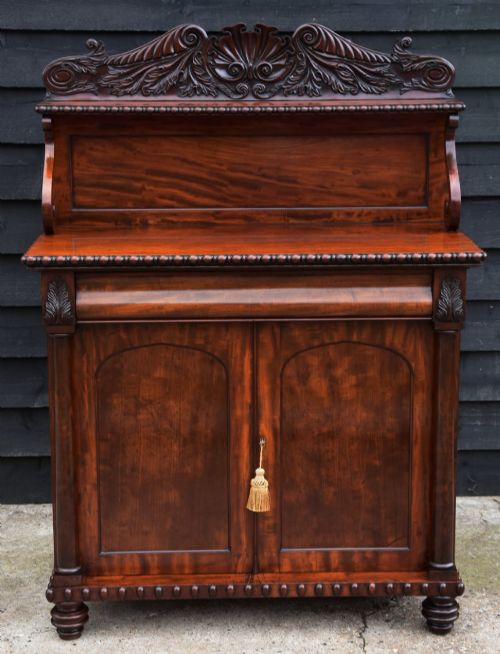
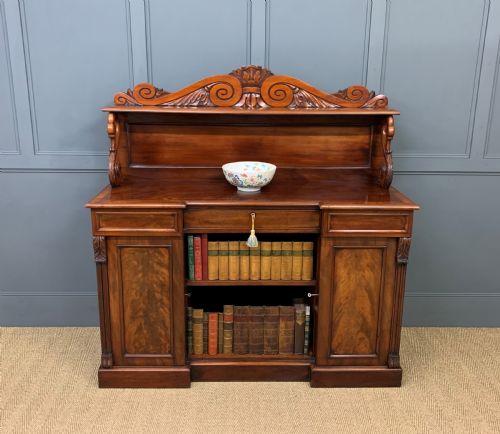
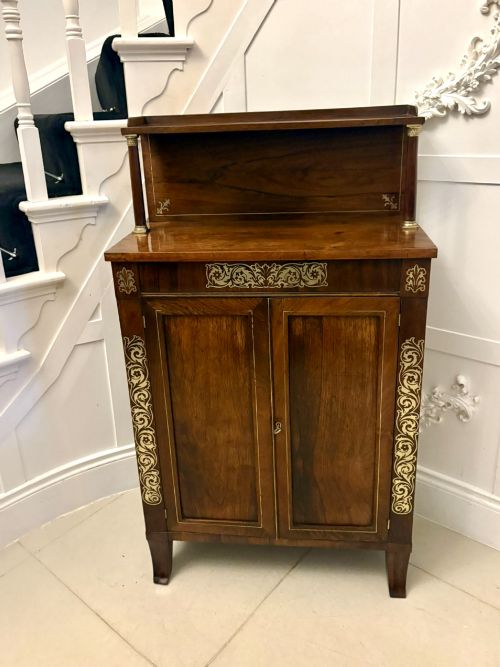
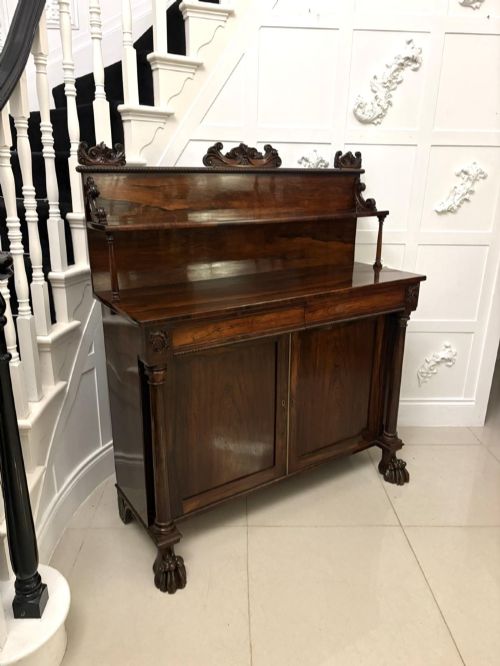
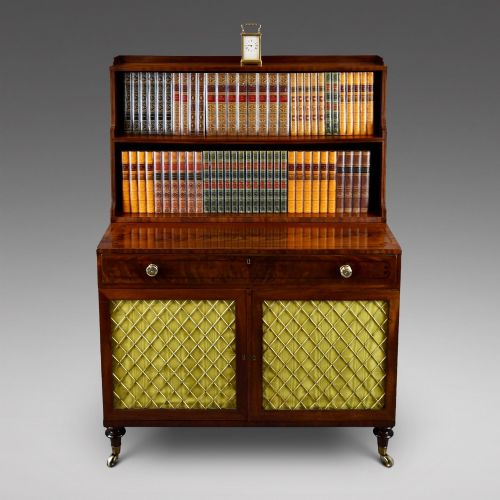
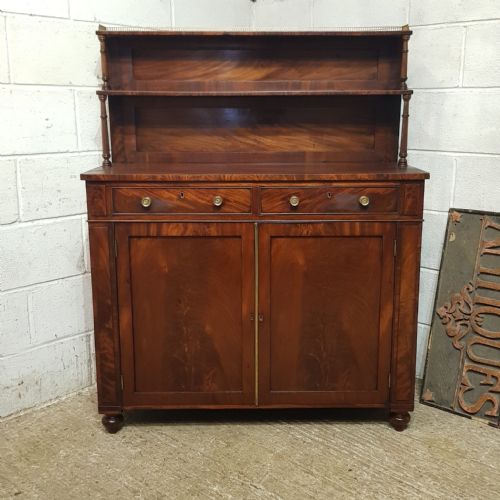
When searching for a georgian chiffonier cabinet, a buyer encounters a specialised form of low storage furniture developed around the turn of the nineteenth century. These pieces function as compact sideboards or dwarf bookcases, often featuring enclosed cupboards beneath open or shelved upper sections.
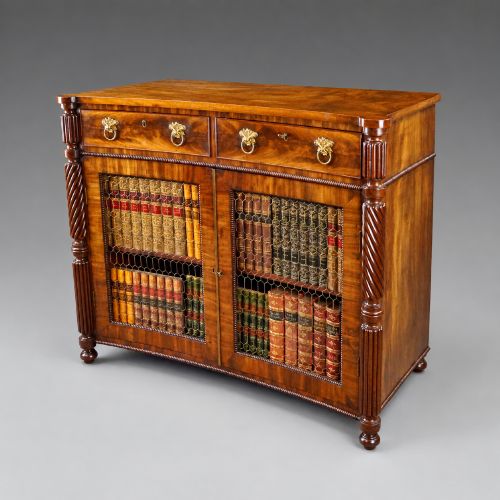
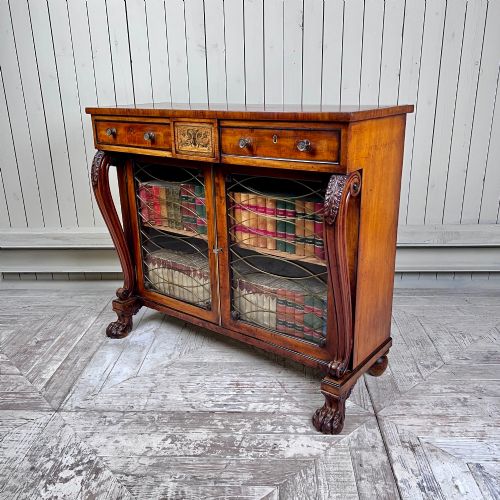
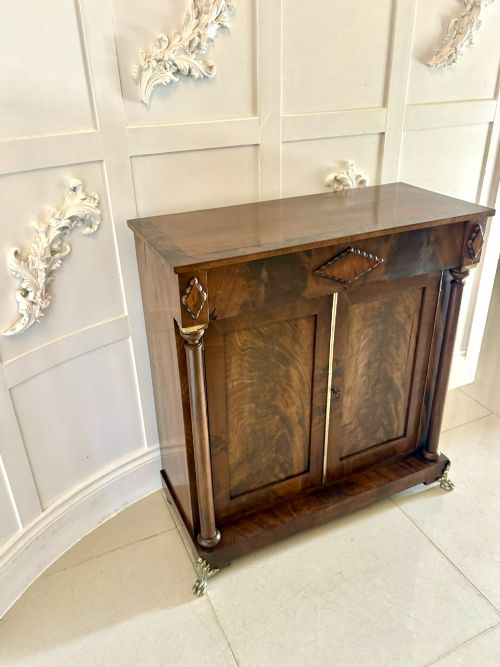
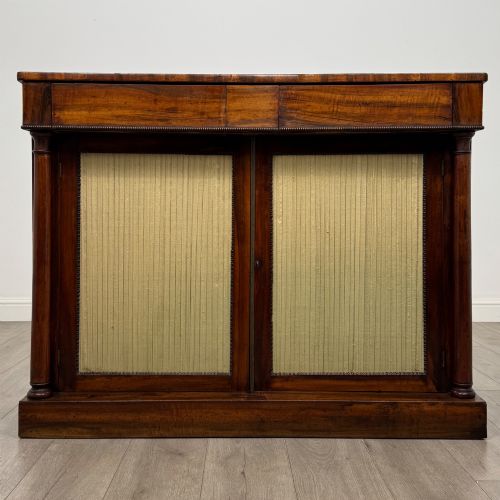
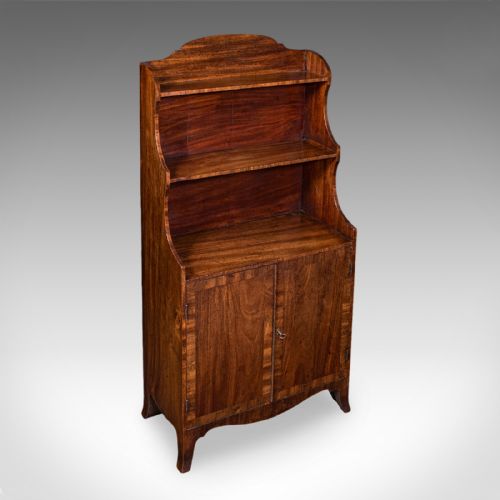
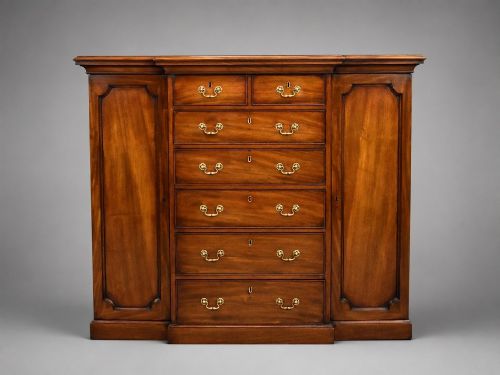
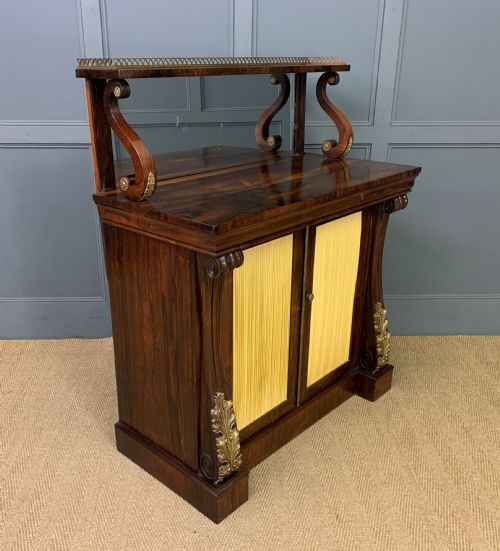
The versions most commonly met on this page date from the Regency and George III periods, constructed predominantly in mahogany and rosewood. Formats range from simple two-door cupboards to elaborate waterfall bookcases and brass-inlaid chiffoniers designed for the principal rooms of a house.
Makers and cabinetmakers of the late eighteenth and early nineteenth centuries adapted these cabinets to meet the demand for versatile, smaller-scale furniture. They serve equally well today as bookcase combinations or serving surfaces in contemporary interiors.
Materials and construction methods
Construction relies heavily on dense timbers such as mahogany and rosewood, frequently enhanced by flame mahogany veneer to create striking grain patterns on door panels and drawer fronts. Cabinetmakers also utilised satinwood and pine within secondary framing elements.
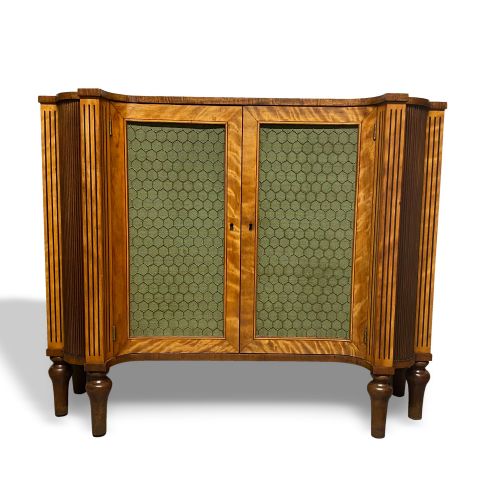
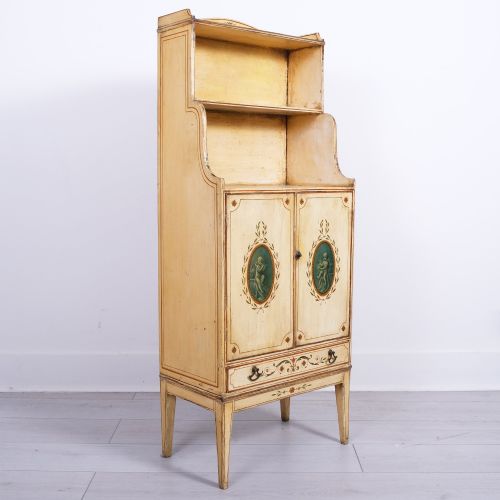
Decorative detailing on these cabinets typically involves brass inlays, ebony stringing, and pierced brass grilles fitted to cupboard doors. Open waterfall bookshelves tier upwards in diminishing depths, supported by shaped sides characteristic of the period.
A pen-work side cabinet proves that even ink and a steady hand could trick the eye into seeing exotic marquetry.
Judging cabinet quality
Distinctions in quality rest upon the selection of timber veneers and the precision of brass inlay work integrated into the cabinet doors and uprights. Superior examples display carefully matched flame mahogany figures and tight, uniform joints rather than plain or heavily restored surfaces.
The refinement of internal shelving, original brass hardware, and the crispness of turned or reeded supports further separate standard utility pieces from fine cabinetwork. Proportions also dictate standing, with neat, petite dimensions commanding particular attention.
The Georgian Chiffonier Cabinet Glossary
- Chiffonier
- A low sideboard or cupboard, typically featuring shelves on top for books or display. This form evolved during the Regency period to serve dining and drawing rooms.
- Flame mahogany
- A veneer cut from timber where the branch meets the trunk, producing a distinctive, rippled flame pattern. Cabinetmakers used this figure to decorate primary display surfaces.
- Waterfall bookcase
- A standing set of open bookshelves where each successive shelf steps back from the one below. These pieces often incorporate a low cupboard base.
- Inlay
- A technique where contrasting materials such as brass or exotic woods are set flush into the primary timber surface. Regency pieces frequently employ brass stringing and floral motifs.
Georgian Chiffonier Cabinet: Frequently Asked Questions
What is a georgian chiffonier cabinet used for?
These cabinets provide low-level surface space alongside enclosed cupboard storage for books, tableware, or display items. In a modern setting, they fit well as compact bookcases or side units in living areas.
Their shallow depth allows them to sit comfortably in hallways or alcoves where larger sideboards would overwhelm the floor space.
How do I date a georgian chiffonier cabinet?
Dating relies on observing structural characteristics, timber choices, and decorative motifs associated with periods like the Regency or George III reign. Lighter exotic veneers, brass grilles, and specific inlay patterns point towards the early nineteenth century.
Examining secondary timbers like pine inside drawers and backboards also helps confirm the period of construction.
Are these cabinets suitable for small rooms?
The compact proportions of these pieces make them exceptionally practical for rooms with limited wall space. Their low height and narrow footprint provide storage without dominating the room.
Many examples specifically described as petite or neat offer functional shelving and cupboards while maintaining an open feel.