


Brass Gallery Chiffonier
A brass gallery chiffonier combines useful enclosed storage with tiered display shelves, bringing refined Regency and Victorian character to any room.
What they are
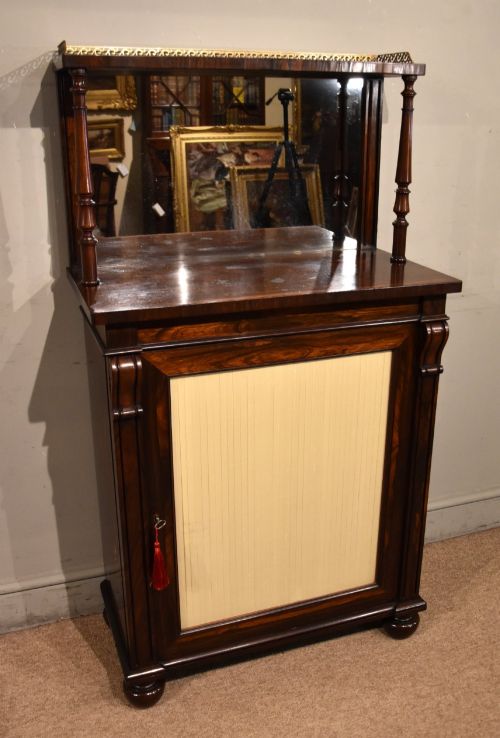
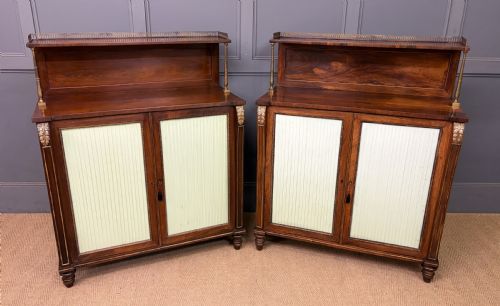
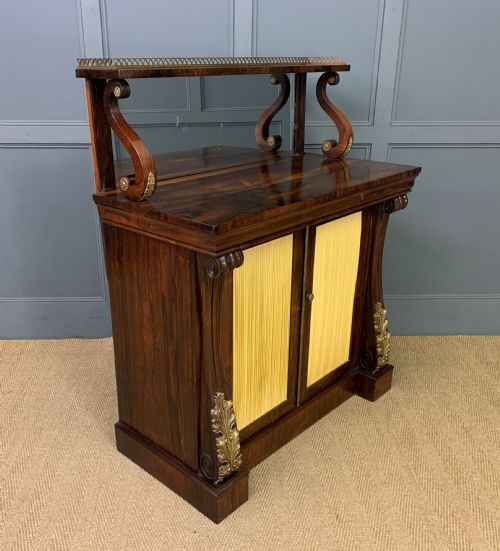
A brass gallery chiffonier is a low cabinet designed for storage and display, appearing primarily in Regency, George IV, and Victorian forms. These pieces typically feature a combination of lower enclosed cupboards and upper tiers supported by slender columns.
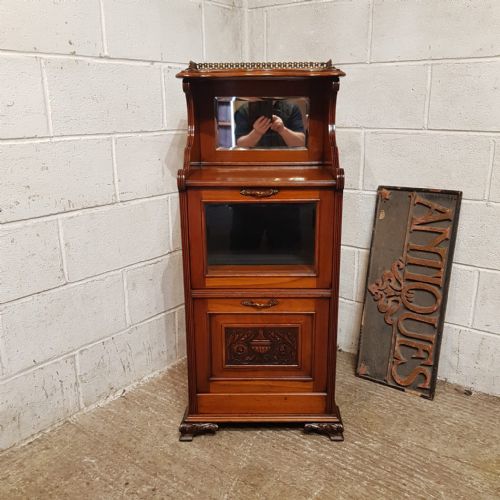
The versions most frequently met on this page are constructed from mahogany, flame mahogany veneer, or rosewood. They often include distinctive brass galleries around their upper shelves, alongside functional additions like writing drawers.
How they were made
Cabinet makers utilised dense hardwoods such as mahogany and rosewood, frequently applying flame mahogany veneer to achieve striking grain patterns on the main surfaces. Structural elements were joined using traditional cabinet-making techniques suited to nineteenth-century workshop practices.
Metalwork components, specifically brass galleries and supporting fixtures, were cast and fitted to the upper tiers of the chiffoniers. Additional materials like mirror glass and fabric panels were sometimes integrated into the upper back sections behind the shelves.
Retail Price Guide 2026
Typical UK retail prices for brass gallery chiffonier, calculated from the Sellingantiques database of over a million retail prices indexed since 2003. This retail price guide relies exclusively on Sellingantiques data; no external sources or auction records are used, so the figures do not describe the wider market.
Some nineteenth-century writers kept stationery locked away in the chiffonier's secret writing drawer, ready for sudden bursts of midnight correspondence.
What varies in quality
The distinction between standard examples and those of finer execution lies in the selection of timbers and the handling of veneers. Selected flame mahogany veneers display a more vibrant, symmetrical grain figure across the cabinet doors and drawer fronts.
Refinement is also evident in the crispness of the brass gallery work and the integration of specialised elements like writing drawers. Pieces attributed to higher-quality production exhibit greater attention to proportion and joinery detail in their tiered backs.
The Brass Gallery Chiffonier Glossary
- Chiffonier
- A low cabinet originating in the nineteenth century, typically featuring a cupboard base and one or more upper display shelves. It served as a versatile piece for both storage and the arrangement of decorative objects.
- Brass gallery
- A low metal rail fitted around the edge of a shelf to prevent items from sliding off. In these cabinets, it adds a distinct decorative and functional border to the upper tiers.
- Flame mahogany veneer
- A thin slice of mahogany timber cut from the fork of the tree where the branch meets the trunk. This produces a dramatic, flame-like pattern highly valued in cabinet making.
- Regency
- A stylistic period spanning the early nineteenth century, known for classical restraint and elegance. Furniture from this era often incorporates clean architectural lines and refined decorative brass mounts.
- George IV
- A British stylistic period covering the 1820s, bridging Regency forms and early Victorian heavy styling. Pieces from this reign often retain classical proportions while introducing richer ornamentation.
Frequently Asked Questions
What is a brass gallery chiffonier?
A brass gallery chiffonier is a low nineteenth-century cabinet featuring enclosed lower storage and upper display shelves bordered by a metal rail.
These pieces emerged during the Regency and Georgian periods, evolving into Victorian variants that combined practical utility with decorative display.
How were these cabinets used?
They served primarily in dining rooms and parlours for storing tableware, linens, or writing materials while displaying decorative objects on the upper tiers.
Some examples include integrated writing drawers, which provided a compact, pull-out surface for correspondence without requiring a dedicated desk.
Which woods were commonly used?
Cabinet makers relied heavily on rich dark timbers, particularly mahogany, flame mahogany veneer, and rosewood.
These dense hardwoods were chosen both for their structural stability and for their ability to take a high polish, enhancing the visual grain.
How do I date a chiffonier?
Dating relies on observing stylistic markers, cabinet construction methods, and timber choices across the Regency, George IV, and Victorian periods.
Earlier Regency examples tend to display lighter classical proportions, whereas pieces marked around eighteen-sixty reflect heavier Victorian interpretations.
Where should I place one?
These cabinets suit living rooms, dining spaces, or hallways where their low profile and surface shelving can be fully appreciated.
The upper brass gallery and tiers offer an ideal platform for displaying ceramics, books, or small ornaments while keeping everyday items concealed below.