
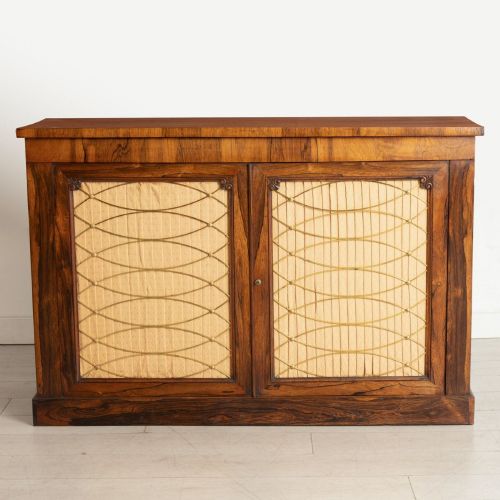
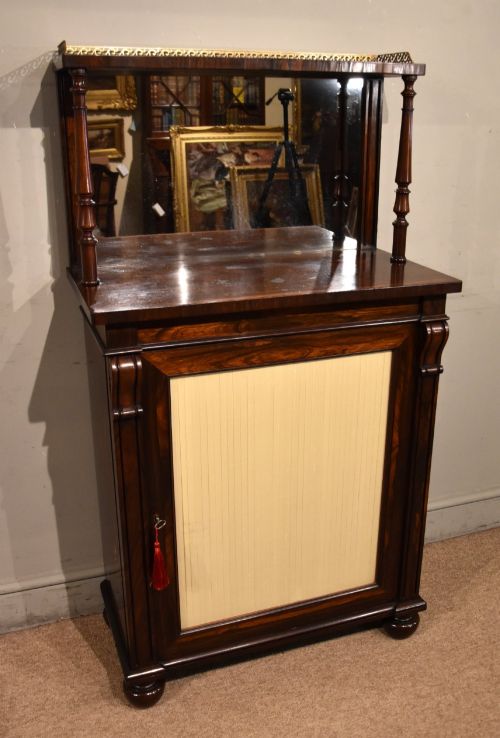

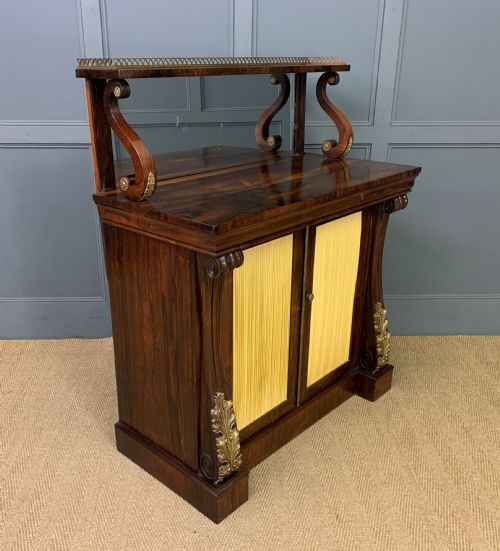
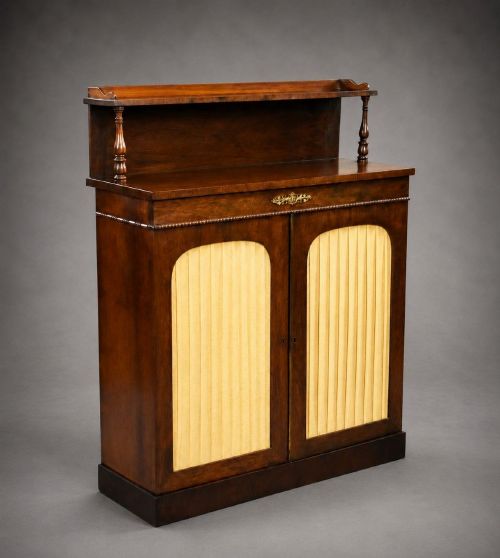


Pleated Fabric Door Cabinet
A pleated fabric door cabinet brings rich nineteenth-century texture to a room, offering refined storage behind delicate silk or cotton panels.
Pleated Fabric Door Cabinet
When you search for a pleated fabric door cabinet, you encounter nineteenth-century forms such as chiffoniers, side cabinets, and credenzas originating from the Regency, George IV, William IV, and Victorian periods. These pieces serve as functional storage furniture designed with delicate textile inserts behind wooden framework.
You are most likely to meet rosewood, simulated rosewood, and goncalo alves side cabinets or chiffoniers featuring brass mounts, mirror glass, or marble tops. The primary versions combine dark exotic woods with gathered or pleated fabric panels set into the door frames.
How they were made
Cabinetmakers constructed these pieces primarily from solid and veneered rosewood, simulated rosewood, and goncalo alves, often incorporating brass mountings and ormolu details. The timber surfaces received careful polishing to highlight the natural grain patterns of the exotic hardwoods.
Doors were fitted with inset panels of pleated fabric, usually backed to protect the interior contents while softening the visual weight of the heavy timber structure. Some examples integrated mirror glass panels alongside the fabric or within the superstructure.
Pleated Fabric Door Cabinet Retail Price Guide 2026
Typical asking prices for pleated fabric door cabinet among the pieces listed under this phrase on Sellingantiques today, from the lower quarter to the upper quarter. They describe what is for sale here now, not the wider market.
The listings on this page span the Regency, George IV, William IV, and Victorian periods, executed in rosewood, simulated rosewood, and goncalo alves.
What varies in quality
The sophistication of the timber figure and the precision of the brass or ormolu mounts dictate the upper tier of these pieces. Highly figured rosewood and meticulously turned columns separate superior examples from standard production.
The integration of the fabric panels within the door frames demonstrates the maker's attention to detail, alongside secondary elements like fitted marble tops or complex breakfront forms.
The Pleated Fabric Door Cabinet Glossary
- Chiffonier
- A low sideboard or cabinet with enclosed shelving below, frequently topped with a small mirrored or shelved superstructure. This form dominates nineteenth-century seating and living spaces.
- Goncalo alves
- A dense exotic hardwood with striking variegated dark brown and golden figuring, utilised in high-end Regency cabinetmaking. It provides a distinct alternative to standard rosewood.
- Ormolu
- Gilded bronze ornamentation applied to furniture mounts and architectural details, adding bright metallic contrast to dark woods. It requires careful casting and chasing by skilled metalworkers.
- Simulated rosewood
- Painted or stained graining on a simpler timber base designed to imitate costly exotic rosewood. Artisans achieved this effect through careful brushwork and layering.
Pleated Fabric Door Cabinet: Frequently Asked Questions
How were these cabinets used?
Nineteenth-century households utilised these cabinets in dining rooms and drawing rooms for storing china, glassware, and writing materials. The enclosed lower cupboards kept delicate items secure and dust-free.
The pleated fabric panels allowed air circulation while concealing the contents from view, serving both a practical and a decorative function within the interior.
How do I style a pleated fabric door cabinet?
Place the cabinet against a prominent wall in a living room or hallway where the timber grain and fabric texture can catch the light. Keep the surface uncluttered to let the period details stand out.
Pair the piece with neutral walls to highlight the deep tones of rosewood or goncalo alves, and coordinate soft furnishings with the colour of the door fabric.
How do I identify a Regency cabinet?
Look for classical restraint, symmetrical proportions, and specific decorative motifs such as brass inlay, gilt mounts, and turned columns. These design markers separate Regency work from later Victorian interpretations.
Materials like solid rosewood, simulated rosewood, and goncalo alves point firmly toward the early nineteenth-century origin of the piece.
What is simulated rosewood?
Simulated rosewood is a painted or stained finish applied to a more common timber base to replicate the appearance of expensive imported Brazilian rosewood. Artisans painted grain lines by hand to achieve this effect.
This technique allowed makers to offer fashionable furniture at a lower cost without sacrificing the desired aesthetic of dark exotic wood.