

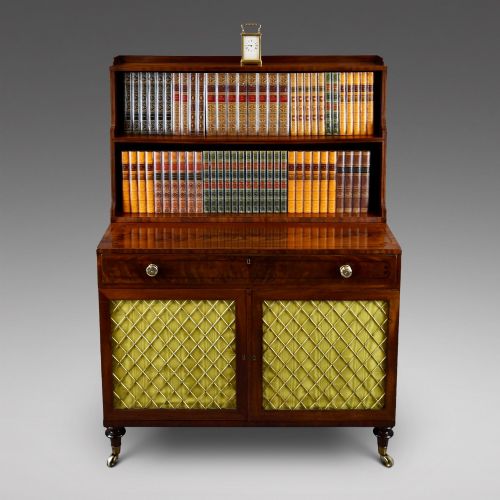
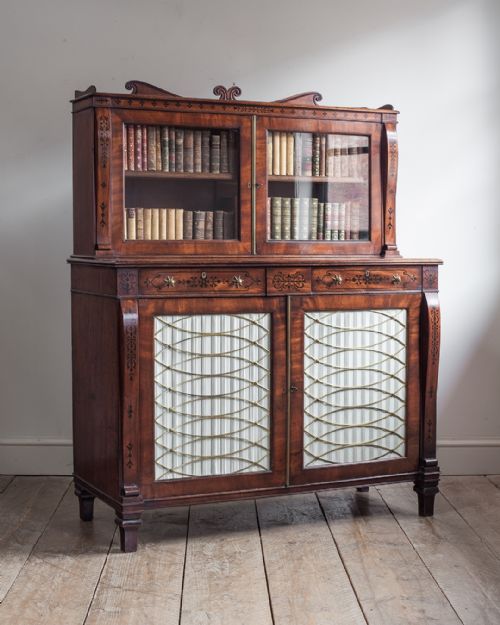
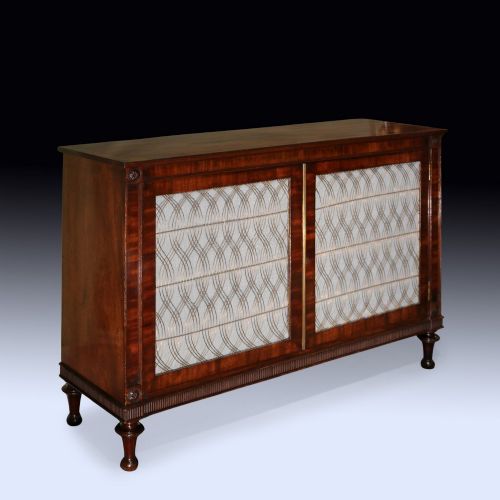


Brass Grille Bookcase
A brass grille bookcase brings architectural order to a room while keeping dust off your library.
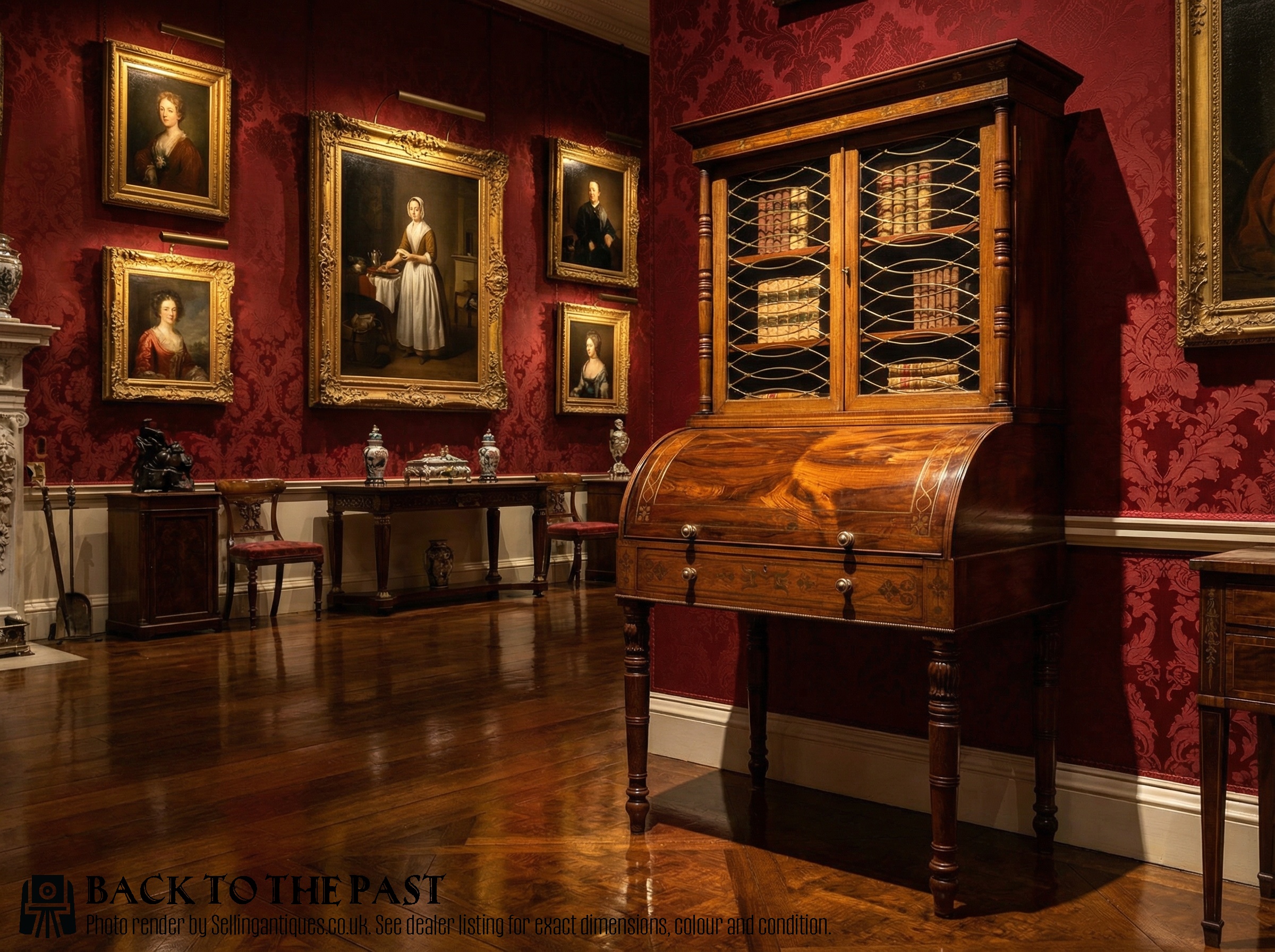
Brass Grille Bookcase
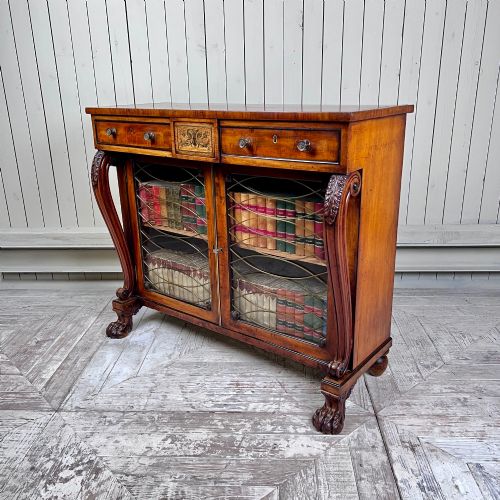
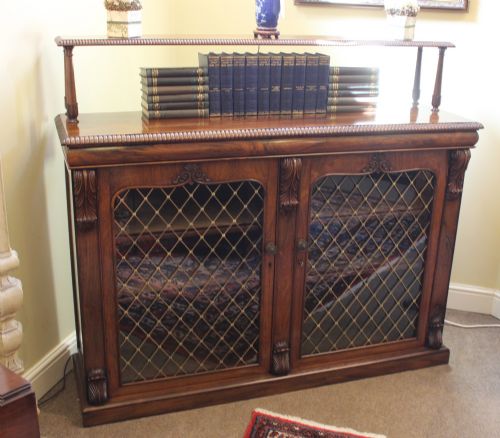
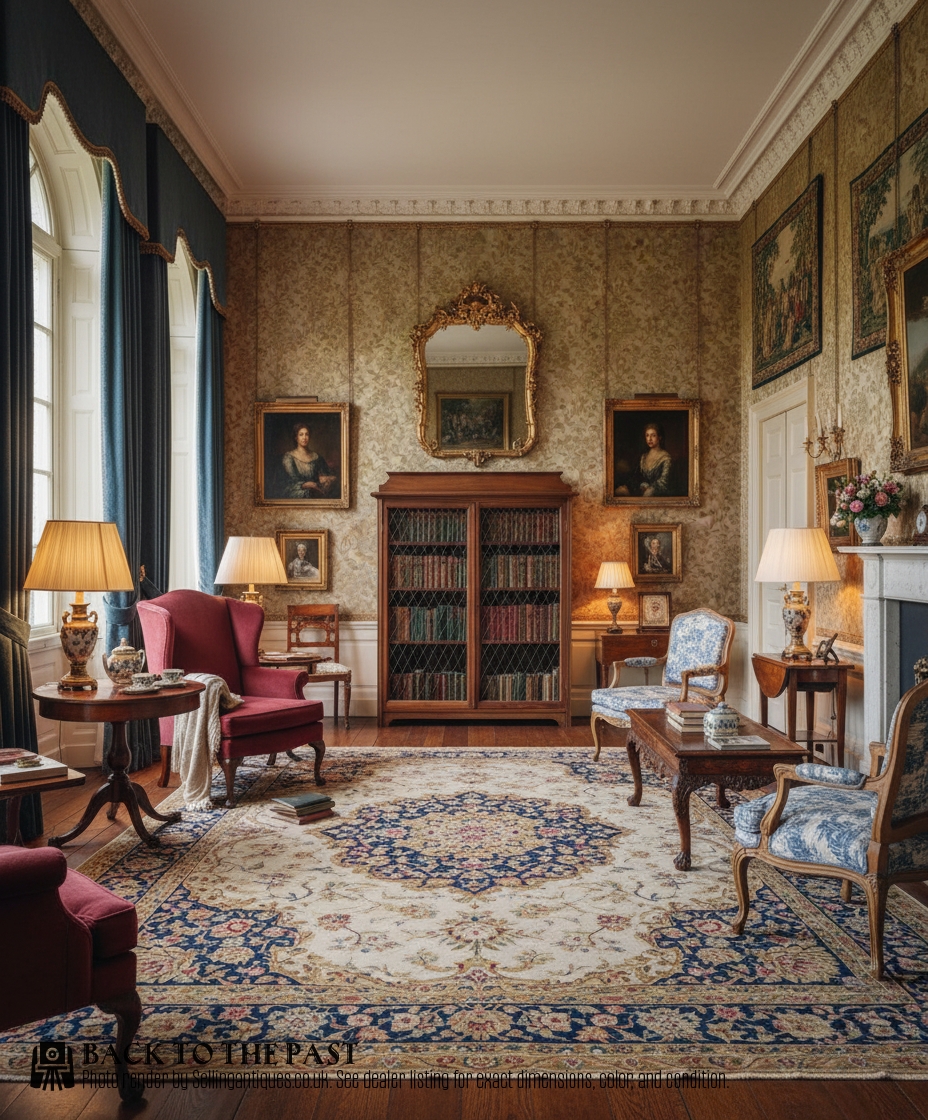
A brass grille bookcase is primarily a storage piece designed to protect books and display objects behind woven or pierced metal wire panels rather than plain timber or clear glass. When you search for a brass grille bookcase, you enter a field dominated by Regency and nineteenth-century pieces alongside later interpretations.
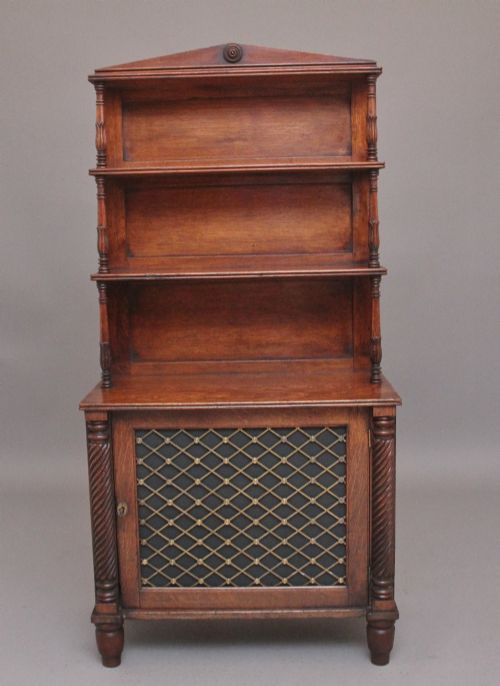
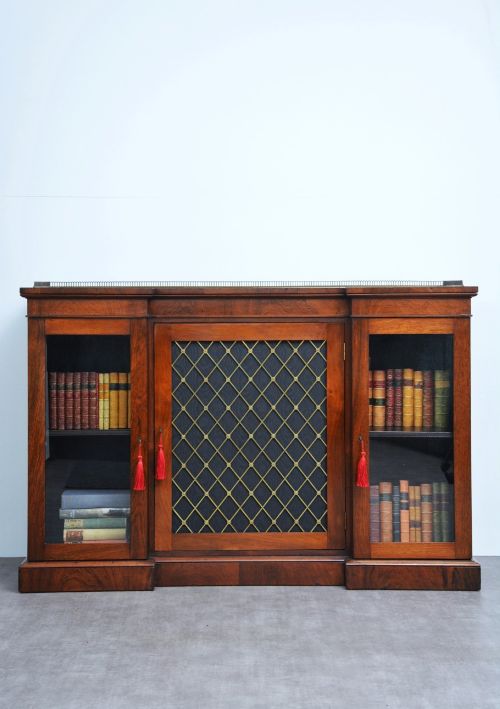
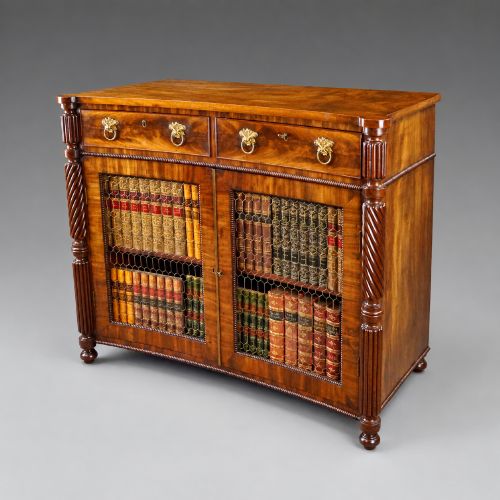
The format spans upright library bookcases, low dwarf cabinets, and chiffoniers fitted with glazed or metal-fronted doors. Mahogany, rosewood, and walnut form the structural core of these items, frequently accented with ebony stringing or brass inlays.
Most examples originate from the Georgian, Regency, and William IV periods, though twentieth-century revival pieces also appear on the market. These cabinets often feature adjustable shelves and enclosed cupboard bases beneath the open display sections.
Construction and materials
Cabinet makers constructed the primary carcasses of these pieces from dense hardwoods like mahogany and rosewood, often veneered onto solid oak or pine secondary timbers. Finer examples incorporate exotic woods such as gonçalo Alves, pollard oak, or kingwood to create striking surface patterns.
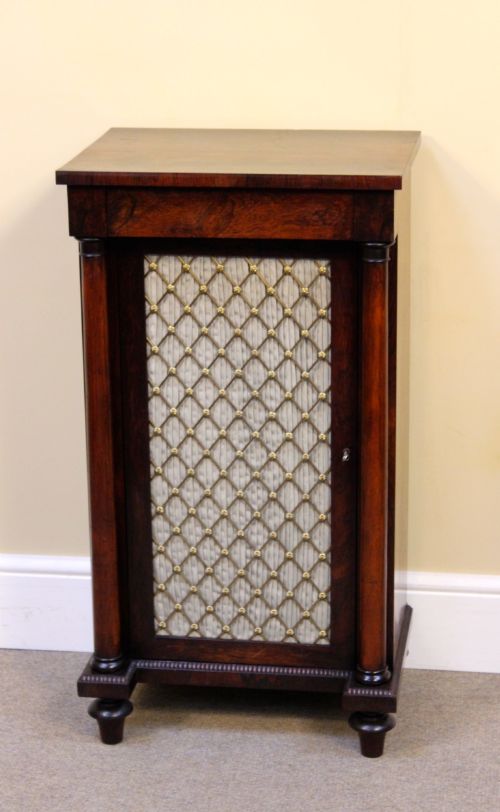
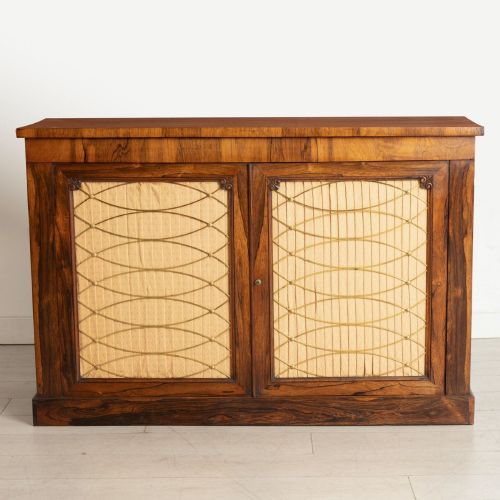
The signature brass grilles were woven or cast as fine metal lattices, then secured behind wooden frame doors with small screws or brass retaining beads. Silk or fabric backing panels were frequently placed behind the grilles to conceal book spines or keep out finer particles of dust.
Brass Grille Bookcase Retail Price Guide 2026
Typical asking prices for brass grille bookcase among the pieces listed under this phrase on Sellingantiques today, from the lower quarter to the upper quarter. They describe what is for sale here now, not the wider market.
Listings feature Regency, Victorian, and Georgian pieces built from mahogany, rosewood, walnut, and pollard oak.
Distinctions in craftsmanship
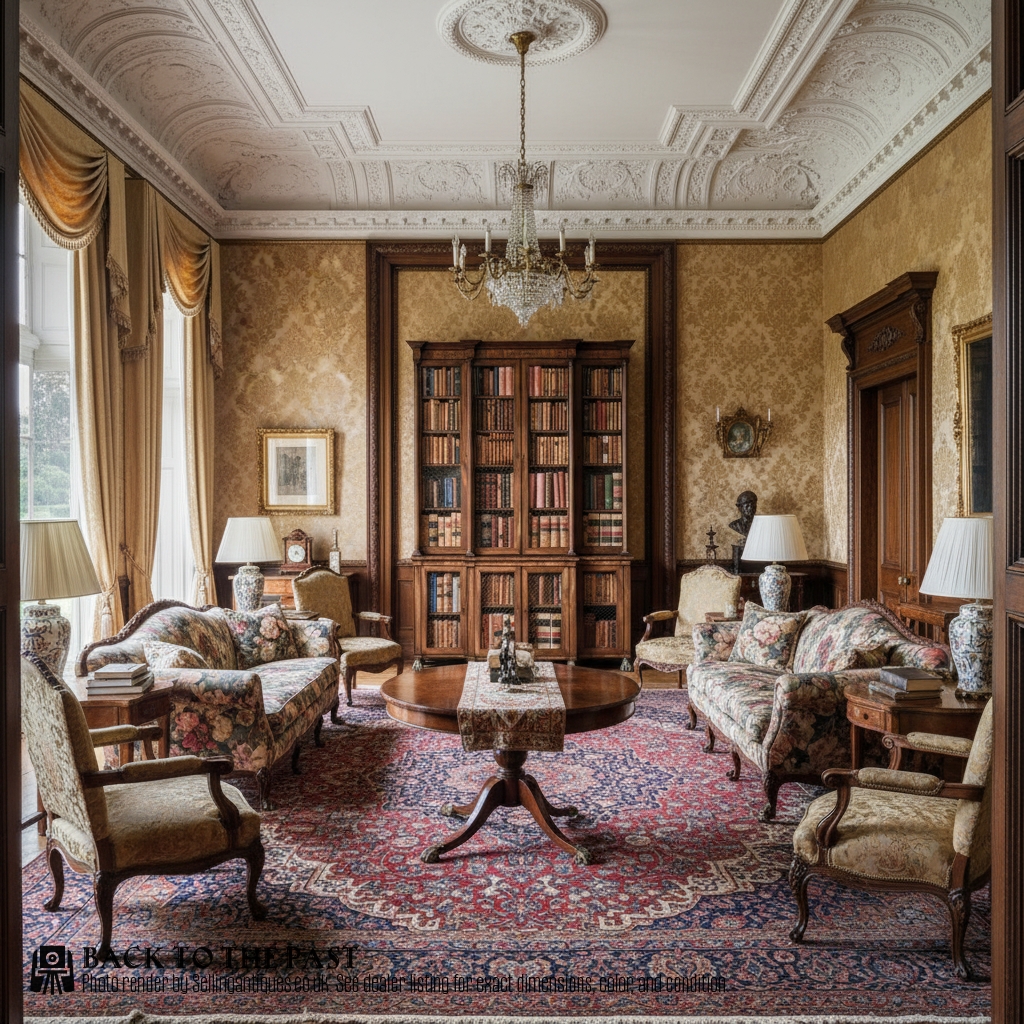
The quality of a brass grille bookcase rests upon the crispness of its joinery, the selection of figured veneers, and the integrity of the metalwork. Superior pieces display tightly fitted door frames, well-matched timber grains across the front elevation, and substantial cast brass grilles rather than stamped wire.
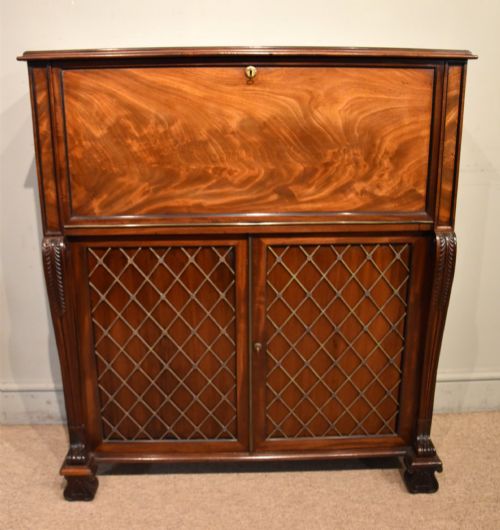
Internal detailing marks the difference between standard production and top-tier workshop output. Refined examples include carefully fitted secretaire drawers with leather writing surfaces, polished solid-wood drawer linings, and original working locks with matching keys.
Gillows·Paul Sormani
The Brass Grille Bookcase Glossary
- Brass grille
- A woven or pierced metal mesh fitted into cabinet doors to allow ventilation while protecting the contents. These panels replaced plain glass in many nineteenth-century library settings.
- Chiffonier
- A low sideboard or cabinet featuring enclosed shelves below, often topped with a small superstructure or mirror. They frequently incorporate fabric-backed brass grilles on the lower doors.
- Breakfront
- A piece of furniture where the central section projects forward from the flanking wings. This architectural arrangement adds depth and shadow to large library bookcases.
- Secretaire
- A desk disguised as a drawer or cabinet section that pulls down to reveal a writing surface and small pigeonholes. Many Regency cabinets integrate this function into the upper or middle tier.
Brass Grille Bookcase: Frequently Asked Questions
What is a brass grille bookcase?
A brass grille bookcase is a storage cabinet featuring metal wire mesh panels set into the doors instead of clear glass panes. These pieces were traditionally designed for fine libraries to protect valuable books.
Most surviving examples date from the Regency and nineteenth-century periods, constructed in dense hardwoods like mahogany and rosewood. They combine enclosed lower cupboards with shelved upper display areas.
How were brass grilles used?
The brass grilles allowed air circulation around leather-bound volumes while keeping dust and handling away from the books. They also offered a decorative texture that softened the heavy wood facades of formal rooms.
Makers often placed pleated silk or fabric behind the wire mesh to obscure the contents of the cabinet. This textile backing could be changed to match the interior colour scheme of the library.
Are the brass grilles original?
Original grilles are typically hand-woven or cast with patinated brass wire that matches the age of the surrounding door frames. Replacement wire often looks overly bright and lacks the minor irregularities of nineteenth-century metalwork.
Inspect the rebate inside the door to see if the fixing pins and wood surround show the same span of wear as the rest of the cabinet.
How do I care for wood and brass?
Maintain the timber surfaces with a light application of traditional beeswax rather than modern silicone sprays. This preserves the depth of the polish on mahogany and rosewood without building up a sticky film.
Clean the brass grilles gently with a dry or barely damp cloth to avoid staining the fabric panels behind them. Take care not to snag cleaning cloths on the interwoven wire edges.