





Regency Dwarf Bookcase
A regency dwarf bookcase brings low, grounded storage and display into a room, offering a neat surface beneath eye level for books and ornaments.
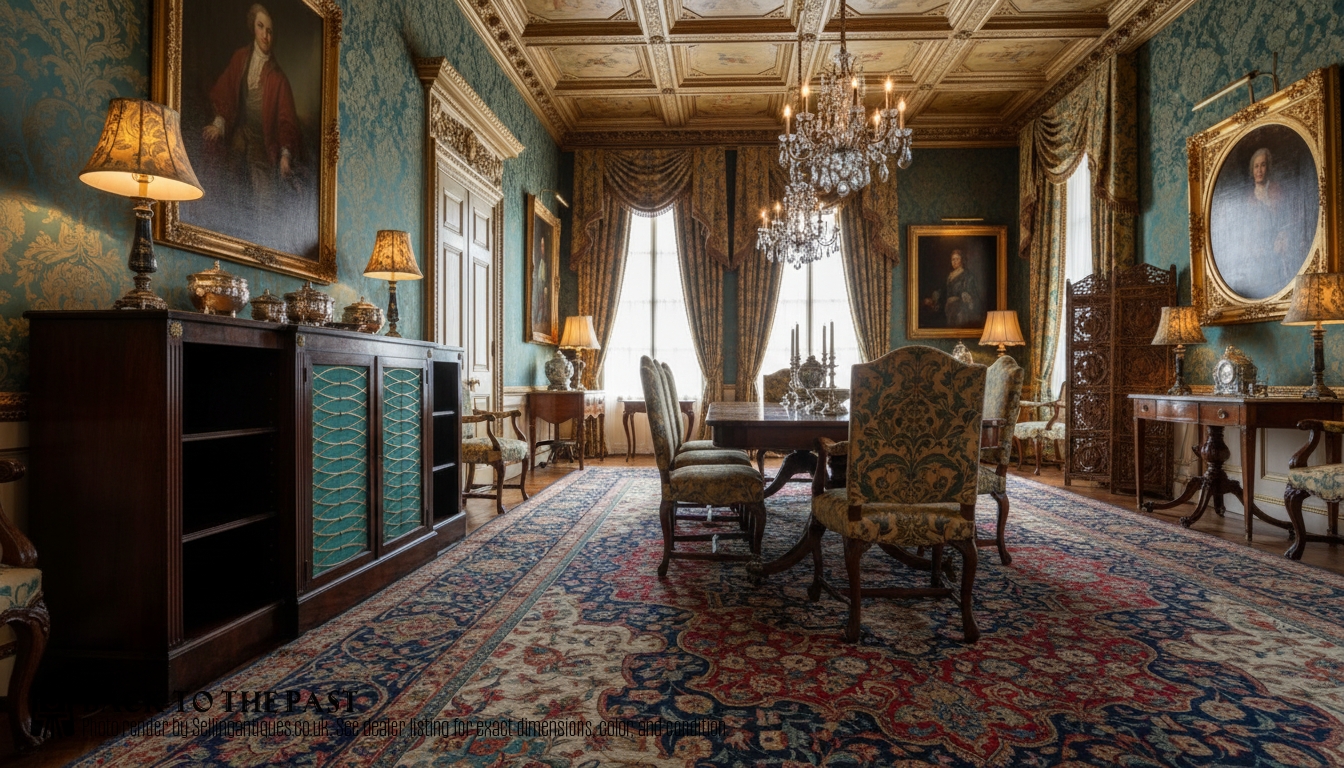
Regency Dwarf Bookcase
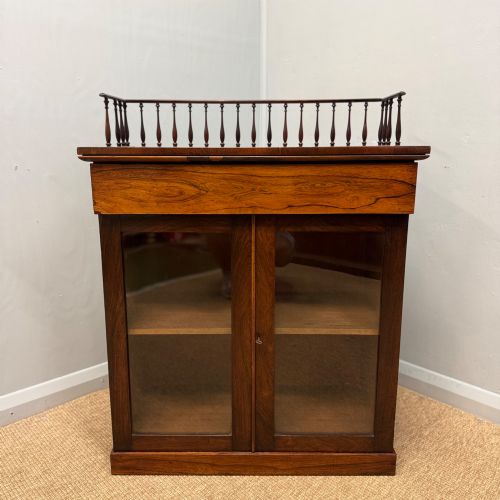
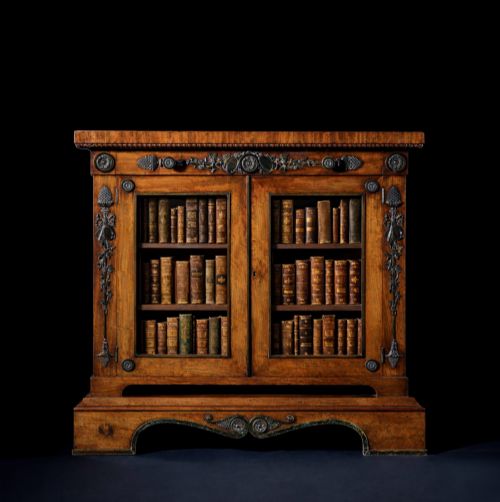
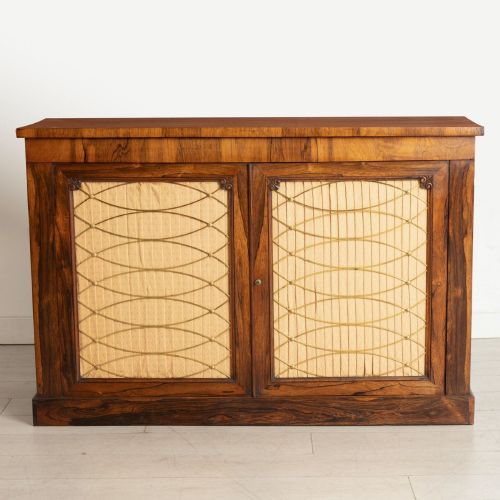
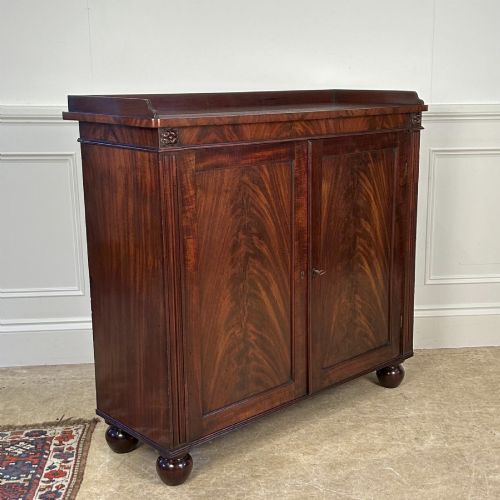
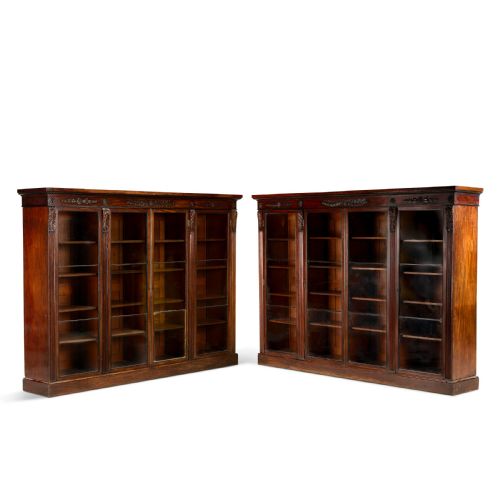
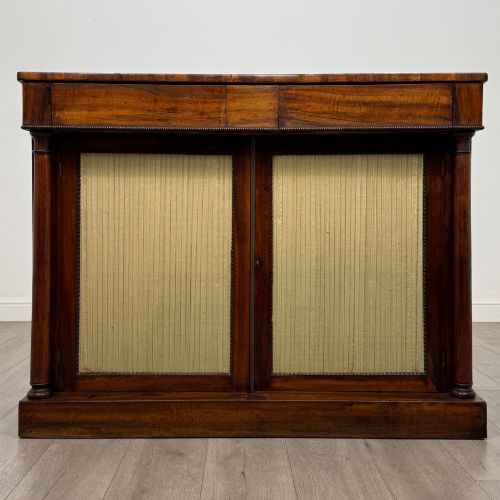
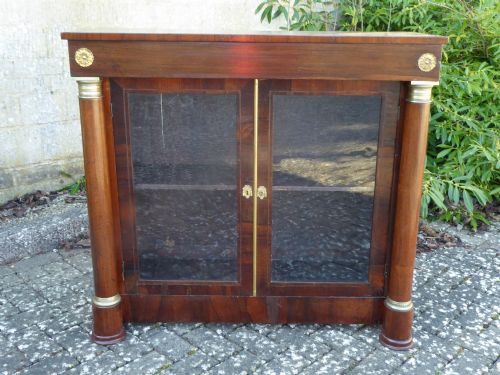
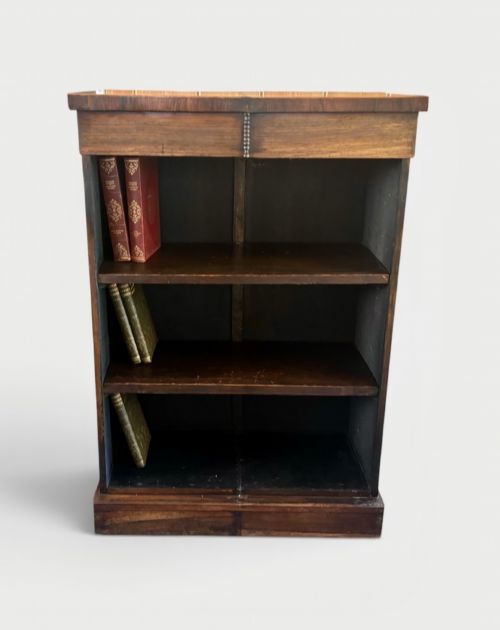
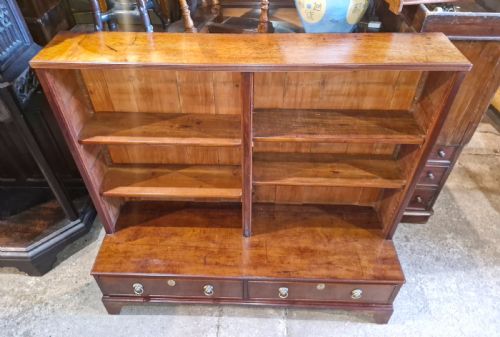
A regency dwarf bookcase sits low against the wall, taking the form of an open bookshelf, a glazed cabinet, or a side cabinet with doors. The pieces seen here span the Regency, George IV, William IV, and Victorian periods, stretching from around 1800 into the nineteenth century.
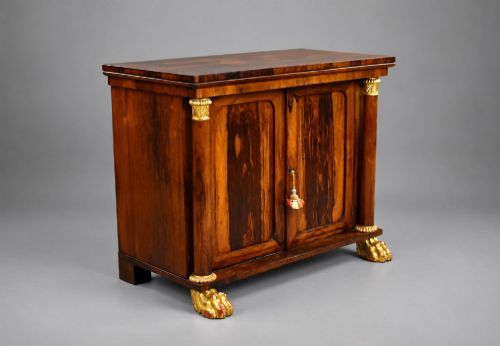
Mahogany and rosewood dominate the selection, often accompanied by rarer timbers like pollard oak, amboyna, and gonçalo alves. Many examples incorporate brass inlay, bronze mounts, or gilt brass work to accent the timber grain.
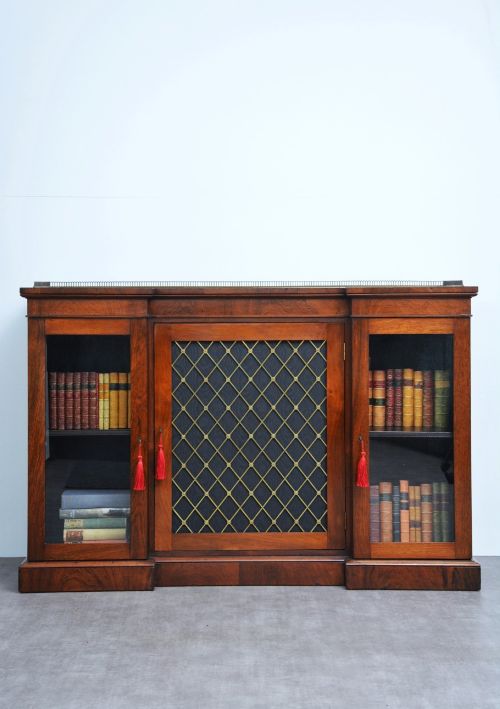
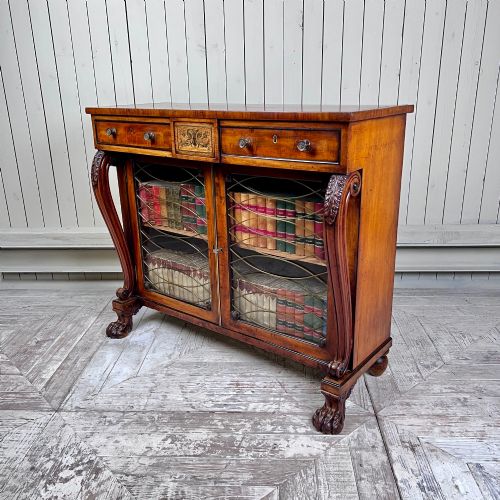
Open shelf formats appear alongside breakfront outlines and pieces fitted with pleated fabric panels behind glass doors. Some incorporate secretary desks, waterfall tiers, or matching pairs designed to anchor a formal interior.
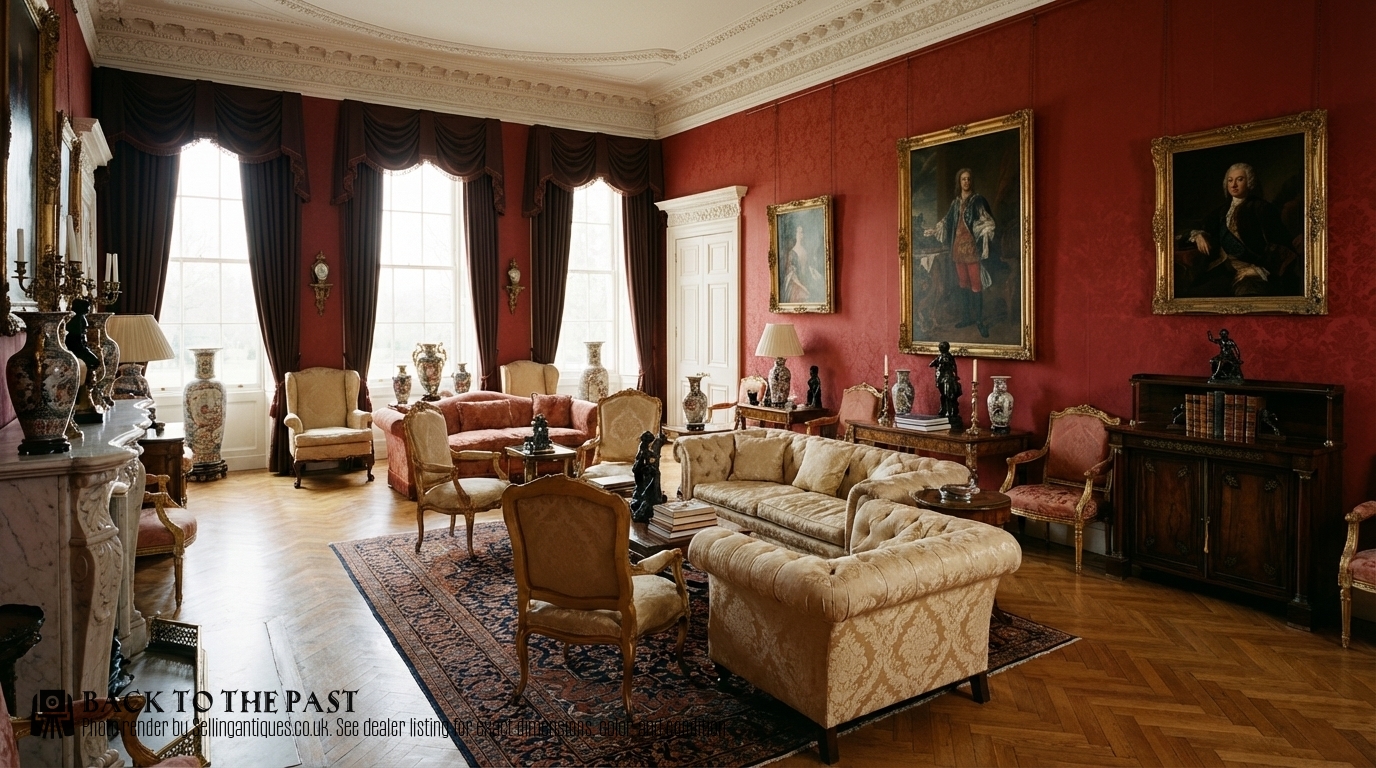
Materials and construction
Cabinet makers constructed carcasses in solid timbers and applied fine veneers of rosewood and mahogany over secondary woods. Brass stringing and brass inlay were meticulously let into the wood surfaces to define panels and shelves.
Gilt bronze mounts and brass grilles were secured to doors and pilasters, while glass was set into timber frames to protect the volumes within. Original painted and grained finishes survive on selected examples, preserving early surface treatments.
Regency Dwarf Bookcase Retail Price Guide 2026
Typical asking prices for regency dwarf bookcase among the pieces listed under this phrase on Sellingantiques today, from the lower quarter to the upper quarter. They describe what is for sale here now, not the wider market.
The selection includes breakfront silhouettes, open shelving, and glazed side cabinets finished with bronze mounts.
Judging the range
The choice of timber veneer dictates much of the visual weight, with richly figured rosewood, amboyna, and pollard oak standing apart from plain mahogany. The precision of the brass inlay and the crispness of any carved or cast bronze mounts set finer examples apart.
Proportion and structural complexity also divide the output, from simple open shelves to breakfront cabinets with integrated drawers and glazed doors. Originality of surface finish, whether polished timber or early paint, anchors the historical integrity of each piece.
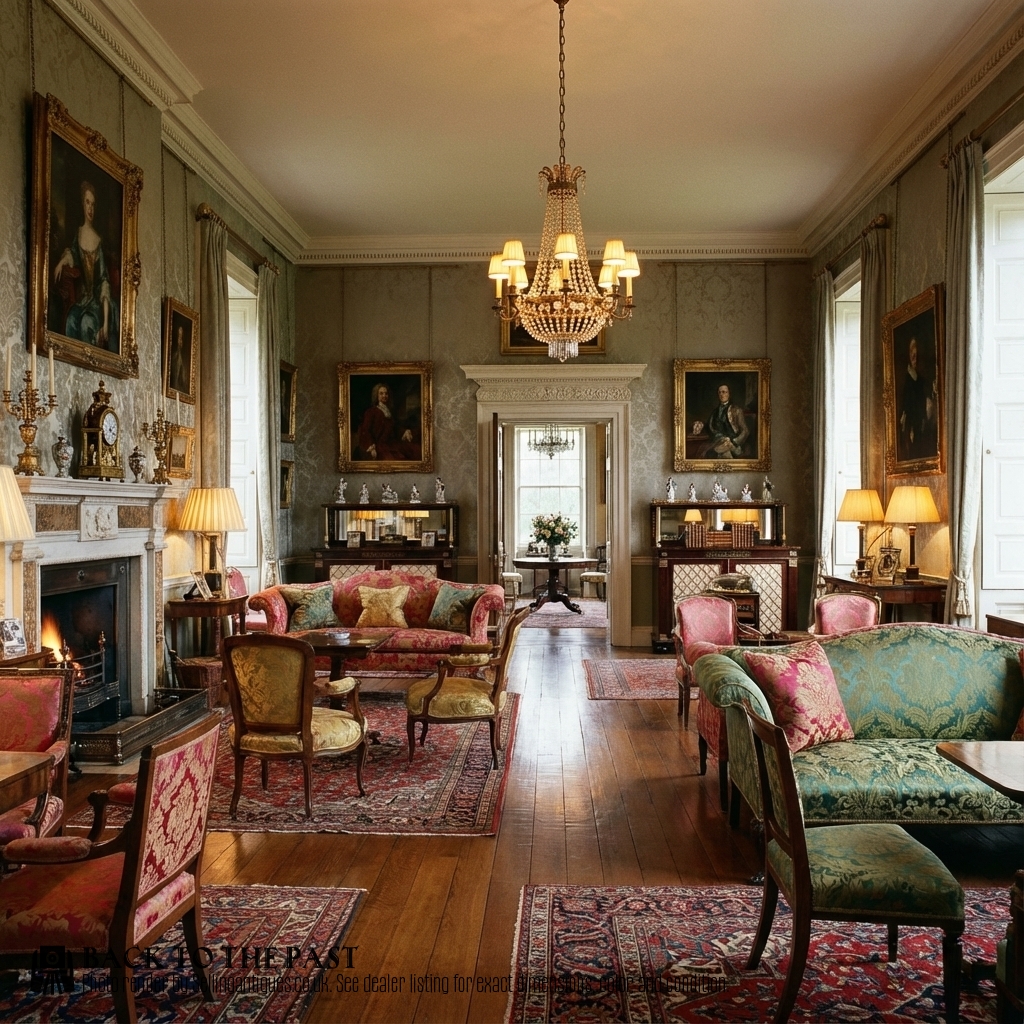
Gillows
The Regency Dwarf Bookcase Glossary
- Breakfront
- A piece of furniture where the central section projects forward from the flanking sides. This layout adds architectural depth to low cabinets.
- Chiffonier
- A low sideboard or cabinet featuring shelves or enclosed storage below. These often include fabric panels behind glass doors.
- Waterfall bookcase
- A set of graduated open shelves stepping back as they rise. This form appears in conjunction with low dwarf formats.
- Stringing
- Thin lines of contrasting timber or brass inlaid into the surface of the wood. It creates geometric borders around panels and doors.
Regency Dwarf Bookcase: Frequently Asked Questions
What is a dwarf bookcase?
A dwarf bookcase is a low-standing piece of furniture designed to hold books beneath normal eye level. This height leaves wall space clear above for pictures and mirrors.
Such cabinets combine open shelving with enclosed cupboards or glass doors to serve multiple storage needs in a principal room.
Where were these placed originally?
These low cabinets stood in libraries, drawing rooms, and formal parlours alongside seating arrangements. Their reduced height allowed them to sit beneath windows or against panelled walls.
Pairs of these cabinets were frequently commissioned to balance opposite sides of a fireplace or architectural bay.
How do I care for rosewood?
Rosewood benefits from stable indoor humidity and protection from direct sunlight to prevent timber movement. Regular dusting with a soft dry cloth maintains the finish without needing heavy polishes.
Wax applied sparingly helps nourish antique veneers and preserves the natural lustre of the figured grain.
How do I date a bookcase?
Dating relies on secondary woods, construction methods, and stylistic cues like brass inlay and leg form. Pieces marked to the Regency or George IV periods display specific proportions and decorative vocabularies.
Comparing structural details with documented cabinet maker output helps narrow the period of manufacture.