


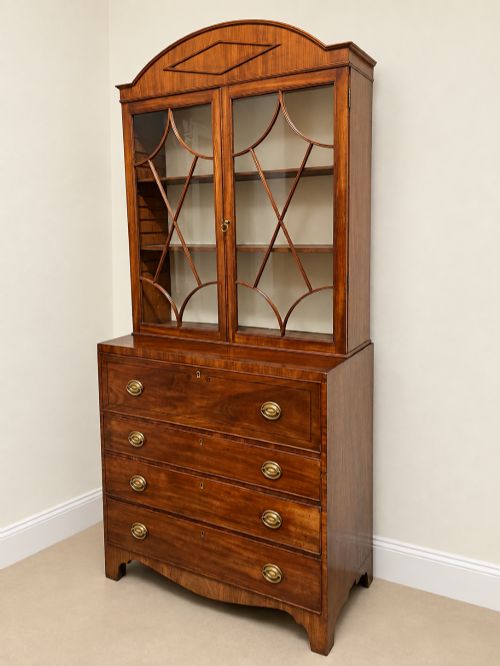
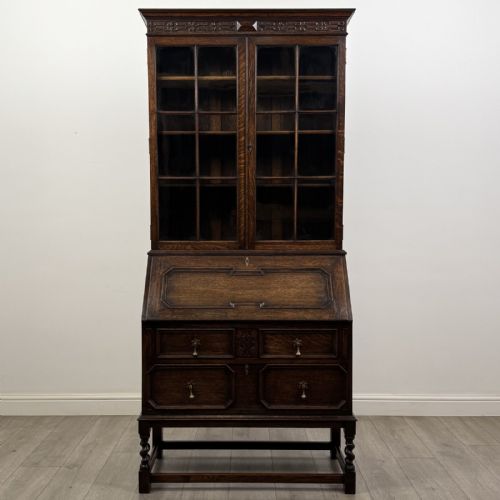
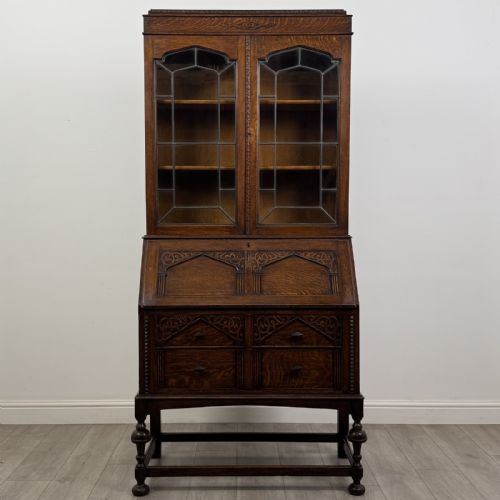
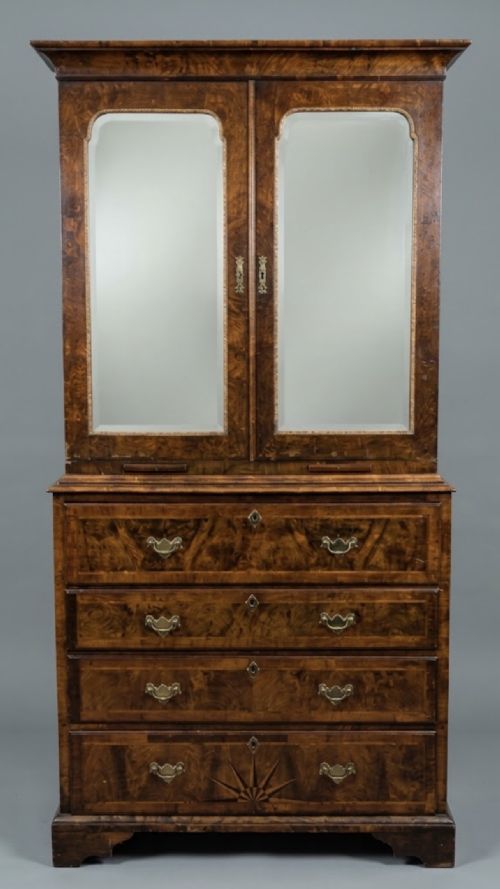
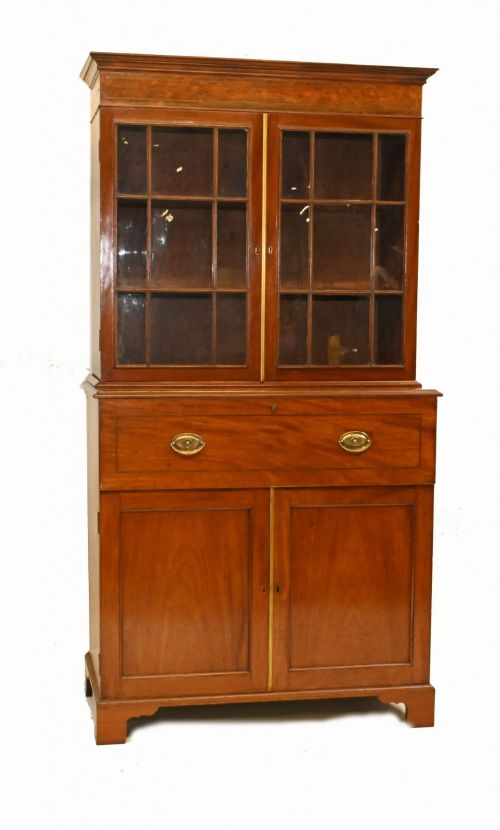
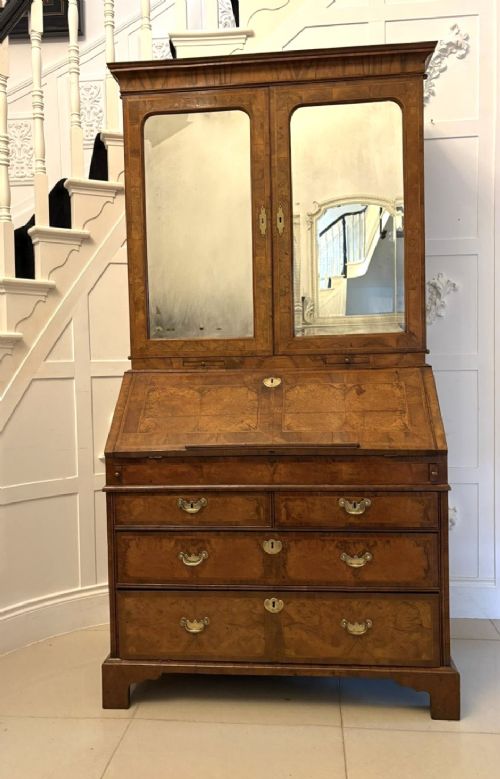
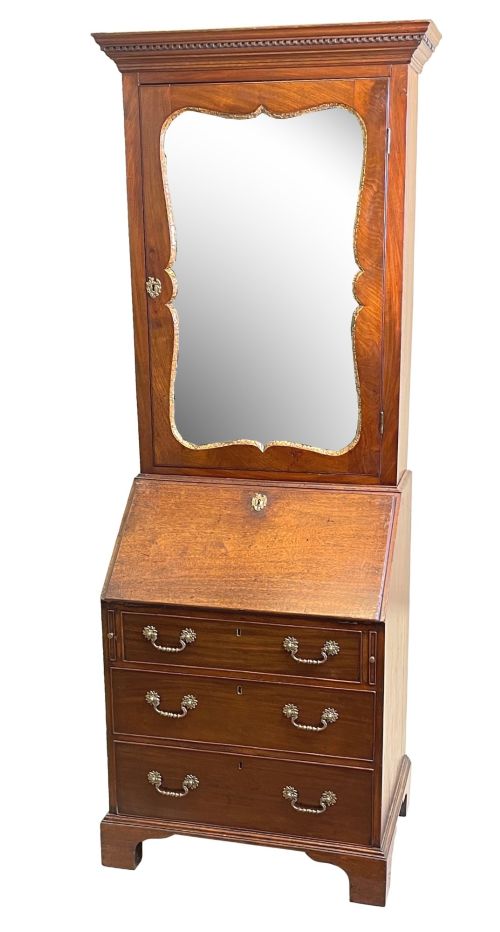
Antique Desk with Bookcase
An antique desk with bookcase combines a drop-front writing surface with enclosed upper shelving, offering a practical workspace and display unit.
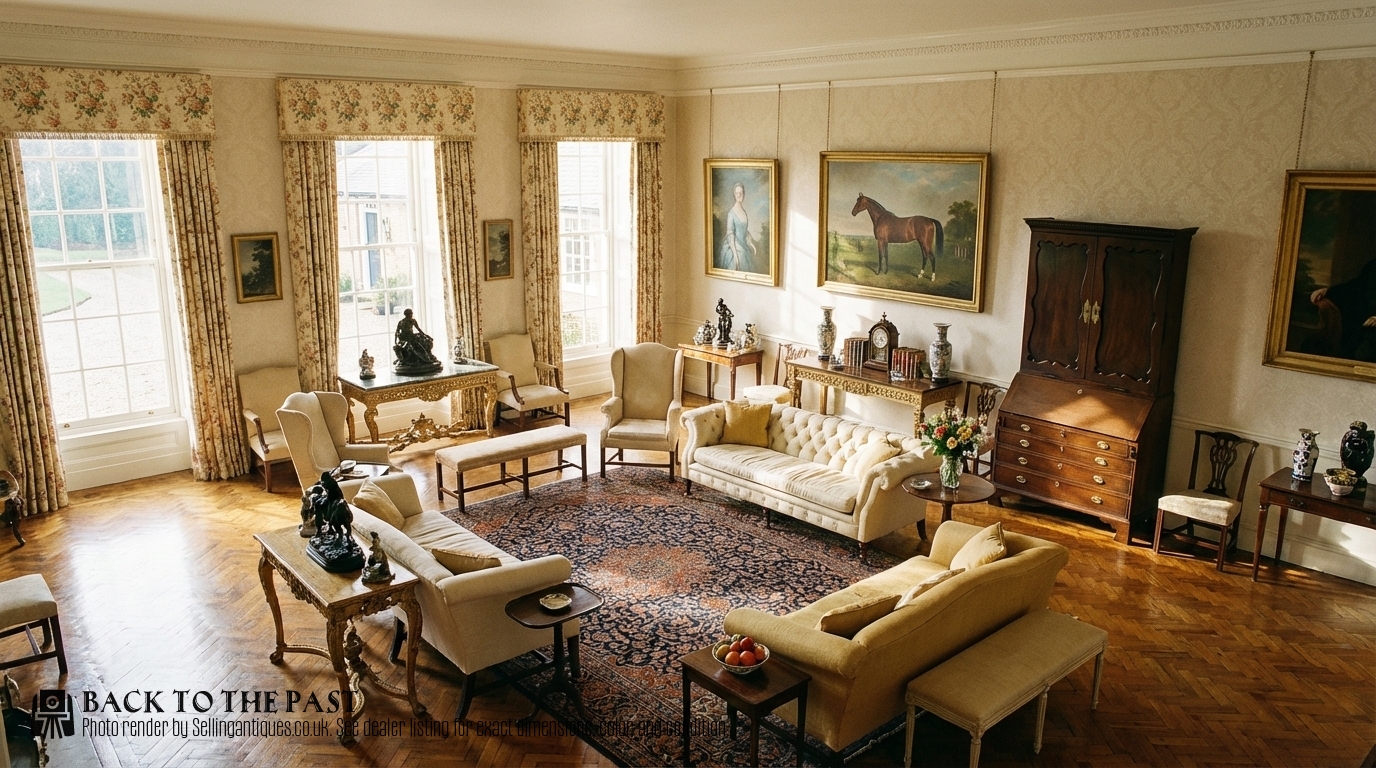
Antique Desk with Bookcase
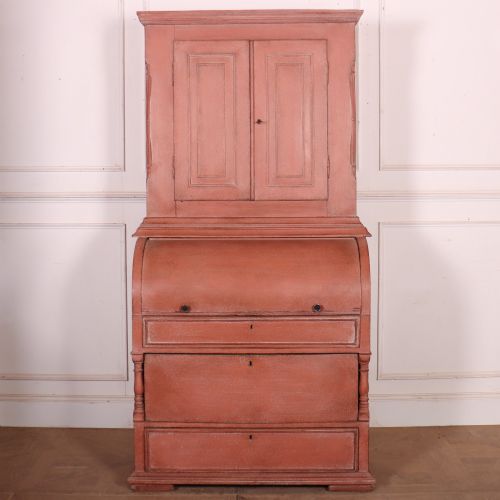
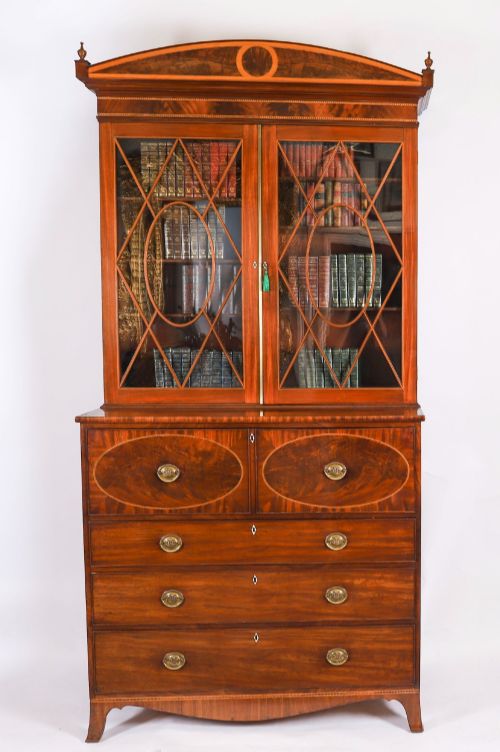
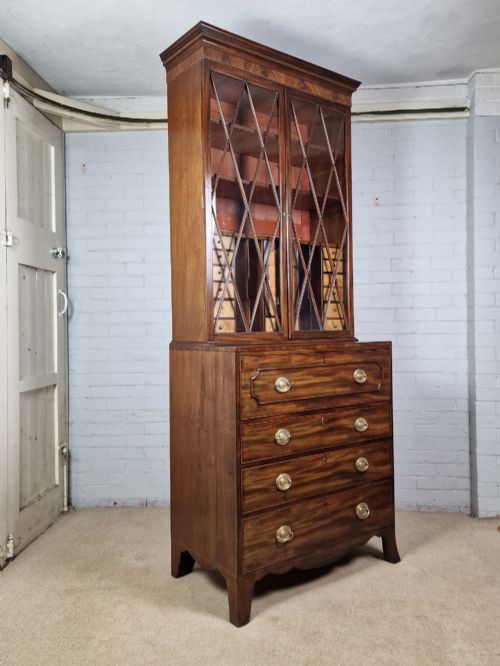
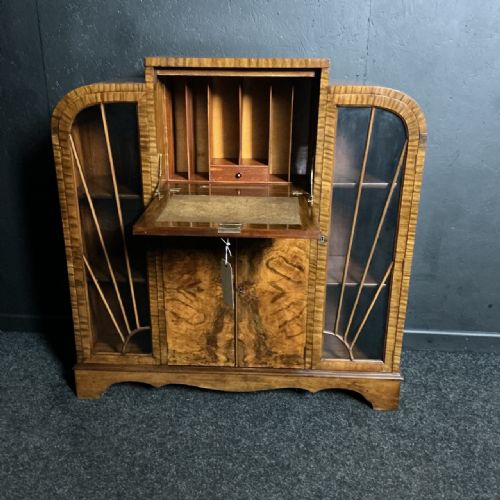
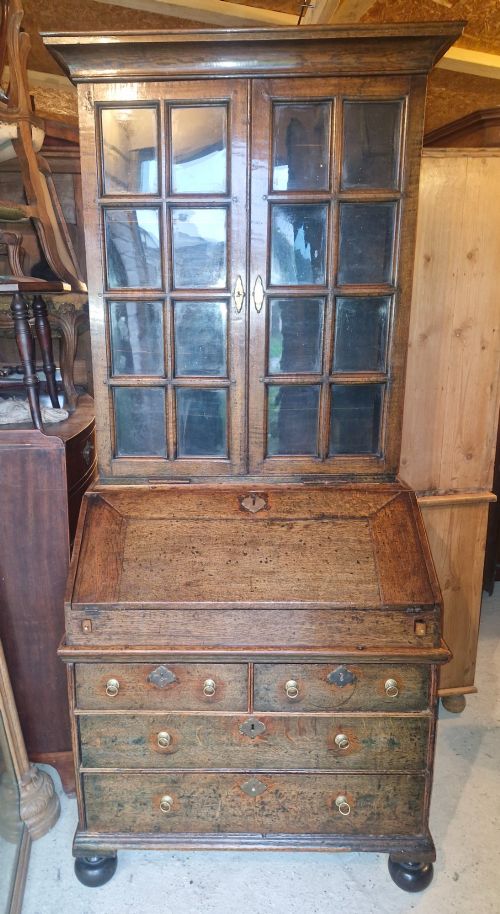
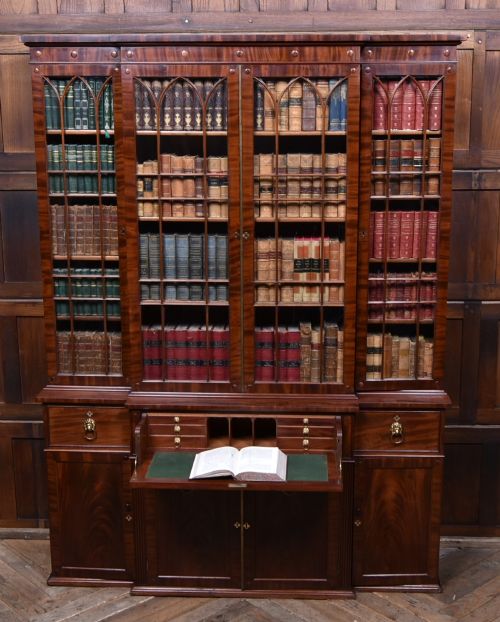
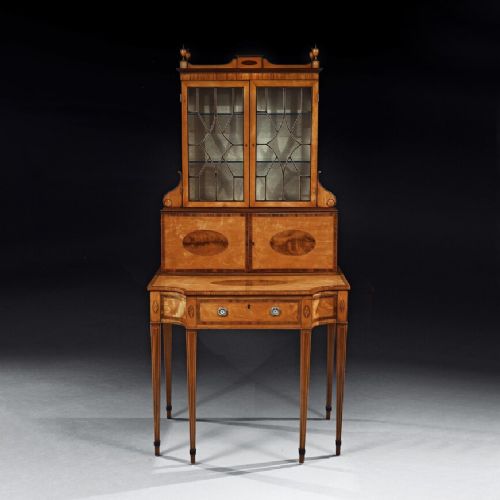
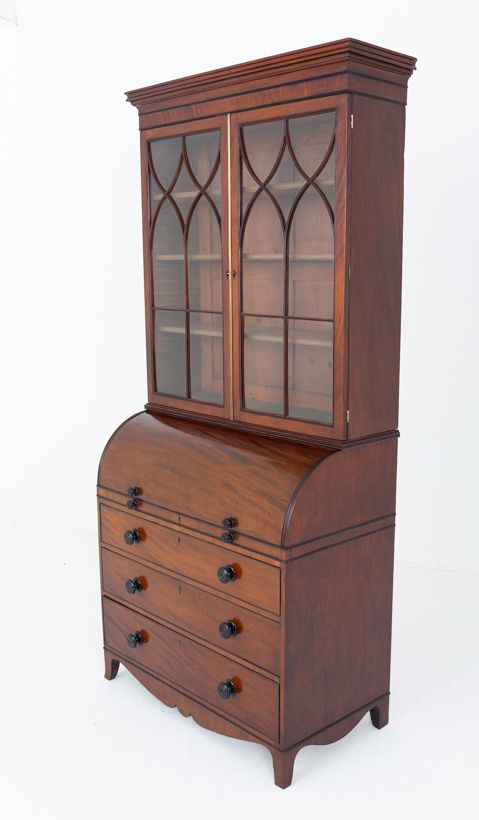
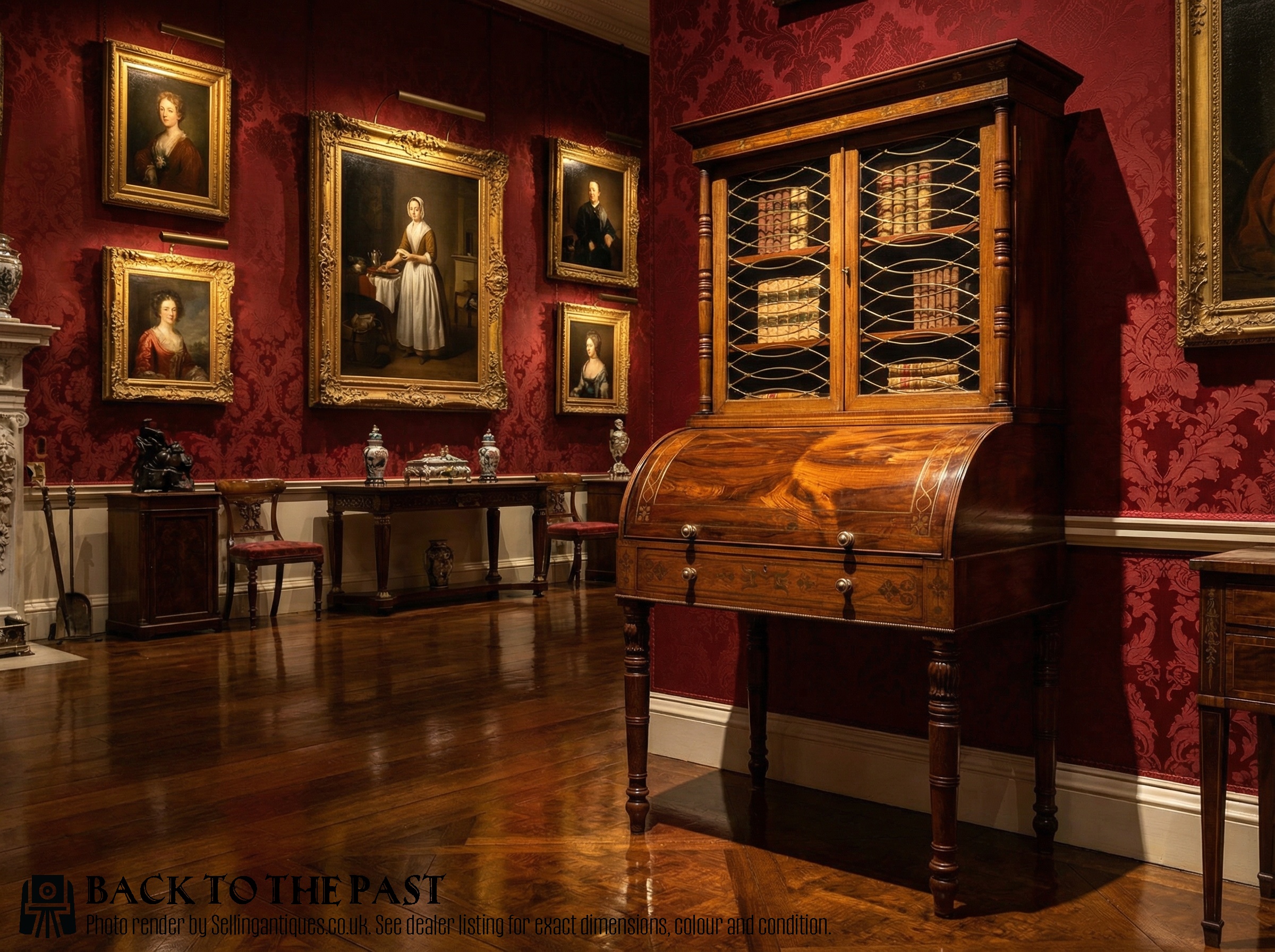
An antique desk with bookcase is a dual-purpose combination of a lower writing cabinet and an upper shelving unit designed for storage and display. These pieces merge a sloping bureau or pull-out cylinder desk with glazed or solid cabinet doors above.
The most common examples encountered on this page date from the eighteenth and nineteenth centuries, taking the form of bureau bookcases and secretaire cabinets. They range from small proportions suited to compact rooms to large architectural pieces with stepped internal compartments.
Makers fashioned these cabinets in regional oak, figured walnut, and rich mahogany, often incorporating satinwood stringing or glass panels. They serve equally as functional writing stations and prominent library storage for the home.
How they were made
Cabinet makers constructed these pieces primarily using solid and veneered timbers such as mahogany, oak, and burr walnut over supportive secondary woods. They utilised traditional joinery like dovetailing for the drawer construction and panel-and-frame methods for the upper bookcase doors.
Finishing techniques involved hand-polishing timber surfaces to highlight the natural grain patterns, whilst higher-end examples incorporated brass hardware and fitted interior pigeonholes. Glass doors on the upper section were individually glazed with timber muntins holding small panes in place.
Antique Desk with Bookcase Retail Price Guide 2026
Typical asking prices for desk with bookcase among the pieces listed under this phrase on Sellingantiques today, from the lower quarter to the upper quarter. They describe what is for sale here now, not the wider market.
One early oak bureau bookcase has been adapted to hold a television, proving that historic storage challenges adapt to modern entertainment.
What varies in quality
The quality of an antique desk with bookcase depends heavily on the selection of timber veneers and the crispness of the internal fittings. Bureau interiors featuring shaped pigeonholes, secret compartments, and finely carved drawers indicate superior craftsmanship.
Proportion and architectural balance set exceptional pieces apart from standard workshop production. The integration of original brasses, finely glazed door panes, and uncompromised timber patination define the upper tier of surviving examples.
Gillows·Tudor and Burrey·Edwards and Roberts
The Antique Desk with Bookcase Glossary
- Bureau bookcase
- A writing cabinet featuring a sloping fall-front that opens to reveal a fitted interior, surmounted by an enclosed bookcase.
- Secretaire
- A piece of furniture containing a drawer or compartment with a drop-front writing surface designed for correspondence.
- Cylinder desk
- A writing desk with a quarter-cylinder rolling shutter that conceals the writing slide and internal drawers when closed.
- Cartonnier
- A desktop cabinet designed to hold papers, documents, and stationery within upright compartments.
- Ormolu
- Gilded bronze mounts applied to furniture for decorative enrichment during the eighteenth and nineteenth centuries.
Antique Desk with Bookcase: Frequently Asked Questions
What is a bureau bookcase?
A bureau bookcase is a combined writing desk and shelving unit featuring a sloping fall-front flap that drops down to create a flat writing surface. Above this lower desk section sits a tall cabinet with doors enclosing shelves for books and papers.
These pieces provide a dual function by housing a personal workspace and a library display within a single upright footprint. They originated as versatile furniture for domestic studies and formal parlours.
How do I use a secretaire bookcase today?
You can utilise a secretaire bookcase as a functional home workstation by pulling down the writing drawer or flap to reveal internal pigeonholes for modern stationery. The upper glazed shelves offer storage for books, ceramics, or display collections.
Position the piece against a sturdy interior wall away from direct sunlight and heat sources to protect the polished wood surfaces. The enclosed shelving keeps reference materials tidy while concealing desk clutter behind closed doors.
How do I tell an 18th-century piece from a 19th-century one?
Eighteenth-century examples frequently employ solid walnut or rich mahogany with hand-cut dovetails, candle slides beneath the upper doors, and panel construction showing distinct hand-tool marks. The internal compartments tend to feature serpentine arrangements and concealed secret drawers. Ninetenth-century pieces often display machine-sawn elements, standardised drawer construction, and different veneer thicknesses such as burr walnut or figured mahogany. Styles from this later period frequently incorporate revival elements reflecting earlier historical eras.