


19th Century Rosewood Sideboard
These heavy, figured cabinets bring a dark warmth to a room, each 19th century rosewood sideboard carrying the deep grain and rich colour characteristic of the period.
19th Century Rosewood Sideboard
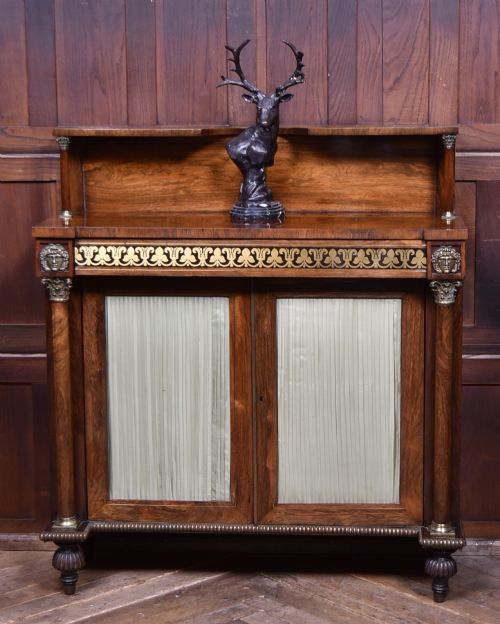
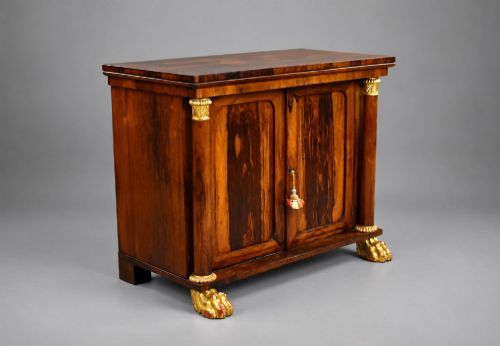
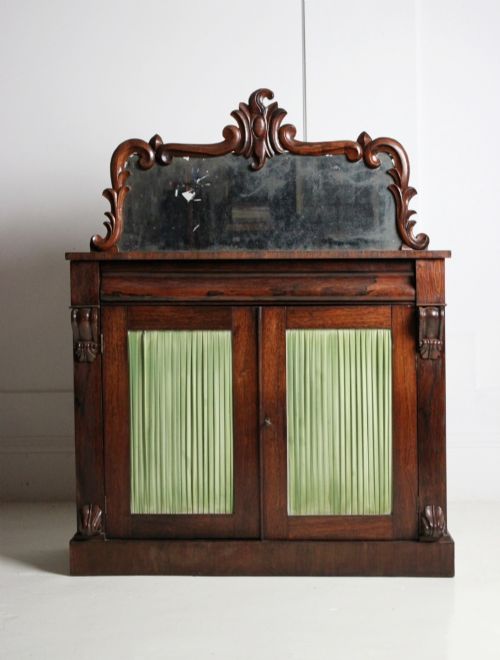
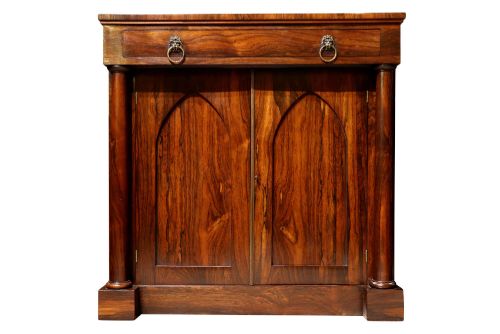
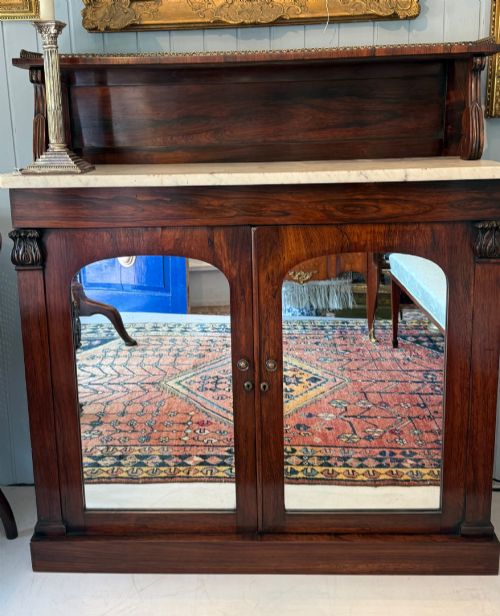
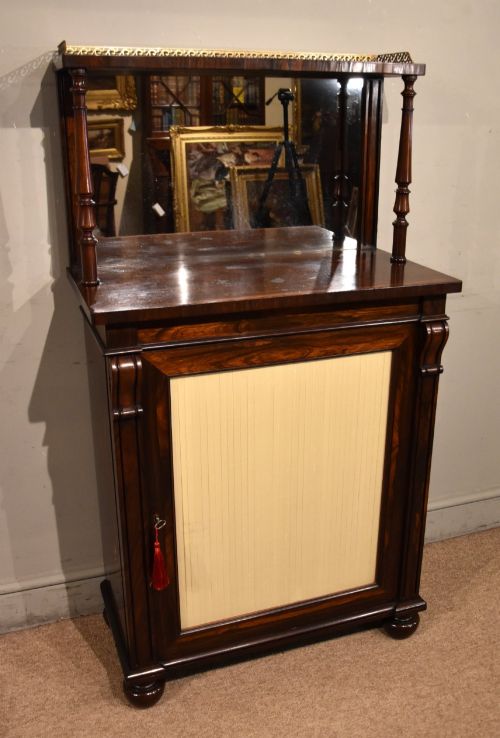
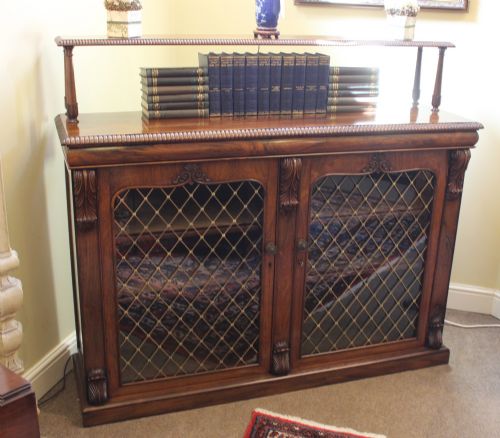
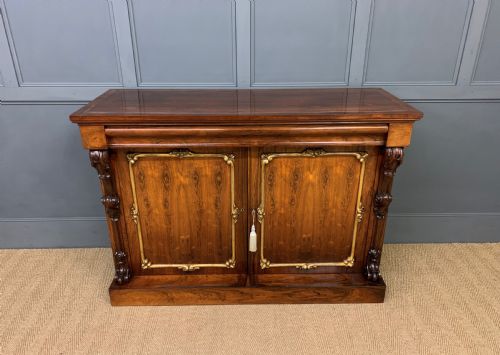
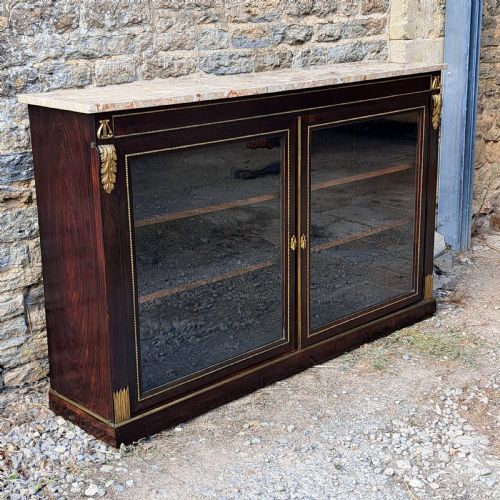
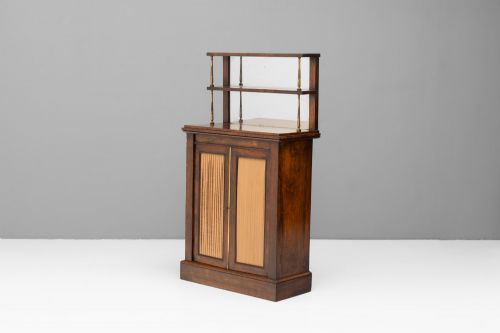
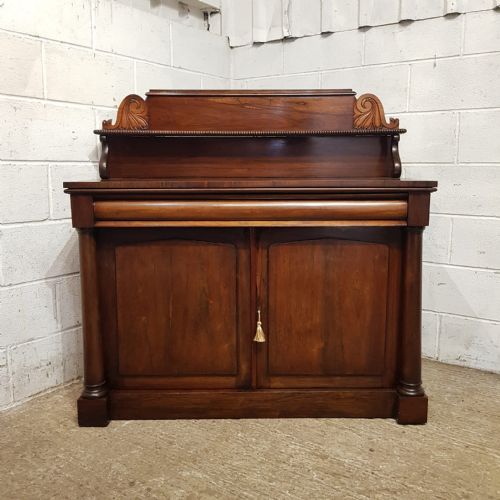
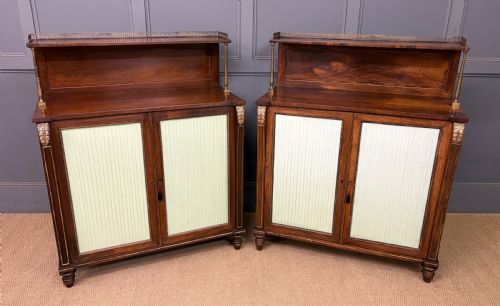
A 19th century rosewood sideboard generally takes the form of a chiffonier, low cabinet, or credenza designed for the principal rooms of a grand house. The selection includes architectural Regency pieces, robust William IV examples, and ornate Victorian variations with glazed or mirrored doors.
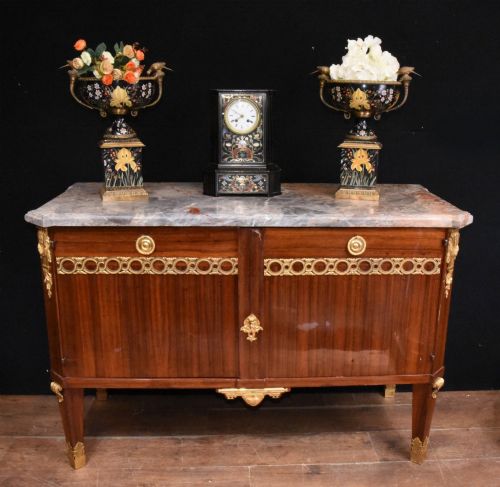
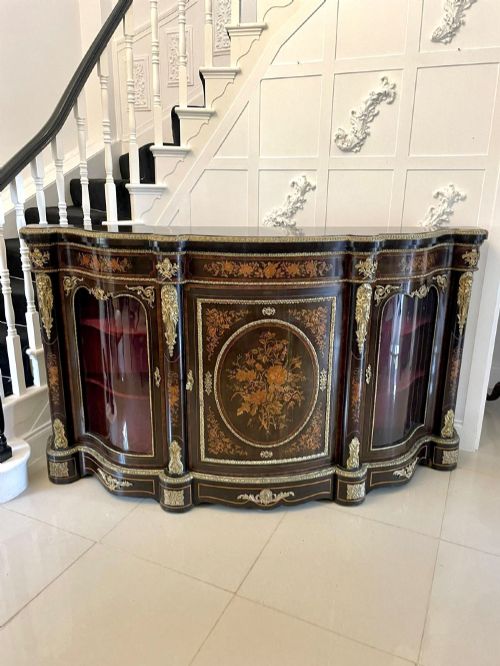
The format evolved through the decades, shifting from formal Regency side cabinets with brass inlay to elaborately mounted French Rococo Revival credenzas and Anglo-Indian carved forms. Most pieces stand low to the floor, often featuring enclosed cupboard space surmounted by shelves or marble tops.
How They Were Made
Cabinetmakers constructed these pieces using dense rosewood veneers applied to solid secondary timbers like pine or mahogany, frequently accentuating the grain with contrasting ebony and brass stringing. Ormolu mounts, gilt bronze details, and mirrored glass panels were integrated into the more elaborate Victorian and revival pieces.
Interiors typically relied on simpler hardwoods for shelving and drawer linings, while specialist techniques such as boullework, floral marquetry, and simulated rosewood paint decorated specific regional and stylistic variants.
19th Century Rosewood Sideboard Retail Price Guide 2026
Typical asking prices for 19th century rosewood sideboard among the pieces listed under this phrase on Sellingantiques today, from the lower quarter to the upper quarter. They describe what is for sale here now, not the wider market.
Several miniature sideboards appear here, proving that nineteenth century cabinetmakers possessed an enduring fondness for tiny furniture.
What Varies in Quality
The visual strength of a piece rests on the selection and matching of the rosewood veneer, where symmetrical grain patterns elevate the overall presence of the cabinet. Finer examples display meticulous attention in the integration of brass inlay, marquetry, and hand-chased ormolu mounts rather than cast ornamentation applied later.
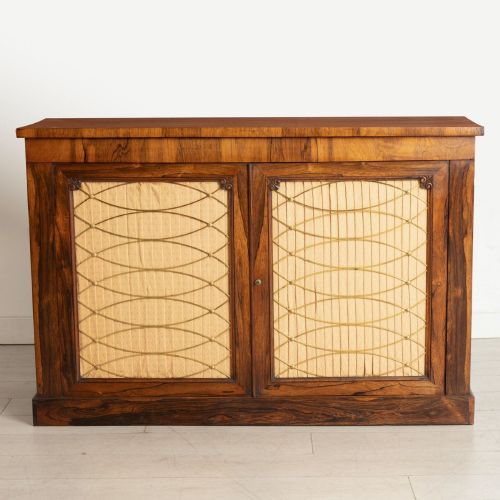
Structural integrity and the retention of original components, such as pleated fabric panels, glass doors, and marble tops, define the better-preserved items in this category. The refinement of the carving, particularly on Anglo-Indian and revival pieces, marks the division between standard production and masterwork.
Holland and Sons·Gillows
The 19th Century Rosewood Sideboard Glossary
- Chiffonier
- A compact sideboard featuring enclosed cupboards below, often with a raised shelf or mirrored superstructure supported by columns.
- Credenza
- A low dining room or drawing room cabinet, frequently fitted with side cupboards and a central door, popular during the Victorian era.
- Ormolu
- Gilt-bronze mounts applied to furniture for decorative effect, common on mid nineteenth century revival pieces.
- Boullework
- An elaborate marquetry technique using brass and tortoiseshell inlaid into dark woods, seen on select French-influenced cabinets.
- Palisander
- A term frequently applied to dense tropical timbers including rosewood, noted for deep purple and dark brown grain patterns.
19th Century Rosewood Sideboard: Frequently Asked Questions
How do I identify a Regency period piece?
Regency pieces often display classical architectural restraint, incorporating brass inlay, lattice grilles, and pillar supports. Their proportions remain relatively severe compared to later Victorian iterations.
Look for rosewood veneers matched with ebony stringing and simpler brass mounts that define the earlier decades of the nineteenth century.
What is the difference between a chiffonier and a credenza?
A chiffonier is typically smaller, featuring a low cupboard base with a shelf on the back tier. They served utility in smaller drawing rooms.
Credenzas are generally longer, low-slung cabinets with multiple doors, heavily ornamented with marquetry or ormolu for display in formal reception spaces.
Are marble tops original to these sideboards?
Marble tops appear frequently on mid nineteenth century credenzas and cabinets, particularly those styled after French Louis XVI or Rococo revival models. They provided a durable, decorative surface for serving or display.
Original tops sit flush with the timber moulding and match the exact footprint of the cabinet carcase beneath.
How should I care for rosewood furniture?
Rosewood requires stable humidity and protection from direct sunlight to prevent the dense veneers from drying or fading. Regular dusting with a dry cloth maintains the finish.
Avoid silicone-based polishes, opting instead for traditional wax applied sparingly to nourish the timber grain.