


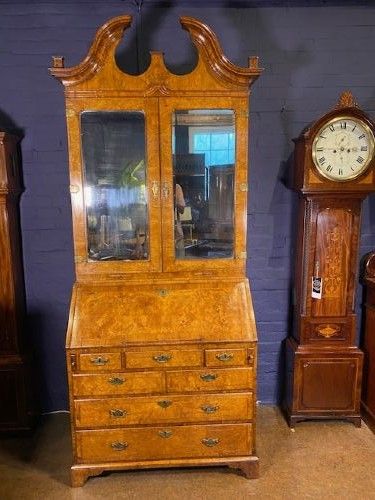
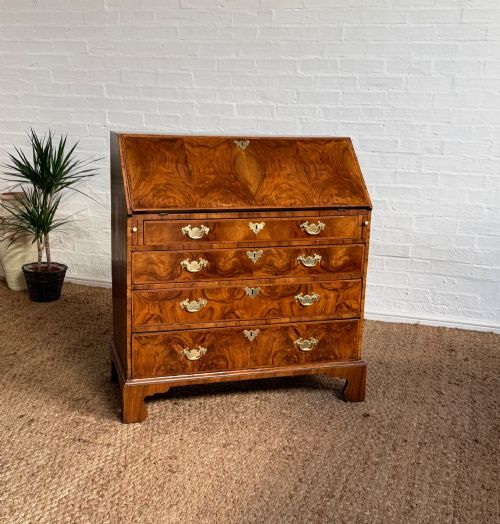
Antique Writing Drawer Cabinet
An antique writing drawer cabinet gathers papers and correspondence behind a fall front or drop leaf, combining storage with a purposeful writing surface.
Antique Writing Drawer Cabinet
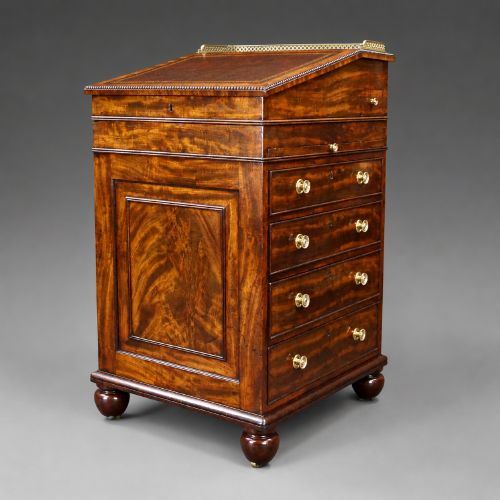
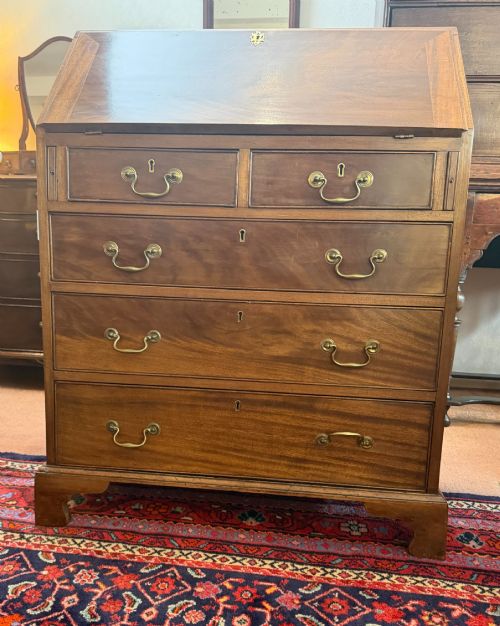
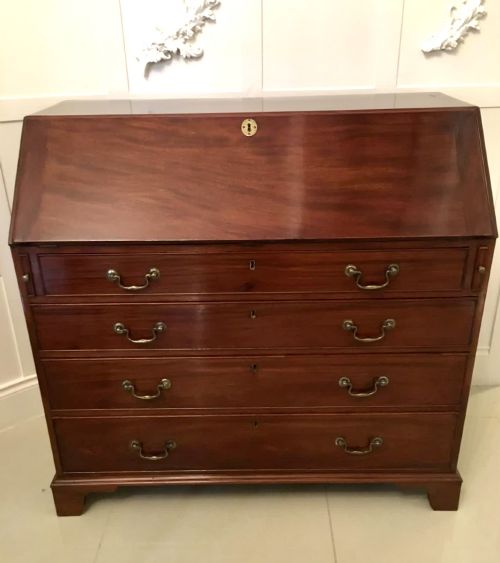
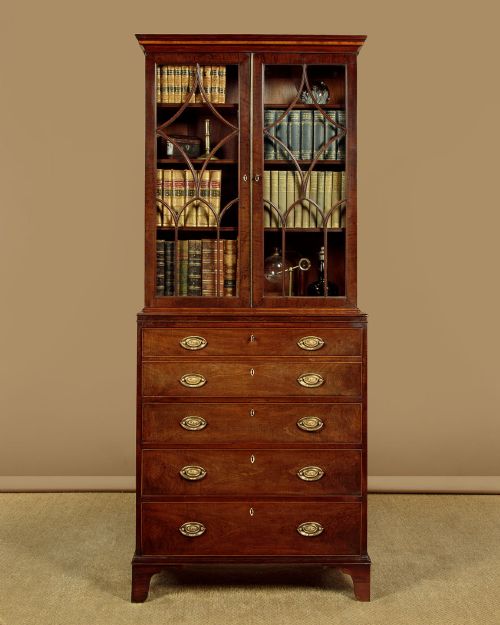
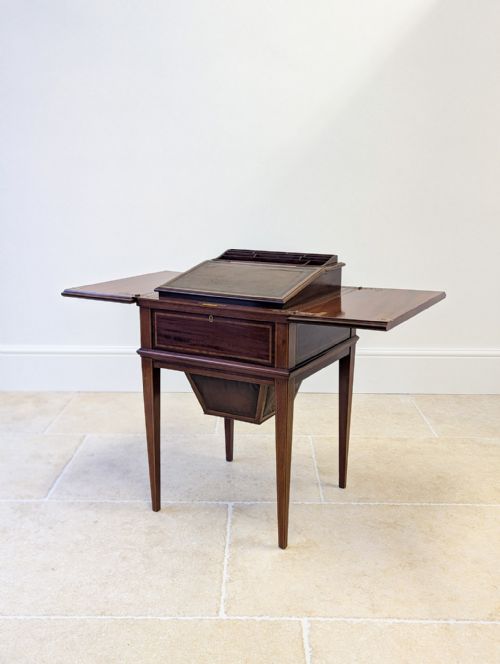
An antique writing drawer cabinet encompasses forms such as bureaux, secretaire bookcases, Davenport desks, and escritoires. When you search for this phrase, you meet compact writing furniture designed for domestic correspondence and record keeping.
The pieces span from the 17th century through the Georgian, Victorian, and Edwardian eras. Oak, mahogany, and walnut dominate the selection, often accompanied by smaller examples in rosewood or burr walnut.
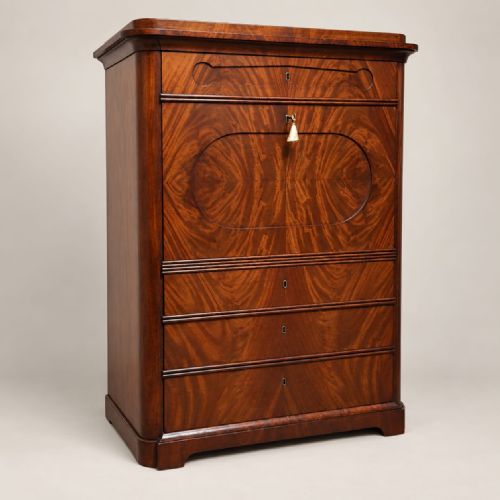
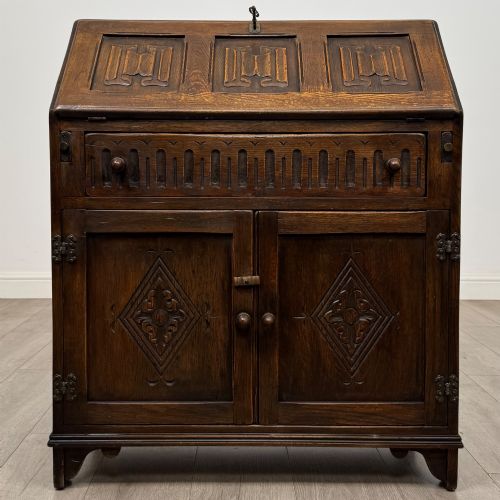
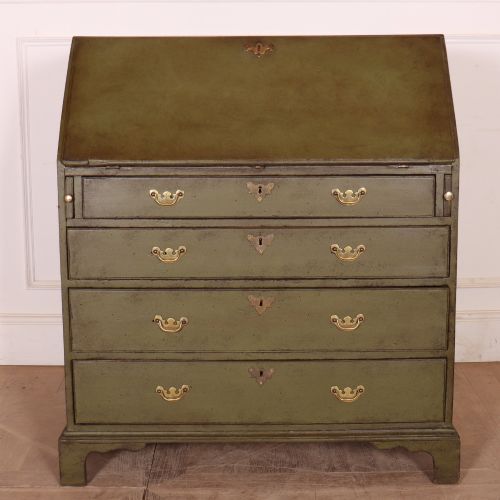
Many variants combine a bank of drawers with a sloping fall front that opens to reveal pigeonholes and small compartments. Others take the form of tall cabinets with drop down writing drawers or integrated bookcase sections above.
Materials and construction
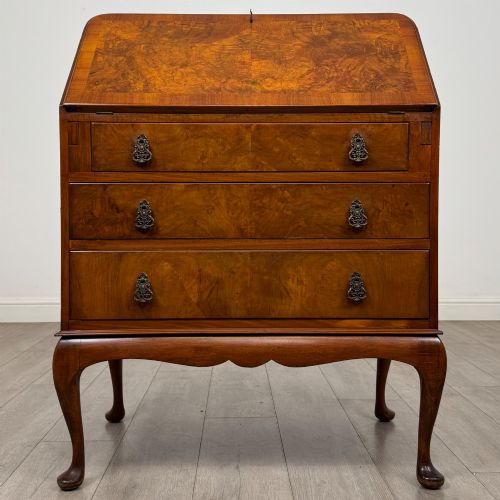
Cabinetmakers constructed these pieces primarily in solid oak, mahogany, and walnut, frequently applying figured veneers like burr walnut or flame mahogany to primary surfaces. Brass handles, escutcheons, and hinges secure the drawers and fall fronts.
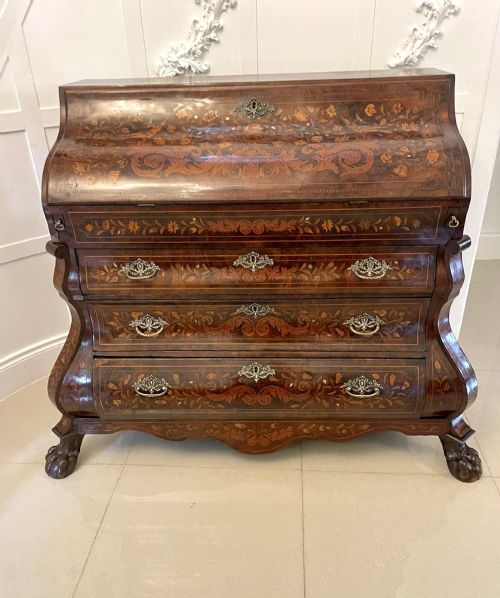
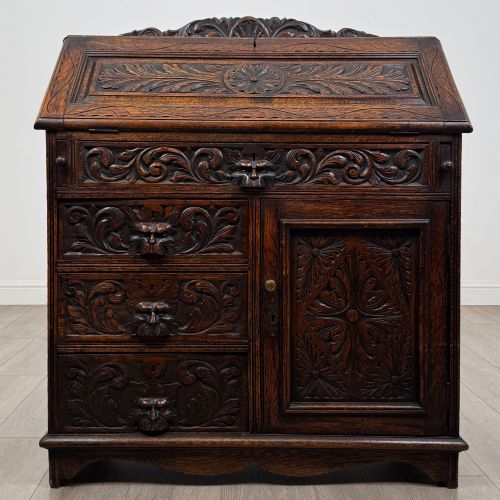
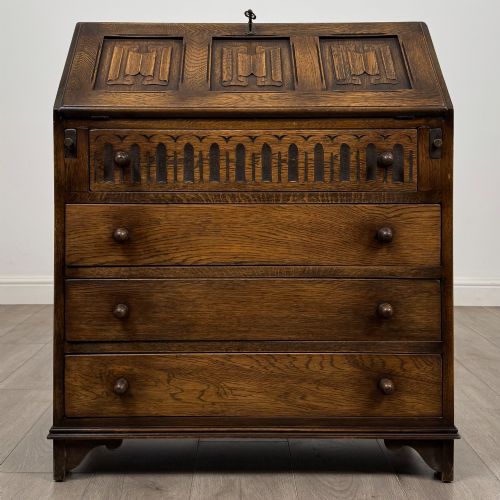
Many examples incorporate marquetry inlay, painted finishes, or carved details such as linenfold panels and green man motifs. Writing surfaces often feature inset leather writing panels to provide a smooth plane for ink and paper.
Interior fitments rely on precise joinery to create miniature drawers, secret compartments, and pigeonholes within the desk carcase. Larger secretaire bookcases and bureau cabinets integrate glazed upper doors with wooden framing.
Several examples conceal secret compartments behind miniature internal drawers, designed to guard private correspondence and lost fortunes.
Distinguishing quality
Quality rests in the choice of timber and the precision of the cabinetmaker's veneer work. Highly figured burr walnut, flame mahogany, and intricate floral marquetry indicate superior materials selected for prominent display.
Construction details differentiate the output of regional workshops from major cabinet makers. Smooth drawer runs, finely dovetailed internal compartments, and well proportioned cornice mouldings demonstrate disciplined execution.
The integrity of original brass hardware, leather writing inserts, and fitted interior configurations maintains the historical character of each piece. Alterations or adaptations affect the continuity of the design.
Gillows·Gillow and Co·Maison Krieger
The Antique Writing Drawer Cabinet Glossary
- Bureau
- A desk featuring a sloping hinged lid that opens to form a writing surface above a set of drawers.
- Secretaire
- A cabinet or chest containing a drawer or compartment with a drop down front used for writing.
- Davenport
- A compact pedestal desk with a sloping top and side drawers, popular during the Regency and Victorian periods.
- Escritoire
- A tall writing cabinet or writing desk, often fitted with doors enclosing drawers and pigeonholes.
- Marquetry
- Decorative veneer work arranged in intricate patterns or pictorial designs using various coloured woods.
- Linenfold
- A style of wood carving that resembles folded parchment or linen, common on oak panels.
Antique Writing Drawer Cabinet: Frequently Asked Questions
What is an antique writing drawer cabinet?
These pieces combine functional storage drawers with a dedicated writing surface, often housed behind a fall front or drop down panel. They served as domestic hubs for household accounts and correspondence.
Designs range from small table desks to tall bureau bookcases and secretaire chests. The category spans multiple centuries of cabinetmaking tradition.
How do I use a bureau in a modern room?
A bureau provides concealed workspace when the fall front is closed, keeping rooms tidy when writing tasks conclude. The internal compartments organise stationery and small items.
Closed cabinets also function as general storage chests of drawers or display surfaces for books and decorative objects.
How can I tell Georgian pieces from Victorian ones?
Georgian examples often emphasise clean architectural lines, mahogany or walnut veneers, and restrained bracket feet. The proportions tend to focus on understated elegance.
Victorian pieces frequently display heavier carving, darker woods, or elaborate aesthetic details like green man motifs or marquetry. Their construction incorporates mechanical improvements and varied revival styles.