
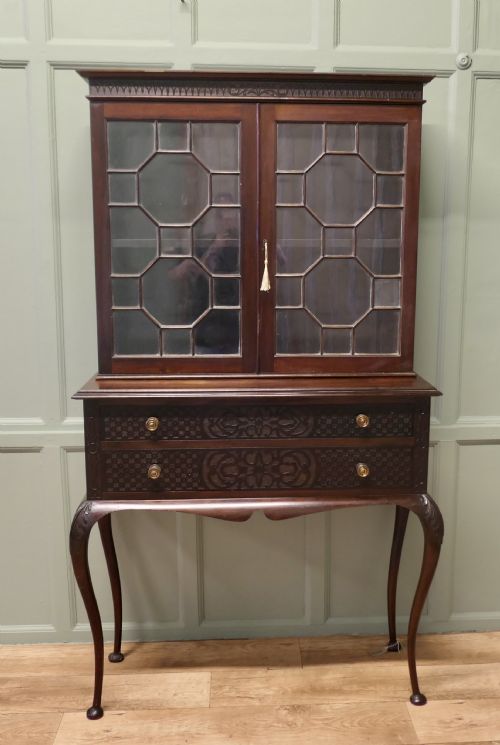
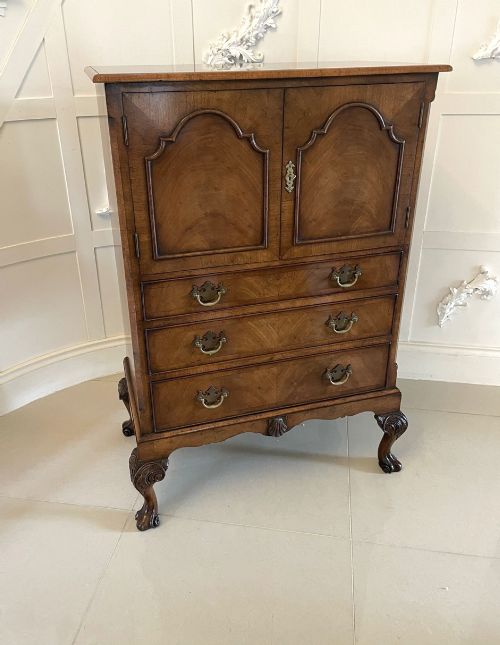
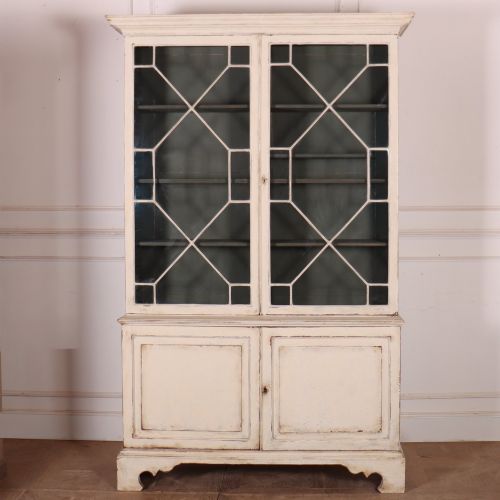
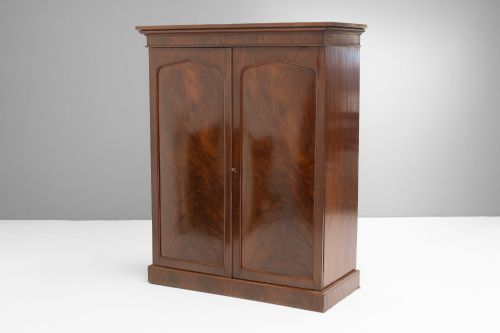
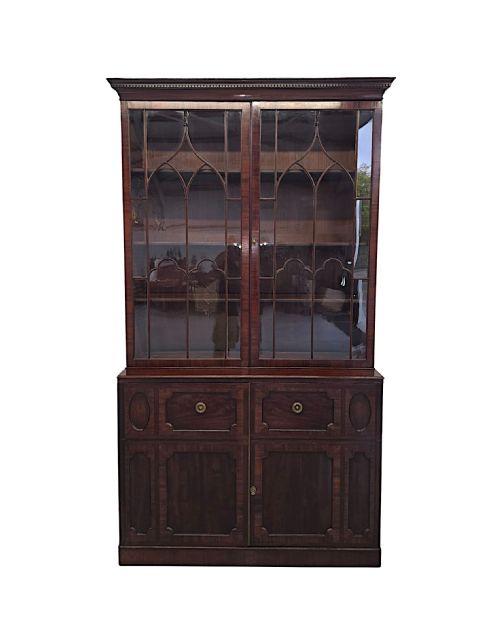
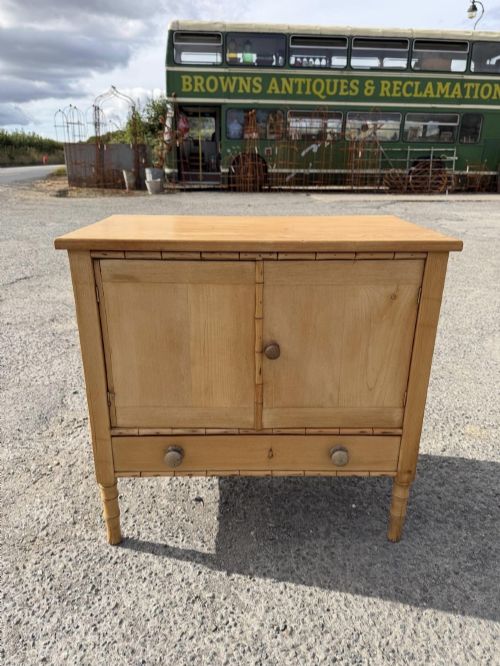
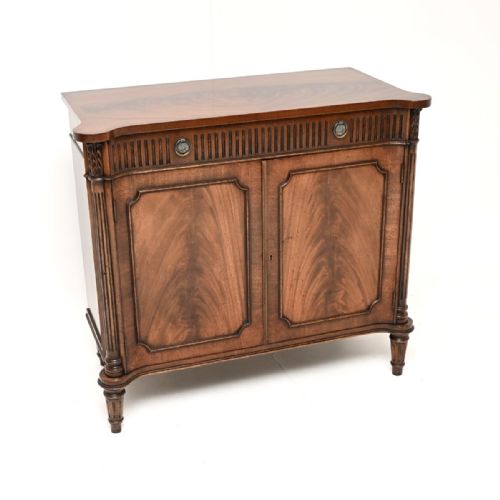
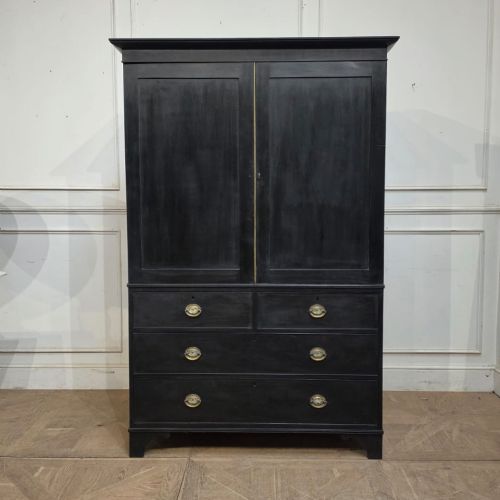
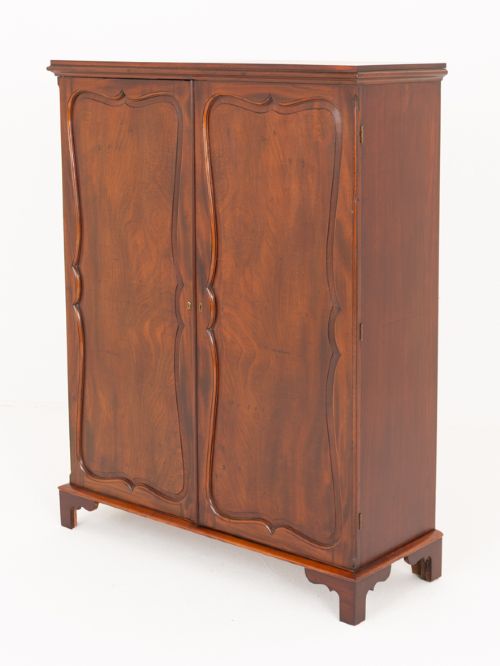
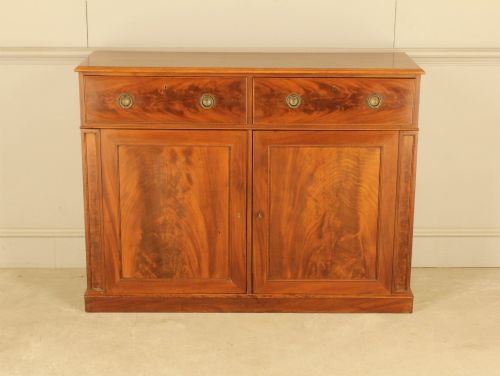
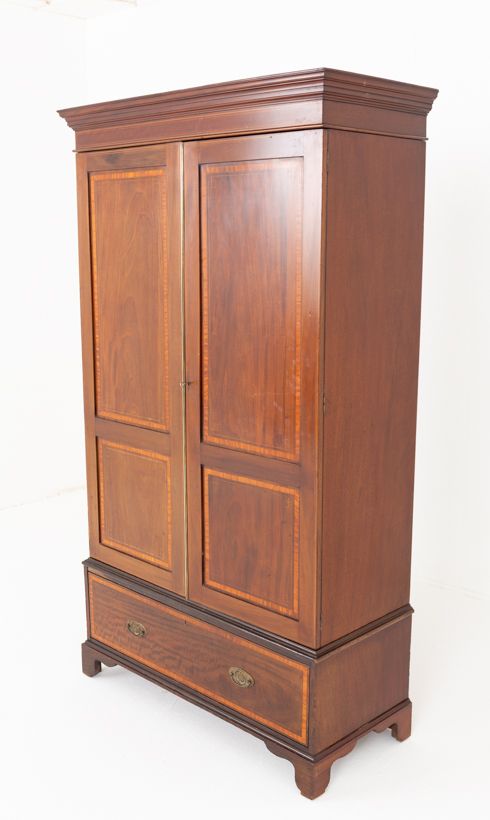
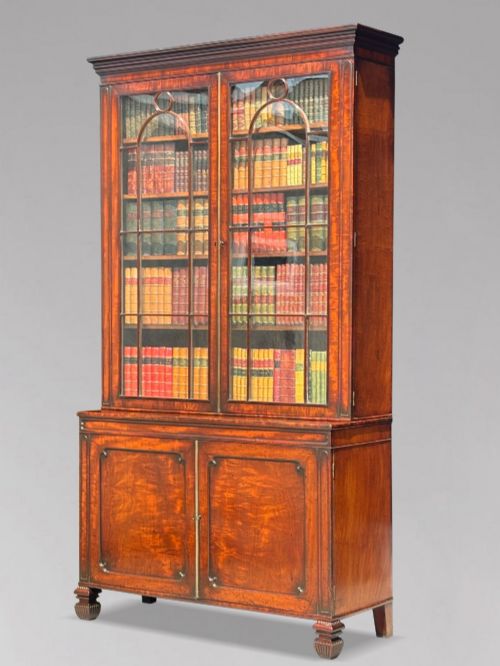
Georgian Two Door Cabinet
A georgian two door cabinet offers understated proportions and rich timber, built to anchor a traditional room with quiet authority.
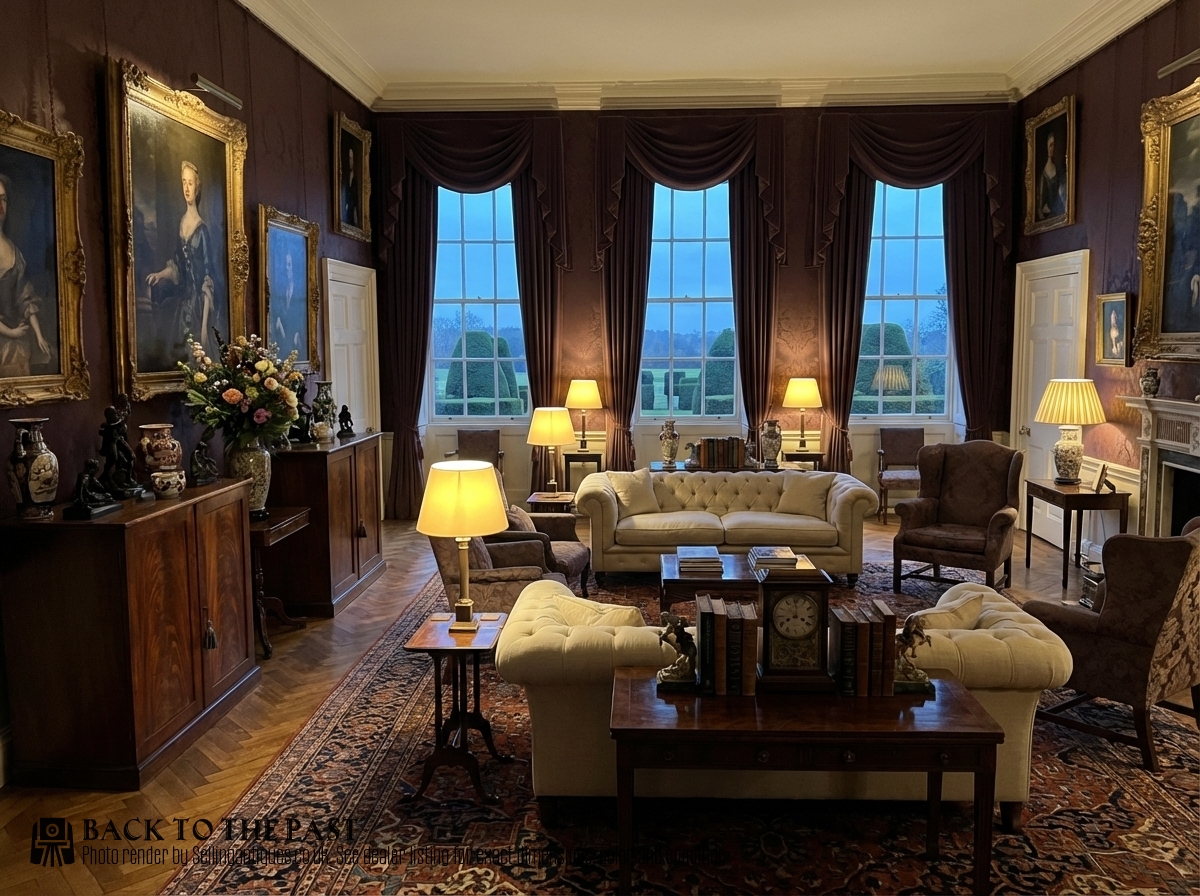
What They Are
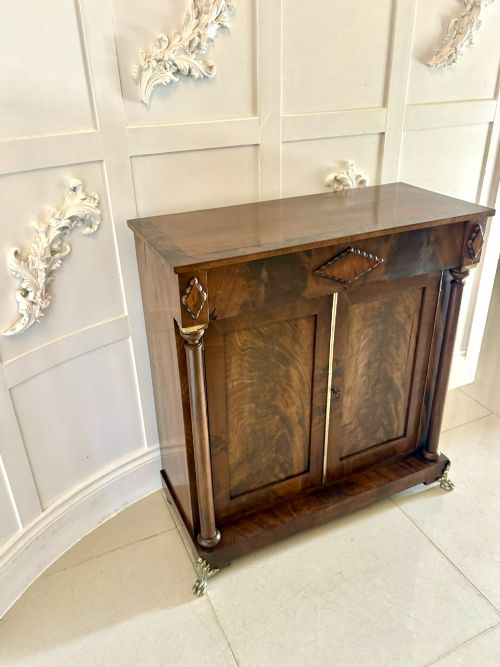
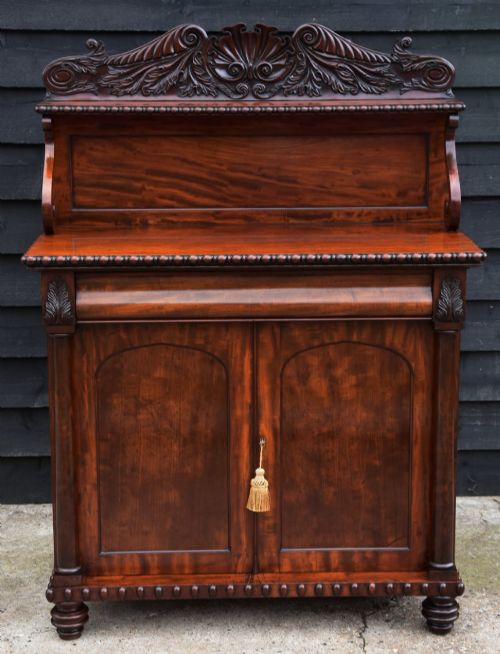
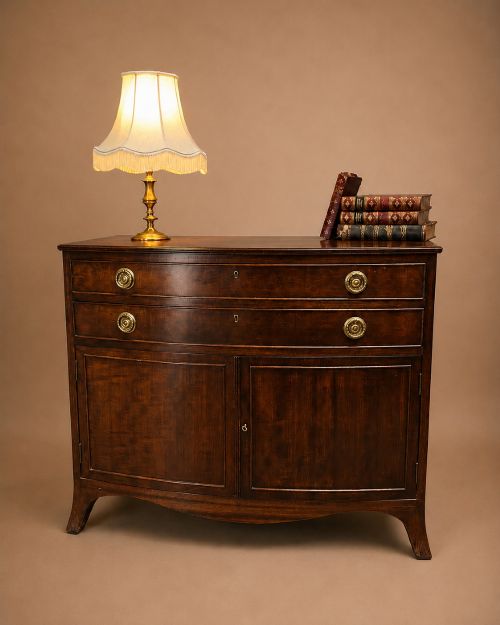
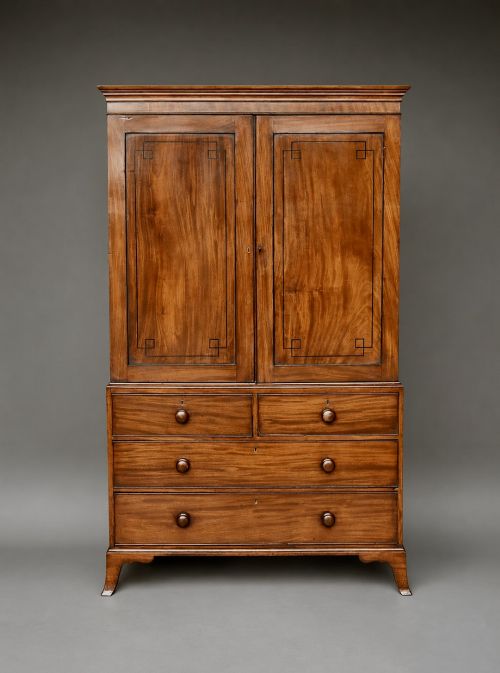
When searching for a georgian two door cabinet, buyers encounter practical storage furniture spanning side cabinets, press cupboards, corner cupboards, and chiffoniers. These pieces originate from the Georgian and Regency eras, encompassing the eighteenth and nineteenth centuries.
The inventory on this page relies heavily on mahogany, oak, and flame mahogany veneer, often fitted with brass hardware. Forms range from low side tables and lamp tables to tall bookcases and display cabinets.
Makers and craftsmen of this era produced versatile double door formats designed to conceal books, linen, or domestic provisions. The survival of these functional items demonstrates the enduring utility of Georgian cabinet work.
How They Were Made
Carpenters constructed these cabinets using solid timbers such as mahogany and oak, frequently applying figured flame mahogany veneers to the primary display surfaces. These wooden elements were paired with cast or chased brass for handles, escutcheons, and hinges.
Construction relied on traditional joinery techniques suited to heavy domestic service, uniting carcase bodies with panelled or glazed doors. Surface finishes were built up with traditional polishes that highlighted the natural grain and colour of the wood.
Retail Price Guide 2026
Typical UK retail prices for georgian two door cabinet, calculated from the Sellingantiques database of over a million retail prices indexed since 2003. This retail price guide relies exclusively on Sellingantiques data; no external sources or auction records are used, so the figures do not describe the wider market.
Some nineteenth-century cabinet makers thoughtfully provided extra depth behind the doors so awkward household ledgers could finally lie flat.
What Varies in Quality
Quality in a georgian two door cabinet rests in the selection of timber, where tightly figured flame mahogany veneer marks a higher standard than plain stock. The refinement of the brass mounts and the crispness of the mouldings further separate standard utility pieces from finer examples.
Proportion and architectural balance dictate the overall success of the piece, with well-judged cornice details and harmonious door panels elevating the cabinet. Original hardware and undisturbed surface patination also distinguish superior survivors from heavily restored examples.
The Georgian Two Door Cabinet Glossary
- Flame mahogany veneer
- A thin slice of wood cut from timber where the grain creates a flamelike pattern, highly prized for cabinet fronts. It requires considerable skill to lay evenly across two doors.
- Chippendale period
- A style era associated with the mid-eighteenth century following the design books of Thomas Chippendale. Pieces from this time often display robust proportions and carved classical details.
- Press cupboard
- A large storage piece traditionally used for linen and garments, featuring double doors enclosing shelves or hanging space. Many examples incorporate drawers in the base section.
- Chiffonier
- A low sideboard or cabinet developed during the early nineteenth century, typically featuring two doors below a shelf or drawer. They served practical storage needs in dining rooms and parlours.
Frequently Asked Questions
What is a georgian two door cabinet used for?
These cabinets served multiple domestic purposes ranging from storing books and linen to holding china and household provisions. In modern settings, they function effectively as sideboards, media storage, or statement pieces in living areas.
The enclosed double door design keeps contents out of sight while providing a flat top surface for lamps or decorative objects.
How do I date a georgian two door cabinet?
Dating relies on observing timber choices, construction methods, and stylistic cues such as bracket feet or cornice details. Pieces span the eighteenth and nineteenth centuries, including George III and Regency periods.
Changes in hardware styles and veneer application also offer reliable clues to the exact decade of manufacture.
Are these cabinets made of solid mahogany?
Many examples utilise solid oak or mahogany for the main carcase structure, while decorative surfaces often feature flame mahogany veneer applied over secondary woods. This combination prevented warping and allowed craftsmen to display striking grain patterns on the doors.
Examining the interior and drawer linings helps reveal the full mix of timbers used by the maker.
What is the difference between a chiffonier and a side cabinet?
A chiffonier typically includes a low two-door cabinet base, sometimes surmounted by a small shelf or gallery supported on pillars. Side cabinets generally offer a simpler profile without the raised upper superstructure.
Both forms emerged to meet specific dining and drawing room storage needs during the Georgian and Regency periods.