
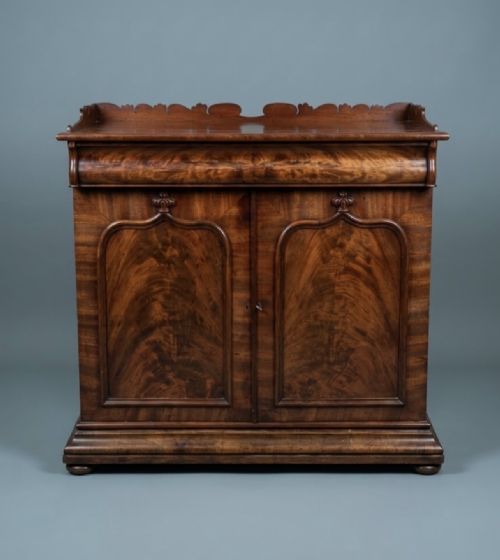
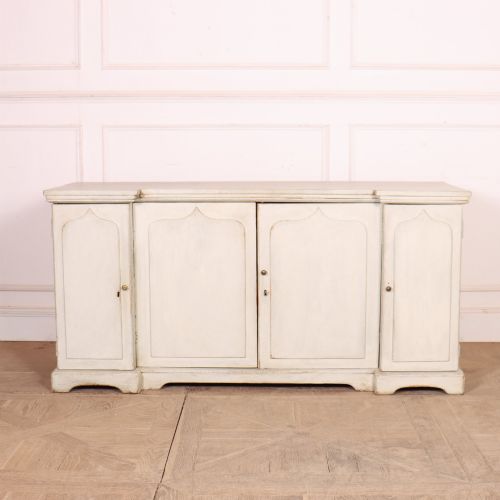
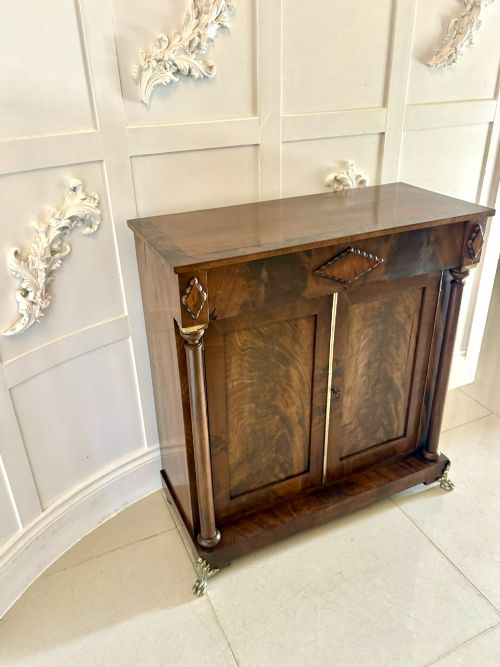
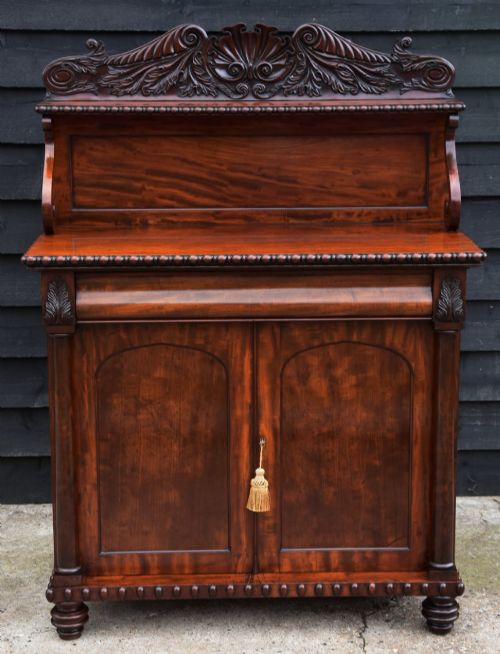
Georgian Credenza Cupboard
These Georgian credenza cupboard pieces bring timber and brass together, offering low storage suited to modern rooms.
Georgian Credenza Cupboard
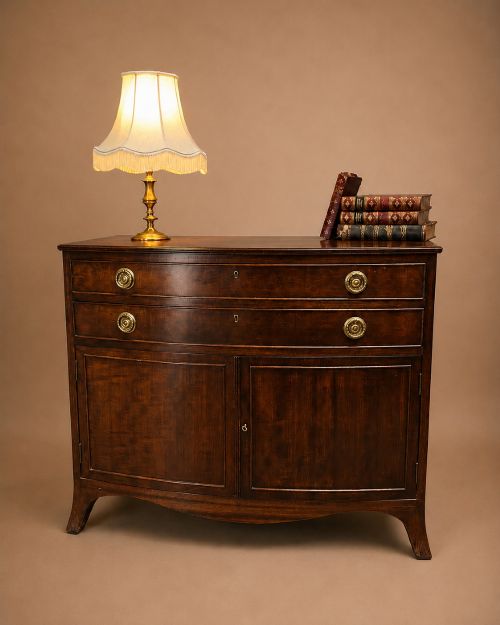
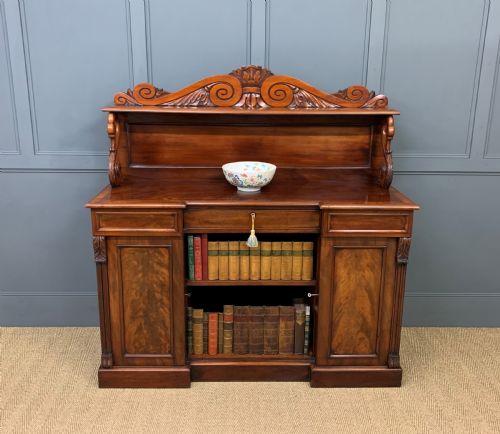
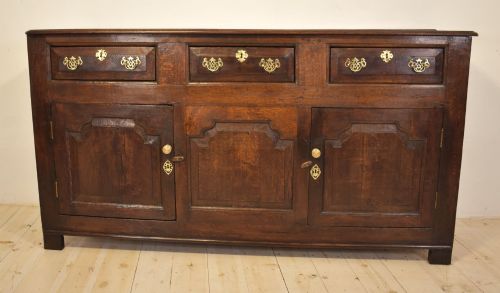
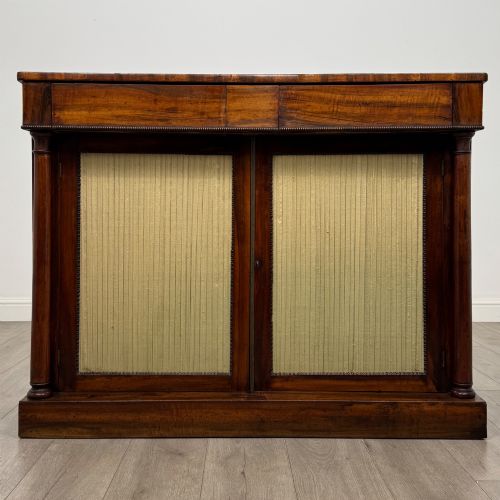
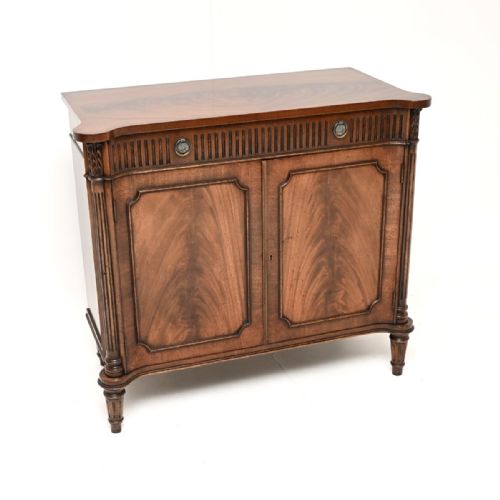
A search for georgian credenza cupboard returns low storage pieces, chiffoniers, side cabinets, and dresser bases spanning several centuries. The selection includes items grouped under styles from the Georgian period alongside later revivals, William IV pieces, and Edwardian examples.
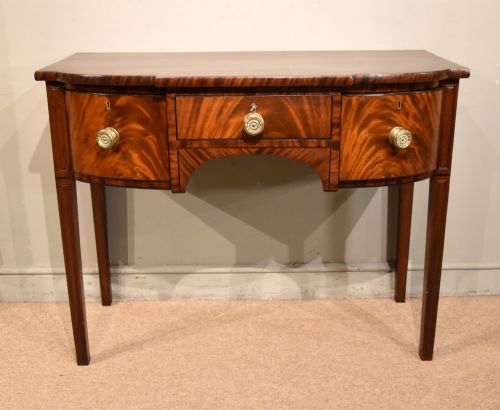
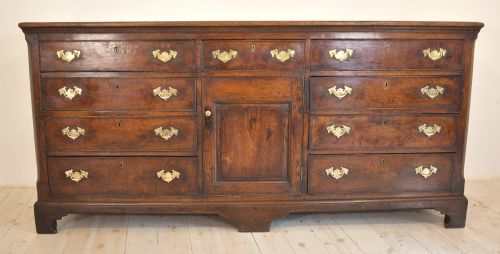
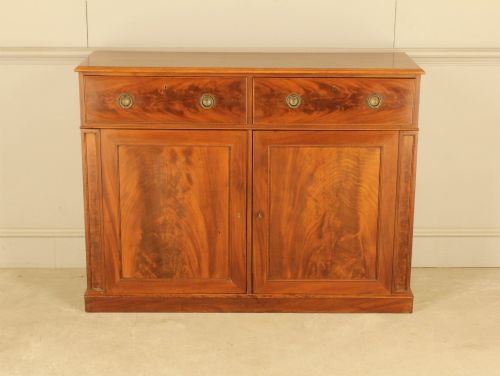
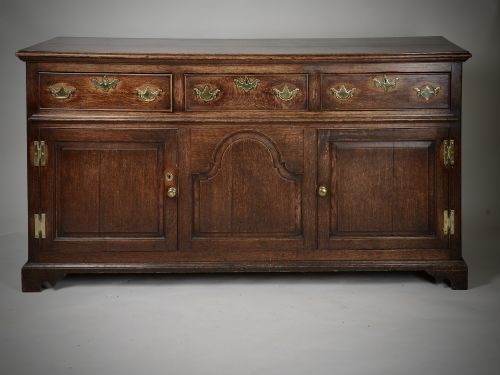
Buyers most frequently encounter mahogany side cabinets and chiffoniers dating from the nineteenth century, often featuring two doors or bow-fronted timber construction. Oak dresser bases from the eighteenth century also appear regularly alongside walnut and satinwood variants.
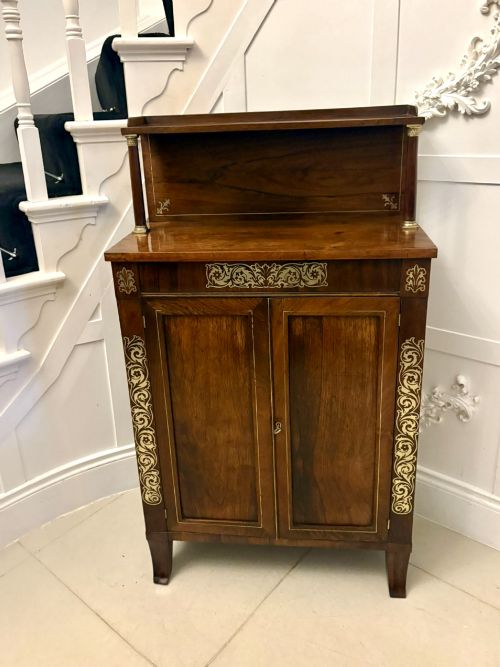
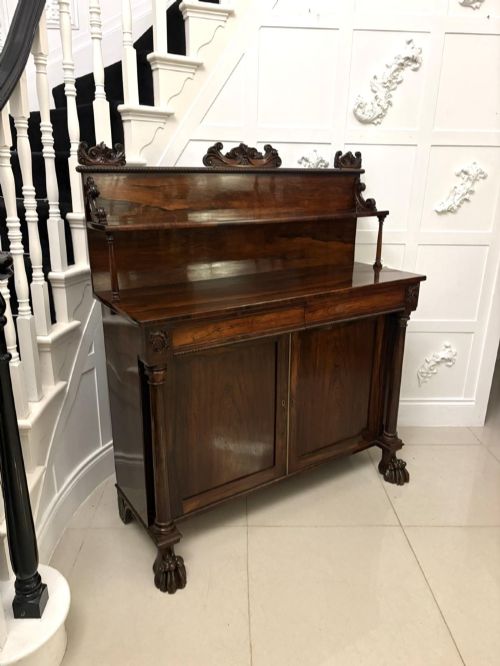
The objects serve as functional sideboards, buffets, and bookcases designed for domestic storage and display. Forms range from simple country pine units to brass-mounted rosewood pieces built with greater formality.
Assessing quality in timber cabinets
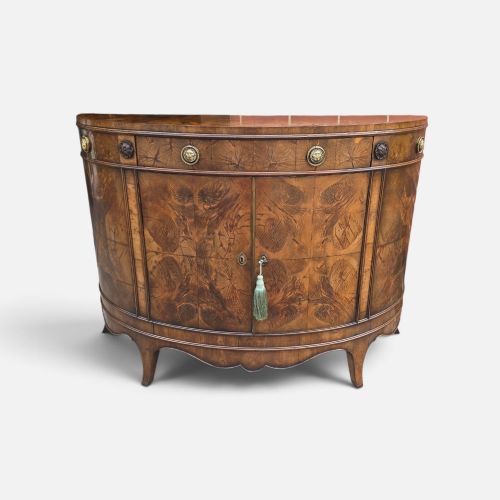
Quality rests in the selection of the timber and the handling of the grain, particularly where figured mahogany, burr walnut, or satinwood veneer is employed. Superior examples display thoughtful book-matching and consistent colour across large expanses of door and top surfaces.
Refinement in secondary details, such as brass mounts, fine inlay work, and the structural integrity of moulded fronts, separates standard utility furniture from pieces made with greater ambition. The harmony of proportions across bow-front and breakfront forms further defines the standard of a piece.
Some pine kitchen dressers arrive ready for a fresh coat of paint, retaining decades of domestic history in their wax.
The Georgian Credenza Cupboard Glossary
- Chiffonier
- A low cabinet, typically fitted with doors below and sometimes a shelf superstructure above, developed during the Regency period. They often incorporate brass mounts or gallery rails.
- Dresser base
- A lower storage unit featuring drawers or cupboards, originating in country houses and kitchens in oak or pine. These pieces served practical utility before moving into formal reception rooms.
- Bow-front
- A convex curved cabinet front that softens the linear geometry of a room. This shape requires skilled carpentry to bend wood or shape solid timber accurately.
- Breakfront
- A cabinet design where the central section projects forward from the flanking wings. This architectural arrangement creates depth and shadow across the front elevation.
Georgian Credenza Cupboard: Frequently Asked Questions
What is a chiffonier?
A chiffonier is a low cabinet designed for storage, frequently associated with the Regency period and nineteenth-century interiors. These pieces typically feature enclosed lower cupboards and sometimes display shelves above.
They function well in dining rooms or living spaces for tableware and glassware. The inclusion of brass mounts and figured mahogany often elevates their decorative presence.
How do I date a cabinet?
Dating relies on timber selection, construction methods, and stylistic markers recorded across periods from the eighteenth century onwards. Mahogany and satinwood denote different eras of fashion compared to earlier structural oak.
Hardware such as brass handles and inlay techniques offer further chronological clues. Comparing the carcass construction and secondary woods helps confirm the period of manufacture.
Where were dresser bases used?
Dresser bases were primarily utilised in kitchens and country houses for food preparation and storage. Oak and pine examples served everyday domestic routines.
Over time, these sturdy units transitioned into dining rooms and halls. Today they provide practical low storage surfaces in contemporary homes.
What is curl mahogany?
Curl mahogany refers to timber taken from the junction where branches meet the main trunk, producing a distinctive feathery grain pattern. This wood was highly prized for cabinet doors.
Because of its striking appearance, makers used it sparingly on prominent exterior surfaces. It adds visual movement and depth to plain cabinet fronts.