

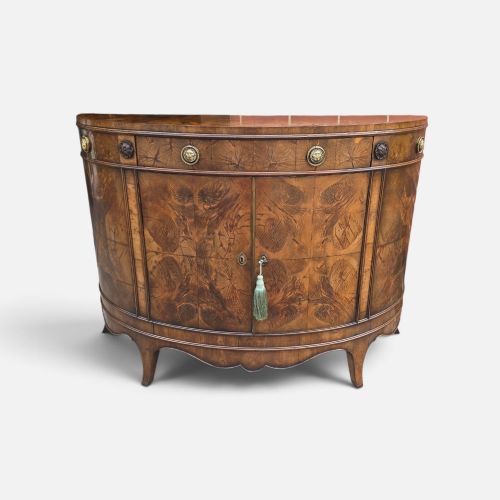


Yew Wood Cabinet
A yew wood cabinet brings rich, knotted figuring and warm honey tones into a room, offering both practical storage and striking timber grain.
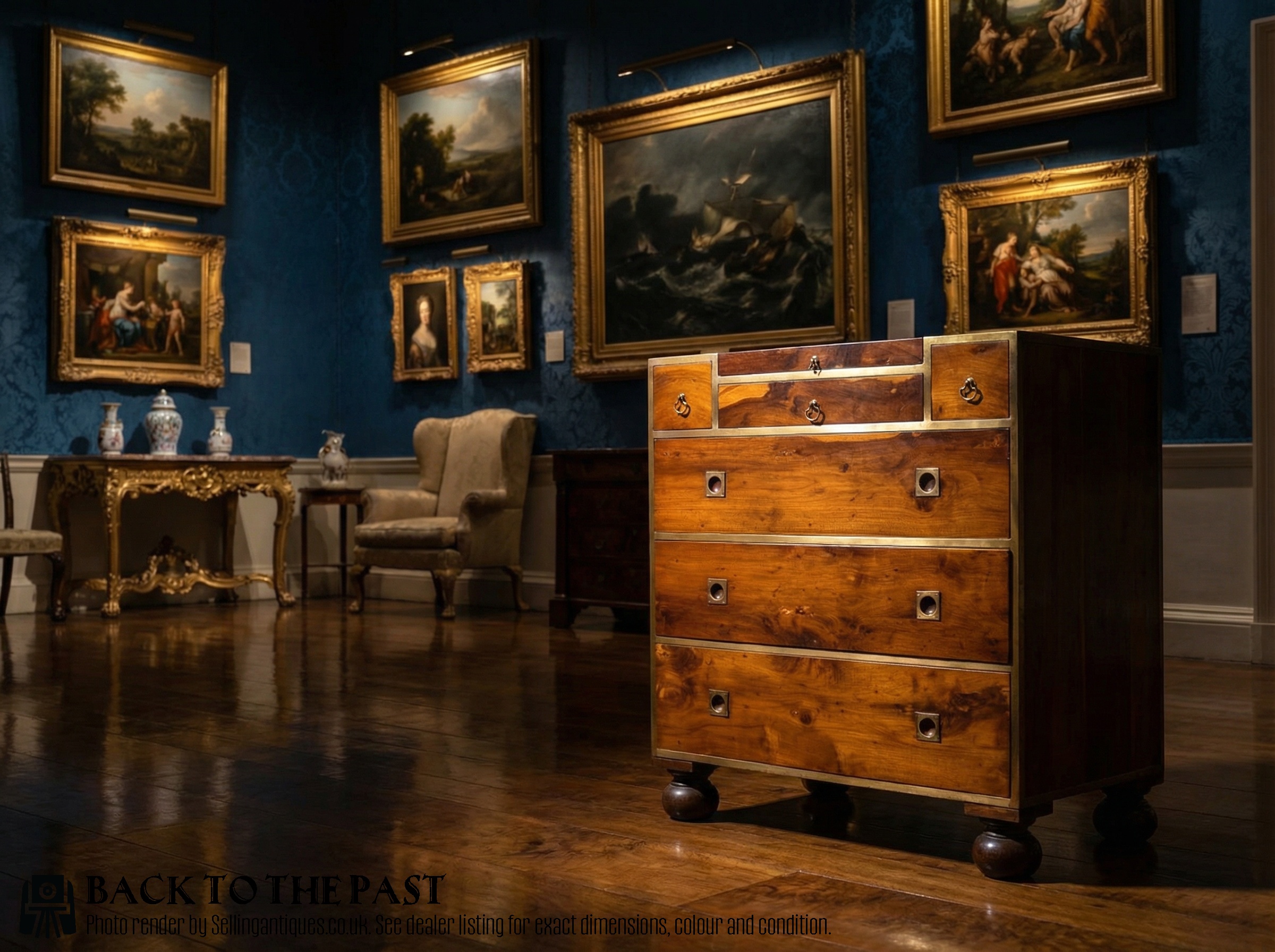
Identifying a yew wood cabinet
A yew wood cabinet encompasses diverse forms ranging from eighteenth-century corner cupboards and multi-drawer chests to twentieth-century bedside cabinets, side cabinets, and serving cabinets. Buyers searching this phrase encounter examples spanning the seventeenth century through to the George V period and the Art Deco era.
The corner cabinet remains a frequent discovery, frequently recorded across Georgian and eighteenth-century listings alongside grander pieces like George III demi-lune commodes and nineteenth-century mirror-back sideboards. Makers also utilised burr yew and burr elm veneers to create highly decorative display cabinets and credenzas.
Origins stretch from the seventeenth century, represented by cabinets on stands, through Regency and Aesthetic Movement interpretations up to 1930s brass-bound designs. Pieces vary from functional corner cupboards with glazed doors to grand mahogany-crossbanded display pieces.
Materials and construction
Makers utilised solid yew wood alongside burr yew and burr elm veneers, often combining these heavily figured timbers with mahogany, ebonised wood, and glass. Brass hardware such as hinges, handles, and corner mounts frequently provide structural and decorative contrast against the timber.
Construction techniques include intricate multi-drawer joinery, as seen in eighteenth-century drawer cabinets, as well as curved demi-lune framing and glazed door assemblies. Surface finishes highlight the natural swirling patterns and warm golden-brown hues characteristic of mature yew growth.
Retail Price Guide 2026
Typical UK retail prices for yew wood cabinet, calculated from the Sellingantiques database of over a million retail prices indexed since 2003. This retail price guide relies exclusively on Sellingantiques data; no external sources or auction records are used, so the figures do not describe the wider market.
Distinguishing quality in yew timber furniture
Quality rests primarily in the selection and matching of the timber, where dense burr figuring and symmetrical veneer layouts elevate a piece far above plain boards. The skill of the cabinetmaker shows in the crispness of brass mounts, the precision of drawer construction, and the harmonious integration of secondary woods like mahogany.
Age and provenance further separate standard examples from exceptional ones, particularly when works bear documented signatures from renowned firms such as Gill & Reigate or exhibit sophisticated period forms like seventeenth-century stands or George III neoclassical detailing.
Gill and Reigate
The Yew Wood Cabinet Glossary
- Burr Yew
- A growth deformity in the tree that produces dense, swirling clusters of small knots and eyes. This highly prized veneer creates a dramatic, decorative surface pattern on cabinet doors and tabletops.
- Demi-Lune
- A half-moon shape used for the footprint of commodes and side cabinets. It requires specialist curved joinery and veneer matching.
- Credenza
- A low-standing cabinet or sideboard, often featuring decorative mounts and glass doors for display. Nineteenth-century examples frequently incorporate aesthetic movement design elements.
- Ebonised Wood
- Timber treated with a dark chemical stain or finish to imitate ebony. It provides a stark, dark contrast against lighter yew and burr veneers.
- Corner Cupboard
- A space-saving cabinet specifically constructed with a triangular footprint to fit snugly into room corners. Many period examples feature glazed upper doors for display.
Frequently Asked Questions
How do I date a yew wood cabinet?
Dating relies on architectural proportions, hardware styles, and construction methods. Eighteenth-century pieces often feature hand-cut dovetails and understated bracket feet, while nineteenth-century and later examples incorporate varied veneers and distinct aesthetic movement motifs.
Examining internal secondary woods and the style of hinges or glass panes provides further clues to a cabinet's precise era of manufacture.
Where should I place a corner cabinet?
Corner cabinets are traditionally designed to utilise unused room angles efficiently. They suit dining rooms, hallways, or living spaces where floor area is at a premium.
Positioning them away from direct sunlight protects the sensitive yew timber and burr veneers from fading over time.
How do I care for yew wood furniture?
Maintenance involves dusting with a soft, dry cloth and avoiding harsh chemical polishes. Keeping the piece away from direct heat sources prevents the timber and veneers from drying out.
Applying a traditional beeswax periodically helps nourish the grain and maintain the natural lustre of the polished wood.