
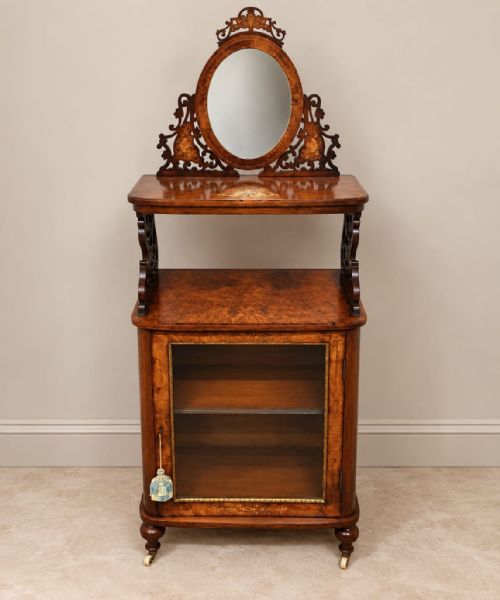
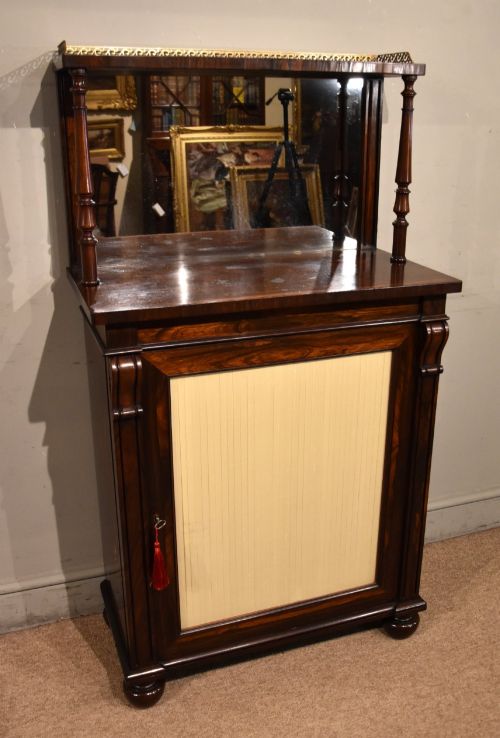
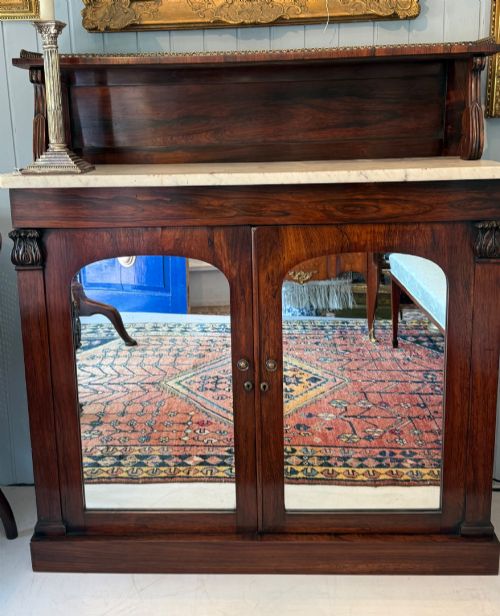
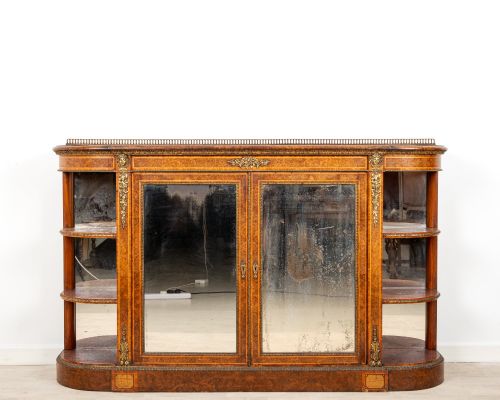
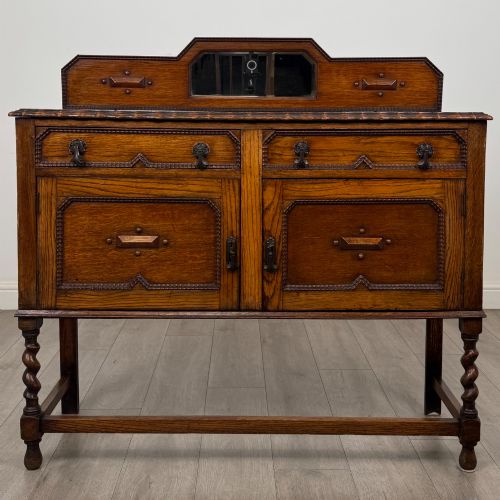
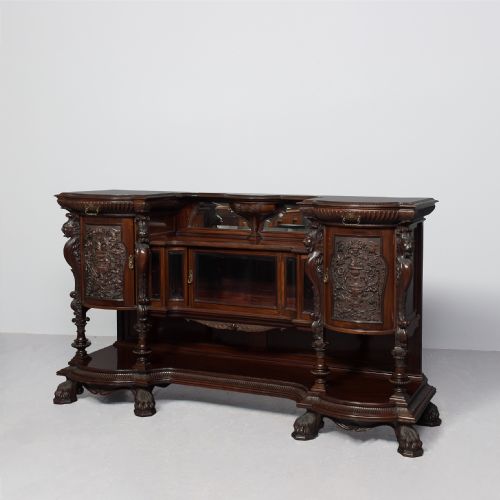
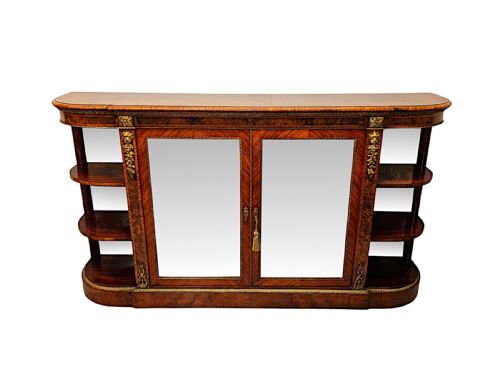
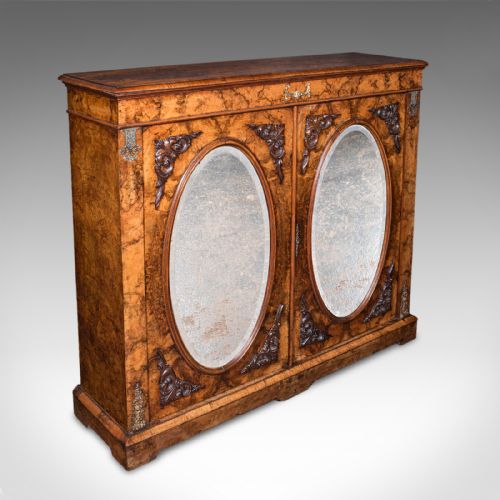
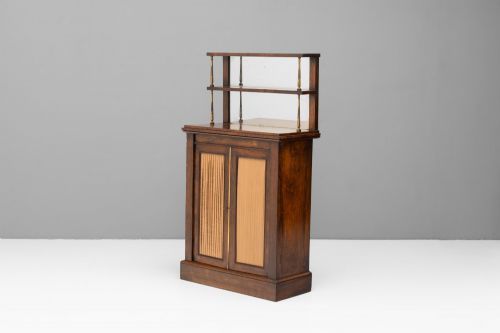

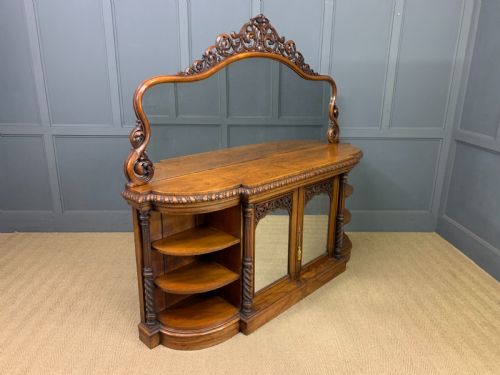


Mirrored Door Credenza
These mirrored door credenza selections bring heavy nineteenth-century presence and reflective glass into a room, offering the kind of substantial storage and display surface that collectors prize.
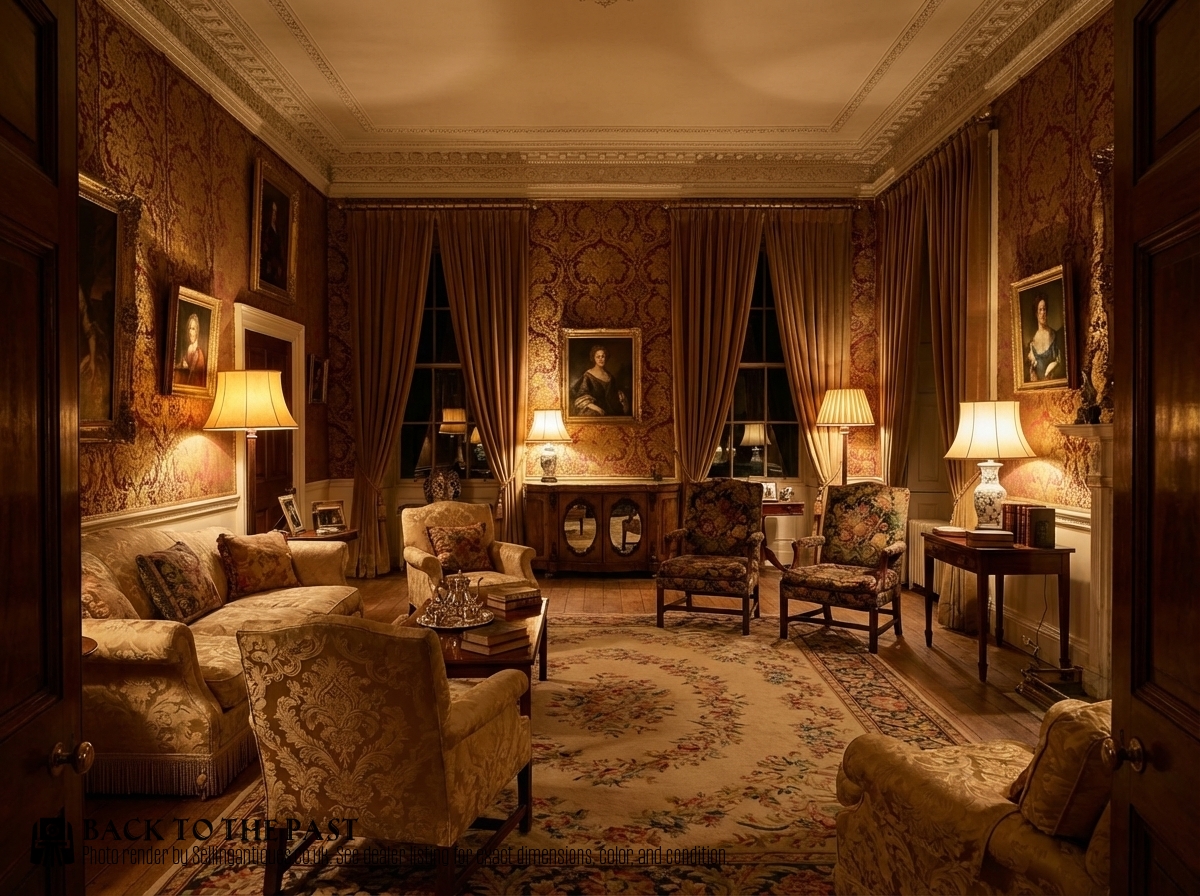
What a mirrored door credenza is
A mirrored door credenza is a substantial nineteenth-century cabinet piece designed to anchor a formal interior, usually combining low enclosed storage with display capabilities. The examples recorded here span the Victorian era, including pieces from eighteen-fifty and eighteen-sixty alongside broader nineteenth-century items.
Most entries on this page take the form of traditional credenzas and sideboards featuring burr walnut or burr yew construction. Buyers encounter variations in architectural silhouette, from carved serpentine fronts to rectilinear Aesthetic Movement designs.
Origins cluster firmly in the nineteenth century, reflecting the Victorian taste for figured timbers and decorative mounts. These low cabinets frequently integrate marble tops and central mirrored doors that open to reveal fitted shelving.
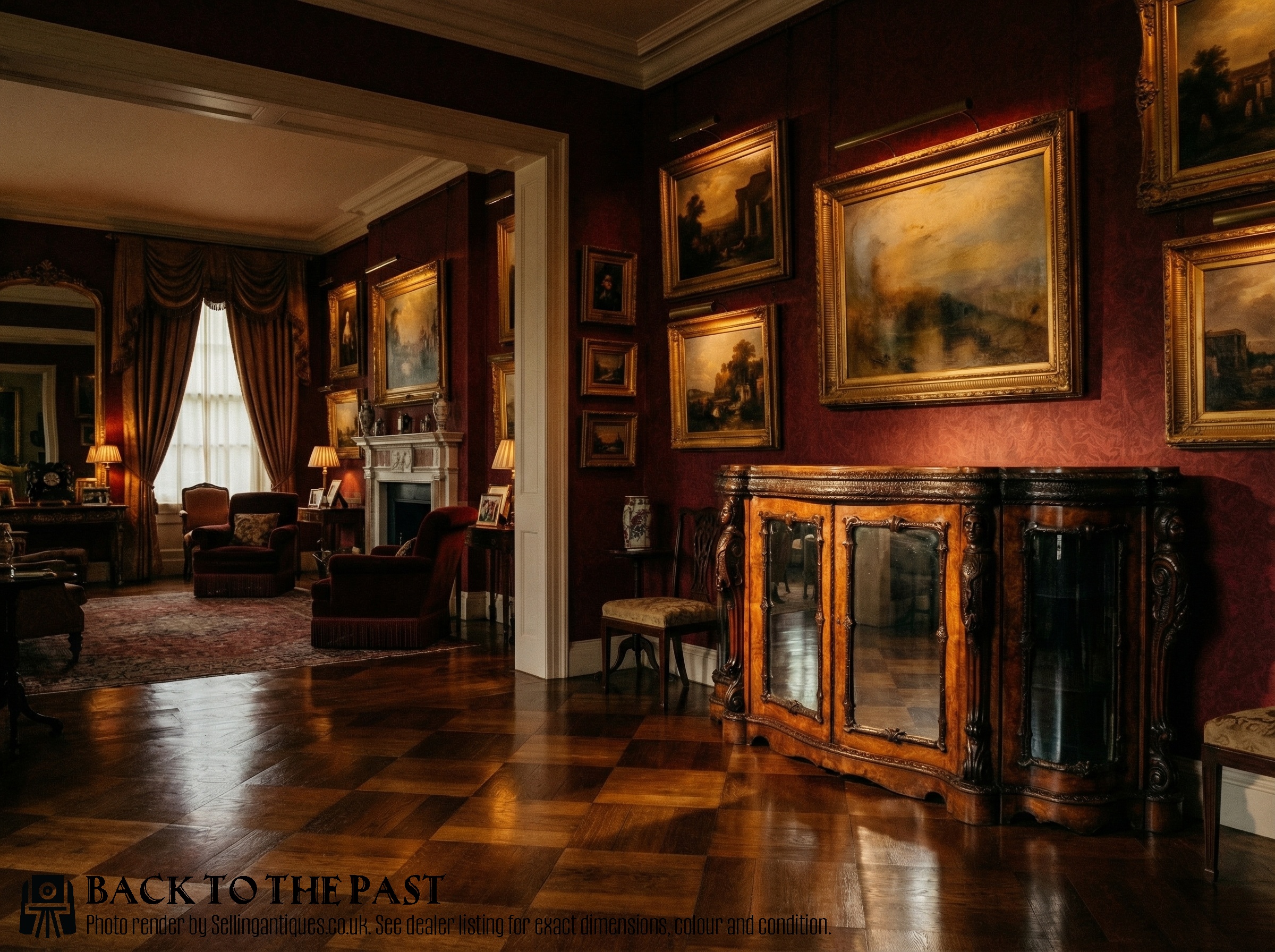
How they were made
Cabinetmakers built these pieces using dense structural woods overlaid with decorative veneers such as burr walnut and burr yew to create striking grain patterns. Wood inlay work and ebonised wood details frequently accent the primary timber surfaces.
The heavy stone upper surfaces utilise white Carrara marble fitted neatly to the cabinet top, while metalwork details incorporate ormolu and gilt bronze mounts. Mirrored glass panels are set securely into the central doors to catch the light.
Retail Price Guide 2026
Typical UK retail prices for mirrored door credenza, calculated from the Sellingantiques database of over a million retail prices indexed since 2003. This retail price guide relies exclusively on Sellingantiques data; no external sources or auction records are used, so the figures do not describe the wider market.
Every listed piece utilises nineteenth-century dating, featuring materials like burr walnut, marble, and ormolu within Victorian styles.
What varies in quality
The distinction between standard production and the top of the range rests on the complexity of the timber figure and the crispness of the carving. Richly figured burr walnut and intricate wood inlay command greater attention than plain wooden surfaces.
Secondary decorative elements also separate ordinary examples from exceptional ones, particularly the weight and chasing of ormolu or gilt bronze mounts. Maker attribution, such as a stamp from Gillows, elevates a piece through documented workshop provenance.
Gillows
The Mirrored Door Credenza Glossary
- Credenza
- A low nineteenth-century cabinet or sideboard used for storage and display, often featuring mirrored central doors. This form sits comfortably against a principal wall in a dining room or drawing room.
- Burr Walnut
- A heavily figured timber taken from the wart or burl of a walnut tree, prized for its swirling grain patterns. Cabinetmakers utilised this veneer to create striking visual movement on large flat door panels.
- Ormolu
- Finely chased and gilt bronze applied as decorative mounts to furniture corners and door frames. The technique adds a bright metallic contrast to dark wooden surfaces.
- Carrara Marble
- A type of white or blue-grey marble quarried in Italy and frequently used for nineteenth-century furniture tops. It provides a durable and cool surface above the wooden cabinet base.
Frequently Asked Questions
What is a mirrored door credenza?
A mirrored door credenza is a low nineteenth-century cabinet designed for storage and display, featuring reflective glass panels set into the central doors. These pieces typically combine heavy timber construction with decorative mounts and stone tops.
They serve as focal points in period interiors, offering a wide surface area and enclosed shelving behind mirrored fronts.
How were these credenzas used historically?
In nineteenth-century homes, these cabinets functioned as serving surfaces and display units in formal dining rooms and drawing rooms. The enclosed cupboards held glassware, linens, and silver.
The central mirrored doors helped to brighten Victorian rooms by reflecting natural daylight from windows and oil lamps.
How do I live with a credenza?
Living with a nineteenth-century credenza involves placing it against a sturdy wall where its weight and proportions can anchor the room. Avoid exposing the burr walnut and marble to direct heat sources or excessive moisture.
The top surface handles decorative objects well, while the interior accommodates books or tableware.