
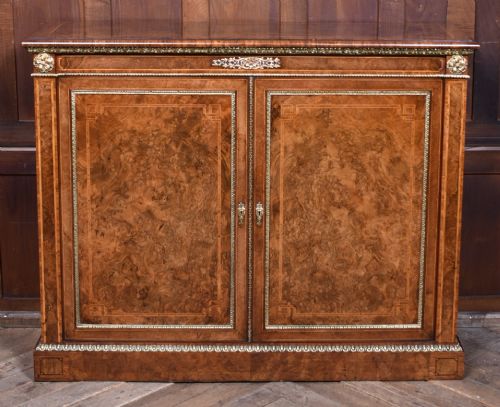


Golden Brown Sideboard
These golden brown sideboard examples bring warmth to a room through rich timber tones.
Golden Brown Sideboard
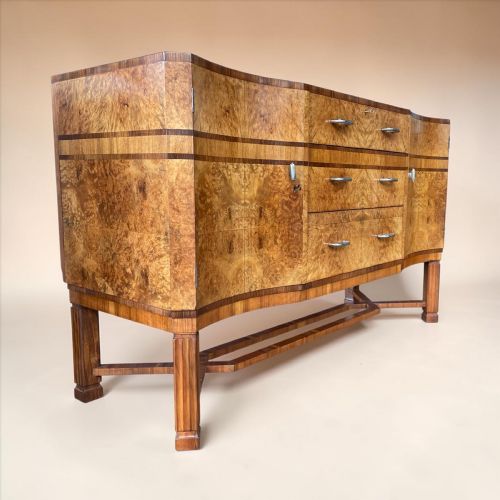
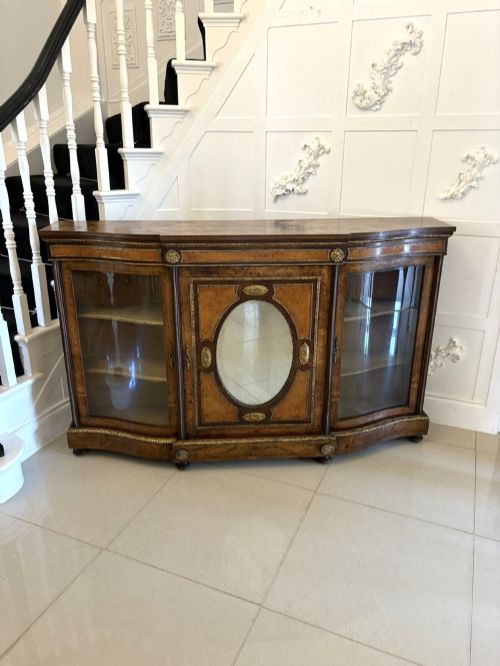
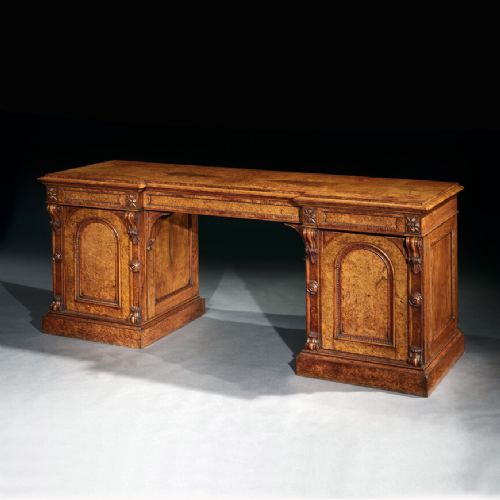
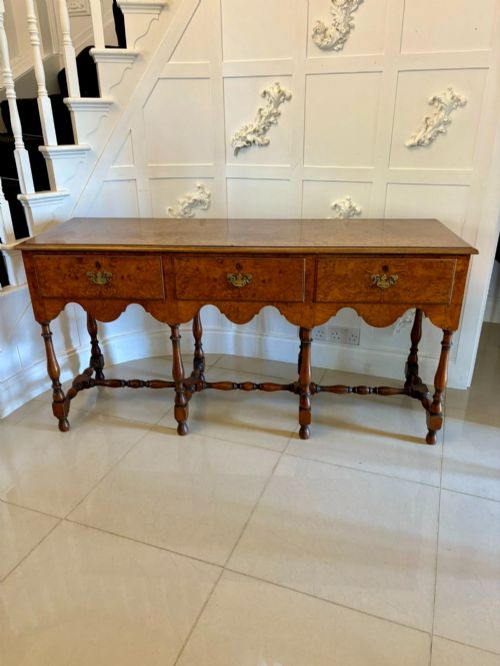
The selection on this page relies heavily on Victorian and 1930s pieces alongside earlier Georgian examples. Credenzas and side cabinets appear frequently alongside traditional dining room sideboards.
Materials and construction methods
Cabinet makers utilised figured timbers such as burr walnut, burr yew, and pollard oak to create striking grain patterns across the front surfaces. Veneers were carefully laid over solid carcases to achieve symmetry in the timber figuring.
Mounts in brass and ormolu often accent the woodwork, particularly on Victorian credenzas and 19th-century cabinet pieces. Joinery traditions varied from simple country oak construction to refined Georgian cabinet work.
Some mid-century cocktail cabinets hide their liquor storage behind gleaming burr walnut veneers, ready for an evening toast.
Distinctions in quality
Superior pieces display exceptional timber selection where grain patterns match harmoniously across doors and drawers. The depth of the polish and the crispness of applied brass or ormolu mounts signal higher workshop standards.
Construction integrity separates standard utility furniture from pieces finished with fine interior drawer linings and well-fitted original doors. The complexity of the timber preparation, especially with burr veneers and amboyna, dictates the standard of the finish.
Harry and Lou Epstein
The Golden Brown Sideboard Glossary
- Burr walnut
- Timber taken from the growth excrescence of a walnut tree, yielding intricate, swirling grain patterns. It was favoured by cabinet makers for decorative veneering.
- Credenza
- A low dining room or parlour cabinet, often featuring glazed side doors and central cupboards. This form became prominent during the Victorian era.
- Ormolu
- Gilt bronze ornamentation applied to furniture. It provides metallic contrast against dark or golden woods.
- Dresser base
- A lower storage unit with drawers or cupboards, historically used in kitchens and dining spaces. These pieces often feature sturdy oak construction.
Golden Brown Sideboard: Frequently Asked Questions
How do I date a sideboard?
Dating relies on timber choices, construction techniques, and stylistic hardware details. Georgian and Victorian pieces show distinct joinery methods compared to 1930s Art Deco examples.
Examining the secondary woods inside drawers and the type of polish applied provides further clues to the manufacturing decade.
Are these sideboards suitable for modern dining rooms?
Their warm timber tones and practical proportions allow them to integrate into contemporary interior schemes easily. They provide functional storage while serving as a focal point in a living space or hallway.
Choosing the right size depends on wall space and the height of surrounding furniture.
What is the difference between a credenza and a sideboard?
A credenza typically sits lower and often includes curved glass display sections on either side of a central cupboard. Traditional sideboards focus more on drawer space and flat top surfaces for serving.
Both serve similar storage functions within dining and reception rooms.
How should I care for burr walnut veneer?
Keep wooden surfaces away from direct sunlight and excessive heat sources to prevent the veneer from drying out. Regular dusting with a soft, dry cloth maintains the finish.
Applying appropriate wax polish periodically nourishes the grain without building up heavy residues.