






Curved Side Credenza
These curved side credenza examples combine generous storage with sweeping front profiles, offering a commanding presence in a formal dining room or hallway.
Curved Side Credenza
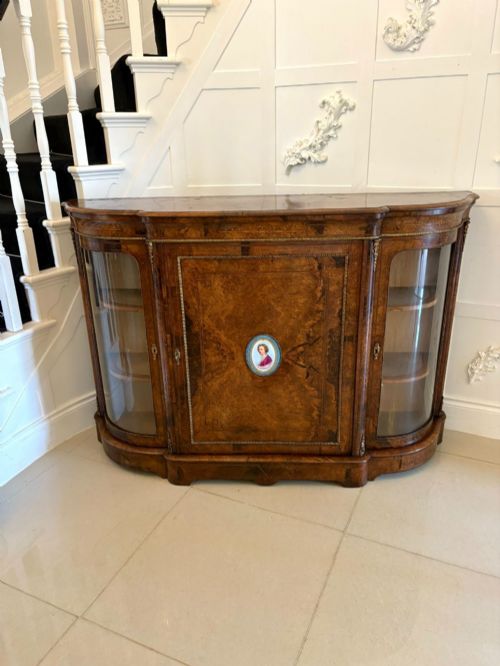
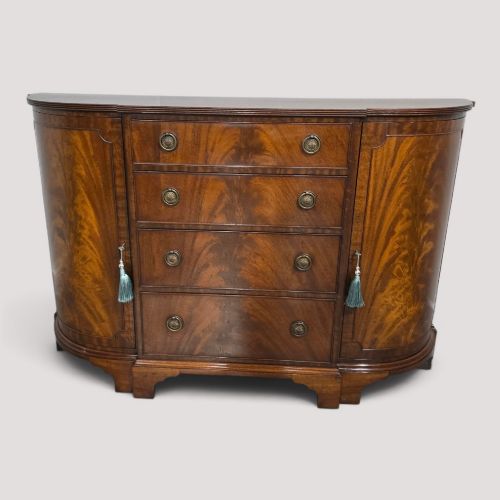
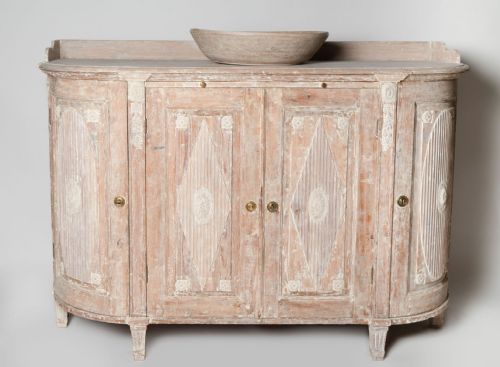
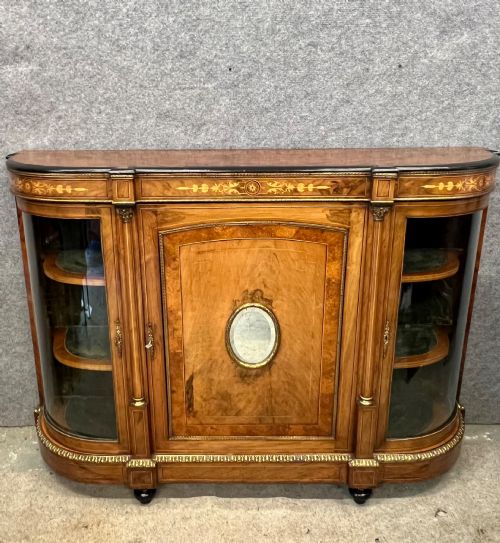
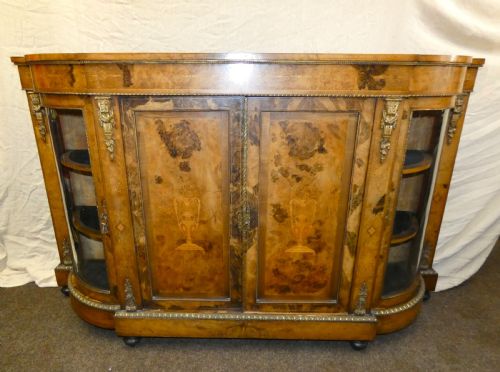
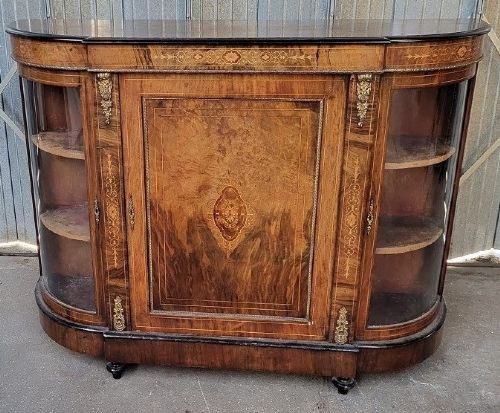
When you search for a curved side credenza, you encounter low profile storage furniture designed with bowed, serpentine or demi-lune fronts. The pieces gathered here span the nineteenth century through the art deco period, predominantly manifesting as Victorian walnut credenzas or side cabinets with glazed doors and curved ends.
Makers utilised timber such as burr walnut, mahogany, satinwood and amboyna, often incorporating marquetry and classical revival motifs. Alongside traditional British Victorian and Georgian style furniture, the selection includes French marble top cabinets, Swedish painted buffets and Italian mahogany pieces.
Materials and construction
Cabinet makers built carcases from solid woods like mahogany or pine, then applied highly figured veneers such as burr walnut and satinwood across the sweeping curved surfaces. Marquetry panels, brass stringing and gilt bronze or ormolu mounts were meticulously fitted to enhance the decorative facade.
Many credenzas incorporated glass panels for display, flanked by curved wooden doors or side compartments. Marble tops featured frequently on continental pieces, while interior shelving provided practical storage behind lockable timber or glazed doors.
Curved Side Credenza Retail Price Guide 2026
Typical asking prices for curved side credenza among the pieces listed under this phrase on Sellingantiques today, from the lower quarter to the upper quarter. They describe what is for sale here now, not the wider market.
Several pieces feature secret compartments hidden behind curved doors, designed to guard household cellar keys from thirsty but dishonest domestic staff.
Distinctions in quality
Quality rests upon the choice of timber and the precision of the veneer work, particularly how seamlessly figured grain follows a curved contour. The crispness of ormolu mounts and the intricacy of hand-cut marquetry separate standard production from exceptional cabinet work.
Internal construction, drawer linings and the preservation of original glass or brass fittings indicate the level of care invested by the original workshop. Pieces retaining their original surface finish and well-fitted locking mechanisms demonstrate superior craftsmanship.
Hille·Harry And Lou Epstein
The Curved Side Credenza Glossary
- Credenza
- A low dining room or parlour cabinet designed for serving food or displaying valuables, often featuring curved side compartments. The form evolved significantly during the Victorian era.
- Marquetry
- The art of applying decorative pieces of veneer to a structure to form intricate floral or geometric designs. Craftsmen utilised various coloured woods to achieve tonal depth.
- Ormolu
- Gilded bronze mounts applied to furniture for decorative accentuation, popular in French revival and nineteenth-century pieces. The metalwork is typically cast and chased by hand.
- Demi-lune
- Half-moon shape describing furniture with a curved, semicircular front profile. This form is common in side cabinets and console tables.
- Burr walnut
- Timber taken from the warted excrescence of a walnut tree, yielding swirling patterns prized by cabinet makers. It formed the primary surface veneer for many luxury credenzas.
Curved Side Credenza: Frequently Asked Questions
Where should I place a curved side credenza?
These cabinets suit dining rooms, hallways or living spaces where a sweeping front profile softens rigid architectural lines.
Ensure adequate clearance for doors that swing outward or slide alongside the curved carcase.
How do I care for burr walnut veneer?
Keep wooden surfaces away from direct sunlight and heat sources to prevent the delicate veneer from drying or cracking.
Apply a traditional beeswax polish occasionally and buff gently with a soft cloth to maintain the lustre.
Are marble top cabinets heavy?
Continental and Victorian cabinets fitted with heavy marble slabs require careful handling during relocation.
The stone top usually rests loose upon the wooden base rather than being permanently fixed.
What is the difference between a credenza and a sideboard?
Credenzas traditionally lack the tall backboards often found on Victorian sideboards and frequently include glass display sections.
The curved side variants served both practical storage and decorative display functions in formal rooms.