

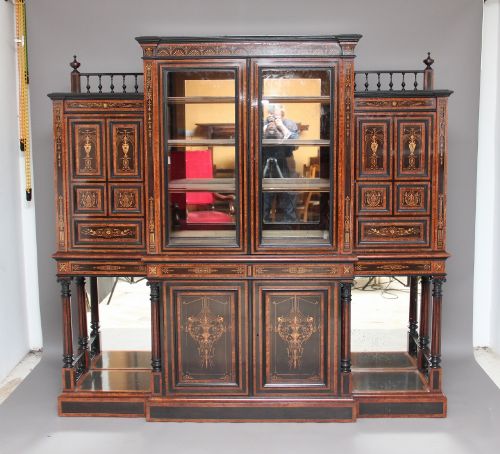


Breakfront Side Cabinet
When you search for a breakfront side cabinet, you seek a distinguished architectural form that anchors a room with tiered cabinetry and timber grain.
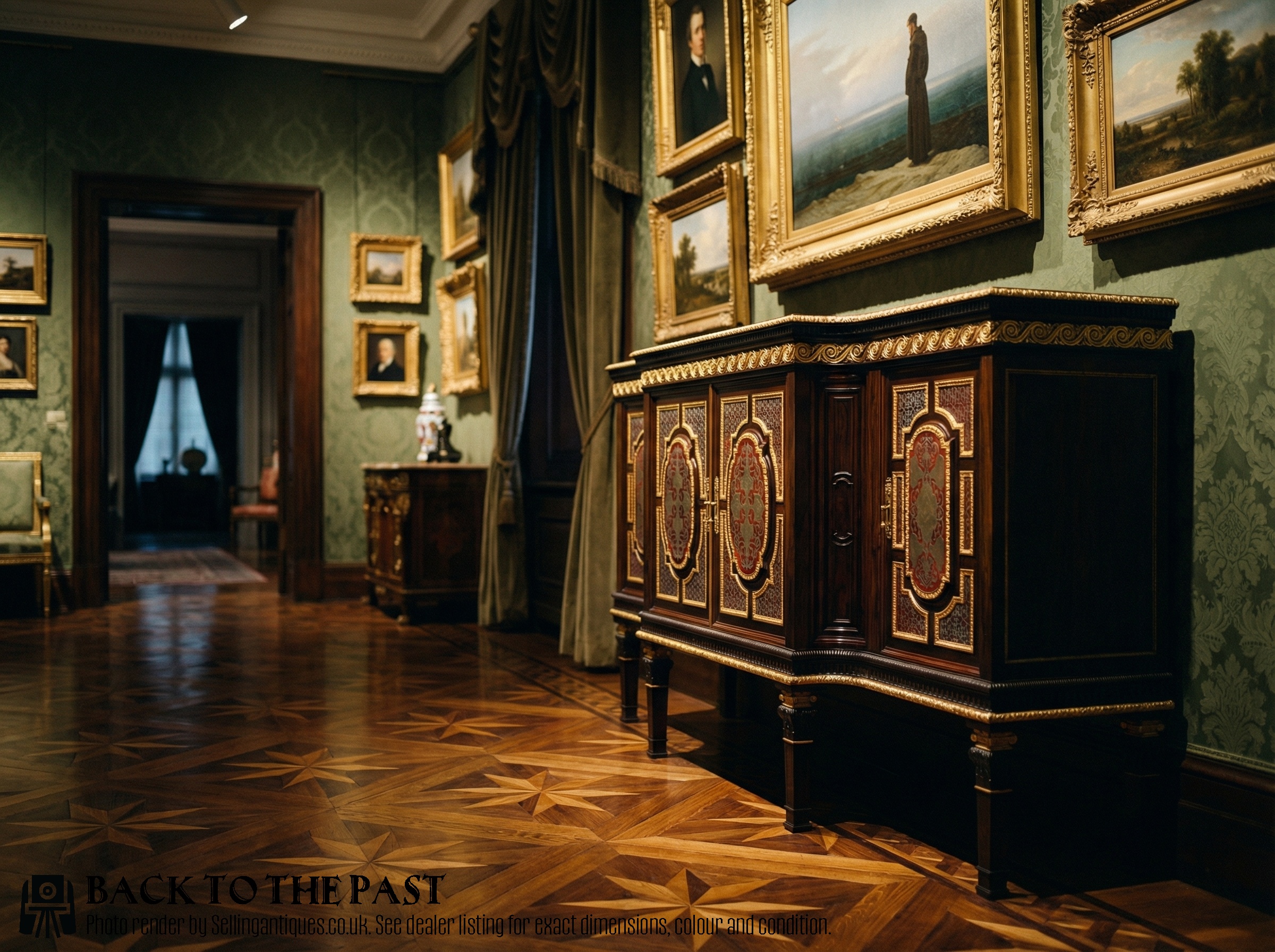
Breakfront Side Cabinet
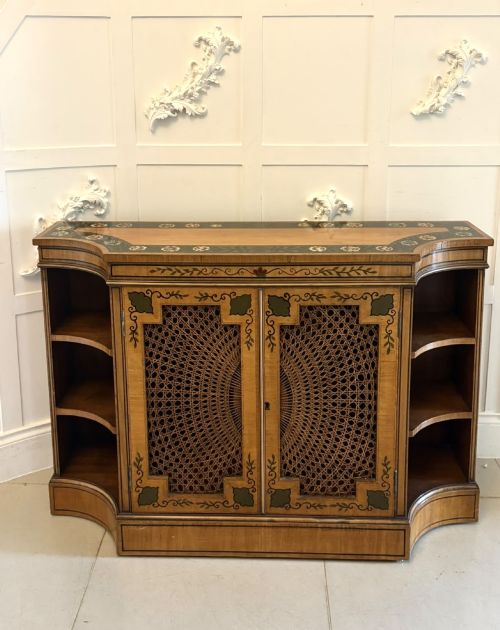
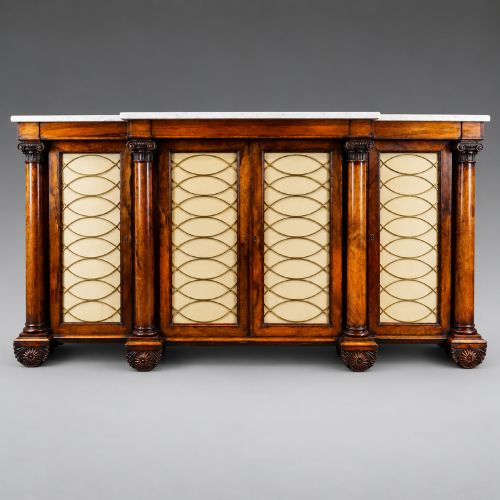
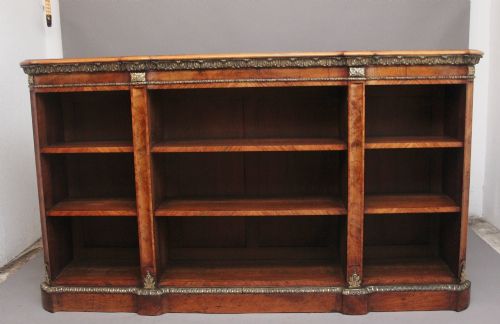
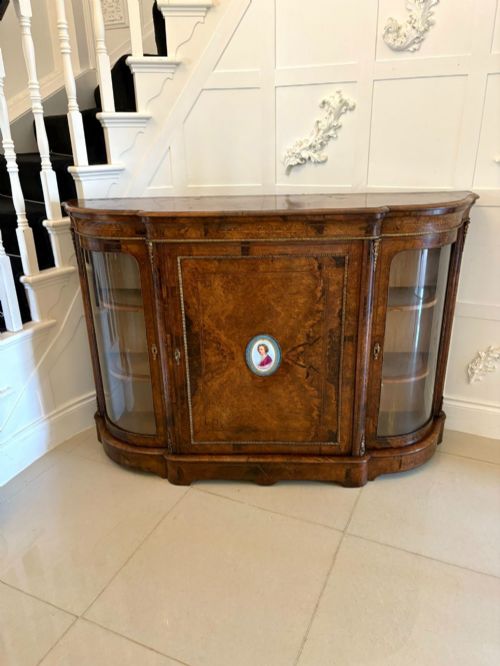
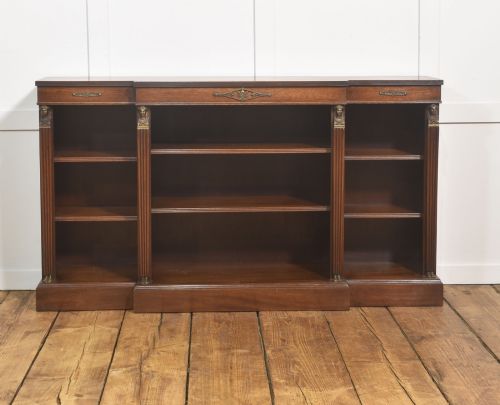
A breakfront side cabinet presents a projecting central section flanked by recessed wings, creating depth along a wall. This architectural profile accommodates books, display items, and concealed storage within domestic interiors.
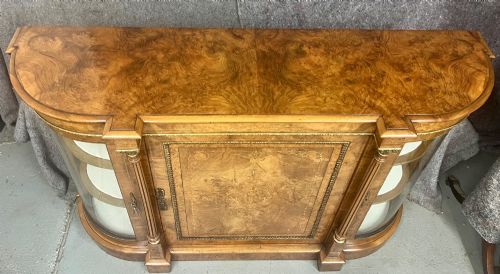
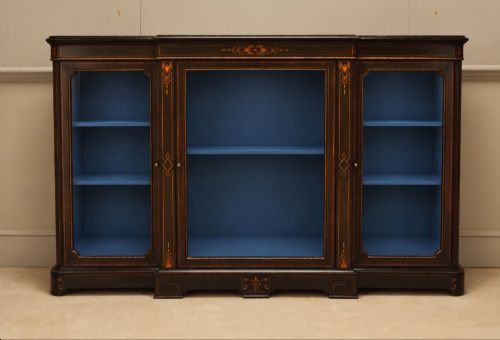
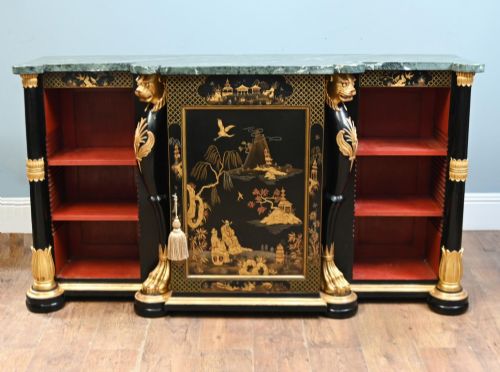
Most examples encountered on this page date from the nineteenth century, spanning Regency elegance through to late Victorian elaboration. Cabinetmakers built these pieces in mahogany, rosewood, and burr walnut, often incorporating glazed doors or marble tops.
The form bridges the function of a bookcase, credenza, and sideboard, serving as a principal focal point in a reception room. Makers utilised various woods and metal mounts to distinguish formal display pieces from working library cabinets.
How they were made
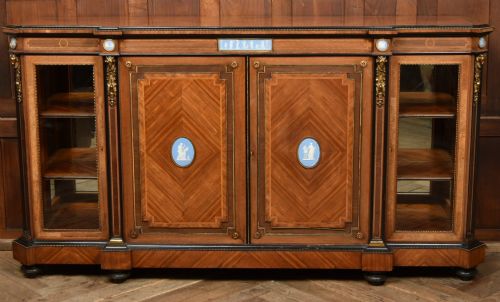
Cabinetmakers constructed carcasses from dense foundational timbers like mahogany and oak, applying finely figured veneers of rosewood, burr walnut, and amboyna to primary surfaces. Marquetry, brass stringing, and boxwood inlays embellished the panels and friezes.
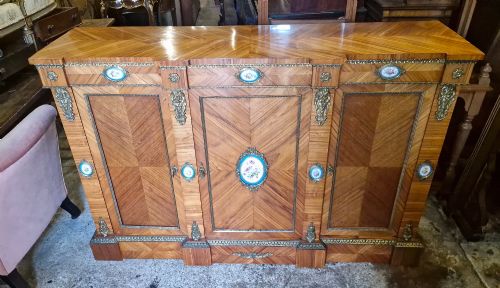
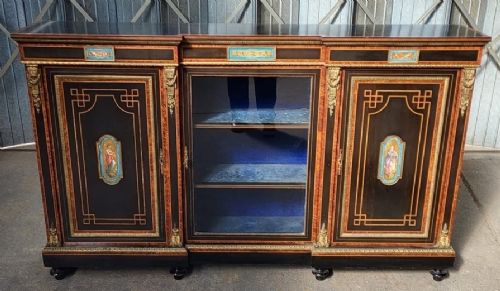
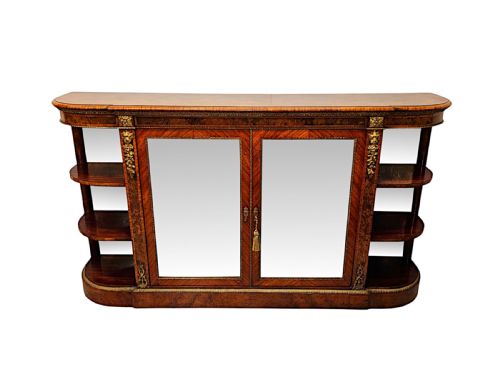
Ormolu mounts, gilt brass galleries, and porcelain plaques added decorative contrast to the timber. Glazing protected contents behind timber framing, while marble tops provided durable, polished surfaces on specific continental and domestic models.
Breakfront Side Cabinet Retail Price Guide 2026
Typical asking prices for breakfront side cabinet among the pieces listed under this phrase on Sellingantiques today, from the lower quarter to the upper quarter. They describe what is for sale here now, not the wider market.
Listings feature woods including mahogany, rosewood, burr walnut, coromandel, and ebonised timber.
What varies in quality
The selection of veneer dictates visual impact, with symmetrical burr walnut figures and richly grained rosewood marking the upper tiers of production. Plain mahogany and secondary timbers appear on simpler or later utilitarian examples.
Ornate enrichment separates standard workshop output from exceptional commissions. Cast ormolu mounts, intricate marquetry panels, and branded or stamped signatures from prominent cabinetmakers elevate the standing of a piece.
Johnstone and Jeanes·Collinson and Lock·Gillows·Lamb of Manchester·Meakin
The Breakfront Side Cabinet Glossary
- Breakfront
- A piece of furniture where the central section projects forward from the side sections. This creates visual rhythm and architectural depth.
- Credenza
- A low cabinet, frequently fitted with glass doors and porcelain mounts. These pieces emerged as prominent display furniture in Victorian drawing rooms.
- Ormolu
- Gilded bronze applied as decorative mounts and feet. It provides metallic contrast against dark timbers.
- Marquetry
- Inlaid patterns formed from different coloured wood veneers. Craftsmen assembled these geometric or floral designs by hand.
- Boulle
- A form of marquetry utilising tortoiseshell and brass. It creates a distinct metallic contrast across cabinet doors.
Breakfront Side Cabinet: Frequently Asked Questions
Where did people place breakfront cabinets?
These cabinets occupied principal reception rooms, dining spaces, and libraries where hosts displayed valued possessions and books.
Their elongated proportions suited placement against long walls, anchoring the surrounding furniture scheme.
How do I identify a Regency period piece?
Regency cabinets often feature clean architectural lines, rosewood veneers, and classical brass inlay work.
Proportions remain restrained, reflecting the neoclassical design influences of the early nineteenth century.
What is the difference between a credenza and a bookcase?
Credenzas sit lower to the ground and frequently feature central cupboards flanked by curved glass display sections.
Bookcases rise taller with extensive shelving, prioritising the storage and presentation of bound volumes.
How should I care for burr walnut veneer?
Keep walnut furniture away from direct sunlight and rapid temperature fluctuations to prevent timber splitting.
Apply traditional wax sparingly and buff gently with a soft cloth to maintain the natural sheen.