


Marble Top Bookcase
A marble top bookcase brings together heavy stone and fine timber to create a practical display piece with a distinctive architectural surface.
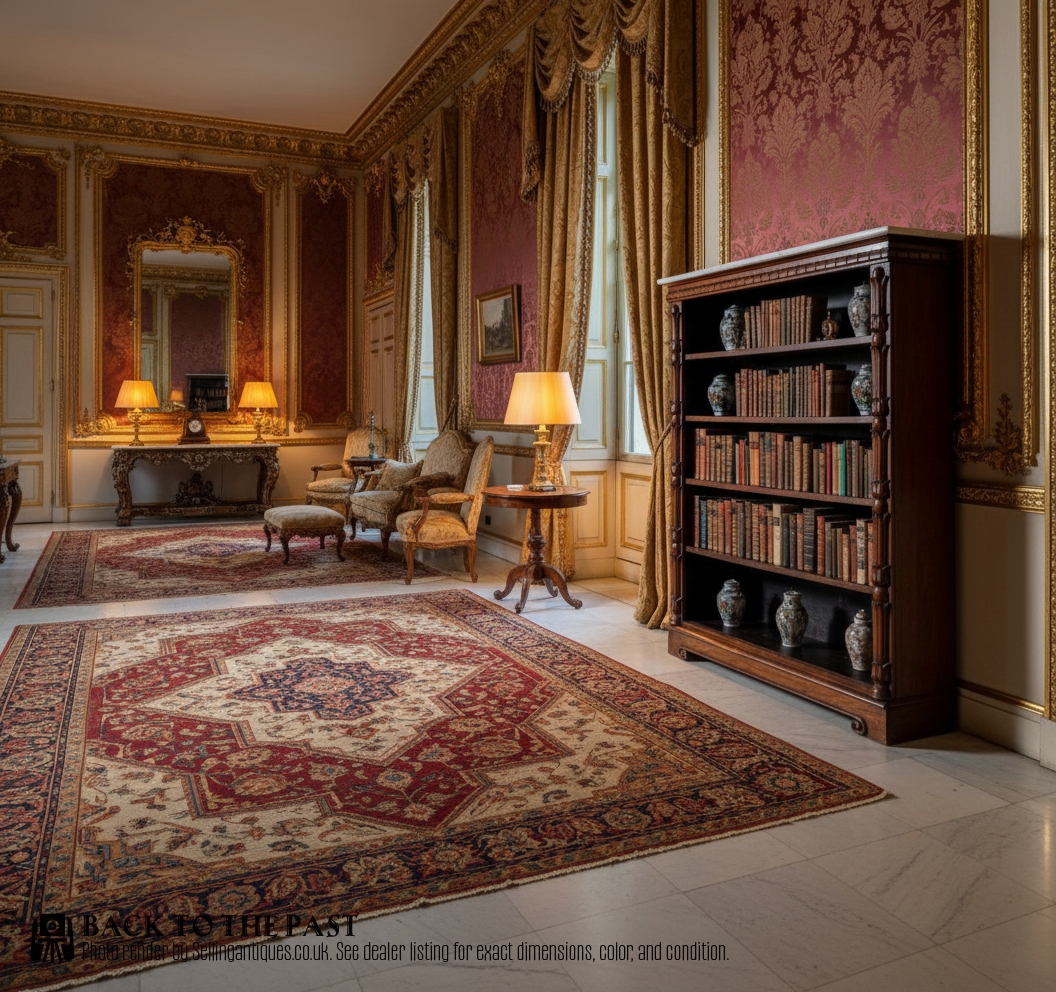
Marble Top Bookcase
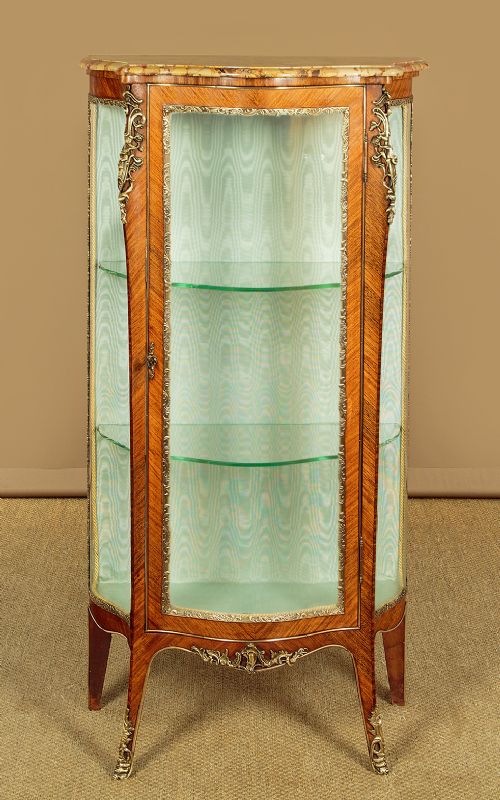
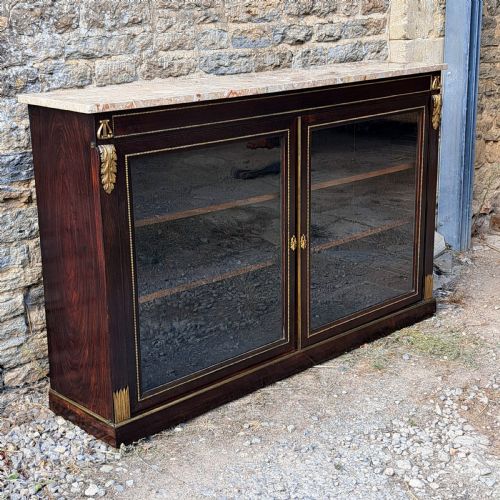
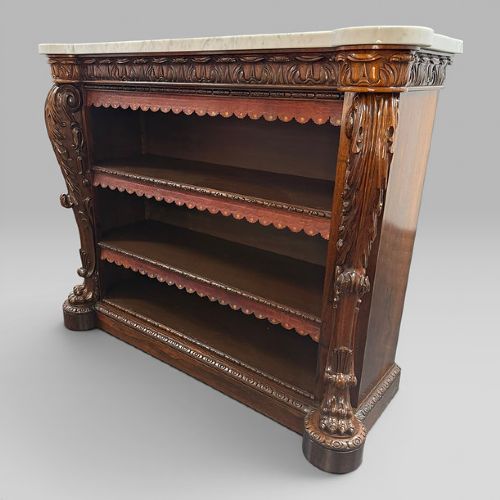
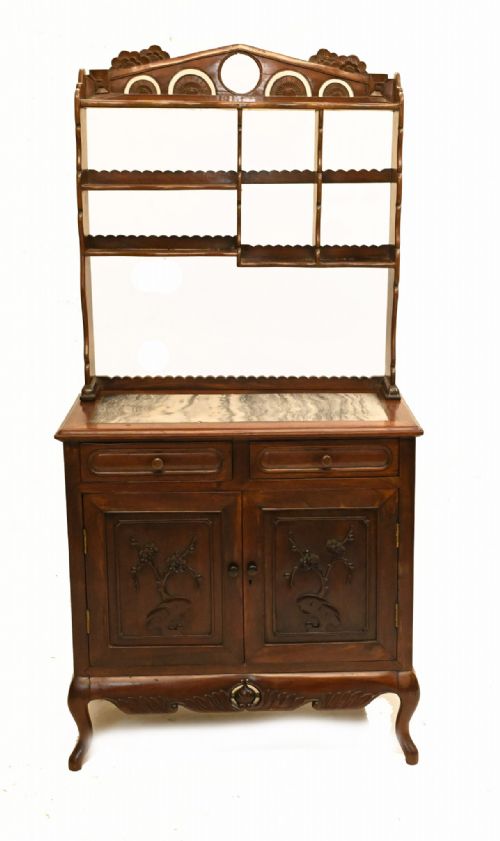
A marble top bookcase combines traditional book storage with a smooth stone surface, appearing in forms ranging from open shelves to glazed display cabinets and low side pieces. Pieces associated with this search phrase bridge the gap between functional libraries and formal reception rooms.
The Regency and Victorian periods provide the core of what appears here, alongside Georgian examples and later French revival pieces. Rosewood and mahogany dominate the timber choices, often paired with contrasting white, pink, or green marble slabs.
Open front configurations sit alongside glazed vitrines and brass-inlaid chiffoniers. Buyers meet both compact pier cabinets designed for tight corners and large breakfront library pieces built for substantial rooms.
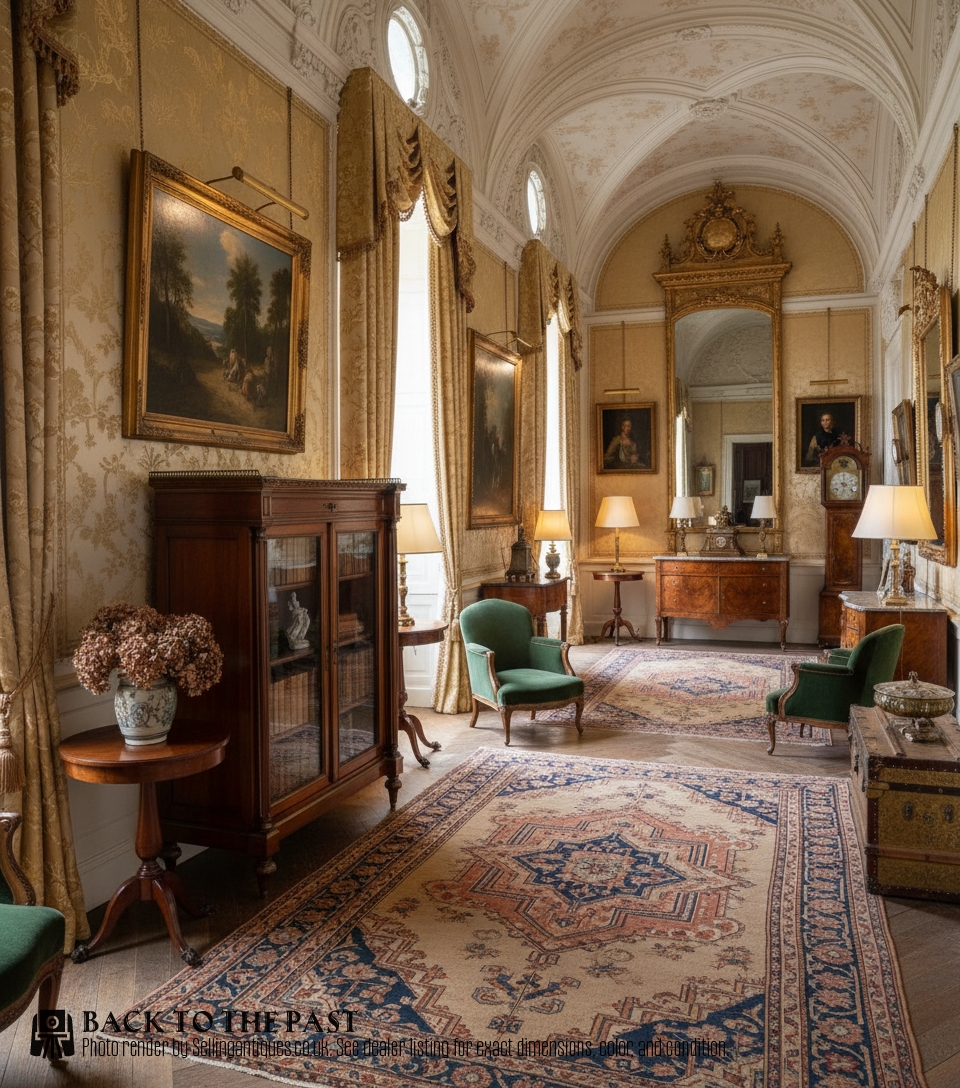
Materials and construction methods
Cabinet makers relied on dense tropical hardwoods like rosewood and mahogany, frequently applying figured veneers over sturdy softwood carcases. Ormolu mounts, brass inlay, and parcel gilding were added to elevate the visual weight of the timber.
The defining feature rests on top: slabs of polished marble, sometimes specified as Carrara or fitted with specimen marble inserts. These stone surfaces required precise masonry work to follow serpentine fronts or straight breakfront outlines.
Marble Top Bookcase Retail Price Guide 2026
Typical asking prices for marble top bookcase among the pieces listed under this phrase on Sellingantiques today, from the lower quarter to the upper quarter. They describe what is for sale here now, not the wider market.
Listings feature rosewood, mahogany, and walnut cabinets fitted with white, green, and pink marble surfaces spanning the Georgian to Edwardian eras.
Judging execution and proportion
Quality rests in the harmony between the stone slab and the timber base, where superior pieces integrate the heavy marble top without overwhelming the proportions of the cabinet below. Finer examples display meticulous grain selection in the rosewood or mahogany veneers and crispness in any cast ormolu mounts.
Internal elements such as adjustable shelving systems, original brass fittings, and secondary softwood timbers that match the stated period indicate high workshop standards. The precision of the joinery around glazed doors and inlaid brass work separates standard production from exceptional cabinet making.
Gillows·Paul Sormani·Collinson & Lock·S Jamar·Maison Krieger·Durand
The Marble Top Bookcase Glossary
- Ormolu
- Gilded bronze mounts used decoratively on furniture frames. The technique involves applying a gold amalgam to cast bronze before heating.
- Breakfront
- A piece of furniture where the central section projects forward from the side sections. This layout creates depth and breaks up long linear runs.
- Chiffonier
- A low cabinet featuring shelves or drawers, often topped with a mirror or gallery back. In these records, the term frequently overlaps with compact bookcase forms.
- Vitrine
- A glass-fronted display cabinet designed for showing porcelain and small objects. These pieces often feature glazed sides as well as front doors.
- Parquetry
- Geometric wood inlay patterns resembling mosaic work. Makers used contrasting timbers to create decorative tabletops and cabinet doors.
Marble Top Bookcase: Frequently Asked Questions
How do I care for the marble top?
Wipe the stone surface regularly with a damp cloth and mild neutral soap, avoiding acidic cleaners that can etch the polish. Use coasters beneath glasses and hot items to protect the natural finish.
Apply a neutral stone wax occasionally to maintain the sheen and guard against moisture penetration. Lift rather than slide heavy objects across the stone to prevent scratching.
How were these cabinets originally used?
These pieces functioned as multipurpose storage and display items in formal drawing rooms, libraries, and parlours. The stone surface provided a durable resting place for serving drinks or displaying heavy decorative bronzes.
Lower open bookcase variants allowed homeowners to keep frequently read volumes within easy reach. Glazed versions protected fine leather bindings and delicate porcelain from dust and handling.
How do I distinguish Regency from Victorian examples?
Regency pieces often feature clean architectural lines, extensive rosewood surfaces, and restrained brass inlay or parcel gilt accents. The proportions remain relatively crisp and draw heavily on classical antiquity.
Victorian cabinets tend toward heavier timber framing, darker walnut or mahogany tones, and more elaborate carving or serpentine fronts. The scale is frequently grander, reflecting changing interior tastes of the later nineteenth century.