
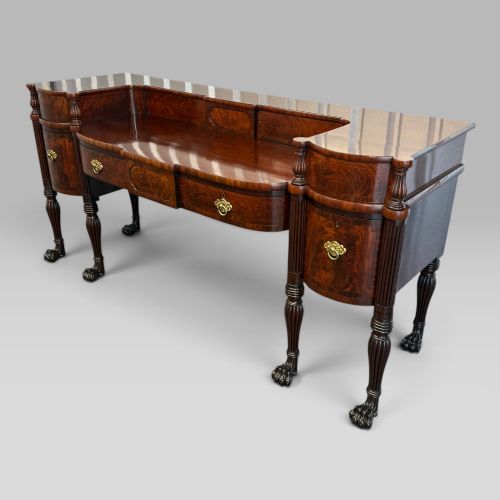
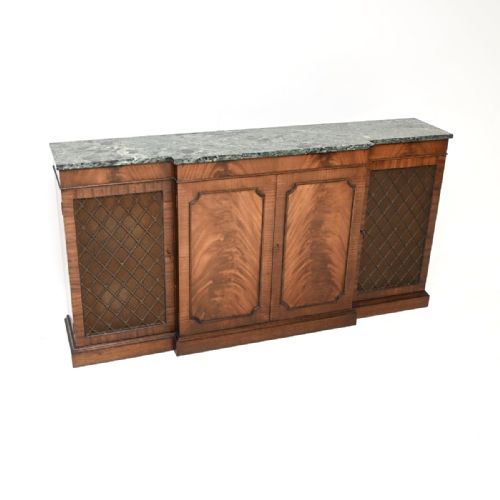
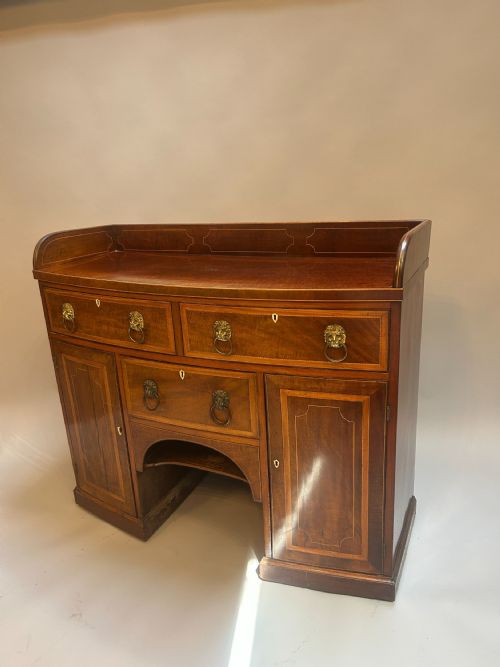


Regency Breakfront Sideboard
These Regency breakfront sideboards offer commanding presence and disciplined storage, standing as the definitive dining room server of their era.
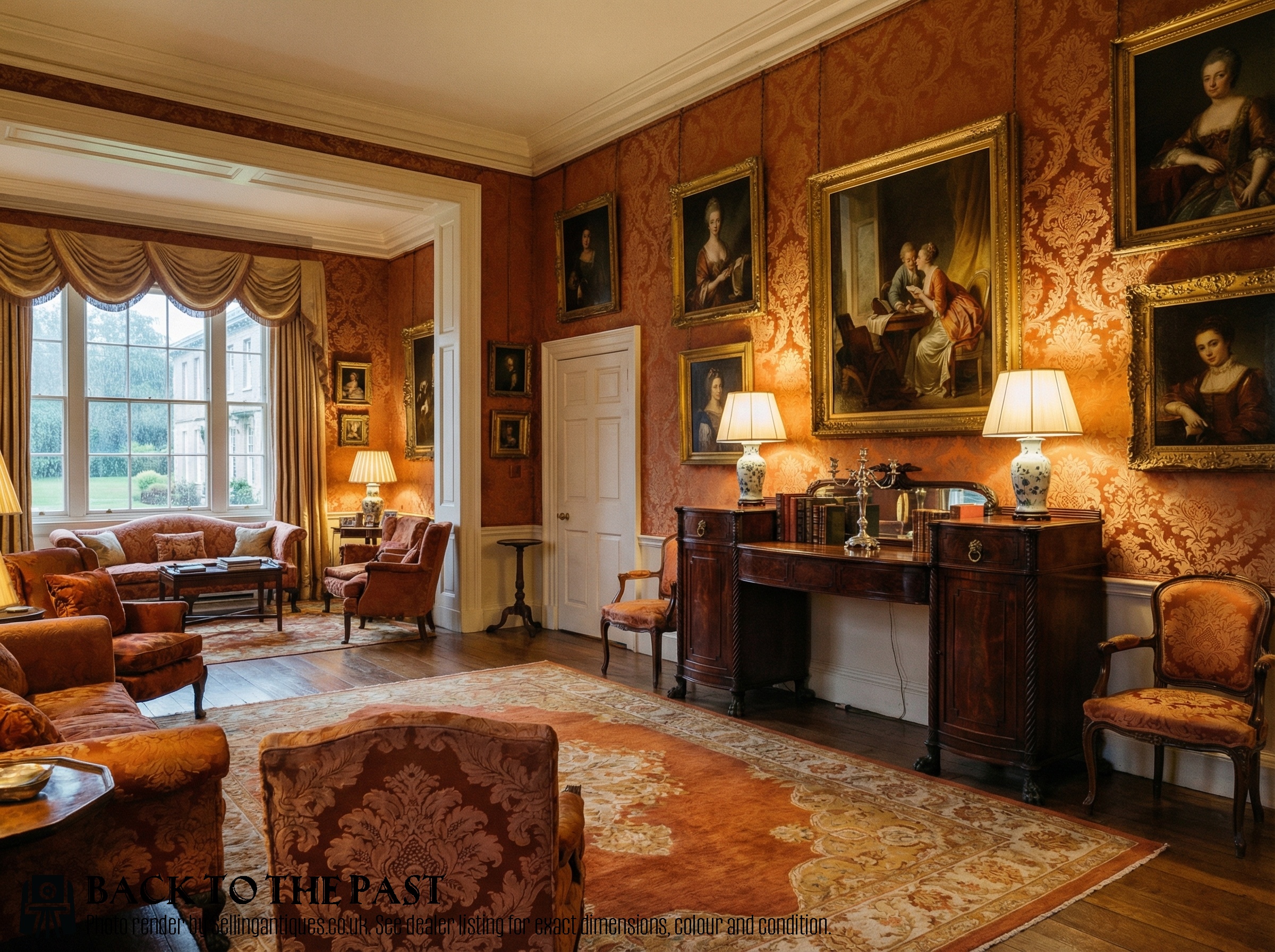
Understanding the regency breakfront sideboard
A regency breakfront sideboard presents a projecting central section flanked by recessed wings, creating a pronounced architectural rhythm along the dining room wall. The surviving examples emerge primarily from the Regency period alongside later revivals, maintaining the classic low-slung, substantial proportions.
The form functions fundamentally as a server and storage cabinet, frequently incorporating multiple doors and concealed cellaret drawers for dining provisions. Pieces span straightforward timber designs to elaborate configurations featuring brass grilles, silk linings, and integrated shelving.

Materials and construction
Makers utilised mahogany as the primary structural and visual timber, frequently selecting flame mahogany and figured veneers to exploit the dramatic grain patterns. Solid oak often forms the secondary framing and drawer linings, providing robust interior stability.
Decoration relied on precision brass inlays set flush into the timber surfaces, alongside cast brass mounts and galleries. Selected pieces integrate painted finishes or marble tops, demonstrating a diverse material palette within the strict neoclassical design vocabulary.
Retail Price Guide 2026
Typical UK retail prices for regency breakfront sideboard, calculated from the Sellingantiques database of over a million retail prices indexed since 2003. This retail price guide relies exclusively on Sellingantiques data; no external sources or auction records are used, so the figures do not describe the wider market.
Listings feature mahogany, flame mahogany, and rosewood alongside decorative brass grilles, silk panels, and marble tops.
Distinctions in quality
Quality rests upon the selection and matching of mahogany veneers, where superior examples display symmetrical flame figures across the entire breakfront facade. The precision of the brass inlay work and the weight of the cast mounts further separate standard execution from pieces of higher ambition.
Interior construction reveals the maker's hand through the tightness of the drawer dovetails and the choice of secondary woods. Pieces retaining original hardware and integrated architectural details command greater authority than those altered over time.
The Regency Breakfront Sideboard Glossary
- Breakfront
- A piece of furniture with a central section that projects forward beyond the flanking wings. This architectural arrangement creates shadow lines and visual depth.
- Flame mahogany
- Timber cut from the fork of the mahogany tree to produce a rippling, flame-like grain pattern. Cabinetmakers reserved these highly figured veneers for primary display surfaces.
- Cellaret
- A compartment or drawer within a sideboard designed to hold wine bottles securely. These often featured lead linings or divisions for temperature control.
- Inlay
- A technique where contrasting materials are set into recesses flush with the wood surface. Brass strips formed the principal linear decoration on these servers.
Frequently Asked Questions
How do I spot a true period piece?
Examine the secondary woods inside the drawers, such as oak, and check for hand-cut dovetails consistent with early nineteenth-century cabinet work.
Surface patination and the integration of brass inlay work provide further evidence of period execution compared to later Revival interpretations.
Where does a breakfront sideboard fit best?
These large servers require substantial wall space in a dining room or wide hallway to accommodate their projecting central facade.
Their generous top surfaces function effectively for serving food or displaying silver during formal gatherings.
How should I care for mahogany surfaces?
Maintain the timber by applying traditional beeswax sparingly and buffing gently with a soft cloth to preserve the natural lustre.
Keep the sideboard away from direct heat sources and strong sunlight to prevent the mahogany veneers from drying or fading.
What is the difference between revival and period pieces?
Period pieces date from the original Regency era around eighteen hundred, while revival pieces were produced in subsequent decades, often echoing the same grand proportions.
Both categories utilise similar mahogany veneers and brass details, but construction techniques and timber ageing help distinguish their exact age.