
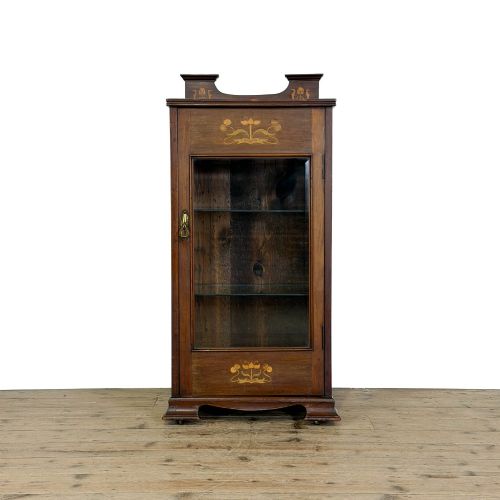
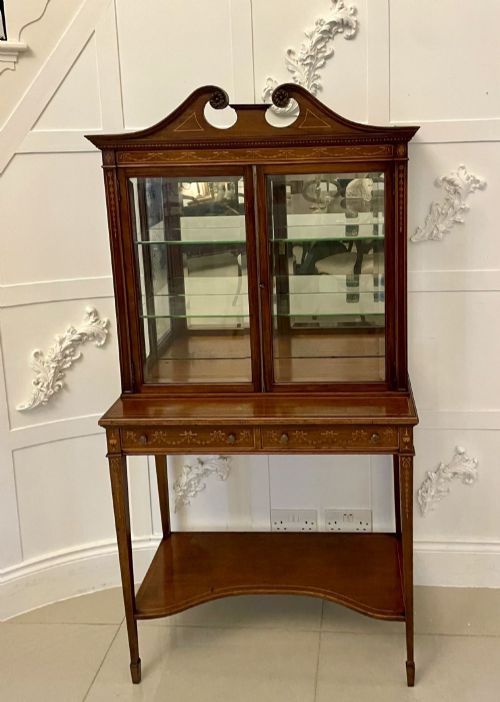
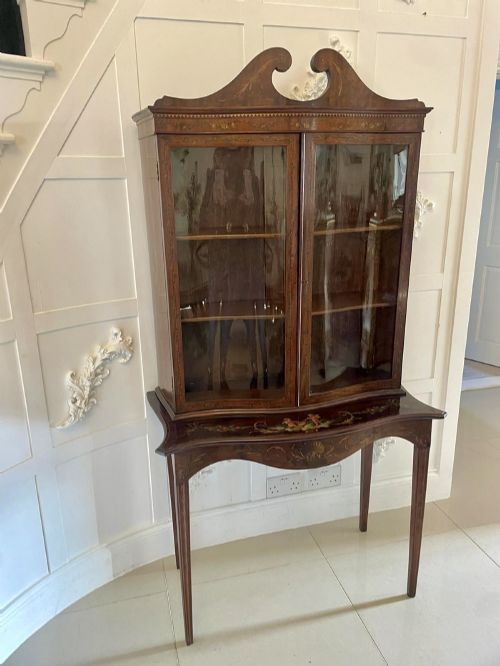
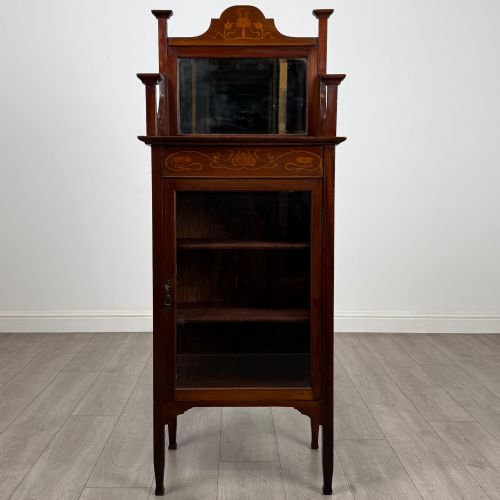
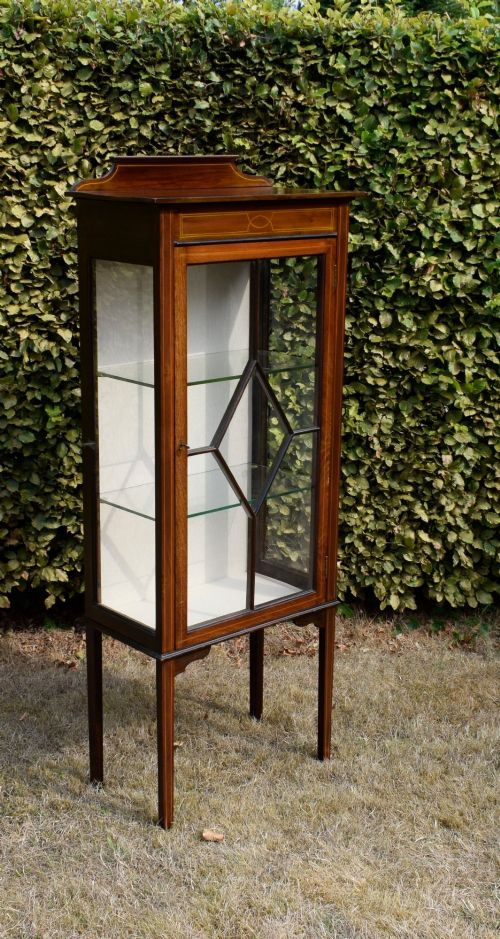
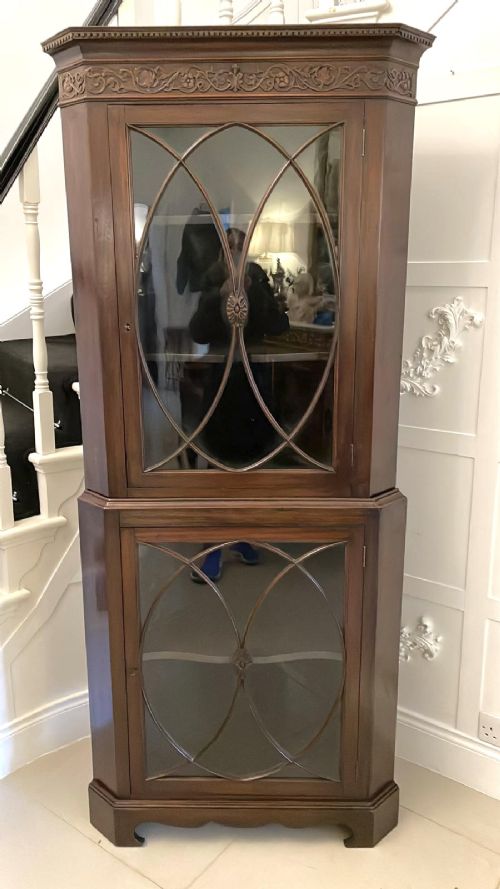
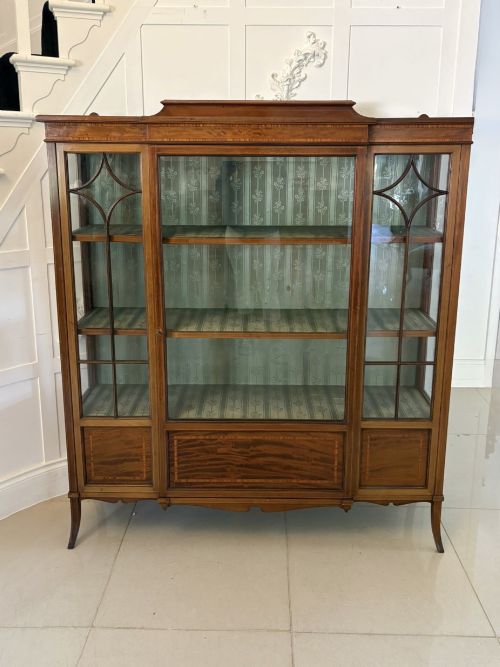
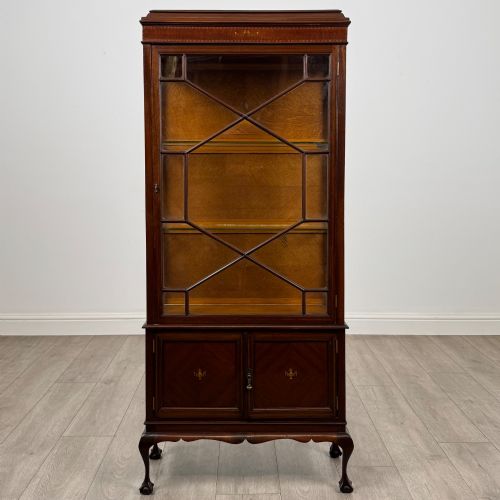
Brown Mahogany Vitrine
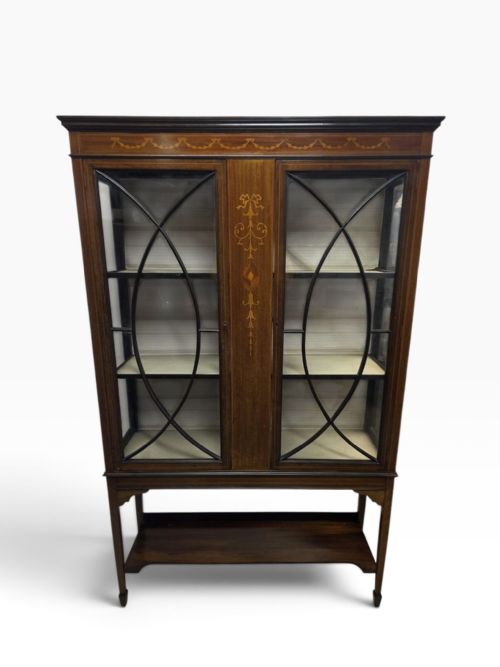
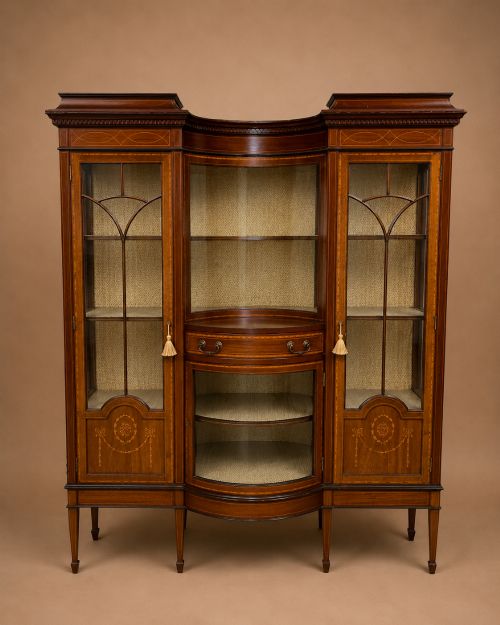
These brown mahogany vitrine pieces display precious objects behind glass, bringing polished timber and refined storage into any room.
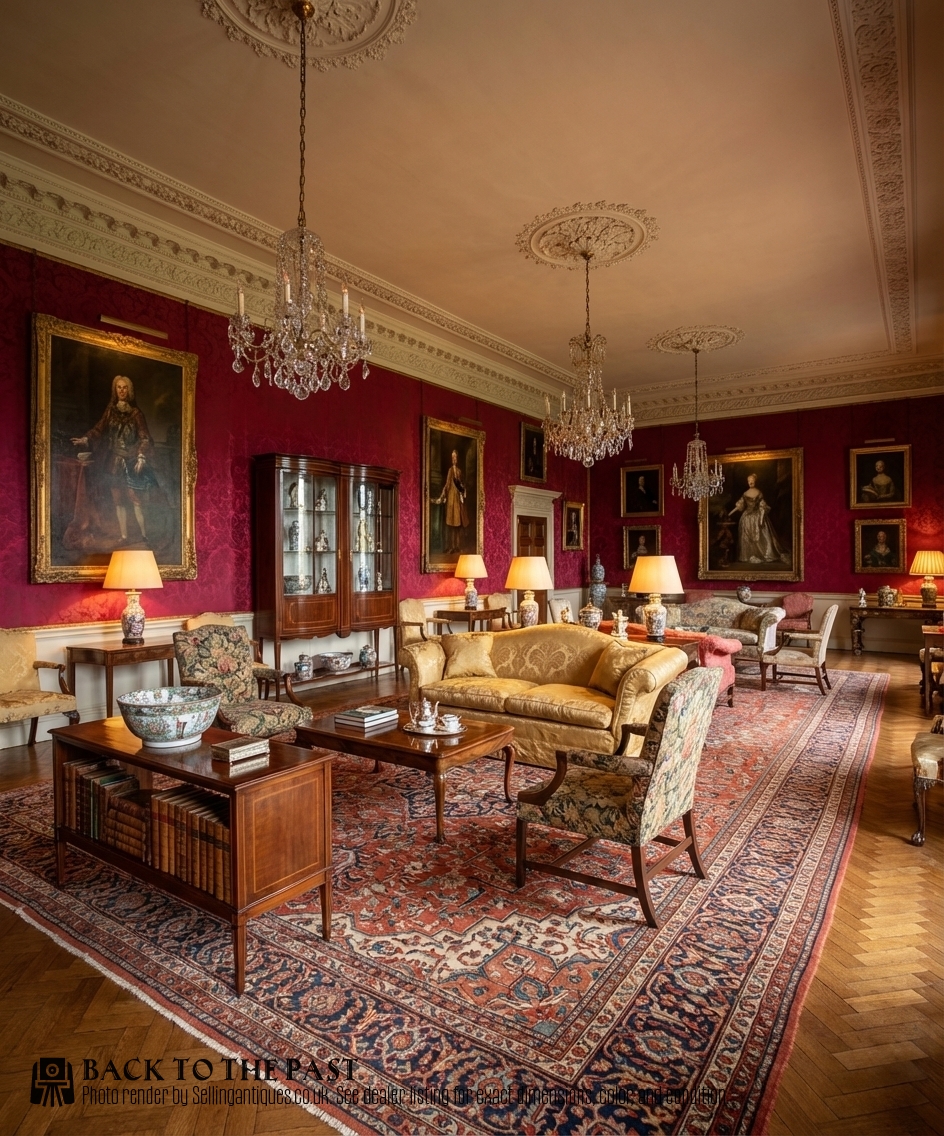
Brown Mahogany Vitrine
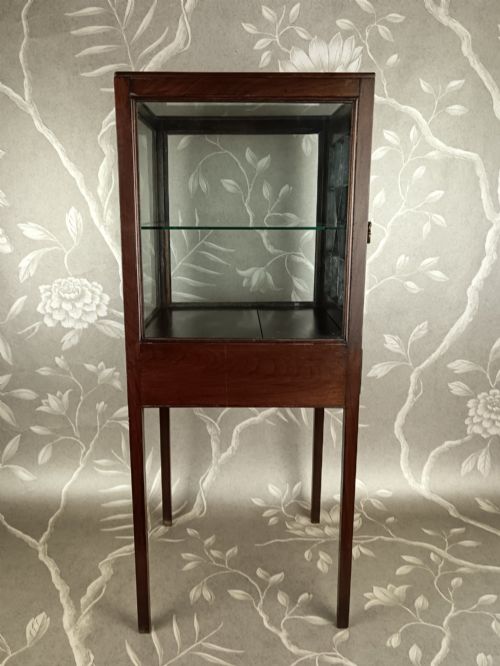
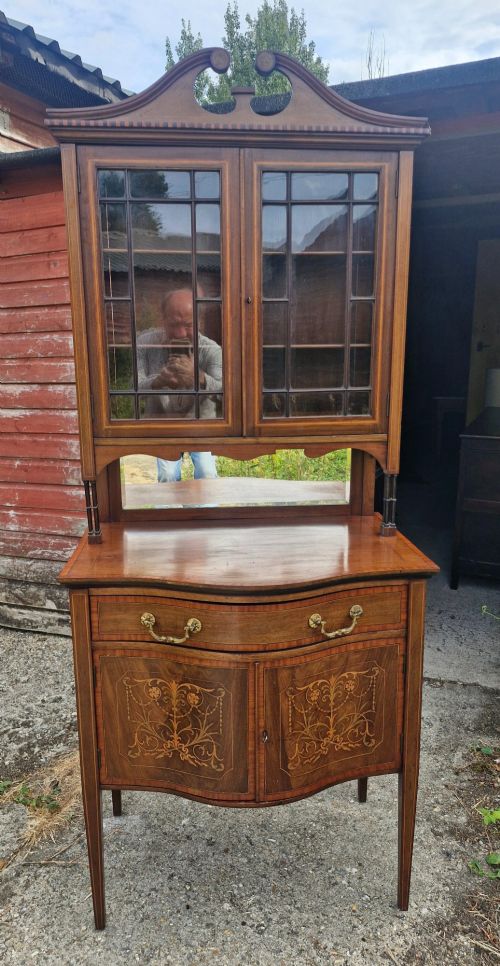
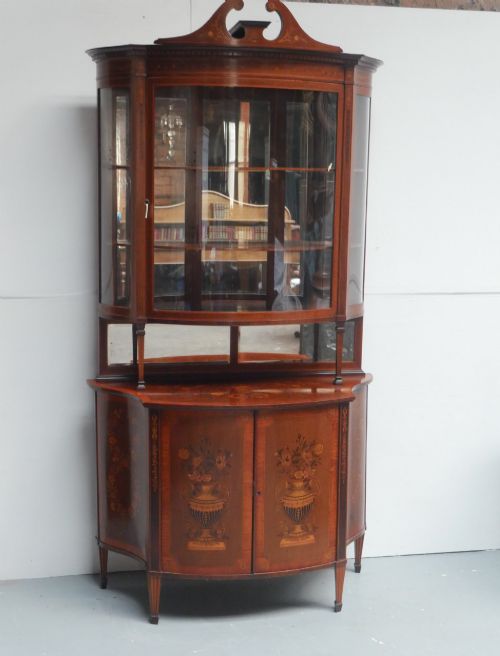
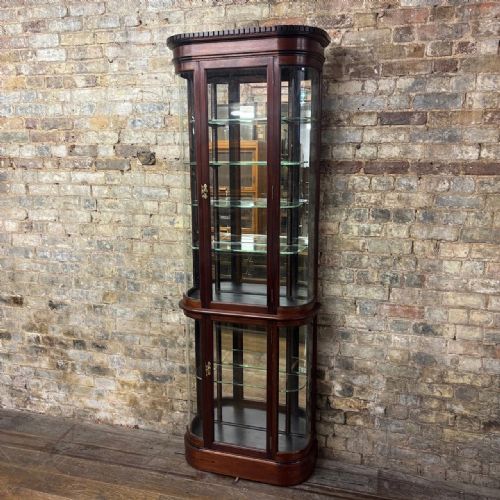
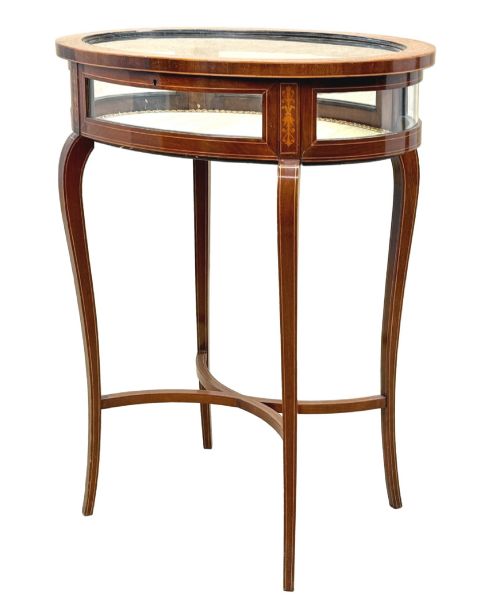
A brown mahogany vitrine functions primarily as a display cabinet for prized possessions, taking forms such as standing display cabinets, corner units, wall cabinets, and bijouterie tables. The search phrase covers these specialised display pieces alongside related display cabinets and bookcases.
The pieces appearing here stem largely from the Edwardian era and the nineteenth century, with occasional eighteenth-century and Georgian examples. Edwardian inlaid variations in mahogany dominate the selection.
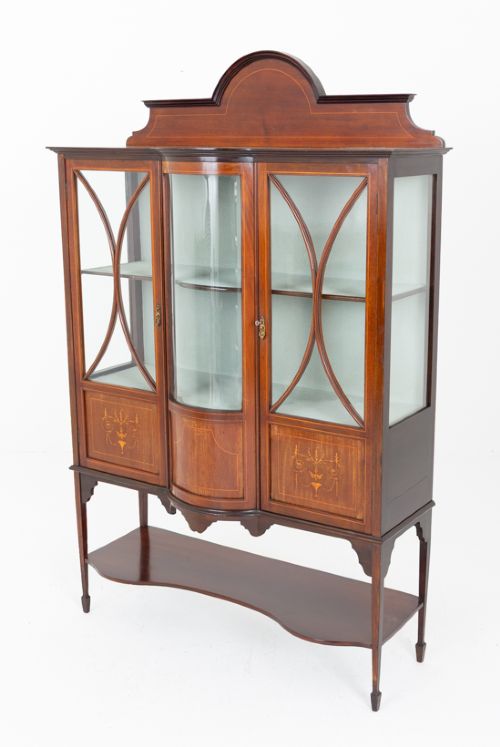
Maker-attributed pieces and specialised formats like serpentine display cases, shop cabinets, and two-part cabinets sit alongside simpler glazed corner cupboards and wall-mounted vitrines.
Materials and Construction Techniques
Cabinetmakers built the foundational carcasses using solid mahogany and mahogany veneers, often incorporating glass panels for visibility and mirrored backs to enhance light reflection inside the display area.
Decoration relied heavily on satinwood inlay, marquetry, wood inlay, and delicate painted details, supplemented by brass fittings, gilt metal mounts, and fabric linings within the display space.
Brown Mahogany Vitrine Retail Price Guide 2026
Typical asking prices for brown mahogany vitrine among the pieces listed under this phrase on Sellingantiques today, from the lower quarter to the upper quarter. They describe what is for sale here now, not the wider market.
Some Edwardian vitrines doubled as tea trolleys, ensuring your biscuits arrived with adequate glass-fronted protection.
Evaluating Craftsmanship and Detail
Quality separates ordinary storage from superior cabinetmaking through the crispness of inlaid motifs, the complexity of serpentine or bow-front shapes, and the inclusion of original painted decoration.
Makers known for exceptional joinery and marquetry, alongside refined hardware like original gilt metal mounts or astragal glazing bars, elevate specific pieces above standard utility cabinets.
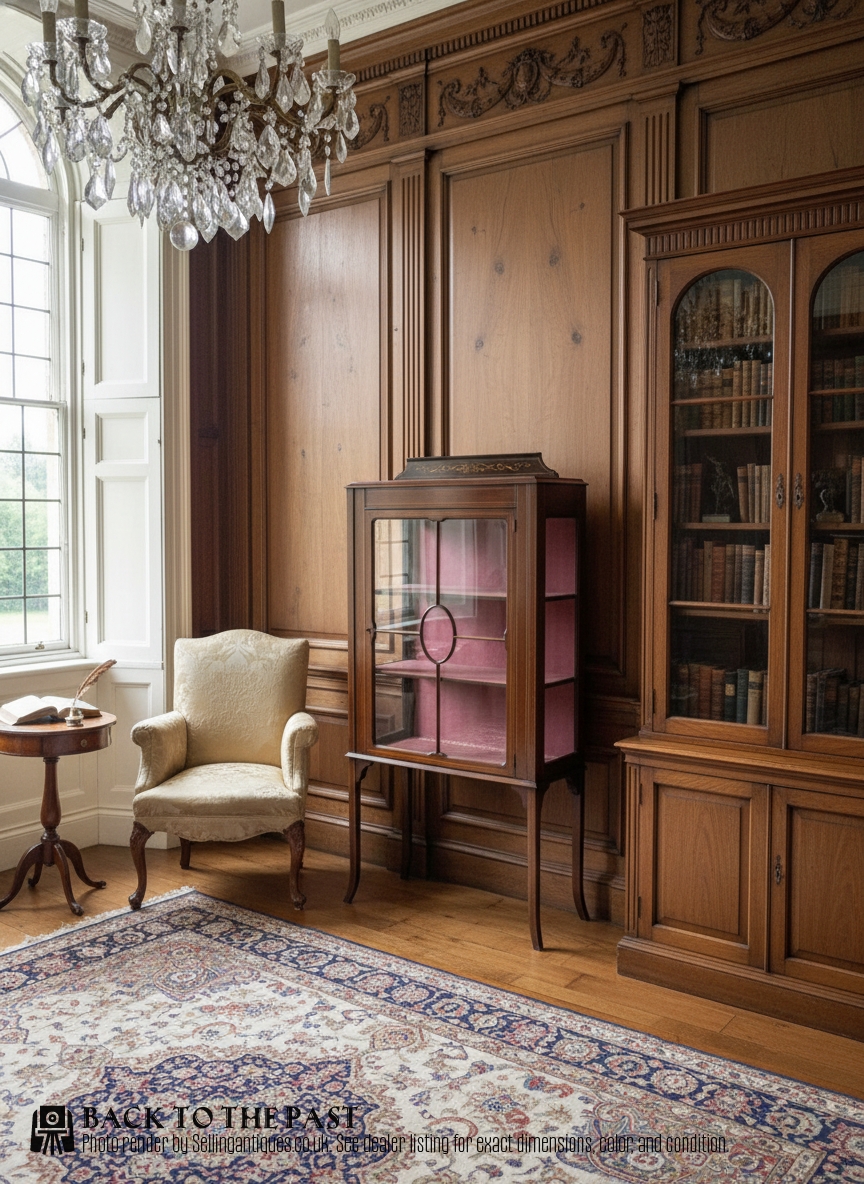
Edwards & Roberts·Maple & Co.
The Brown Mahogany Vitrine Glossary
- Vitrine
- A glass-fronted display cabinet designed for showcasing porcelain, curiosities, or fine objects. These cases protect items from dust while offering maximum visibility.
- Astragal
- A moulding profile used to hold glass panes within a door frame. In glazed cabinets, intersecting astragals create decorative grid patterns.
- Bijouterie
- A low display table or cabinet featuring a glass top and sides intended for small valuable items like jewellery or medals. They often stand on slender legs.
- Marquetry
- Decorative patterns formed by fitting together thin veneers of wood and other materials onto a structural surface. This technique creates elaborate floral or geometric designs.
- Serpentine
- A furniture front characterised by a wavy contour featuring a convex centre flanked by concave curves. This shape requires skilled carpentry to execute properly.
Brown Mahogany Vitrine: Frequently Asked Questions
What is a brown mahogany vitrine used for?
These cabinets serve to display porcelain, silver, and decorative objects safely behind glass doors. The enclosed shelves protect delicate items from dust while keeping them visible.
They also provide a focal point in a room, combining practical storage with polished timber surfaces and decorative inlay work.
How do I date a mahogany display cabinet?
Dating relies on observing construction methods, timber choice, and decorative styles like Edwardian marquetry or Georgian proportions. Cabinet hardware and glass characteristics also offer clues.
Makers' stamps or labels can confirm a specific workshop origin, helping narrow down the decade of manufacture.
Where should I place a corner vitrine?
Corner cabinets fit neatly into unused room angles, making them practical for smaller spaces where a flat-wall cabinet might obstruct movement. They draw the eye upward and utilise vertical room corners effectively.
Positioning them away from direct sunlight protects the timber finish and any fabric linings inside the display area.
What distinguishes an Edwardian vitrine from a Victorian one?
Edwardian examples often feature lighter satinwood inlay, delicate marquetry, and slender proportions influenced by the Sheraton Revival style. They tend to emphasise bright, airy display formats.
Victorian cabinets frequently display heavier mahogany timber, darker finishes, and occasionally more robust Gothic or breakfront architectural influences.