9,641  PAGES BROWSED TODAY PAGES TODAY 36  ANTIQUES UPLOADED TODAY NEW ARRIVALS
ID #SA1205822
FOR SALE
£2,950
Email
Save
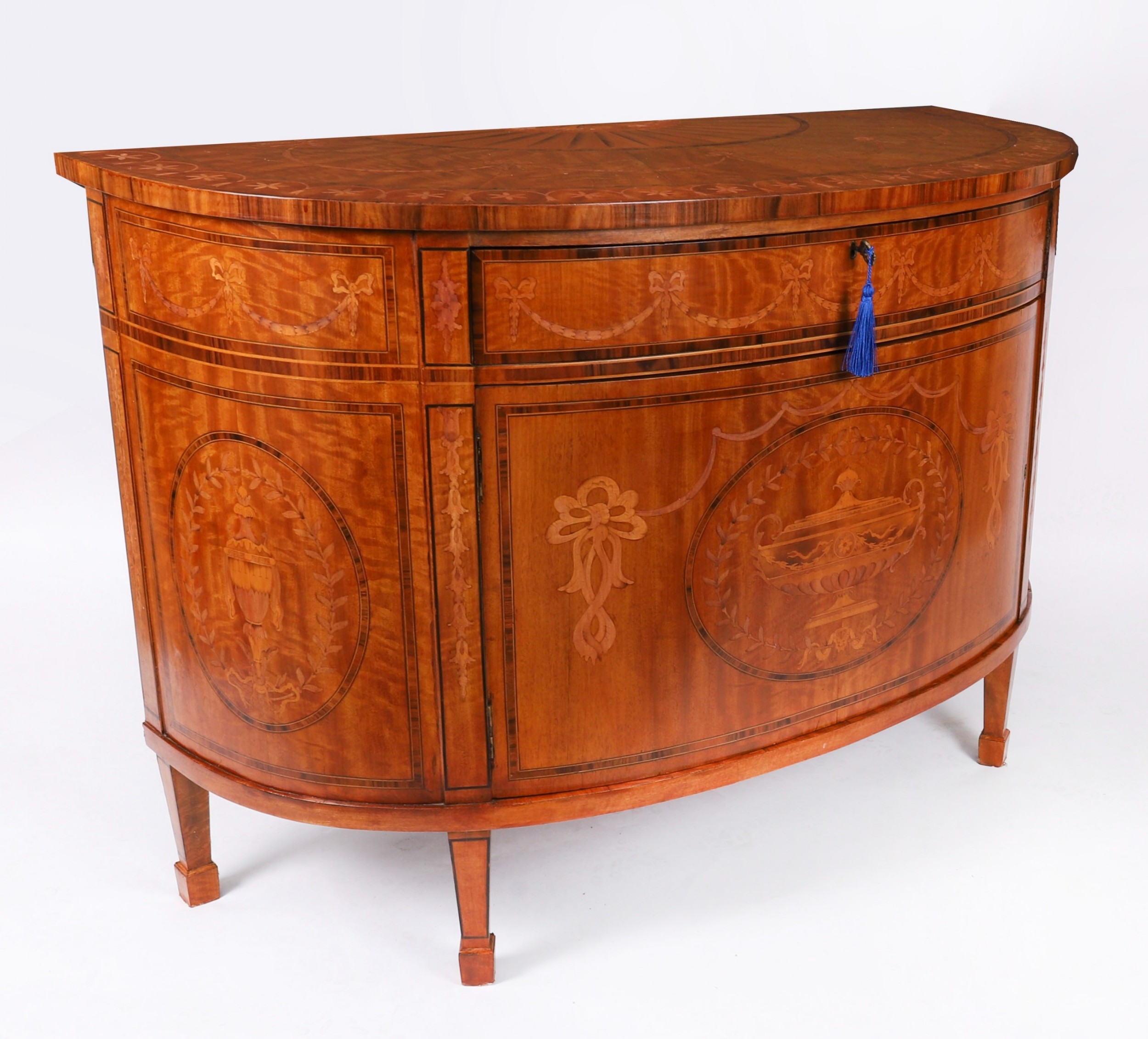
Antique English Sheraton Revival Satinwood and Marquetry Cabinet Circa 1900
Regent Antiques
for sale €3,452     $3,747
£2,950
Regent Antiques

Regent Antiques

Sellingantiques Verified Since Sep 2016
View Dealers Stock Page
  • About Us
    We specialise in english and continental furniture, silver, porcelain and decorative items.
  • Trade Associations
    Regent Antiques is a registered member of LAPADA  CINOA
Id #SA1205822
PDF SHARE
SAVE

Antique English Sheraton Revival Satinwood and Marquetry Cabinet Circa 1900

1900 - 1920
For Sale by Regent Antiques
Description

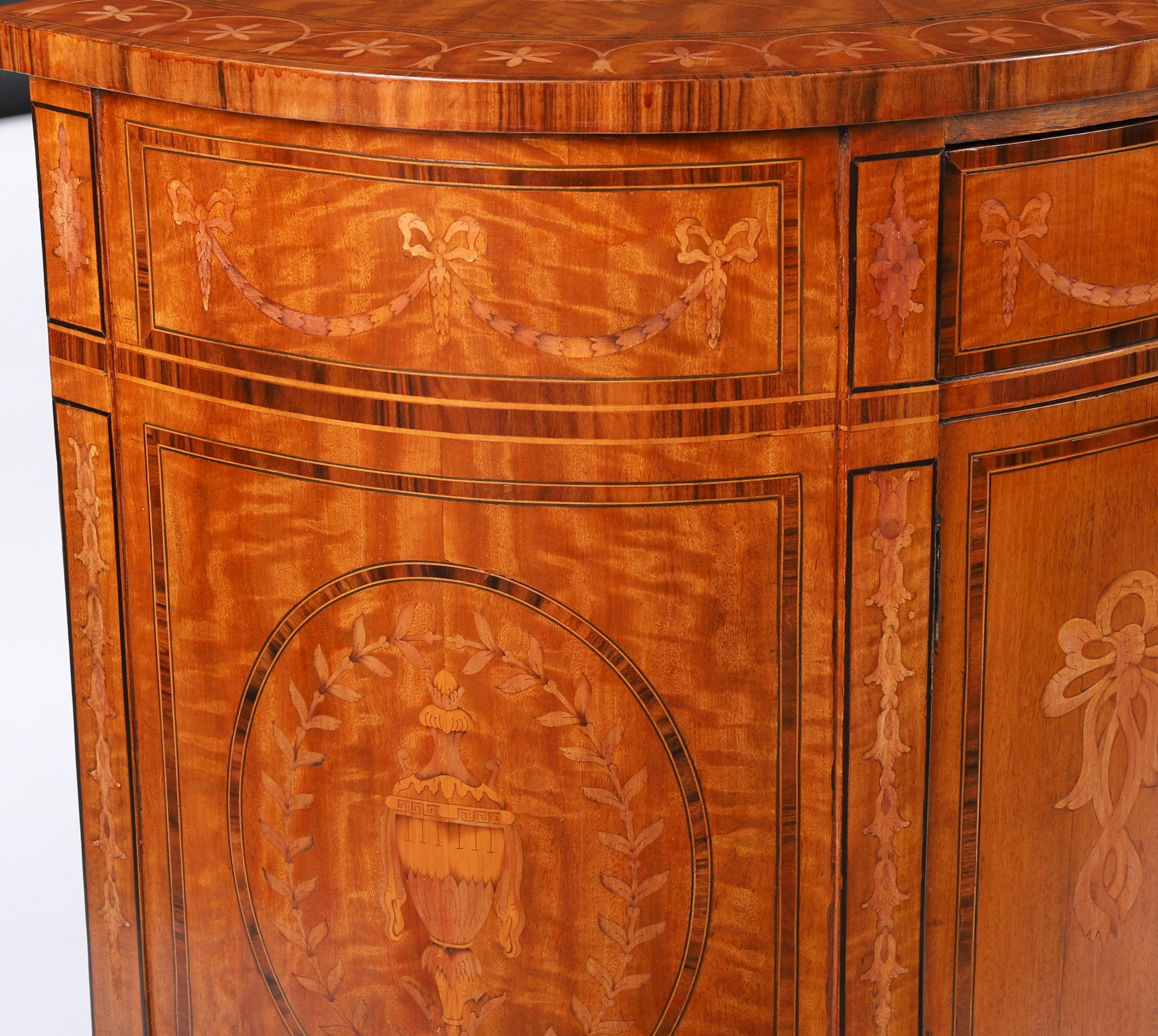
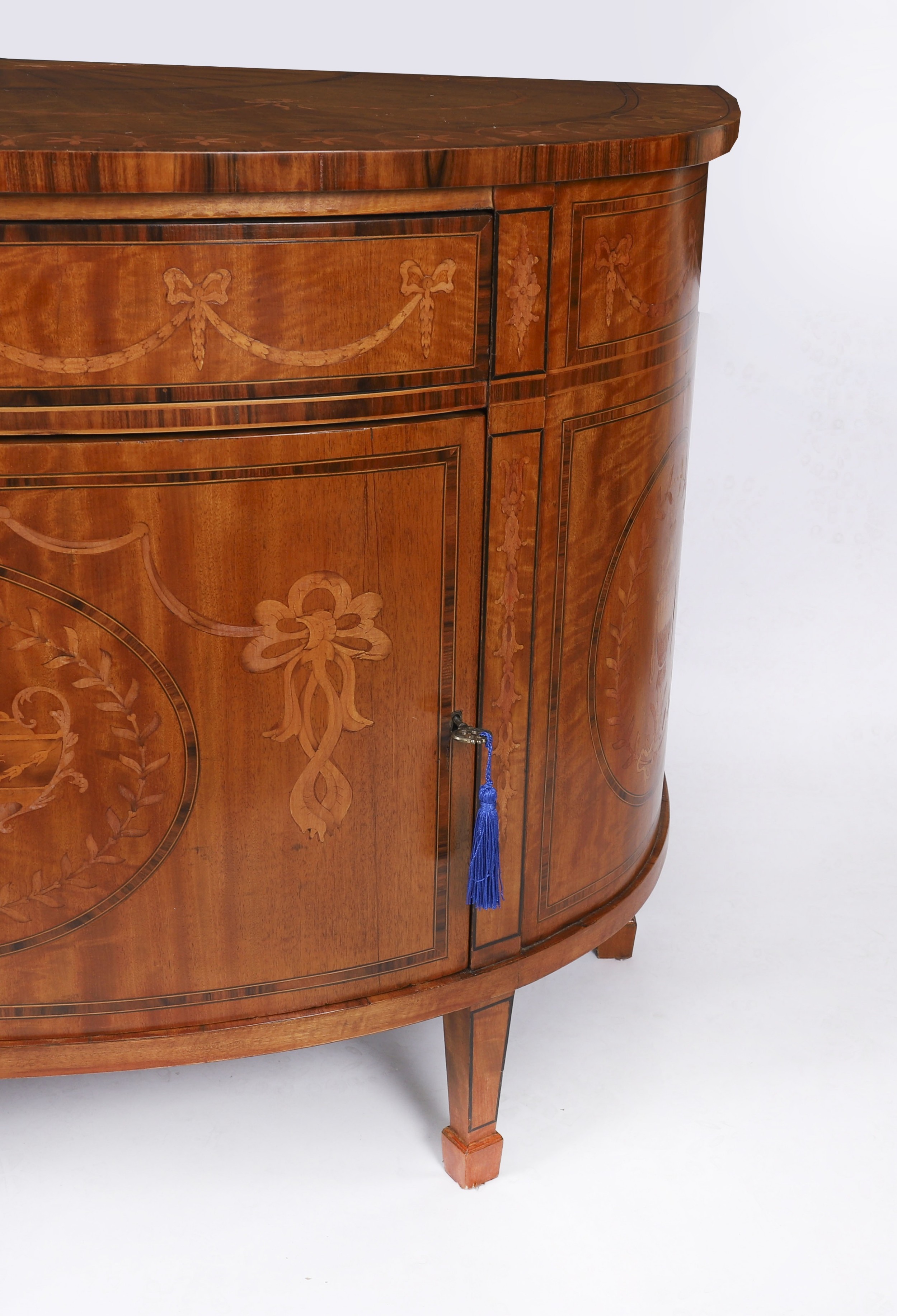
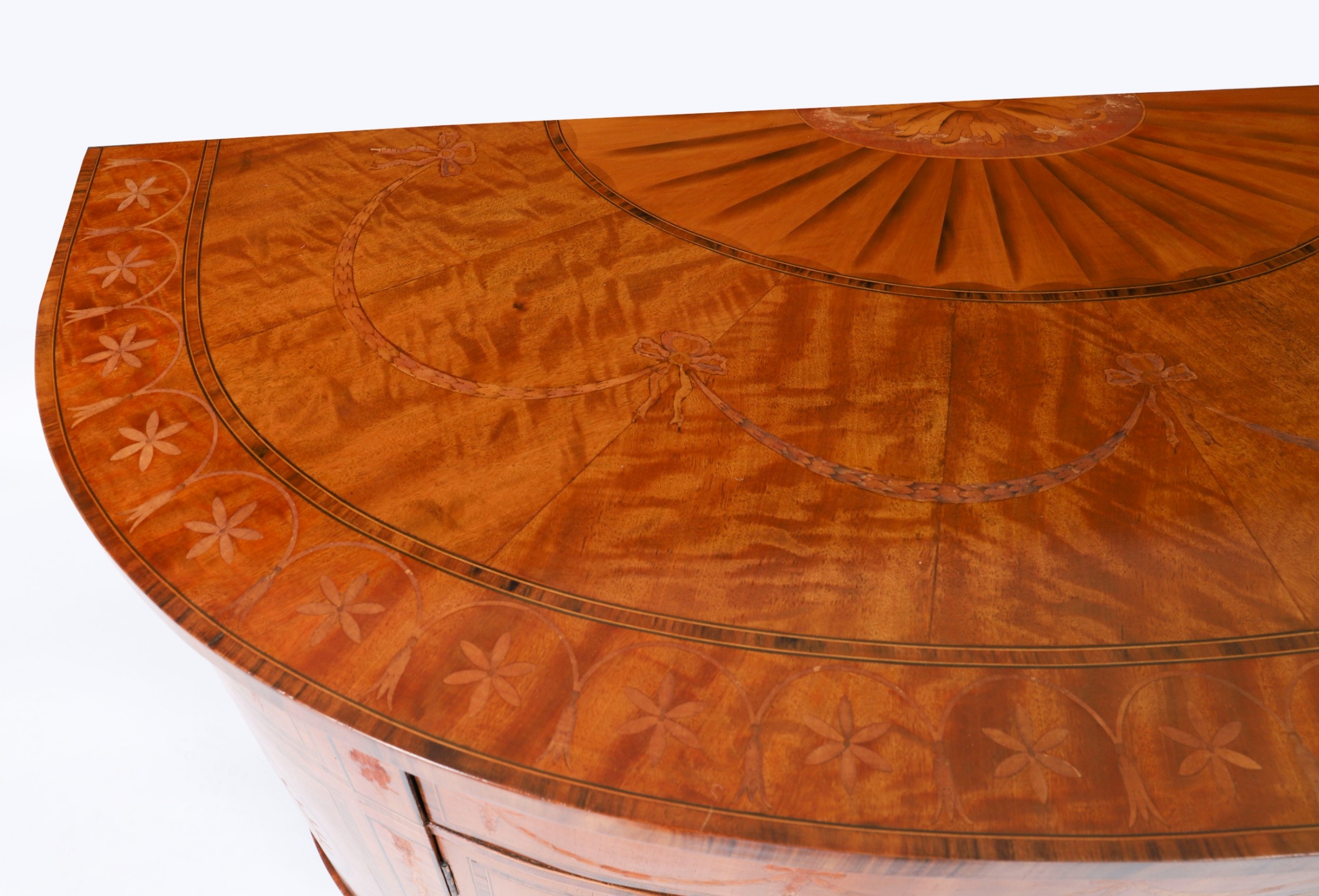
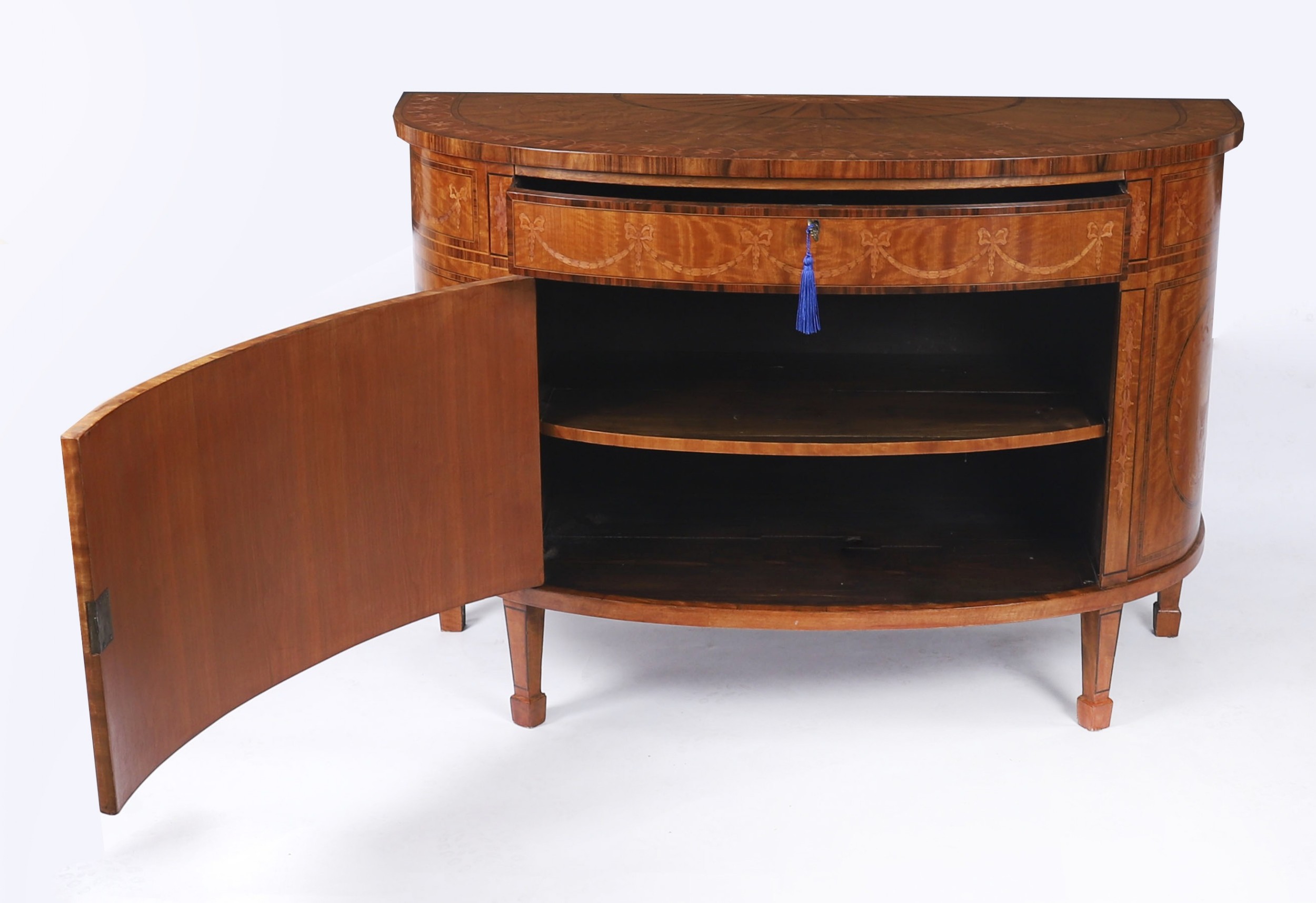
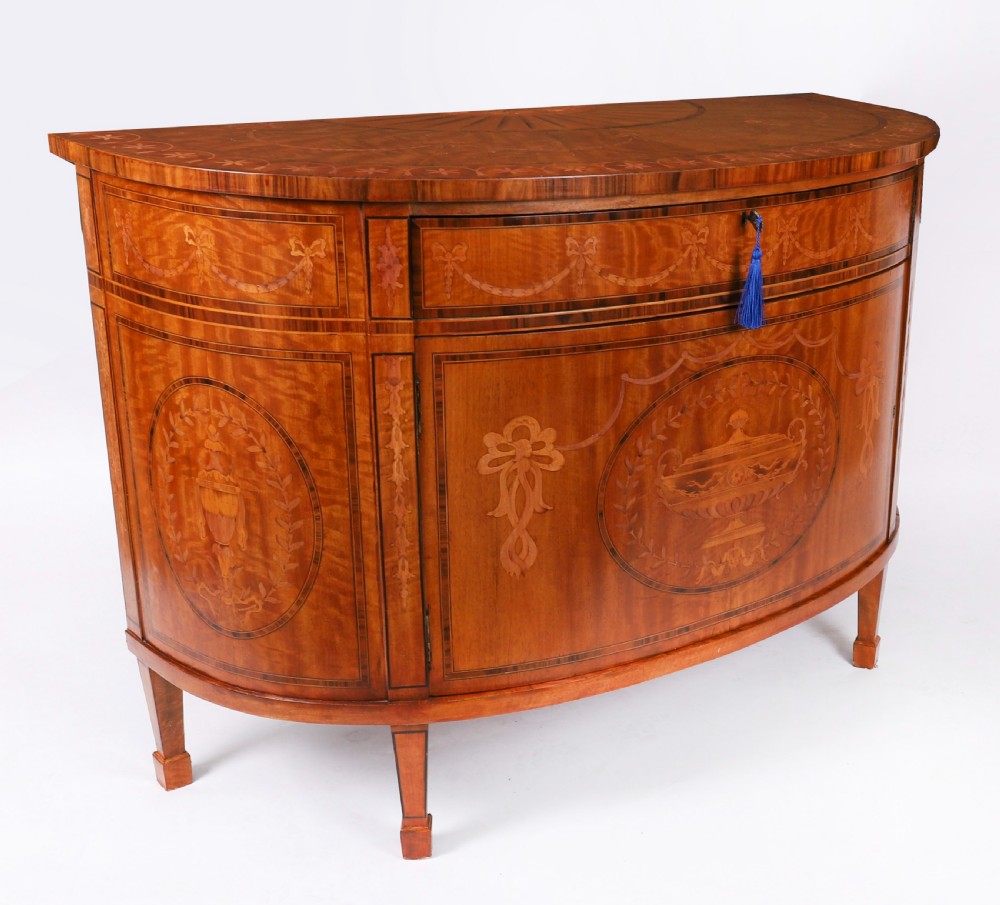
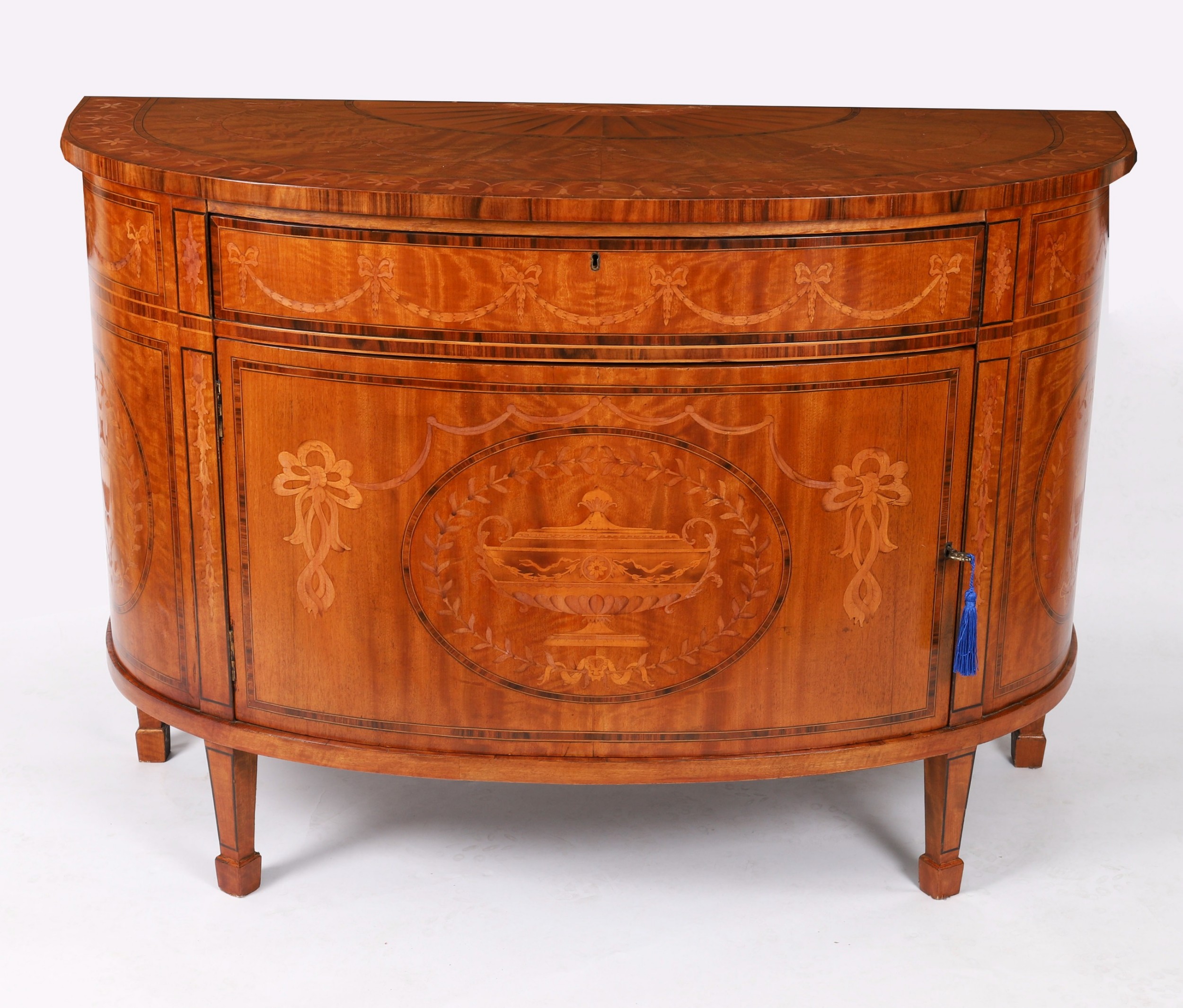
This is a superb antique Sheraton Revival demi-lune satin wood and marquetry cabinet, Circa 1900 in date.

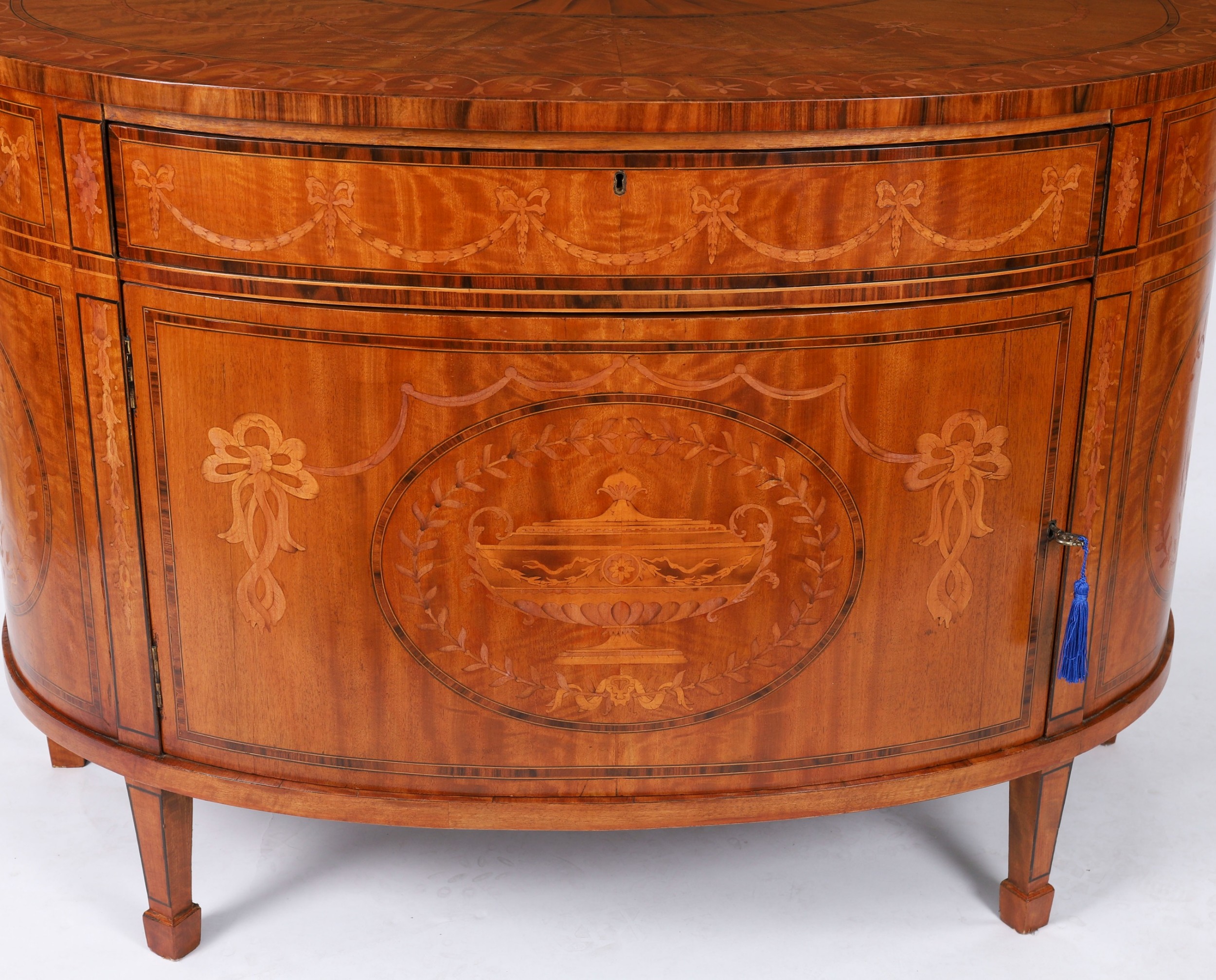
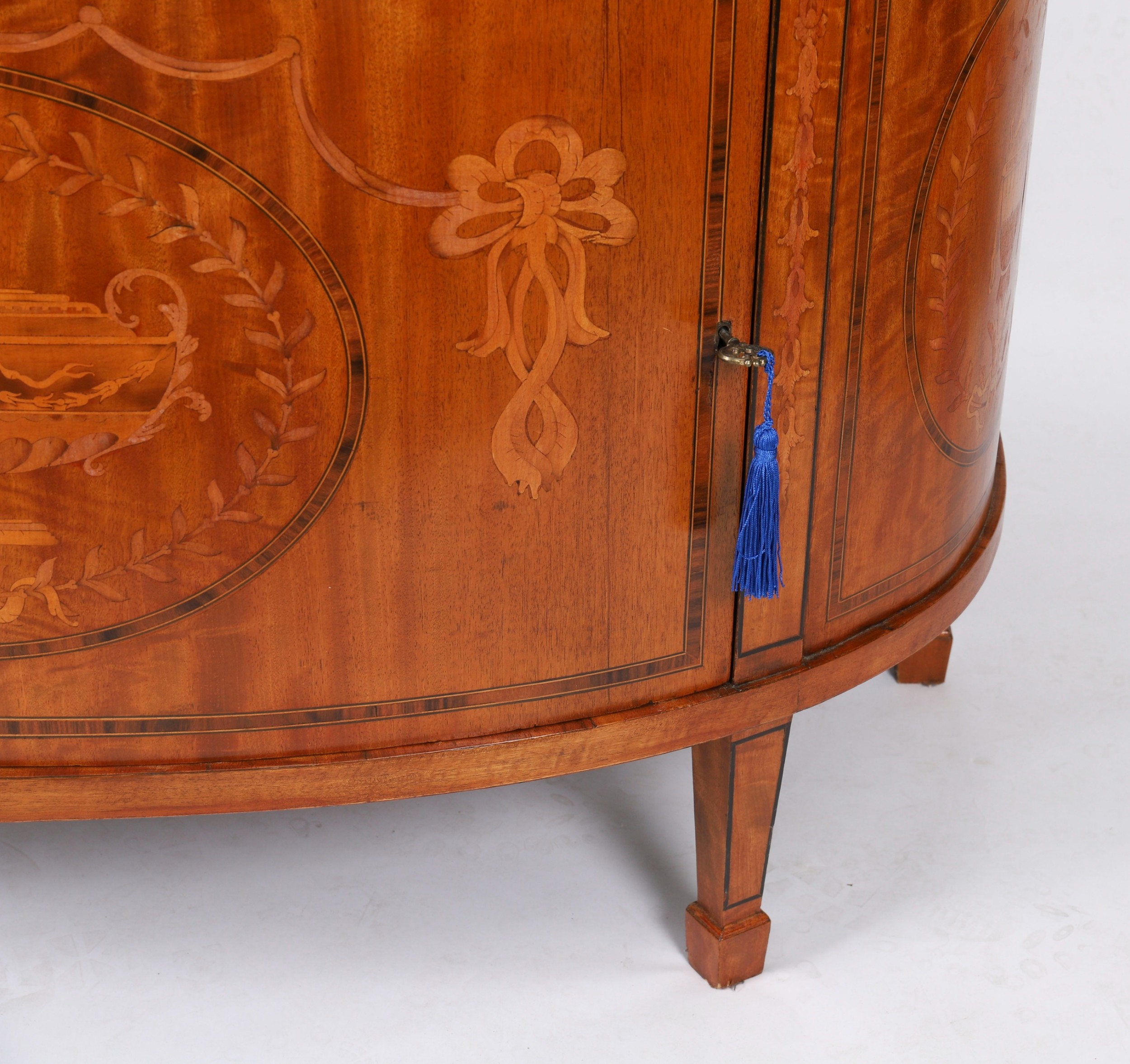
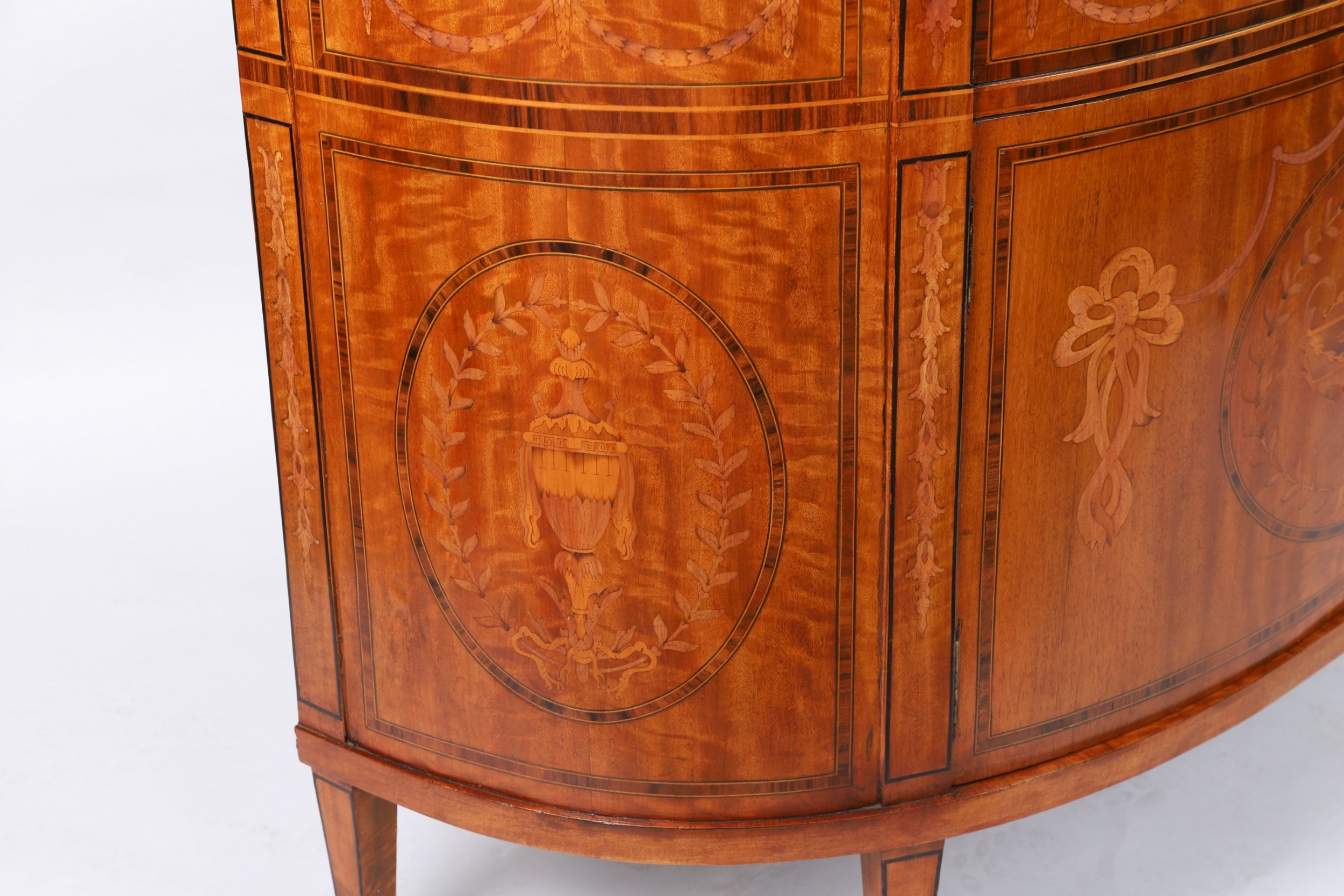
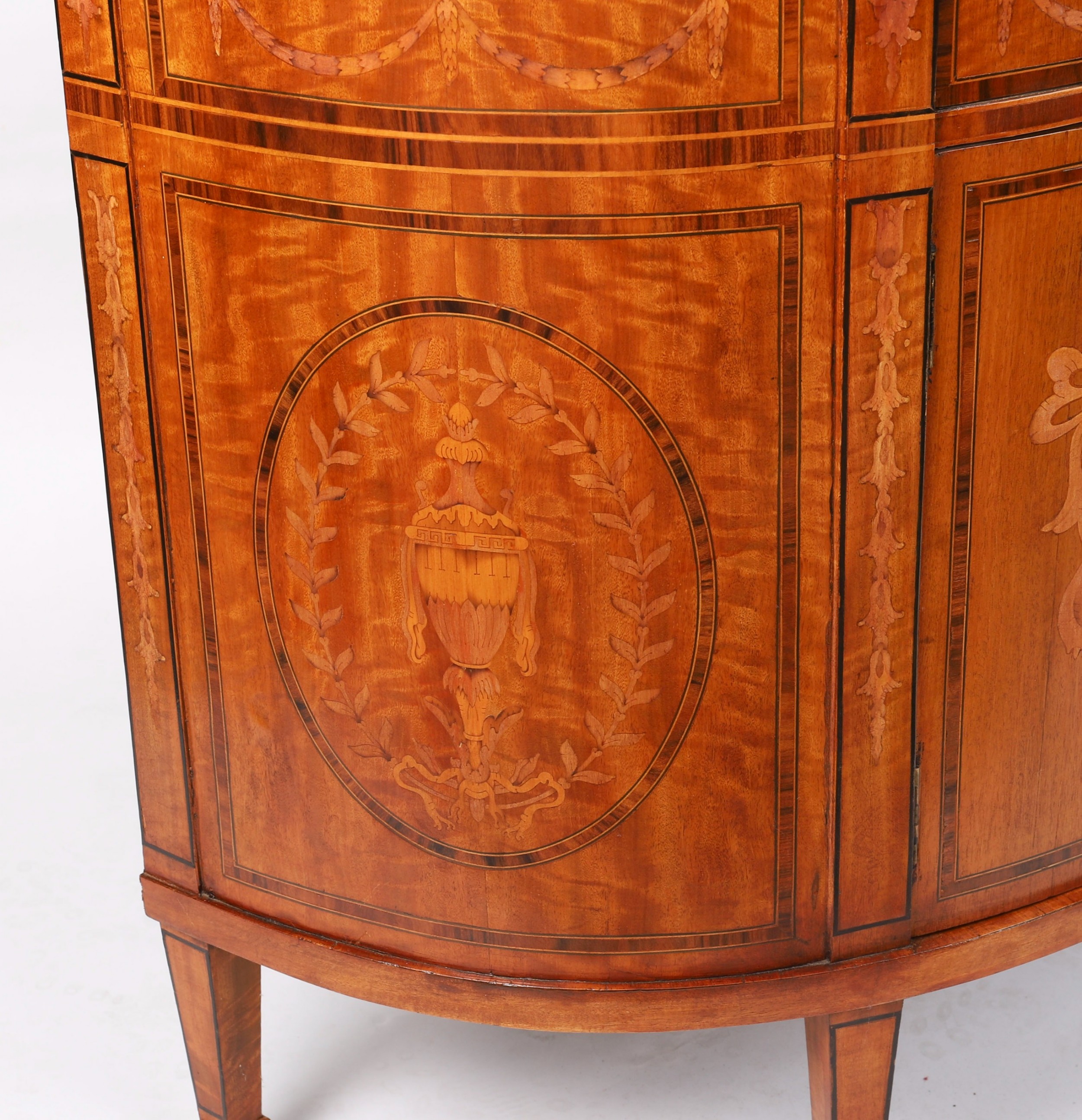
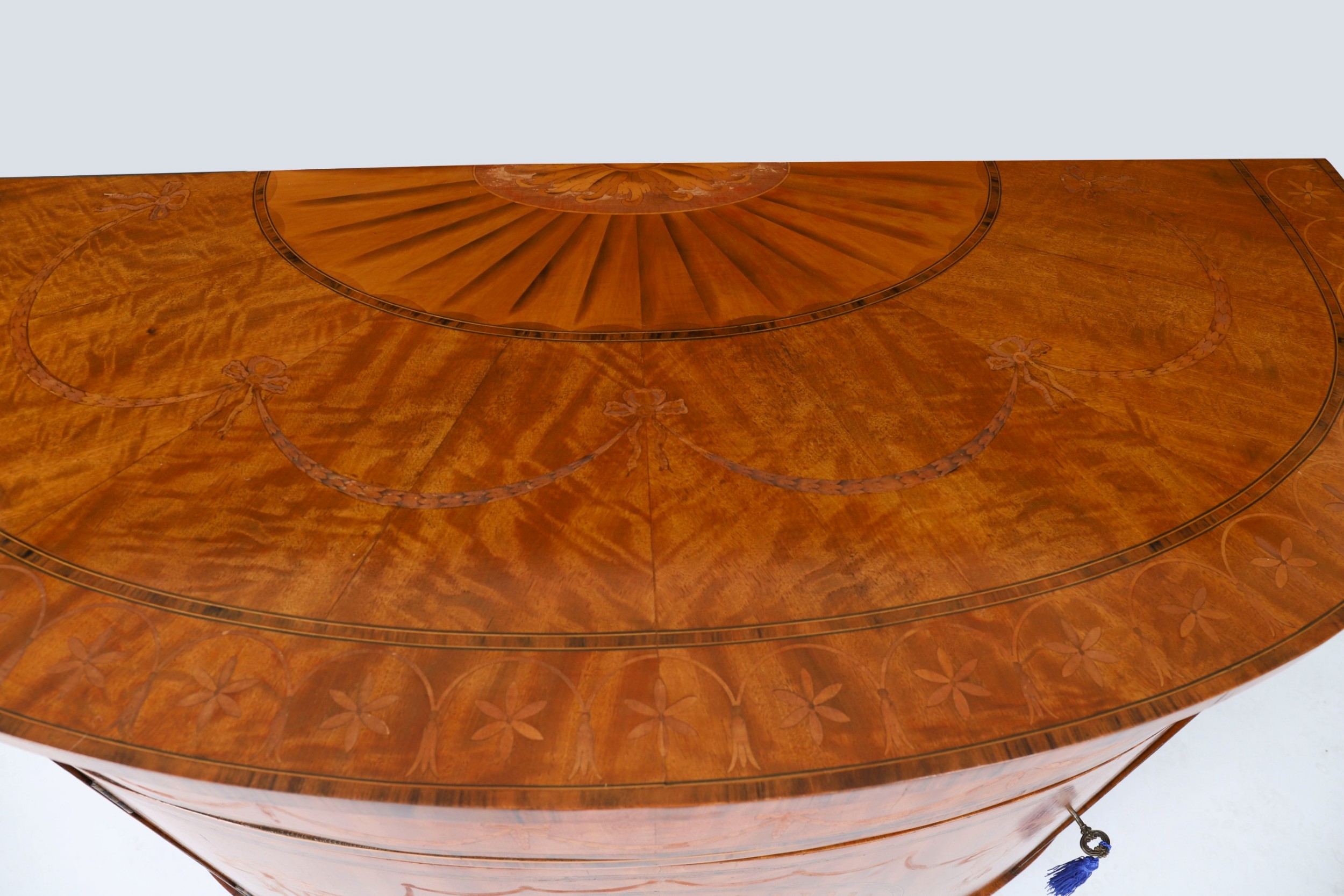
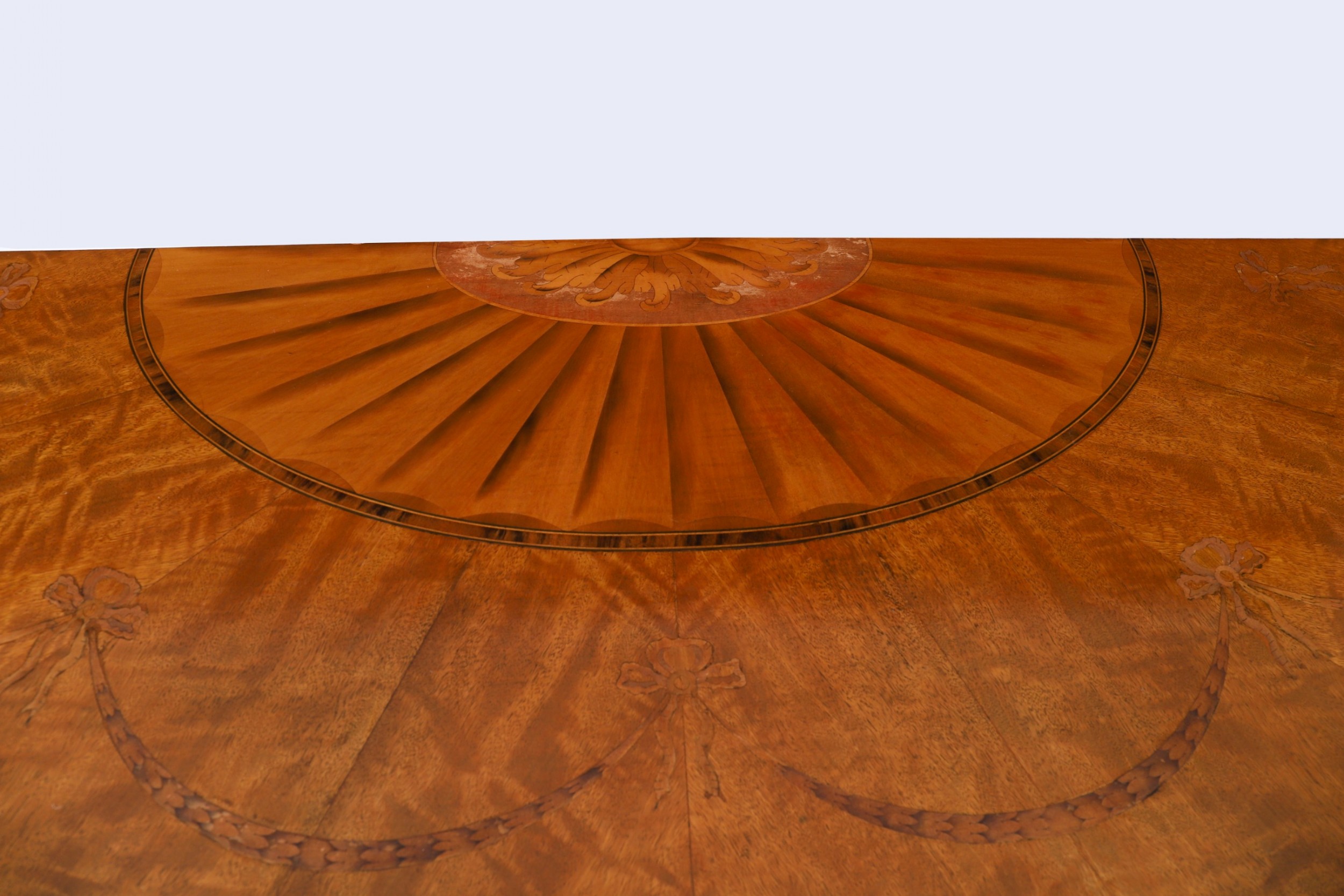
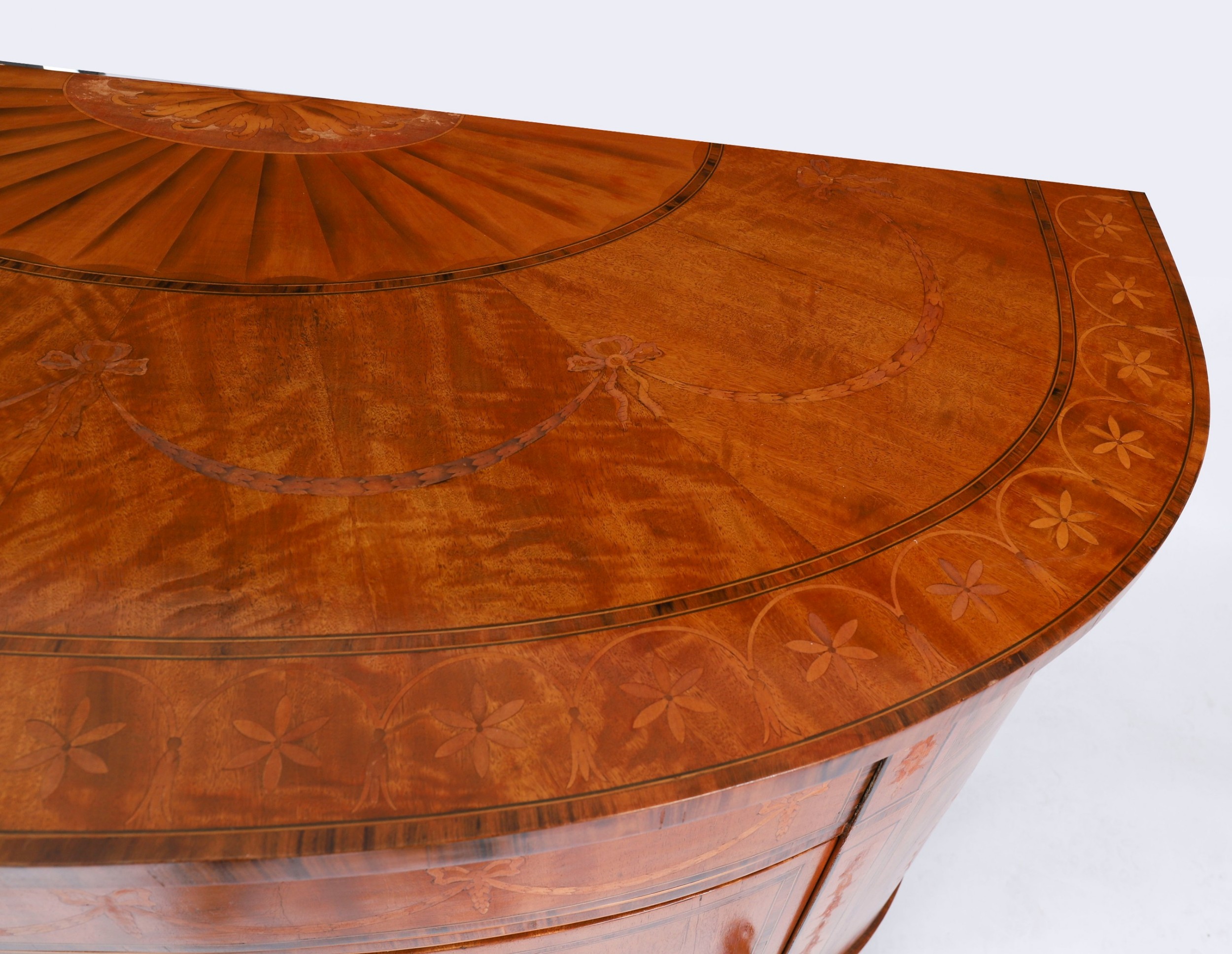
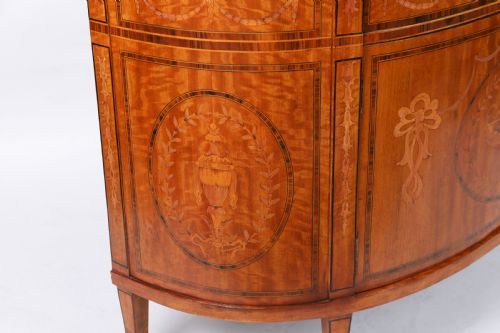
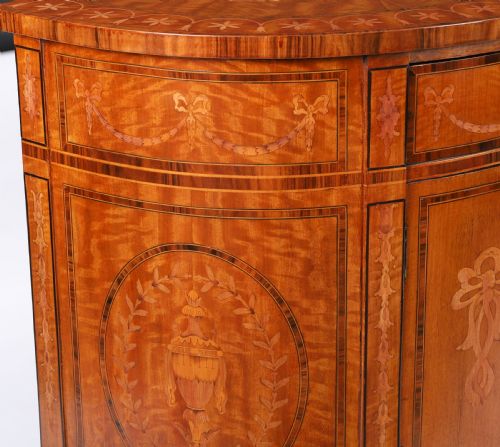
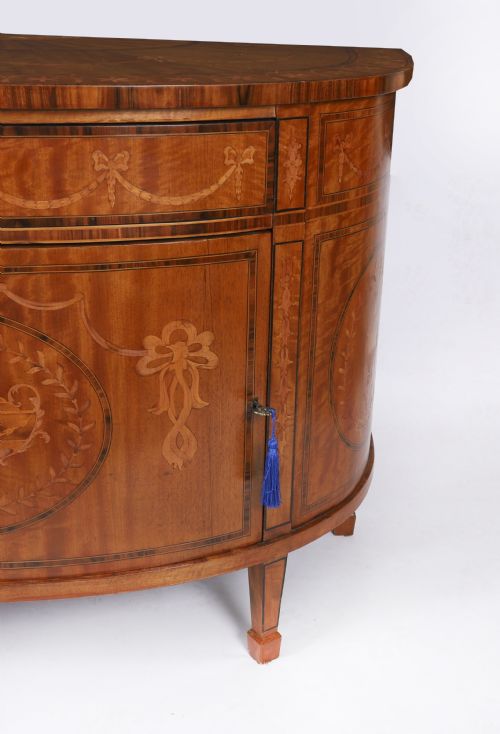
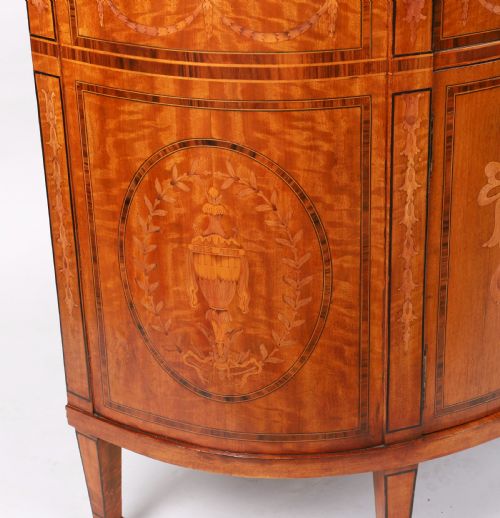
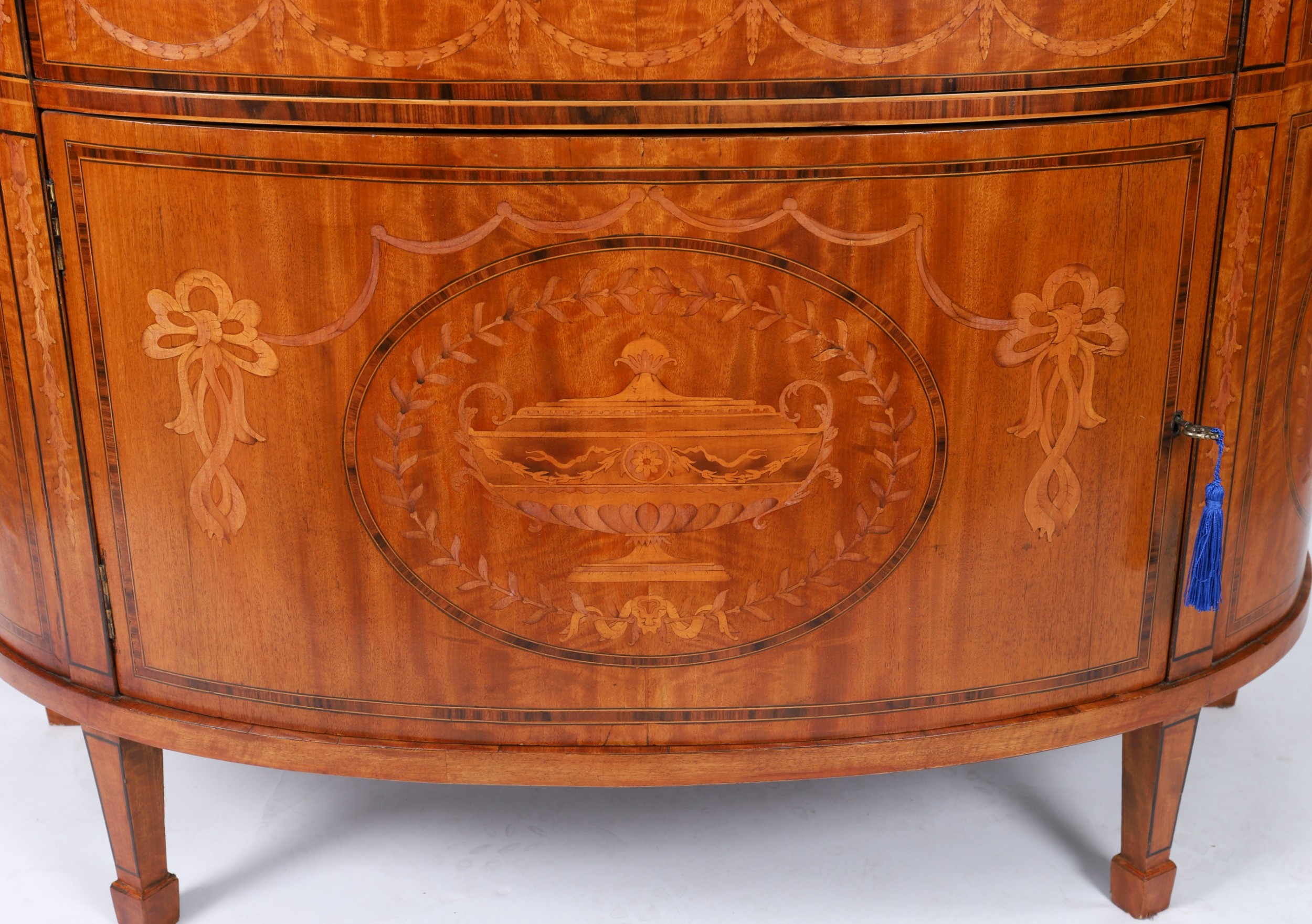
The cabinet is beautifully crossbanded and decorated with ribbons, swags and classical urns, it features a capacious central drawer in the frieze and a cupboard door below with  a  central shelf. It stands on short square tapering legs that terminate in spade feet.
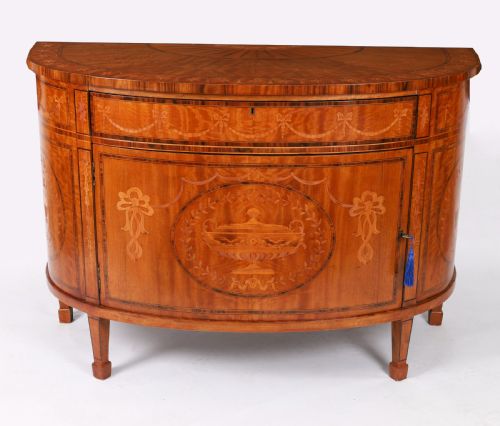
This lovely cabinet will instantly enhance the style of one special room in your home and is sure to receive the maximum amount of attention wherever it is placed.

Condition:

In really excellent condition having been beautifully cleaned, polished and waxed in our workshops, please see photos for confirmation.
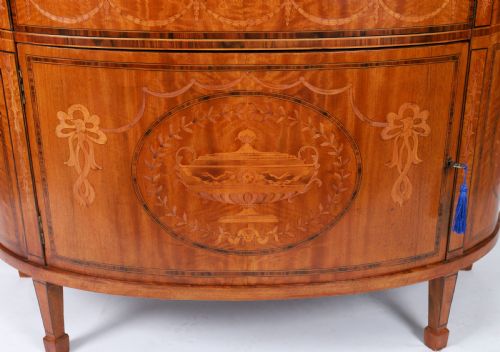
Dimensions in cm:

Height 92 cm x Width 132 cm x Depth 56 cm

Dimensions in inches:

Height 3 foot x Width 4 foot, 4 inches x Depth 1 foot, 10 inches

Thomas Sheraton

(1751 - 1806) was an English cabinetmaker and one of the leading exponents of Neoclassicism. Sheraton gave his name to a style of furniture characterised by a feminine refinement of late Georgian styles and became the most powerful source of inspiration behind the furniture of the late 18th century. His four-part Cabinet-Maker and Upholsterers’ Drawing Book greatly influenced English and American design.
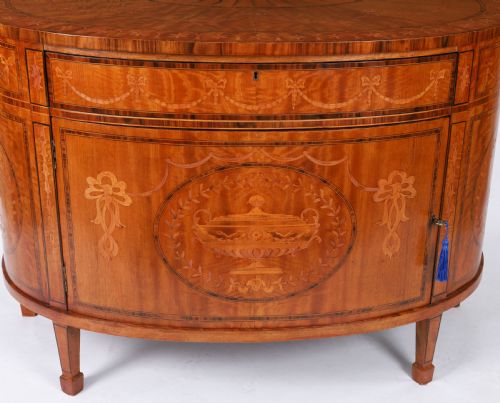
Sheraton was apprenticed to a cabinetmaker, but he became better known as an inventor, artist, mystic, and religious controversialist. Initially he wrote on theological subjects, describing himself as a “mechanic, one who never had the advantage of collegiate or academical education.” He settled in London c. 1790, and his trade card gave his address as Wardour Street, Soho.
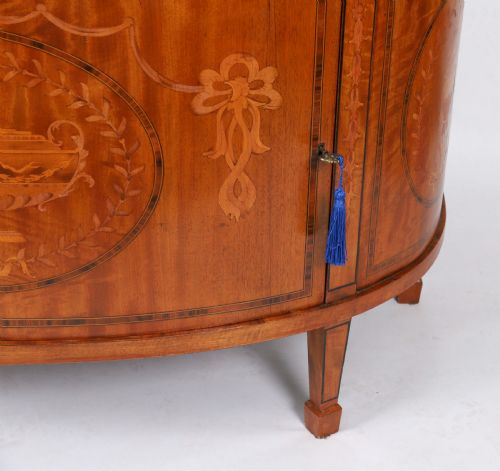
Supporting himself mainly as an author, Sheraton wrote Drawing Book (1791), the first part of which is devoted to somewhat naive, verbose dissertations on perspective, architecture, and geometry and the second part, on which his reputation is certainly based, is filled with plates that are admirable in draftsmanship, form, and proportion.
In 1803 Sheraton, who had been ordained a Baptist minister in 1800, published his Cabinet Dictionary (with plates), containing An Explanation of All Terms Used in the Cabinet, Chair and Upholstery Branches with Dictionary for Varnishing, Polishing and Gilding.
Some of the designs in this work, venturing well into the Regency style, are markedly unconventional. That he was a fashionable cabinetmaker is remarkable, for he was poor, his home of necessity half shop. It cannot be presumed that he was the maker of those examples even closely resembling his plates.
Although Sheraton undoubtedly borrowed from other cabinetmakers, most of the plates in his early publications are supposedly his own designs. The term Sheraton has been recklessly bestowed upon vast quantities of late 18th-century painted and inlaid satinwood furniture, but, properly understood and used in a generic sense, Sheraton is an appropriate label recognizing a mastermind behind the period. The opinion that his lack of success was caused by his assertive character is hypothetical.
Marquetry

is decorative artistry where pieces of material of different colours are inserted into surface wood veneer to form intricate patterns such as scrolls or flowers.

The technique of veneered marquetry had its inspiration in 16th century Florence. Marquetry elaborated upon Florentine techniques of inlaying solid marble slabs with designs formed of fitted marbles, jaspers and semi-precious stones. This work, called opere di commessi, has medieval parallels in Central Italian "Cosmati"-work of inlaid marble floors, altars and columns. The technique is known in English as pietra dura, for the "hardstones" used: onyx, jasper, cornelian, lapis lazuli and colored marbles. In Florence, the Chapel of the Medici at San Lorenzo is completely covered in a colored marble facing using this demanding jig-sawn technique.

Physical Dimensions
Height
92cm (36.22")
Width
132cm (51.97")
Depth
56cm (22.05")
Declaration

Regent Antiques has dated this Satinwood Marquetry Demilune Cabinet to the 1900s.

Reference Numbers
Sellingantiques Reference
SA1205822
Dealers Internal Reference
A5118
Description
This is a superb antique Sheraton Revival demi-lune satin wood and marquetry cabinet, Circa 1900 in date.
The cabinet is beautifully crossbanded and decorated with ribbons, swags and classical urns, it features a capacious central drawer in the frieze and a cupboard door below with  a  central shelf.
Regent Antiques

It stands on short square tapering legs that terminate in spade feet.

fig 1. A semicircular antique satinwood demilune cabinet featuring urn and swag marquetry inlays, a top drawer with a blue tassel key, and slender tapered legs.
fig 1. Antique English Sheraton Revival Satinwood and Marquetry Cabinet Circa 1900

This lovely cabinet will instantly enhance the style of one special room in your home and is sure to receive the maximum amount of attention wherever it is placed.

Condition:

In really excellent condition having been beautifully cleaned, polished and waxed in our workshops, please see photos for confirmation.

fig 2. A semicircular antique satinwood demilune cabinet featuring urn and swag marquetry inlays, a top drawer with a blue tassel key, and slender tapered legs.
fig 2. Antique English Sheraton Revival Satinwood and Marquetry Cabinet Circa 1900

Dimensions in cm:

Height 92 cm x Width 132 cm x Depth 56 cm

Dimensions in inches:

Height 3 foot x Width 4 foot, 4 inches x Depth 1 foot, 10 inches

Thomas Sheraton

(1751 - 1806) was an English cabinetmaker and one of the leading exponents of Neoclassicism. Sheraton gave his name to a style of furniture characterised by a feminine refinement of late Georgian styles and became the most powerful source of inspiration behind the furniture of the late 18th century. His four-part Cabinet-Maker and Upholsterers’ Drawing Book greatly influenced English and American design.

fig 3. A semicircular antique satinwood demilune cabinet featuring urn and swag marquetry inlays, a top drawer with a blue tassel key, and slender tapered legs.
fig 3. Antique English Sheraton Revival Satinwood and Marquetry Cabinet Circa 1900

Sheraton was apprenticed to a cabinetmaker, but he became better known as an inventor, artist, mystic, and religious controversialist. Initially he wrote on theological subjects, describing himself as a “mechanic, one who never had the advantage of collegiate or academical education.” He settled in London c. 1790, and his trade card gave his address as Wardour Street, Soho.

fig 4. A semicircular antique satinwood demilune cabinet featuring urn and swag marquetry inlays, a top drawer with a blue tassel key, and slender tapered legs.
fig 4. Antique English Sheraton Revival Satinwood and Marquetry Cabinet Circa 1900

Supporting himself mainly as an author, Sheraton wrote Drawing Book (1791), the first part of which is devoted to somewhat naive, verbose dissertations on perspective, architecture, and geometry and the second part, on which his reputation is certainly based, is filled with plates that are admirable in draftsmanship, form, and proportion.

fig 5. A semicircular antique satinwood demilune cabinet featuring urn and swag marquetry inlays, a top drawer with a blue tassel key, and slender tapered legs.
fig 5. Antique English Sheraton Revival Satinwood and Marquetry Cabinet Circa 1900

In 1803 Sheraton, who had been ordained a Baptist minister in 1800, published his Cabinet Dictionary (with plates), containing An Explanation of All Terms Used in the Cabinet, Chair and Upholstery Branches with Dictionary for Varnishing, Polishing and Gilding.

fig 6. A semicircular antique satinwood demilune cabinet featuring urn and swag marquetry inlays, a top drawer with a blue tassel key, and slender tapered legs.
fig 6. Antique English Sheraton Revival Satinwood and Marquetry Cabinet Circa 1900

Some of the designs in this work, venturing well into the Regency style, are markedly unconventional. That he was a fashionable cabinetmaker is remarkable, for he was poor, his home of necessity half shop. It cannot be presumed that he was the maker of those examples even closely resembling his plates.

fig 7. A semicircular antique satinwood demilune cabinet featuring urn and swag marquetry inlays, a top drawer with a blue tassel key, and slender tapered legs.
fig 7. Antique English Sheraton Revival Satinwood and Marquetry Cabinet Circa 1900

Although Sheraton undoubtedly borrowed from other cabinetmakers, most of the plates in his early publications are supposedly his own designs. The term Sheraton has been recklessly bestowed upon vast quantities of late 18th-century painted and inlaid satinwood furniture, but, properly understood and used in a generic sense, Sheraton is an appropriate label recognizing a mastermind behind the period. The opinion that his lack of success was caused by his assertive character is hypothetical.

fig 8. A semicircular antique satinwood demilune cabinet featuring urn and swag marquetry inlays, a top drawer with a blue tassel key, and slender tapered legs.
fig 8. Antique English Sheraton Revival Satinwood and Marquetry Cabinet Circa 1900

Marquetry

is decorative artistry where pieces of material of different colours are inserted into surface wood veneer to form intricate patterns such as scrolls or flowers.

The technique of veneered marquetry had its inspiration in 16th century Florence. Marquetry elaborated upon Florentine techniques of inlaying solid marble slabs with designs formed of fitted marbles, jaspers and semi-precious stones. This work, called opere di commessi, has medieval parallels in Central Italian "Cosmati"-work of inlaid marble floors, altars and columns. The technique is known in English as pietra dura, for the "hardstones" used: onyx, jasper, cornelian, lapis lazuli and colored marbles. In Florence, the Chapel of the Medici at San Lorenzo is completely covered in a colored marble facing using this demanding jig-sawn technique.

Height
92cm (36.22")
Width
132cm (51.97")
Depth
56cm (22.05")
Date of Manufacture

Regent Antiques has dated this Satinwood Marquetry Demilune Cabinet to the 1900s.

Reference Numbers
Sellingantiques Ref
SA1205822
Dealers Internal Ref
A5118
Regent Antiques
Regent Antiques
Sellingantiques verified Since Sep 2016

We specialise in english and continental furniture, silver, porcelain and decorative items.

Dealer Profile

You can view the stock and full dealer information on the Regent Antiques Profile Page

Trade Associations

Regent Antiques is a registered member of LAPADA  CINOA
PDF SHARE
SAVE
A semicircular antique satinwood demilune cabinet featuring urn and swag marquetry inlays, a top drawer with a blue tassel key, and slender tapered legs.
1 / 14
Archive I A semicircular antique satinwood demilune cabinet featuring urn and swag marquetry inlays, a top drawer with a blue tassel key, and slender tapered legs.

Antique English Sheraton Revival Satinwood and Marquetry Cabinet Circa 1900
Archive II A semicircular antique satinwood demilune cabinet featuring urn and swag marquetry inlays, a top drawer with a blue tassel key, and slender tapered legs. View II
Archive III A semicircular antique satinwood demilune cabinet featuring urn and swag marquetry inlays, a top drawer with a blue tassel key, and slender tapered legs. View III
Archive IV A semicircular antique satinwood demilune cabinet featuring urn and swag marquetry inlays, a top drawer with a blue tassel key, and slender tapered legs. View IV
Archive V A semicircular antique satinwood demilune cabinet featuring urn and swag marquetry inlays, a top drawer with a blue tassel key, and slender tapered legs. View V
Archive VI A semicircular antique satinwood demilune cabinet featuring urn and swag marquetry inlays, a top drawer with a blue tassel key, and slender tapered legs. View VI
Archive VII A semicircular antique satinwood demilune cabinet featuring urn and swag marquetry inlays, a top drawer with a blue tassel key, and slender tapered legs. View VII
Archive VIII A semicircular antique satinwood demilune cabinet featuring urn and swag marquetry inlays, a top drawer with a blue tassel key, and slender tapered legs. View VIII
Archive IX A semicircular antique satinwood demilune cabinet featuring urn and swag marquetry inlays, a top drawer with a blue tassel key, and slender tapered legs. View IX
Archive X A semicircular antique satinwood demilune cabinet featuring urn and swag marquetry inlays, a top drawer with a blue tassel key, and slender tapered legs. View X
Archive XI A semicircular antique satinwood demilune cabinet featuring urn and swag marquetry inlays, a top drawer with a blue tassel key, and slender tapered legs. View XI
Archive XII A semicircular antique satinwood demilune cabinet featuring urn and swag marquetry inlays, a top drawer with a blue tassel key, and slender tapered legs. View XII
Archive XIII A semicircular antique satinwood demilune cabinet featuring urn and swag marquetry inlays, a top drawer with a blue tassel key, and slender tapered legs. View XIII
Archive XIV A semicircular antique satinwood demilune cabinet featuring urn and swag marquetry inlays, a top drawer with a blue tassel key, and slender tapered legs. View XIV
Enlarged Archival View
Location
Manor Warehouse
318 Green Lanes
London
N4 1BX
United Kingdom
Verified Since Sep 2016
Items For Sale 659
Items Sold 2,608
Regent Antiques
Regent Antiques
Verified Since Sep 2016
View Dealer Info
Location: Manor Warehouse, 318 Green Lanes, London, N4 1BX, United Kingdom
Verified
Sep 2016
For Sale
659
Sold
2,608
A semicircular antique satinwood demilune cabinet featuring urn and swag marquetry inlays, a top drawer with a blue tassel key, and slender tapered legs.
Antique English Sheraton Revival Satinwood and Marquetry Cabinet Circa 1900
Ref: SA1205822
A semicircular antique satinwood demilune cabinet featuring urn and swag marquetry inlays, a top drawer with a blue tassel key, and slender tapered legs.
Detail View 1
Detail View 2
Detail View 3
Detail View 4
Detail View 5
Detail View 6
Detail View 7
Detail View 8
Detail View 9
Detail View 10
Detail View 11
Detail View 12
Detail View 13
Archival Detail
Every single antique dealer on our platform is individually approved by our internal team. We verify their professional trade history, ethical standards, and photographic quality to ensure a secure, high-standard buying environment. Upon joining, every dealer agrees to a strict 9-point code of conduct. While issues can occasionally arise, our dealers typically resolve them swiftly and directly with the buyer. In fact, since our founding in 2002, Sellingantiques has only had to step in to help resolve an issue on roughly five occasions—a true testament to the quality of our dealers and their dedication to your happiness.
Our dealers are highly experienced in packing and shipping fragile, high-value antiques. Because you are in direct contact with the dealer, you will be able to easily go through all available shipping and insurance options together to ensure your item arrives safely.
Antiques are the ultimate green purchase. By choosing historical pieces over newly manufactured goods, you completely eliminate the carbon footprint of modern mass production while preserving exceptional, timeless craftsmanship.

Sheraton Revival furniture, popular from the late nineteenth century through the Edwardian era, draws inspiration from Thomas Sheratons late eighteenth-century Neoclassical designs. It is defined by delicate proportions, straight or subtly curved lines, slender tapered legs, and extensive use of light-coloured timbers like satinwood decorated with marquetry, classical urns, and floral swags.

These cabinets primarily utilise satinwood veneers over a solid timber carcass, such as oak or mahogany. Marquetry details are inlaid using contrasting woods like rosewood, boxwood, tulipwood, and ebony to create detailed decorative panels depicting ribbons, foliage, and classical vessels.

Sheraton Revival pieces dating around 1900 typically exhibit late-Victorian or Edwardian construction methods, such as machine-cut dovetails, modern screw threads, and more uniform veneer thicknesses. Original eighteenth-century pieces display hand-sawn mark variations, irregular hand-cut dovetails, and thicker, hand-cut veneers.

A demilune cabinet functions well against a flat focal wall, in an entrance hallway, or within a formal drawing room. Its curved front softens linear architecture, making it suitable for display beneath a gilded wall mirror or flanked by minimalist wall sconces to balance traditional craftsmanship with modern simplicity.

Keep the furniture away from direct sunlight and heat sources to prevent the wood veneers from drying out or fading. Dust regularly with a soft, lint-free cloth and apply a high-grade beeswax polish sparingly along the grain to preserve the original finish.
items
Add keywords to the filter
Price
£100
£250000
Era
Movements
Material
Origin
Stock Location
Freshness
Online Payments
Categories