


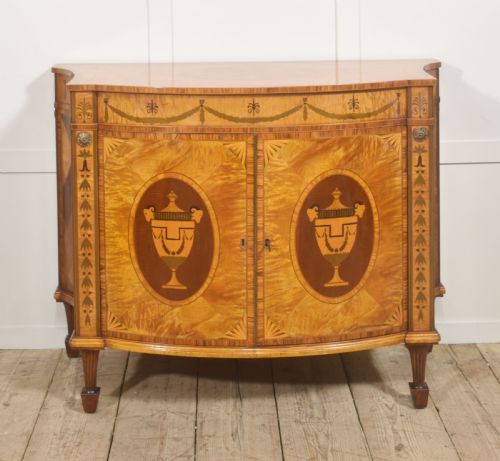


Sheraton Style Commode
These sheraton style commode pieces are refined storage cabinets and chests shaped by neoclassical elegance, built to anchor a gracious room.
Sheraton Style Commode
A sheraton style commode brings together classical proportions and refined cabinet work, drawing heavily on eighteenth-century design principles. When searching for a sheraton style commode, buyers encounter pieces ranging from Georgian originals to later revival interpretations.
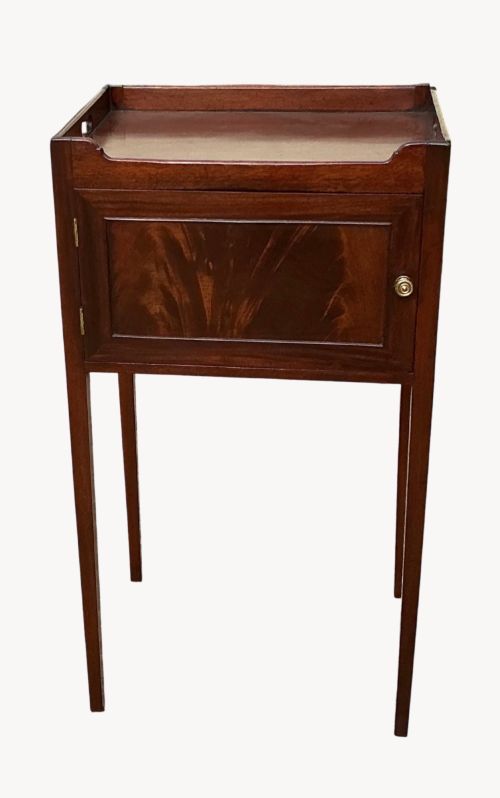
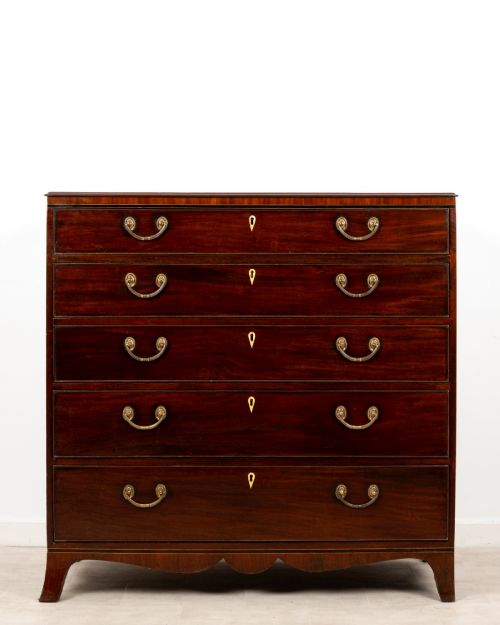
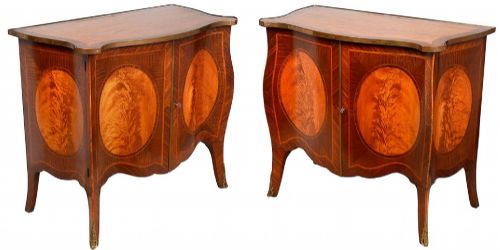
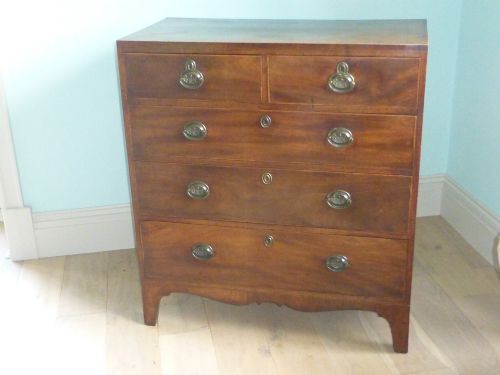
The form appears in various shapes including serpentine fronts, demi-lune cabinets, bowed side cabinets, and chests of drawers. Most examples on this page date from the nineteenth and early twentieth centuries, reflecting the enduring popularity of revival aesthetics.
Makers utilised rich timbers like satinwood and mahogany, often enhanced by elaborate marquetry and hand-painted details. These pieces function primarily as side cabinets, bedside cupboards, and decorative storage units.
Materials and construction
Cabinet makers constructed these pieces using solid mahogany and satinwood, frequently applying decorative veneers to curved and flat surfaces. Rosewood, boxwood, and bone provided contrasting stringing and geometric details.
Marquetry inlay formed intricate floral and classical motifs, requiring skilled hand-cutting of diverse timber species. Surface decoration also included hand-painted classical panels, brass hardware, and subtle crossbanding.
Sheraton Style Commode Retail Price Guide 2026
Typical asking prices for sheraton style commode among the pieces listed under this phrase on Sellingantiques today, from the lower quarter to the upper quarter. They describe what is for sale here now, not the wider market.
Some nineteenth-century cabinet makers hid secret compartments within writing cabinets to keep private correspondence safe from wandering eyes.
Markers of quality
Quality rests in the precision of the marquetry and the choice of timbers, where tightly figured satinwood and rich mahogany distinguish superior pieces. The crispness of the hand-painted panels and the finesse of the brass fittings further separate standard production from finer cabinet work.
Structural integrity reveals itself in the handling of curved forms, such as serpentine and demi-lune fronts, which demand exact joinery. The alignment of drawer linings and the subtlety of boxwood stringing indicate the maker's attention to detail.
Edwards and Roberts
The Sheraton Style Commode Glossary
- Demi-lune
- A half-moon shape commonly utilised for tabletops and cabinet fronts on neoclassical side pieces. This curved profile allows the cabinet to sit flush against a wall while offering display space.
- Marquetry
- The art of applying pieces of veneer to a structure to form decorative patterns and pictures. Craftsmen select different coloured woods to create contrast without using paint.
- Serpentine
- A furniture front characterised by a concave central section flanked by convex ends. This flowing line requires advanced woodworking skill to execute properly.
- Satinwood
- A durable timber known for its golden lustre and reflective grain. It served as a primary ground for painted and inlaid cabinets during the revival periods.
- Stringing
- Thin strips of contrasting wood inlaid into grooves on drawer fronts or table edges. It outlines panels and defines the geometric proportions of the piece.
Sheraton Style Commode: Frequently Asked Questions
What is a sheraton style commode?
A sheraton style commode is a refined cabinet or chest inspired by late eighteenth-century neoclassical designs. These pieces often feature satinwood, mahogany, and detailed marquetry.
They serve as decorative storage units in reception rooms and hallways, combining aesthetic appeal with functional drawer or cupboard space.
How do I date a revival commode?
Dating relies on examining the secondary timbers, construction methods, and hardware. Revival pieces from the nineteenth and early twentieth centuries often exhibit machine-cut elements alongside hand finish work.
Comparing the marquetry style and the choice of veneers against known revival periods helps narrow down the decade of manufacture.
Where should I place a demi-lune cabinet?
A demi-lune cabinet works best against a flat wall in a hallway, landing, or dining room. Its curved front softens the geometry of a room while providing a useful surface for lamps or decorative objects.
Because these pieces are often shallow, they fit well in narrower spaces where standard rectangular cabinets would obstruct movement.
How do I care for satinwood surfaces?
Satinwood requires gentle cleaning with a soft, dry cloth to remove dust. Avoid using silicone-based polishes, as they build up a residue over time and dull the natural lustre of the timber.
Keep the cabinet away from direct sunlight and heat sources to prevent the veneers and delicate painted panels from drying out or fading.