4,379  PAGES BROWSED TODAY PAGES TODAY 0  ANTIQUES UPLOADED TODAY NEW ARRIVALS
ID #SA1128521
FOR SALE
£6,250
Email
Save
Antique Pair Adam Revival Satinwood Side Cabinets Commodes 19th C
Regent Antiques
for sale €7,313     $7,938
£6,250
Regent Antiques

Regent Antiques

Sellingantiques Verified Since Sep 2016
View Dealers Stock Page
  • About Us
    We specialise in english and continental furniture, silver, porcelain and decorative items.
  • Trade Associations
    Regent Antiques is a registered member of LAPADA  CINOA
Id #SA1128521
PDF SHARE
SAVE

Antique Pair Adam Revival Satinwood Side Cabinets Commodes 19th C

19th century
For Sale by Regent Antiques
Description

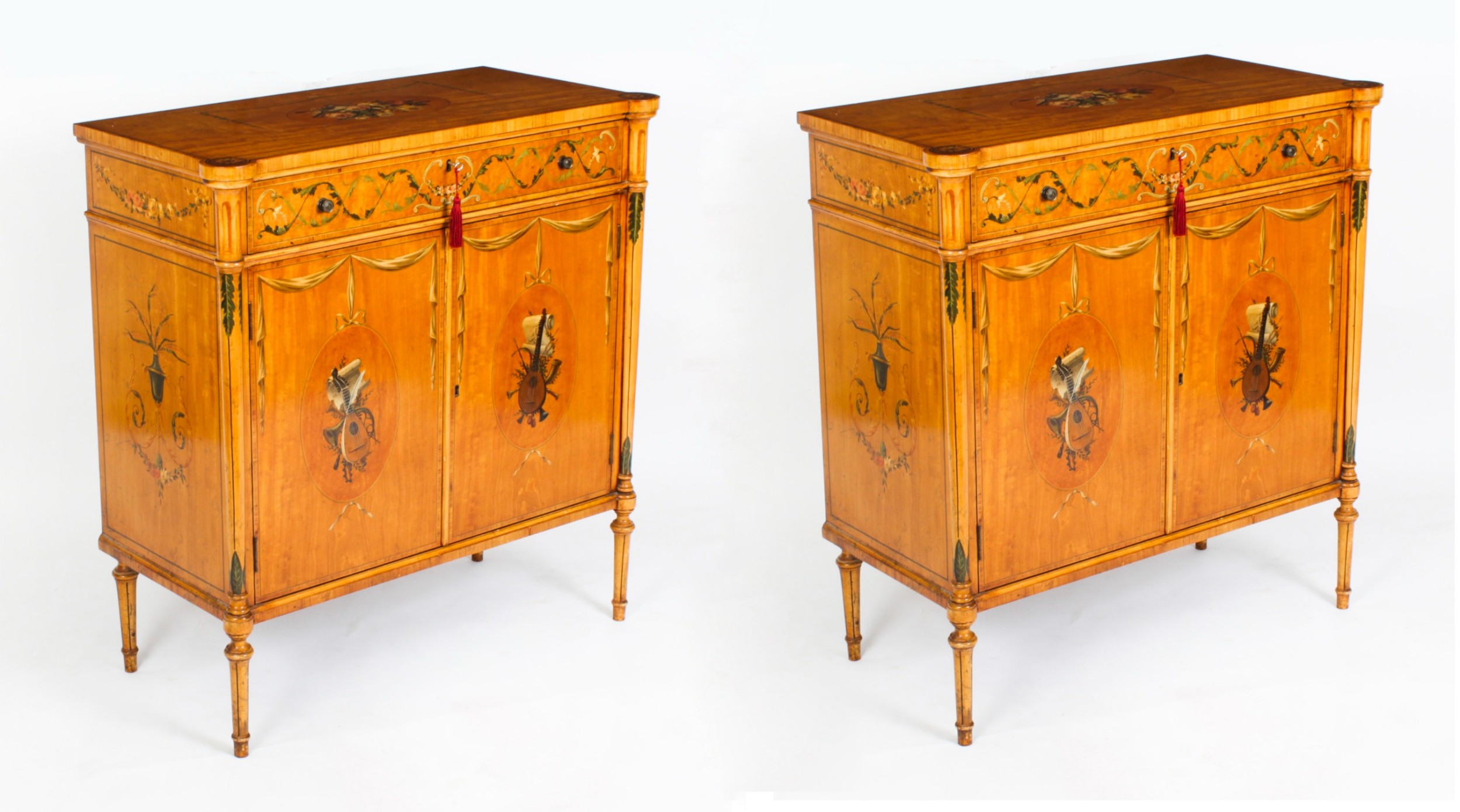
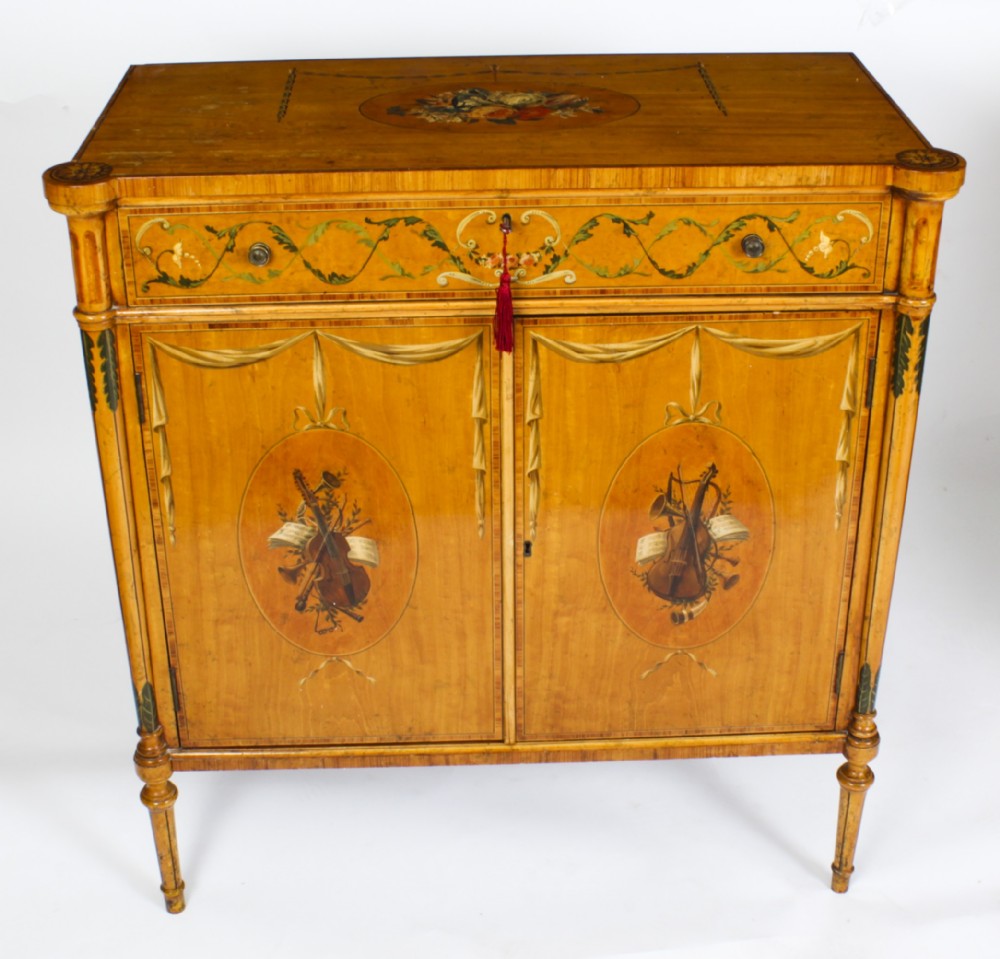
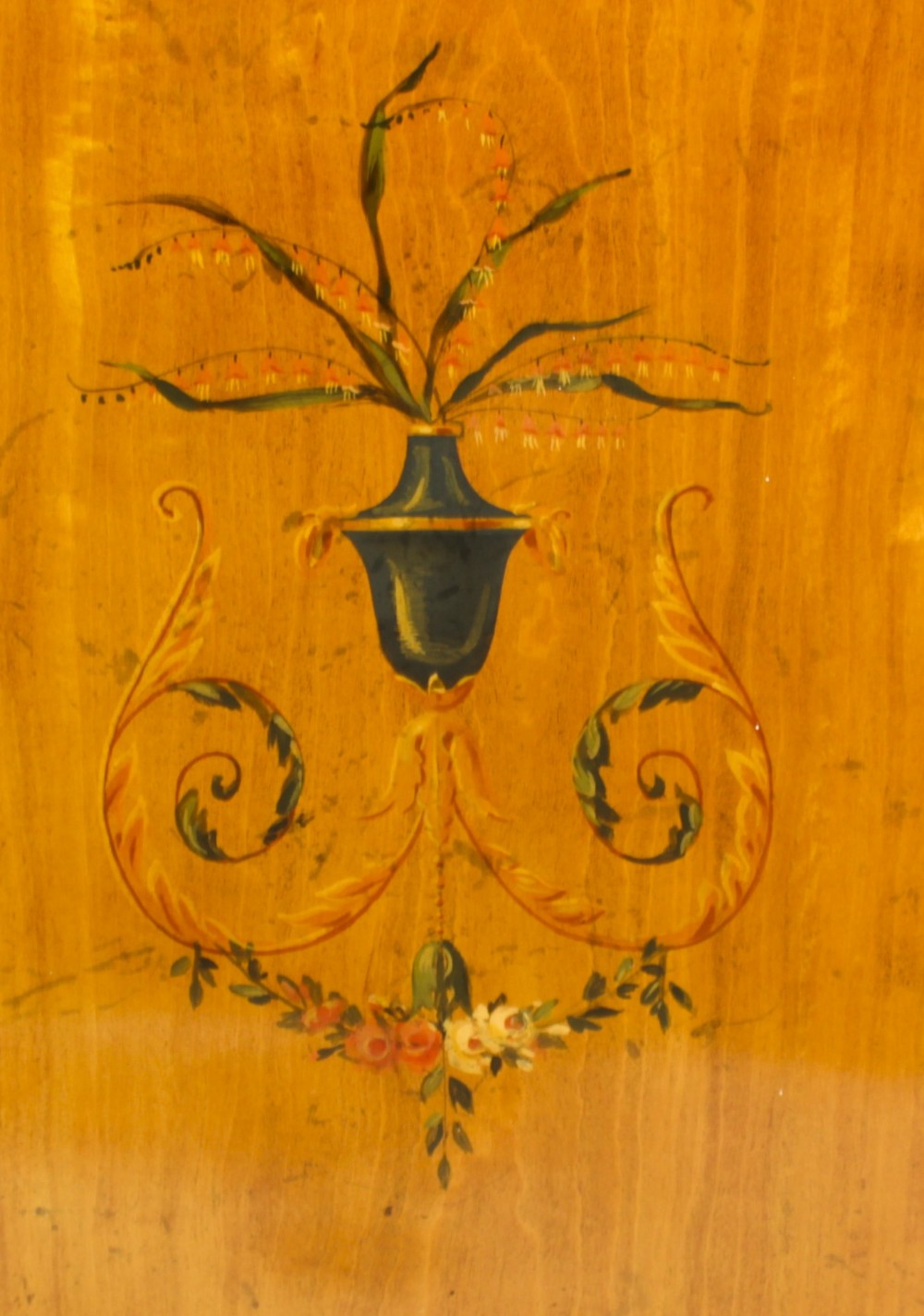
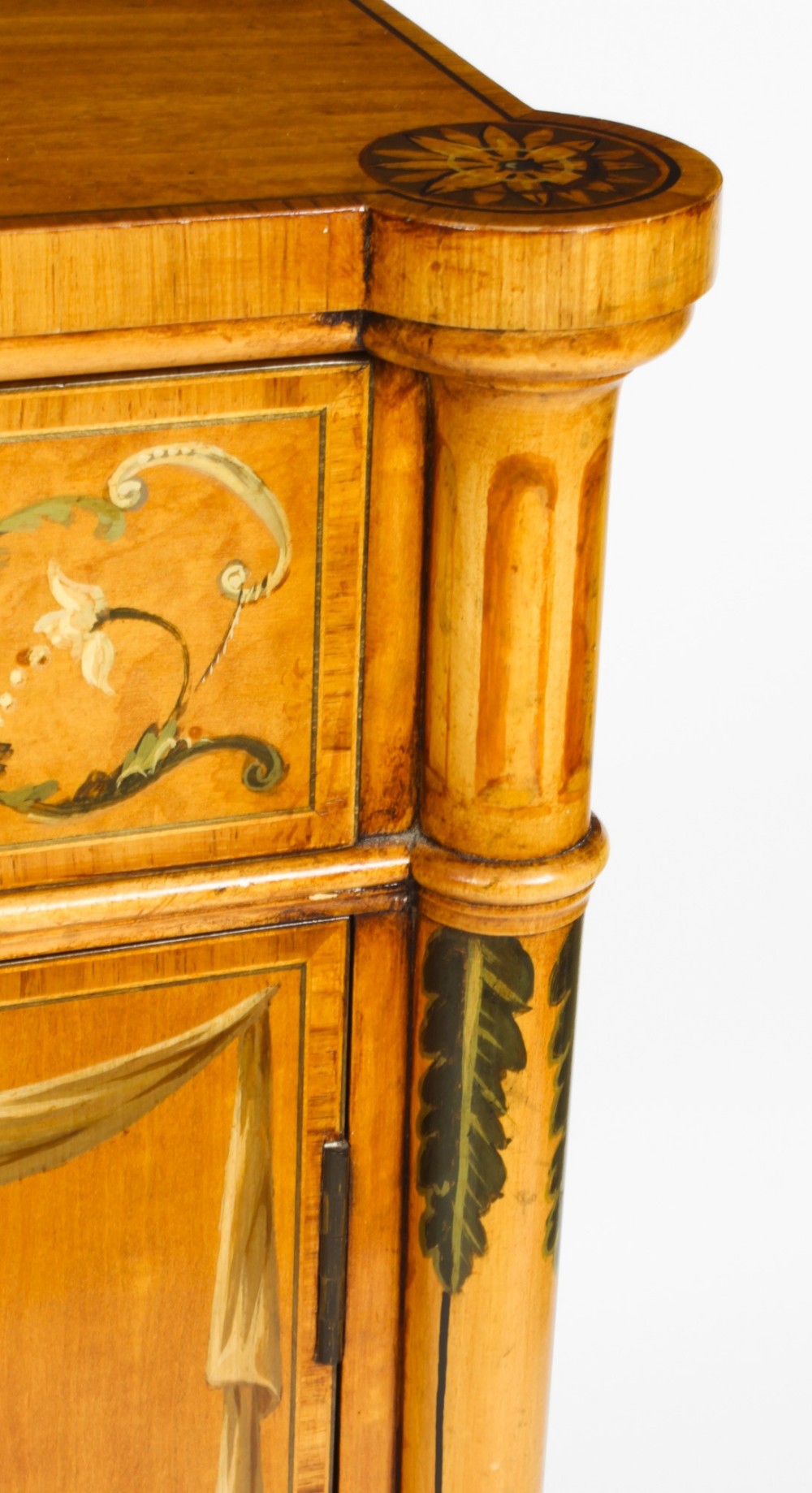
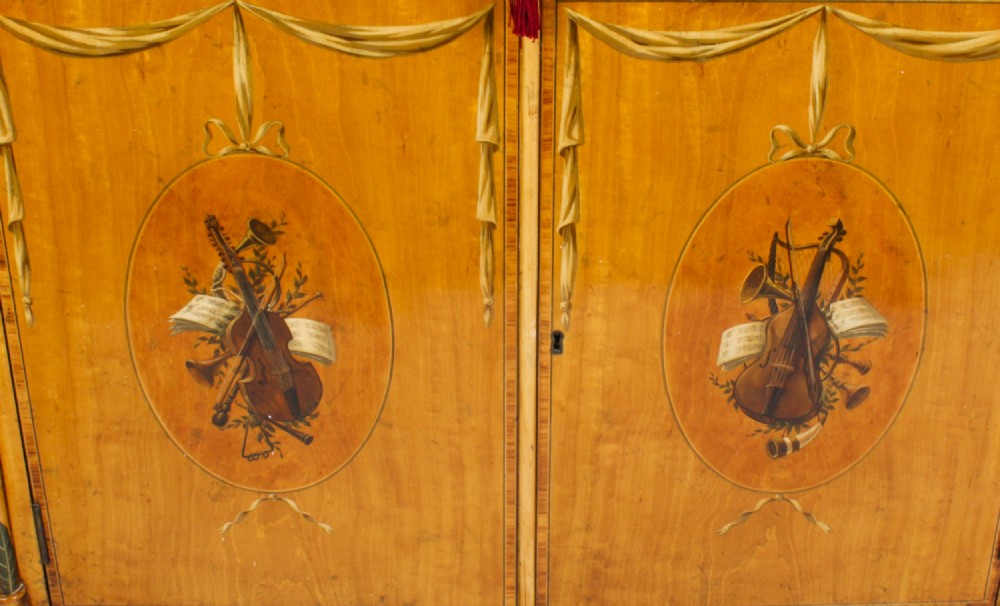
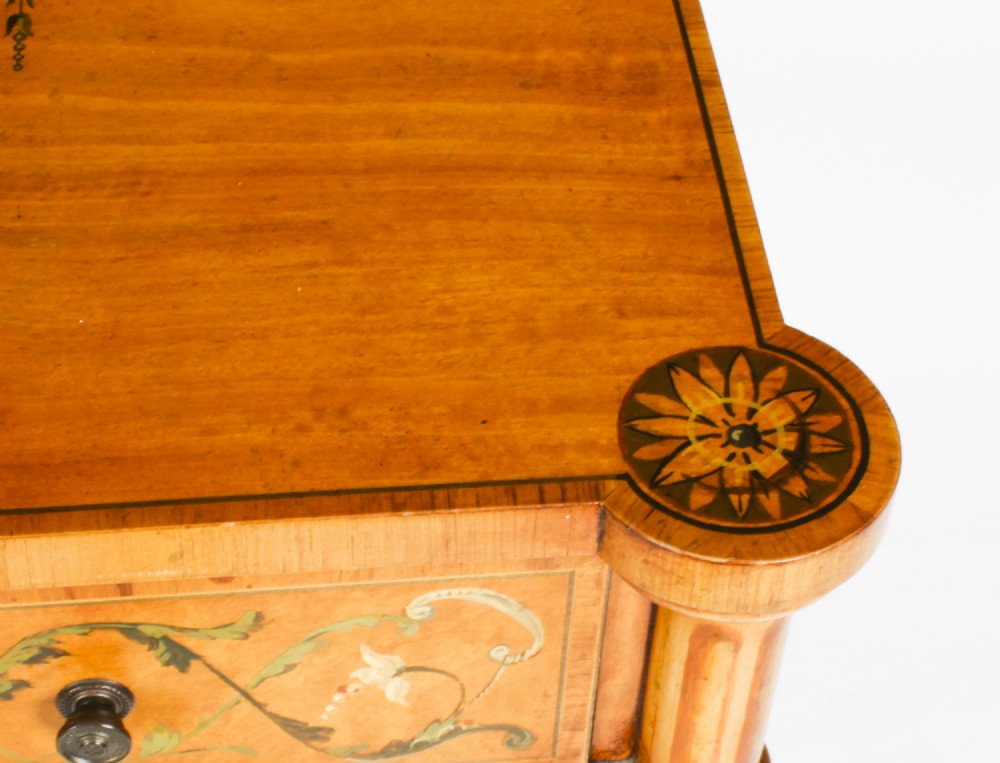
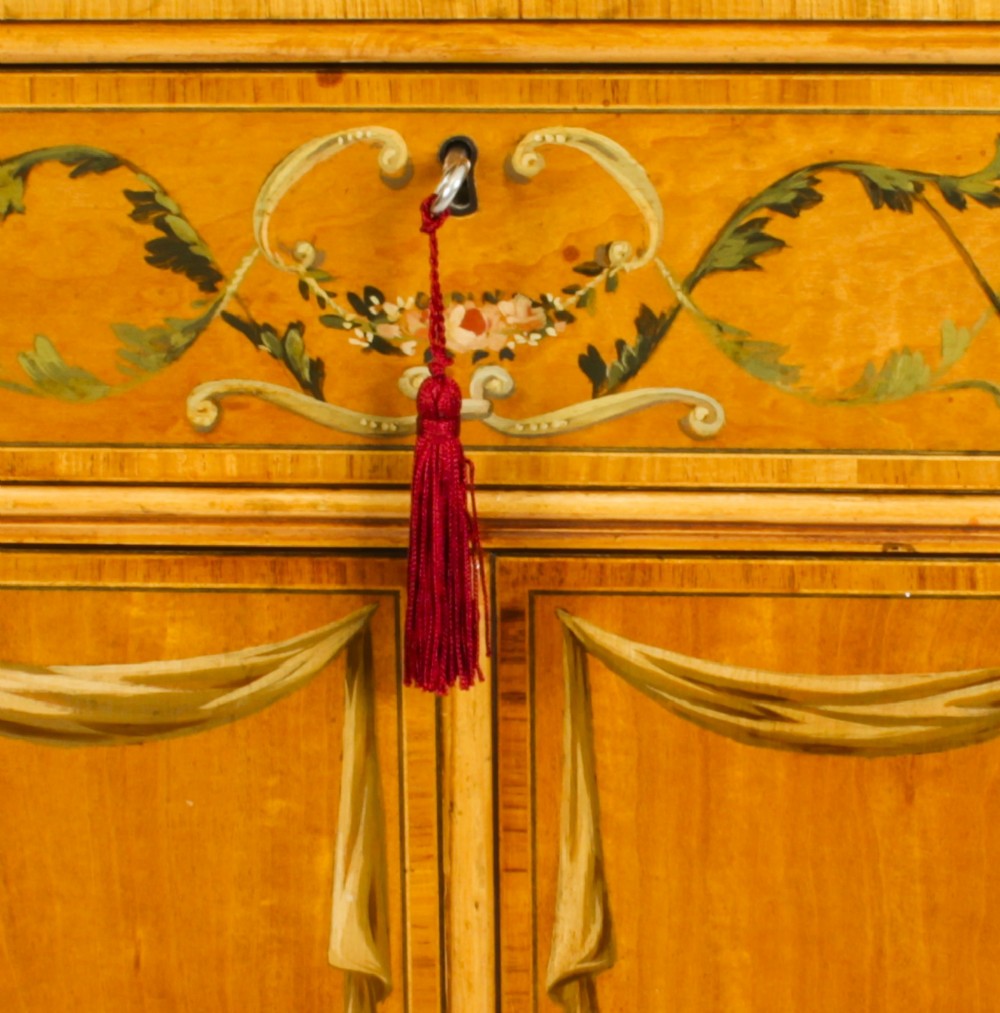
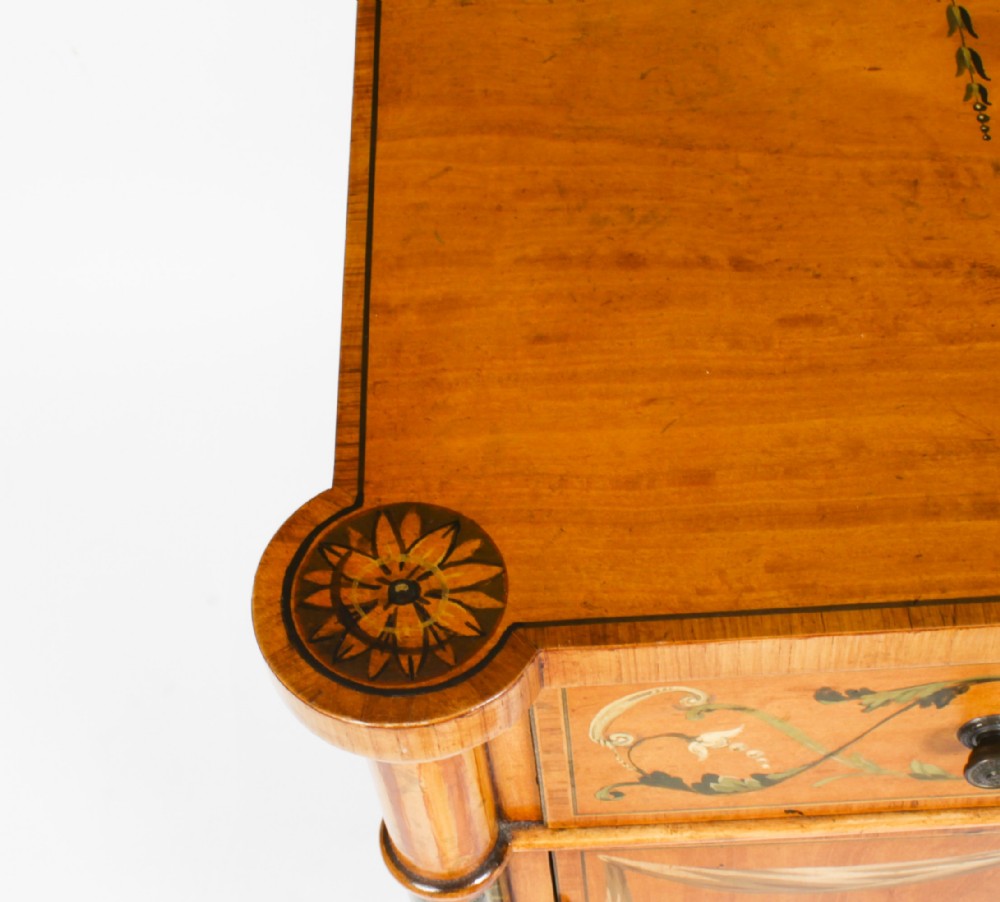
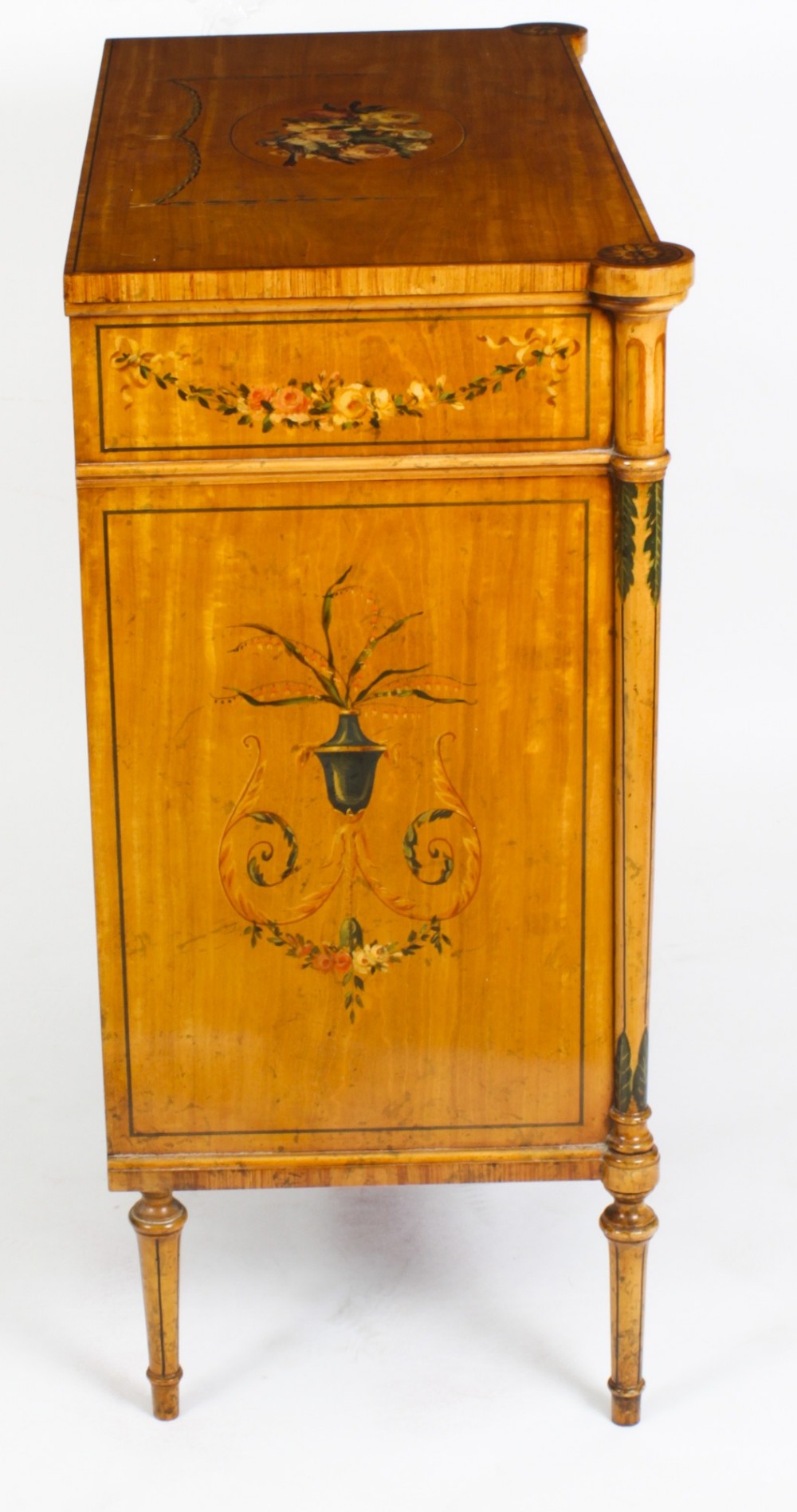
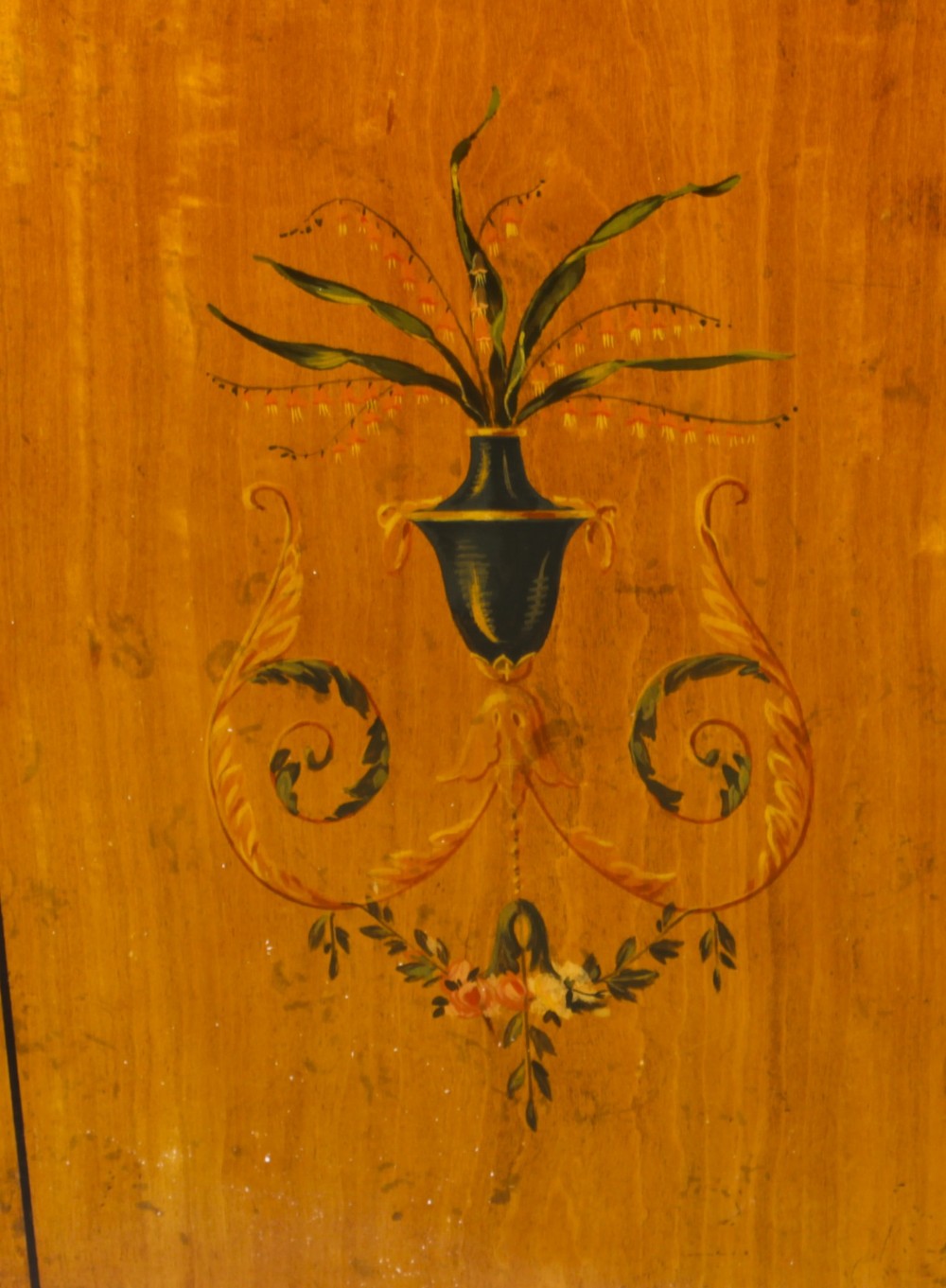
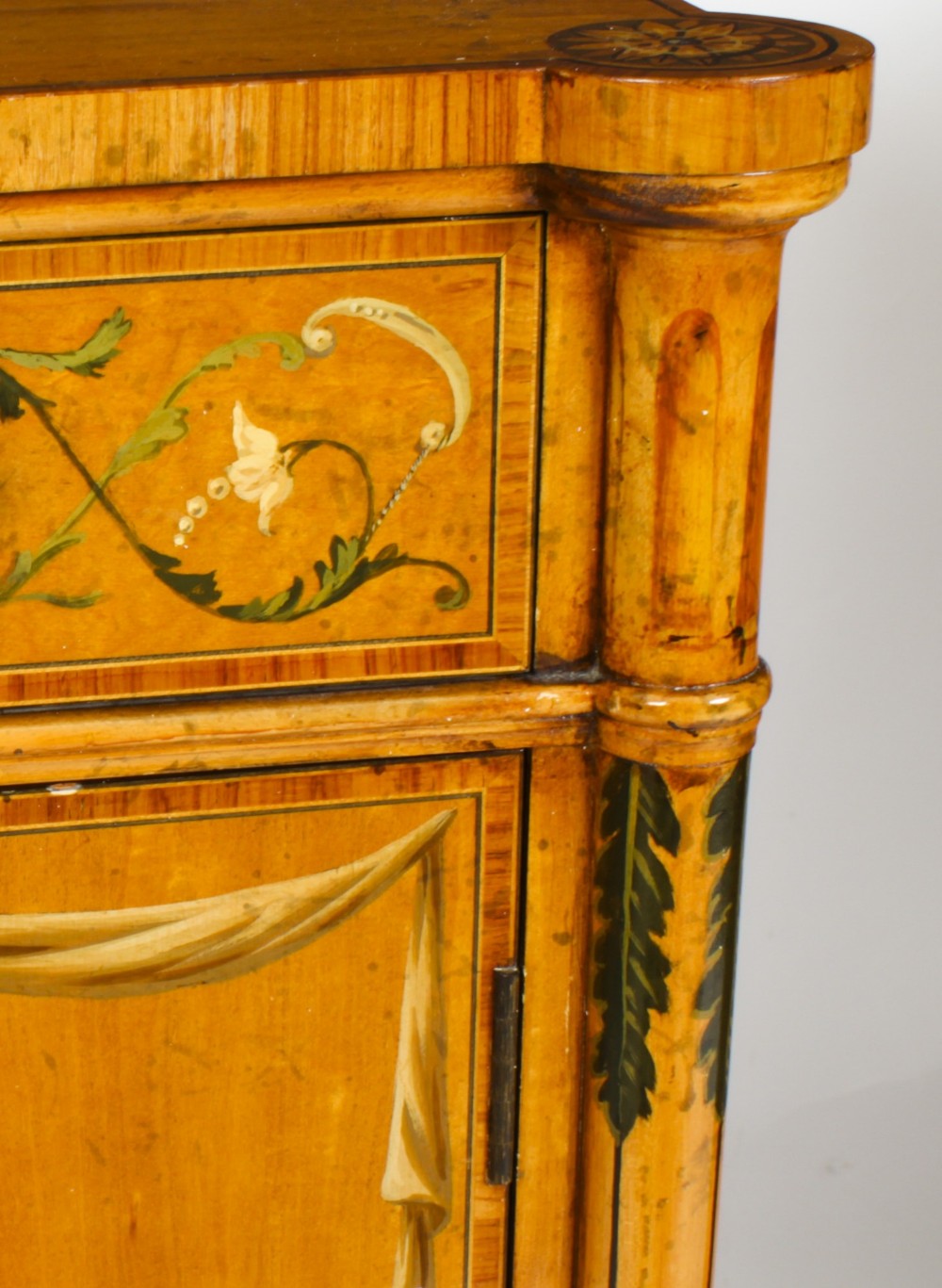
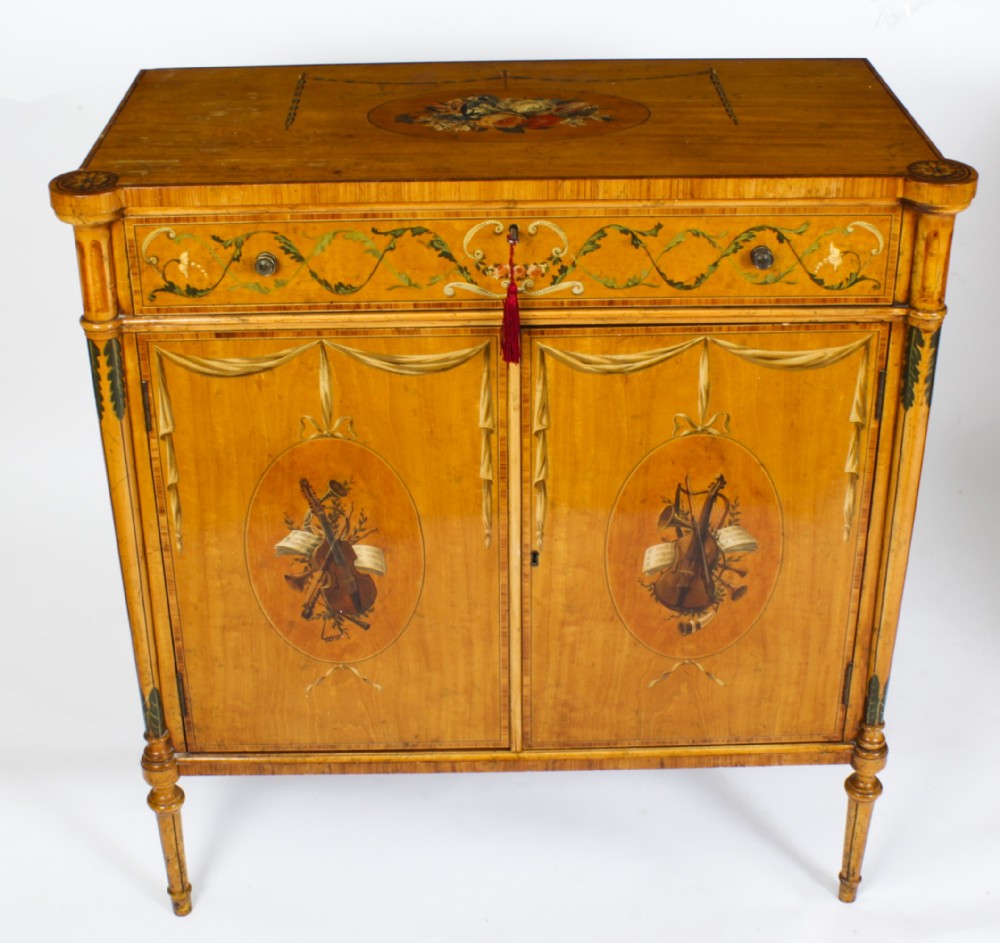
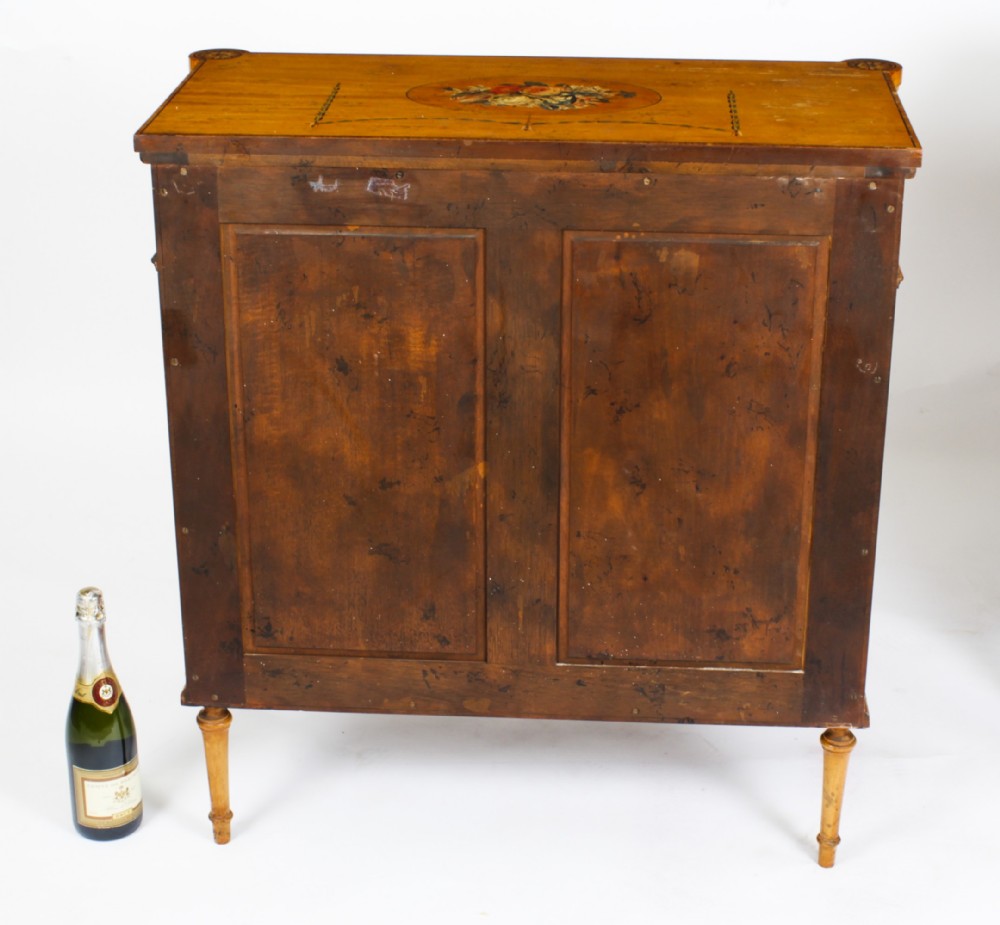
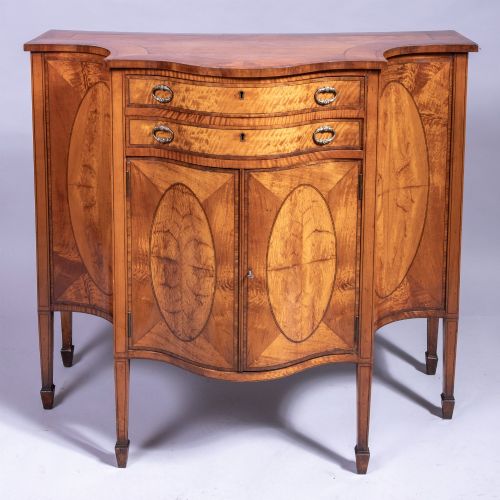
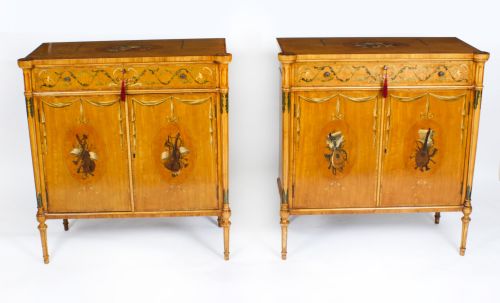
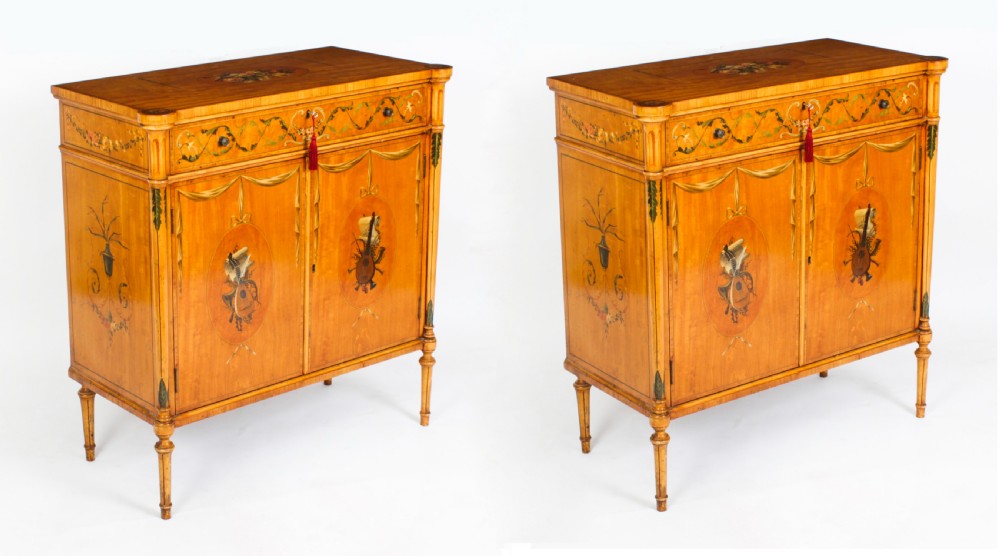
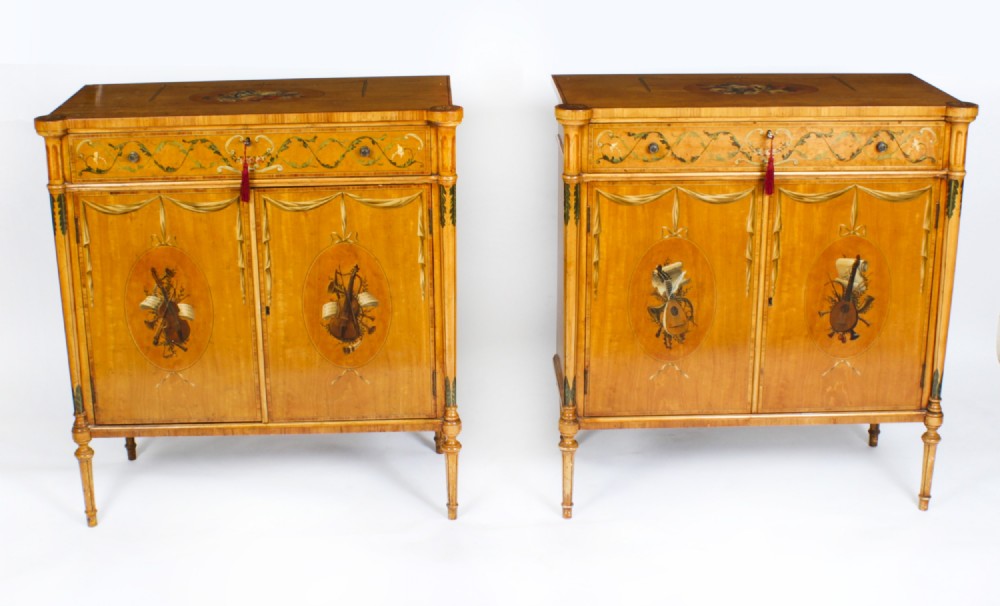
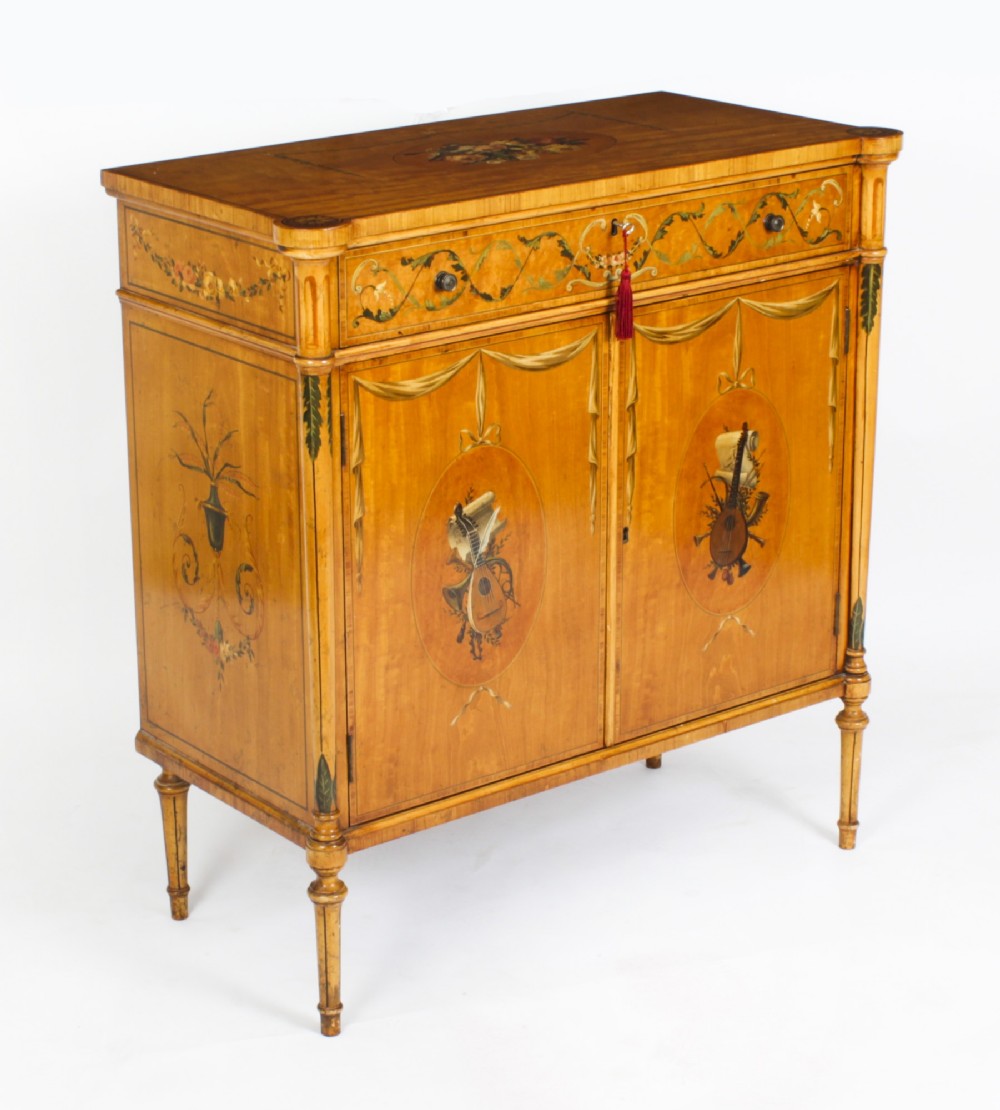
This is a gorgeous antique pair of Adam Revival two door satinwood side cabinets with beautiful hand painted floral decoration in the manner of Angelica Kauffman, dating from the late 19th century.

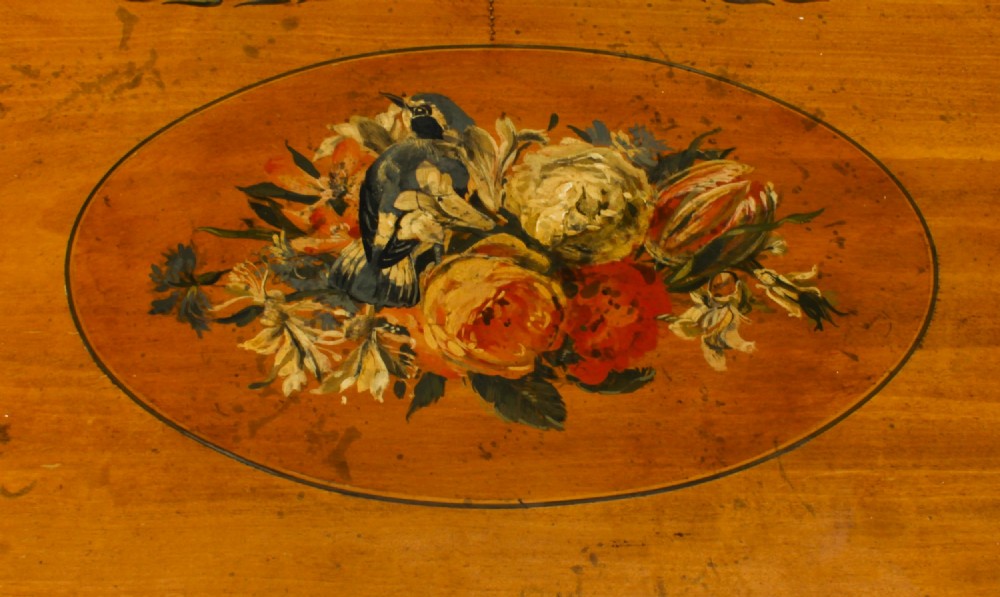
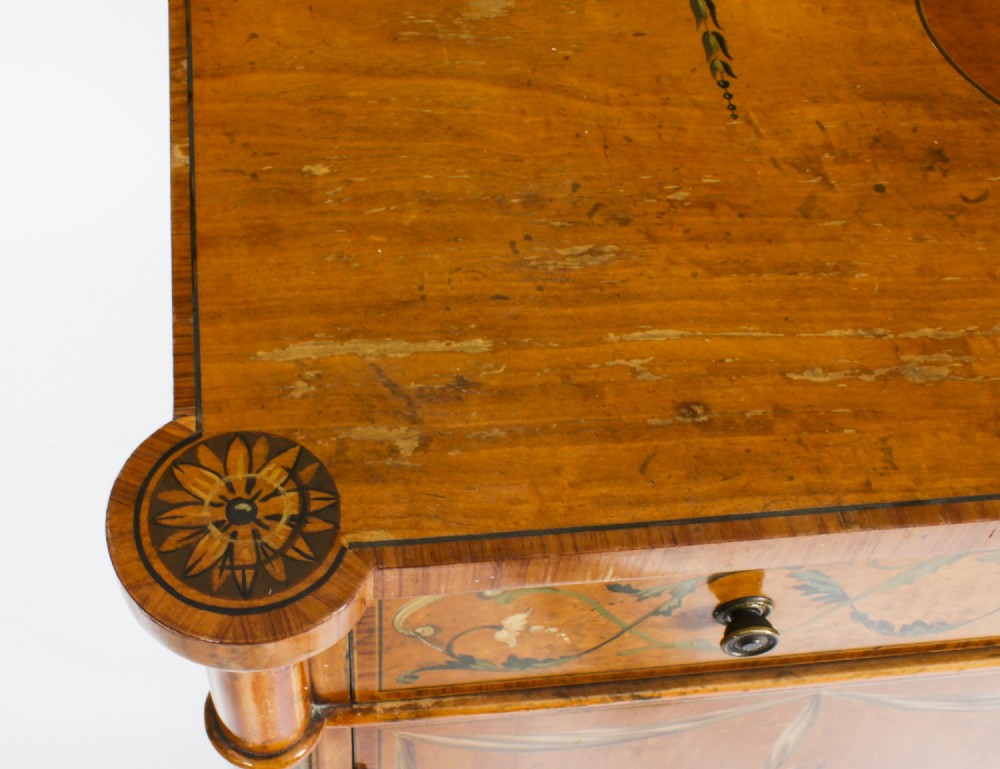
The tops beautifully decorated with a bouquet of flowers, each with a single frieze drawer above a pair of cupboard doors with painted musical trophies within oval panels.

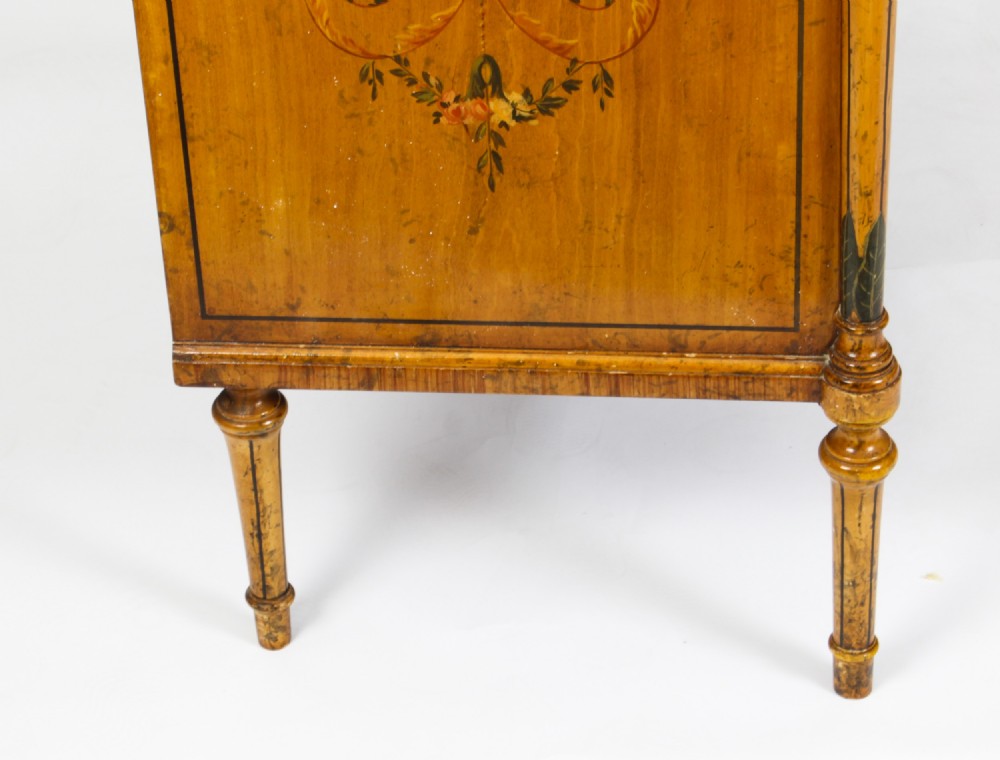
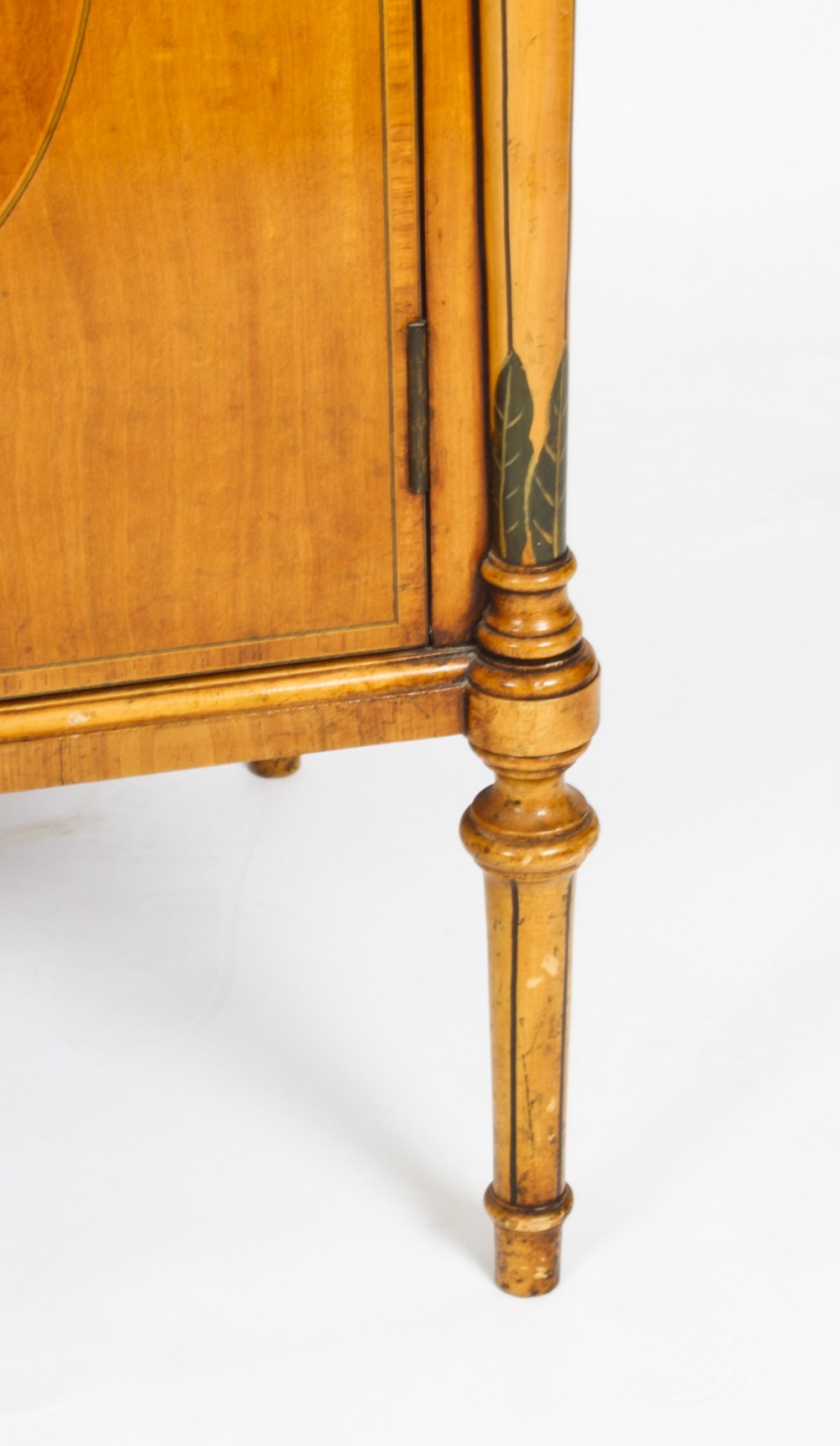
The cabinets are elegantly raised on turned and tapering legs.

Add a touch of elegance to a special room in your home with this superb pair.

With working locks and keys.

Condition:

In excellent condition having been beautifully cleaned and waxed in our workshops, please see photos for confirmation.

Dimensions in cm:

Height 87 cm x Width 83 cm x Depth 41 cm

Dimensions in inches:

Height 2 foot, 10 inches x Width 2 foot, 9 inches x Depth 1 foot, 4 inches

Angelica Kauffman, RA (1741 - 1807)

was a Swiss-born Austrian Neoclassical painter who had a successful career in London and Rome. Though born as "Kauffmann", Kauffman is the preferred spelling of her name in English; it is the form she herself used most in signing her correspondence, documents and paintings.

While Kauffman produced many types of art, she identified herself primarily as a history painter, an unusual designation for a woman artist in the 18th century. History painting, was considered the most elite and lucrative category in academic painting during this time period. Under the direction of Sir Joshua Reynolds, the Royal Academy made a strong effort to promote history painting to a native audience who were more interested in commissioning and buying portraits and landscapes.

Despite the popularity that Kauffman enjoyed in British society and her success as an artist, she was disappointed by the relative apathy that the British had towards history painting. Ultimately she left Britain for the continent, where history painting was better established, held in higher esteem and patronized.

The works of Angelica Kauffman have retained their reputation. By 1911, rooms decorated with her work were still to be seen in various quarters. At Hampton Court was a portrait of the duchess of Brunswick; in the National Portrait Gallery, a self-portrait. There were other pictures by her at Paris, at Dresden, in the Hermitage at St Petersburg, in the Alte Pinakothek atMunich, in Kadriorg Palace, Tallinn (Estonia).

Satinwood

is a hard and durable wood with a satinlike sheen, much used in cabinetmaking, especially in marquetry. It comes from two tropical trees of the family Rutaceae (rue family). East Indian or Ceylon satinwood is the yellowish or dark-brown heartwood of Chloroxylon swietenia.

The lustrous, fine-grained, usually figured wood is used for furniture, cabinetwork, veneers, and backs of brushes. West Indian satinwood, sometimes called yellow wood, is considered superior. It is the golden yellow, lustrous, even-grained wood found in the Florida Keys and the West Indies.

It has long been valued for furniture. It is also used for musical instruments, veneers, and other purposes. Satinwood is classified in the division Magnoliophyta, class Magnoliopsida, order Sapindales, family Rutaceae.

Our reference: A2605

Physical Dimensions
Height
87cm (34.25")
Width
83cm (32.68")
Depth
41cm (16.14")
Declaration

Regent Antiques has dated this Satinwood Side Cabinet Pair to the 19th Century.
Reference Numbers
Sellingantiques Reference
SA1128521
Dealers Internal Reference
A2605
Description
This is a gorgeous antique pair of Adam Revival two door satinwood side cabinets with beautiful hand painted floral decoration in the manner of Angelica Kauffman, dating from the late 19th century.
The tops beautifully decorated with a bouquet of flowers, each with a single frieze drawer above a pair of cupboard doors with painted musical trophies within oval panels.
Regent Antiques
fig 1. A pair of 19th-century Adam Revival satinwood side cabinets featuring hand-painted classical swags, musical trophies, and slender turned legs.
fig 1. Antique Pair Adam Revival Satinwood Side Cabinets Commodes 19th C

The cabinets are elegantly raised on turned and tapering legs.

Add a touch of elegance to a special room in your home with this superb pair.

With working locks and keys.

Condition:

In excellent condition having been beautifully cleaned and waxed in our workshops, please see photos for confirmation.
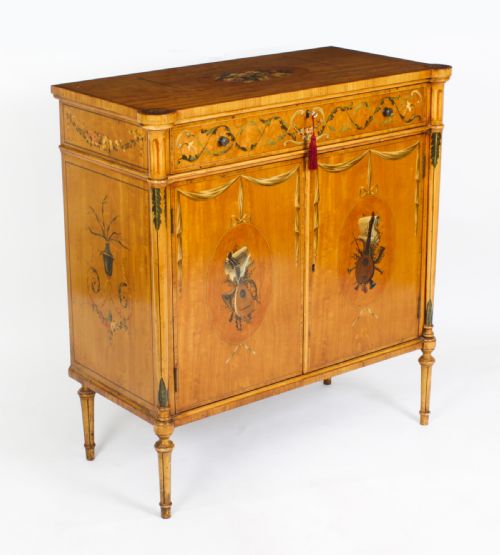
fig 2. A pair of 19th-century Adam Revival satinwood side cabinets featuring hand-painted classical swags, musical trophies, and slender turned legs.
fig 2. Antique Pair Adam Revival Satinwood Side Cabinets Commodes 19th C

Dimensions in cm:

Height 87 cm x Width 83 cm x Depth 41 cm

Dimensions in inches:

Height 2 foot, 10 inches x Width 2 foot, 9 inches x Depth 1 foot, 4 inches

Angelica Kauffman, RA (1741 - 1807)

was a Swiss-born Austrian Neoclassical painter who had a successful career in London and Rome. Though born as "Kauffmann", Kauffman is the preferred spelling of her name in English; it is the form she herself used most in signing her correspondence, documents and paintings.
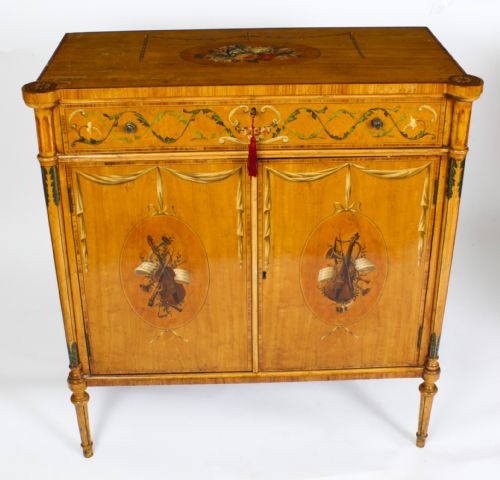
fig 3. A pair of 19th-century Adam Revival satinwood side cabinets featuring hand-painted classical swags, musical trophies, and slender turned legs.
fig 3. Antique Pair Adam Revival Satinwood Side Cabinets Commodes 19th C

While Kauffman produced many types of art, she identified herself primarily as a history painter, an unusual designation for a woman artist in the 18th century. History painting, was considered the most elite and lucrative category in academic painting during this time period. Under the direction of Sir Joshua Reynolds, the Royal Academy made a strong effort to promote history painting to a native audience who were more interested in commissioning and buying portraits and landscapes.
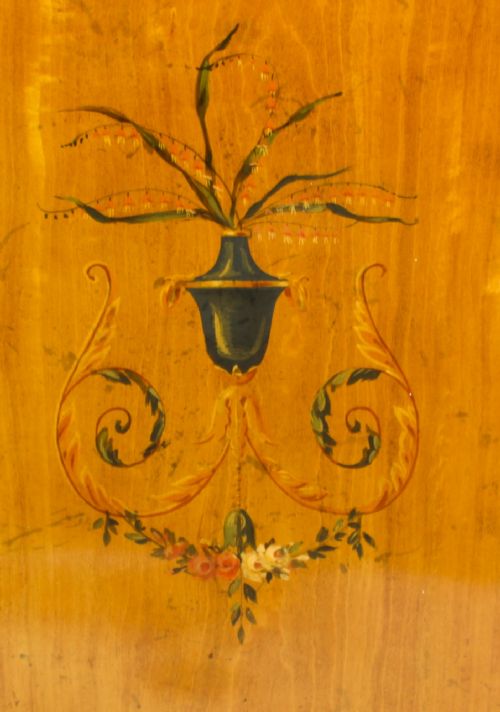
fig 4. A pair of 19th-century Adam Revival satinwood side cabinets featuring hand-painted classical swags, musical trophies, and slender turned legs.
fig 4. Antique Pair Adam Revival Satinwood Side Cabinets Commodes 19th C

Despite the popularity that Kauffman enjoyed in British society and her success as an artist, she was disappointed by the relative apathy that the British had towards history painting. Ultimately she left Britain for the continent, where history painting was better established, held in higher esteem and patronized.
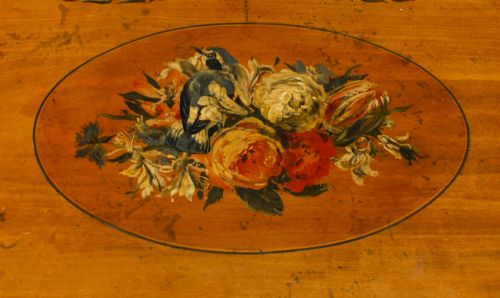
fig 5. A pair of 19th-century Adam Revival satinwood side cabinets featuring hand-painted classical swags, musical trophies, and slender turned legs.
fig 5. Antique Pair Adam Revival Satinwood Side Cabinets Commodes 19th C

The works of Angelica Kauffman have retained their reputation. By 1911, rooms decorated with her work were still to be seen in various quarters. At Hampton Court was a portrait of the duchess of Brunswick; in the National Portrait Gallery, a self-portrait. There were other pictures by her at Paris, at Dresden, in the Hermitage at St Petersburg, in the Alte Pinakothek atMunich, in Kadriorg Palace, Tallinn (Estonia).
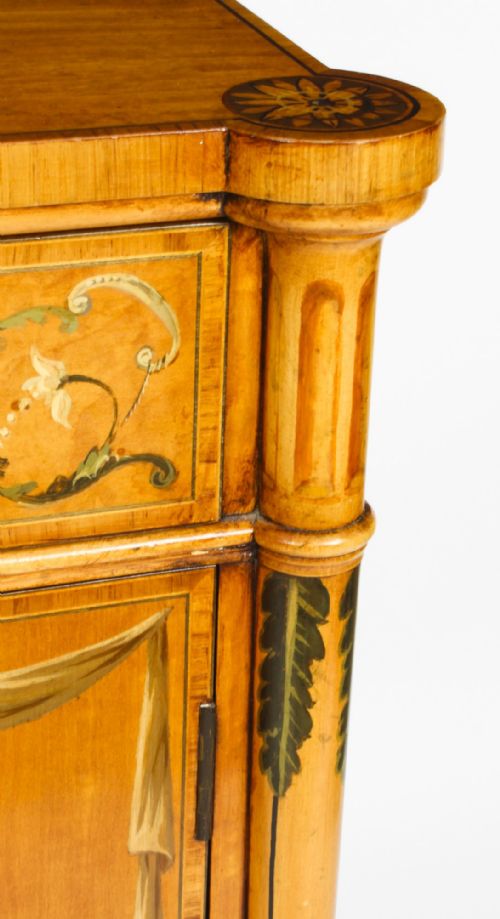
fig 6. A pair of 19th-century Adam Revival satinwood side cabinets featuring hand-painted classical swags, musical trophies, and slender turned legs.
fig 6. Antique Pair Adam Revival Satinwood Side Cabinets Commodes 19th C

Satinwood

is a hard and durable wood with a satinlike sheen, much used in cabinetmaking, especially in marquetry. It comes from two tropical trees of the family Rutaceae (rue family). East Indian or Ceylon satinwood is the yellowish or dark-brown heartwood of Chloroxylon swietenia.
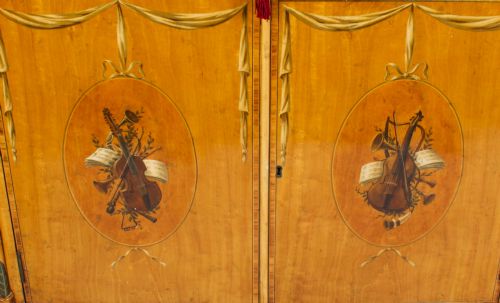
fig 7. A pair of 19th-century Adam Revival satinwood side cabinets featuring hand-painted classical swags, musical trophies, and slender turned legs.
fig 7. Antique Pair Adam Revival Satinwood Side Cabinets Commodes 19th C

The lustrous, fine-grained, usually figured wood is used for furniture, cabinetwork, veneers, and backs of brushes. West Indian satinwood, sometimes called yellow wood, is considered superior. It is the golden yellow, lustrous, even-grained wood found in the Florida Keys and the West Indies.
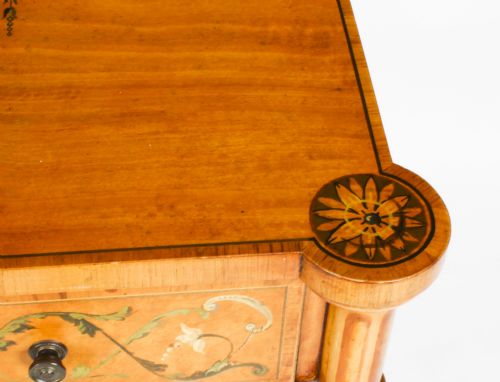
fig 8. A pair of 19th-century Adam Revival satinwood side cabinets featuring hand-painted classical swags, musical trophies, and slender turned legs.
fig 8. Antique Pair Adam Revival Satinwood Side Cabinets Commodes 19th C

It has long been valued for furniture. It is also used for musical instruments, veneers, and other purposes. Satinwood is classified in the division Magnoliophyta, class Magnoliopsida, order Sapindales, family Rutaceae.

Our reference: A2605

Height
87cm (34.25")
Width
83cm (32.68")
Depth
41cm (16.14")
Date of Manufacture

Regent Antiques has dated this Satinwood Side Cabinet Pair to the 19th Century.

Reference Numbers
Sellingantiques Ref
SA1128521
Dealers Internal Ref
A2605
Regent Antiques
Regent Antiques
Sellingantiques verified Since Sep 2016

We specialise in english and continental furniture, silver, porcelain and decorative items.

Dealer Profile

You can view the stock and full dealer information on the Regent Antiques Profile Page

Trade Associations

Regent Antiques is a registered member of LAPADA  CINOA
PDF SHARE
SAVE
A pair of 19th-century Adam Revival satinwood side cabinets featuring hand-painted classical swags, musical trophies, and slender turned legs.
1 / 20
Archive I A pair of 19th-century Adam Revival satinwood side cabinets featuring hand-painted classical swags, musical trophies, and slender turned legs.

Antique Pair Adam Revival Satinwood Side Cabinets Commodes 19th C
Archive II A pair of 19th-century Adam Revival satinwood side cabinets featuring hand-painted classical swags, musical trophies, and slender turned legs. View II
Archive III A pair of 19th-century Adam Revival satinwood side cabinets featuring hand-painted classical swags, musical trophies, and slender turned legs. View III
Archive IV A pair of 19th-century Adam Revival satinwood side cabinets featuring hand-painted classical swags, musical trophies, and slender turned legs. View IV
Archive V A pair of 19th-century Adam Revival satinwood side cabinets featuring hand-painted classical swags, musical trophies, and slender turned legs. View V
Archive VI A pair of 19th-century Adam Revival satinwood side cabinets featuring hand-painted classical swags, musical trophies, and slender turned legs. View VI
Archive VII A pair of 19th-century Adam Revival satinwood side cabinets featuring hand-painted classical swags, musical trophies, and slender turned legs. View VII
Archive VIII A pair of 19th-century Adam Revival satinwood side cabinets featuring hand-painted classical swags, musical trophies, and slender turned legs. View VIII
Archive IX A pair of 19th-century Adam Revival satinwood side cabinets featuring hand-painted classical swags, musical trophies, and slender turned legs. View IX
Archive X A pair of 19th-century Adam Revival satinwood side cabinets featuring hand-painted classical swags, musical trophies, and slender turned legs. View X
Archive XI A pair of 19th-century Adam Revival satinwood side cabinets featuring hand-painted classical swags, musical trophies, and slender turned legs. View XI
Archive XII A pair of 19th-century Adam Revival satinwood side cabinets featuring hand-painted classical swags, musical trophies, and slender turned legs. View XII
Archive XIII A pair of 19th-century Adam Revival satinwood side cabinets featuring hand-painted classical swags, musical trophies, and slender turned legs. View XIII
Archive XIV A pair of 19th-century Adam Revival satinwood side cabinets featuring hand-painted classical swags, musical trophies, and slender turned legs. View XIV
Archive XV A pair of 19th-century Adam Revival satinwood side cabinets featuring hand-painted classical swags, musical trophies, and slender turned legs. View XV
Archive XVI A pair of 19th-century Adam Revival satinwood side cabinets featuring hand-painted classical swags, musical trophies, and slender turned legs. View XVI
Archive XVII A pair of 19th-century Adam Revival satinwood side cabinets featuring hand-painted classical swags, musical trophies, and slender turned legs. View XVII
Archive XVIII A pair of 19th-century Adam Revival satinwood side cabinets featuring hand-painted classical swags, musical trophies, and slender turned legs. View XVIII
Archive XIX A pair of 19th-century Adam Revival satinwood side cabinets featuring hand-painted classical swags, musical trophies, and slender turned legs. View XIX
Archive XX A pair of 19th-century Adam Revival satinwood side cabinets featuring hand-painted classical swags, musical trophies, and slender turned legs. View XX
FURTHER BROWSING

Visitors also looked at these ⇣

Enlarged Archival View
Location
Manor Warehouse
318 Green Lanes
London
N4 1BX
United Kingdom
Verified Since Sep 2016
Items For Sale 659
Items Sold 2,608
Regent Antiques
Regent Antiques
Verified Since Sep 2016
View Dealer Info
Location: Manor Warehouse, 318 Green Lanes, London, N4 1BX, United Kingdom
Verified
Sep 2016
For Sale
659
Sold
2,608
A pair of 19th-century Adam Revival satinwood side cabinets featuring hand-painted classical swags, musical trophies, and slender turned legs.
Antique Pair Adam Revival Satinwood Side Cabinets Commodes 19th C
Ref: SA1128521
A pair of 19th-century Adam Revival satinwood side cabinets featuring hand-painted classical swags, musical trophies, and slender turned legs.
Detail View 1
Detail View 2
Detail View 3
Detail View 4
Detail View 5
Detail View 6
Detail View 7
Detail View 8
Detail View 9
Detail View 10
Detail View 11
Detail View 12
Detail View 13
Detail View 14
Detail View 15
Detail View 16
Detail View 17
Detail View 18
Detail View 19
Archival Detail
Every single antique dealer on our platform is individually approved by our internal team. We verify their professional trade history, ethical standards, and photographic quality to ensure a secure, high-standard buying environment. Upon joining, every dealer agrees to a strict 9-point code of conduct. While issues can occasionally arise, our dealers typically resolve them swiftly and directly with the buyer. In fact, since our founding in 2002, Sellingantiques has only had to step in to help resolve an issue on roughly five occasions—a true testament to the quality of our dealers and their dedication to your happiness.
Our dealers are highly experienced in packing and shipping fragile, high-value antiques. Because you are in direct contact with the dealer, you will be able to easily go through all available shipping and insurance options together to ensure your item arrives safely.
Antiques are the ultimate green purchase. By choosing historical pieces over newly manufactured goods, you completely eliminate the carbon footprint of modern mass production while preserving exceptional, timeless craftsmanship.

Adam Revival furniture, popular during the late 19th century, draws inspiration from the 18th-century Neoclassical designs of Robert Adam, characterised by symmetrical proportions, light timbers, and classical ornamentation such as swags, urns, and husks.

Fine 19th-century pieces predominantly utilised West Indian satinwood veneers for their golden lustre, often complemented by hand-painted polychrome decoration, fine marquetry inlays, and oak or mahogany drawer linings.

Authentic pieces exhibit hand-cut dovetail joints, subtle timber oxidisation on unvarnished interior surfaces, fine hand-painted detailing rather than printed transfers, and period-appropriate cast brass hardware.

Placing a matching pair symmetrically on either side of a focal point, such as a fireplace or doorway, provides structural balance and introduces warm timber tones to modern classical or transitional spaces.

Clean gently using a soft, dry microfibre cloth to remove surface dust, avoiding liquid cleaners, commercial solvents, or direct sunlight which can degrade delicate hand-painted motifs and discolour the timber finish.
items
Add keywords to the filter
Price
£100
£250000
Era
Movements
Material
Origin
Stock Location
Freshness
Online Payments
Categories